Division of Infection, Immunity and Respiratory Medicine, The University of Manchester Faculty of Biology, Medicine and Health, Manchester, UK
Manchester Adult Cystic Fibrosis Centre, Manchester University NHS Foundation Trust, Manchester, UK.
Thorax. 2022 Apr;77(4):357-363. doi: 10.1136/thoraxjnl-2021-216928. Epub 2021 Jul 22.
Lung clearance index (LCI) is a valuable research tool in cystic fibrosis (CF) but clinical application has been limited by technical challenges and uncertainty about how to interpret longitudinal change. In order to help inform clinical practice, this study aimed to assess feasibility, repeatability and longitudinal LCI change in children and adults with CF with predominantly mild baseline disease.
Prospective, 3-year, multicentre, observational study of repeated LCI measurement at time of clinical review in patients with CF >5 years, delivered using a rapid wash-in system.
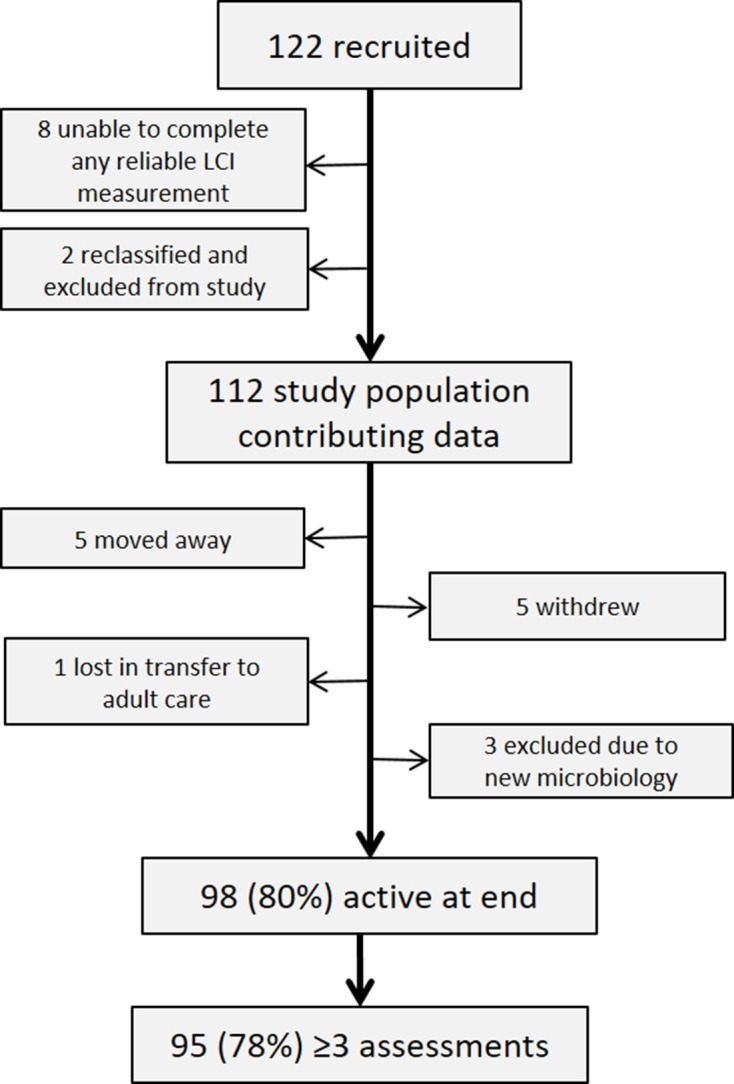
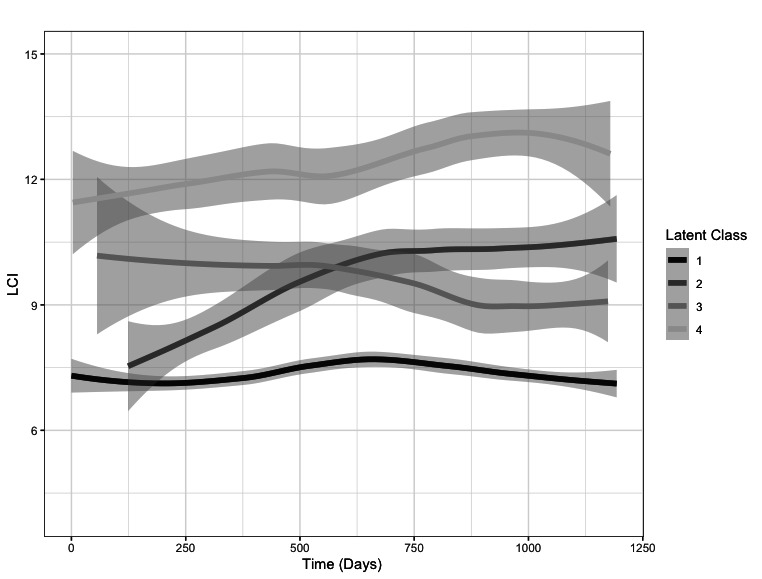
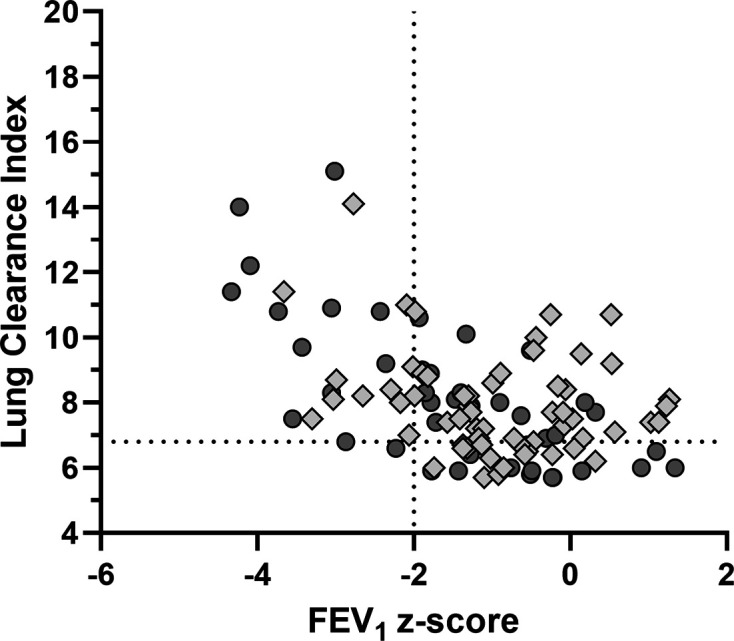
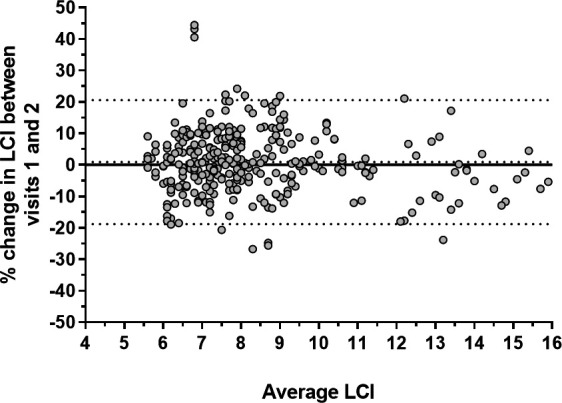
112 patients completed at least one LCI assessment and 98 (90%) were still under follow-up at study end. The median (IQR) age was 14.7 (8.6-22.2) years and the mean (SD) FEV z-score was -1.2 (1.3). Of 81 subjects with normal FEV (>-2 z-scores), 63% had raised LCI (indicating worse lung function). For repeat stable measurements within 6 months, the mean (limits of agreement) change in LCI was 0.9% (-18.8% to 20.7%). A latent class growth model analysis identified four discrete clusters with high accuracy, differentiated by baseline LCI and FEV. Baseline LCI was the strongest factor associated with longitudinal change. The median total test time was under 19 min.
Most patients with CF with well-preserved lung function show stable LCI over time. Cluster behaviours can be identified and baseline LCI is a risk factor for future progression. These results support the use of LCI in clinical practice in identifying patients at risk of lung function decline.
肺清除指数(LCI)是囊性纤维化(CF)研究中的一种有价值的工具,但由于技术挑战以及对如何解释纵向变化的不确定性,其临床应用受到限制。为了帮助指导临床实践,本研究旨在评估具有轻度基线疾病的 CF 患儿和成人中 LCI 的可行性、可重复性和纵向变化。
前瞻性、3 年、多中心、观察性研究,在 CF 患者临床复查时使用快速冲洗系统重复测量 LCI。
112 例患者完成了至少一次 LCI 评估,98 例(90%)患者在研究结束时仍在随访中。中位(IQR)年龄为 14.7(8.6-22.2)岁,平均(SD)FEV z 评分为-1.2(1.3)。在 81 例 FEV 正常(>-2 z 评分)的受试者中,63%的患者 LCI 升高(表明肺功能更差)。在 6 个月内重复稳定测量时,LCI 的平均(一致性界限)变化为 0.9%(-18.8%至 20.7%)。潜在类别增长模型分析以较高的准确性识别了四个离散的聚类,这些聚类通过基线 LCI 和 FEV 来区分。基线 LCI 是与纵向变化最相关的因素。总测试时间中位数不到 19 分钟。
大多数肺功能良好的 CF 患者的 LCI 随时间保持稳定。可以识别聚类行为,并且基线 LCI 是未来进展的危险因素。这些结果支持在临床实践中使用 LCI 来识别肺功能下降风险的患者。