Song Lei, Zhao Fei, Liu Yong, Guo Xiaonong, Wu Chengli, Liu Junxi
Key Laboratory of Biotechnology and Bioengineering of State Ethnic Affairs Commission, Biomedical Research Center, Northwest Minzu University, Gansu, China.
Department of Medicine, Northwest Minzu University, Gansu, China.
Curr Ther Res Clin Exp. 2021 Mar 4;94:100624. doi: 10.1016/j.curtheres.2021.100624. eCollection 2021.
Isocorydine (ICD) has anticancer effects; however, its suboptimal bioactivity has driven the production of ICD derivatives, including 8-amino-isocorydine (8-NICD).
This study explored the antitumor effects of 8-NICD on a variety of tumor cell lines to detect tumors sensitive to 8-NICD and investigated the mechanisms by which it suppresses tumor cell growth.
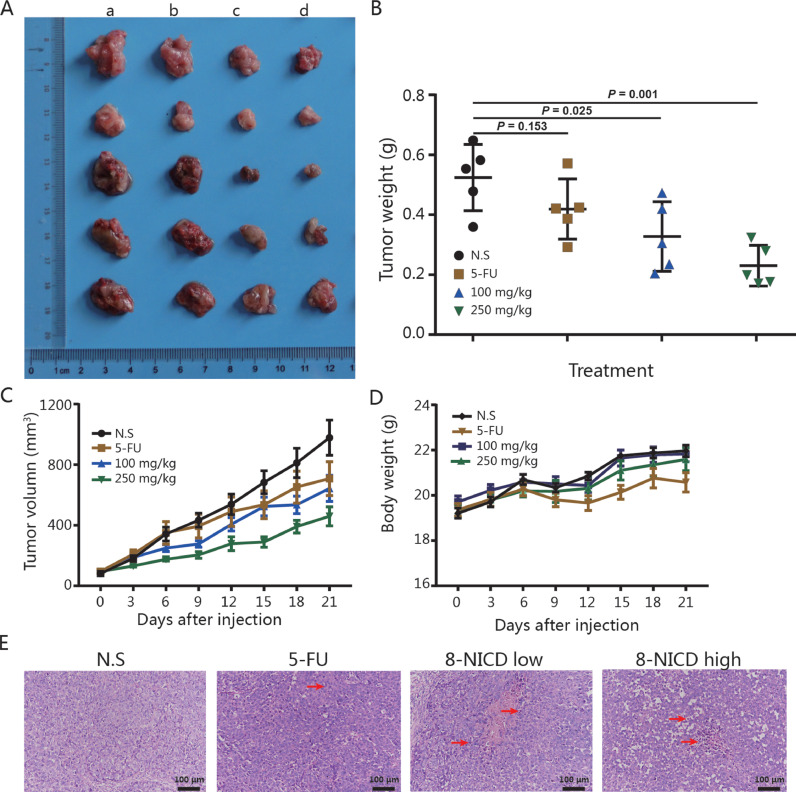
Human gastric carcinoma (GC) cells (MGC-803) were used to evaluate the effects of 8-NICD on cell proliferation and apoptosis. The in vivo action of 8-NICD in a nude mouse xenograft model was also investigated. The antioxidant activity of 8-NICD was evaluated using a 1,1-diphenyl-2-picrylhydrazyl radical scavenging assay.
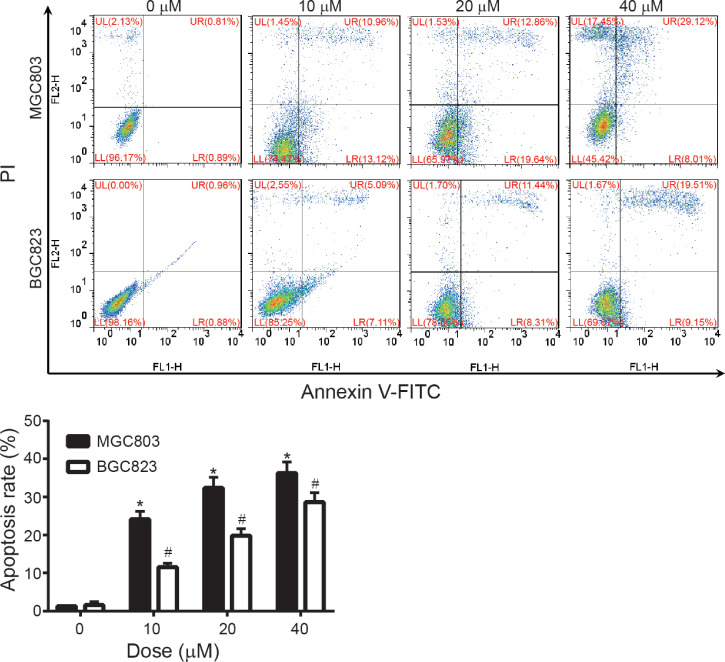
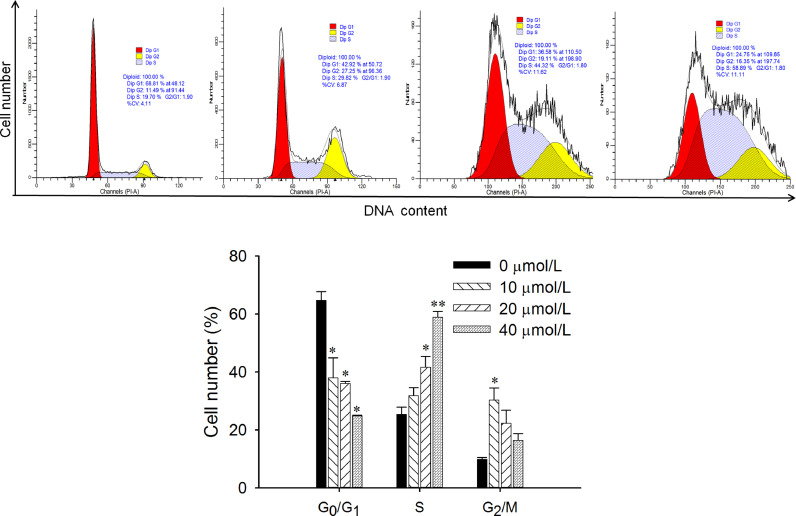
8-NICD exerted significant antitumor activity against several tumor cell lines with IC between 8.0 and 142.8 µM and was not toxic to healthy fibroblasts and epithelial cells at concentrations up to 100 µM. Moreover, 8-NICD strongly inhibited the proliferation of MGC803 cells without causing toxicity to human umbilical vein endothelial cells with a selectivity index of 19.2 and arrested MGC803 cells in the S phase. Further, the percentages of apoptotic MGC-803 and BGC823 cells increased in a concentration-dependent manner, and the expression of apoptosis regulator Bax increased, whereas that of Bcl-2 decreased in response to 8-NICD treatment. Further, 8-NICD significantly suppressed MGC-803 tumor growth in nude mice. In addition, 8-NICD was a potent scavenger of radicles in a 1,1-diphenyl-2-picrylhydrazyl (IC = 11.12 µM) antioxidant assay.
These results suggest that 8-NICD exerts significant antitumor effects on GC cells by inducing apoptosis and cell cycle arrest and is a promising candidate anti-GC drug. The particularly high sensitivity of MGC803 cells suggest that the potential of 8-NICD to treat GC should be further explored. ( 2021; 82:XXX-XXX).
异紫堇定(ICD)具有抗癌作用;然而,其欠佳的生物活性促使了异紫堇定衍生物的产生,包括8-氨基异紫堇定(8-NICD)。
本研究探讨8-NICD对多种肿瘤细胞系的抗肿瘤作用,以检测对8-NICD敏感的肿瘤,并研究其抑制肿瘤细胞生长的机制。
使用人胃癌(GC)细胞(MGC-803)评估8-NICD对细胞增殖和凋亡的影响。还研究了8-NICD在裸鼠异种移植模型中的体内作用。使用1,1-二苯基-2-苦基肼自由基清除试验评估8-NICD的抗氧化活性。
8-NICD对几种肿瘤细胞系具有显著的抗肿瘤活性,IC为8.0至142.8 μM,在浓度高达100 μM时对健康成纤维细胞和上皮细胞无毒。此外,8-NICD强烈抑制MGC803细胞的增殖,对人脐静脉内皮细胞无毒性,选择性指数为19.2,并使MGC803细胞停滞在S期。此外,凋亡的MGC-803和BGC823细胞百分比呈浓度依赖性增加,凋亡调节因子Bax的表达增加,而Bcl-2的表达在8-NICD处理后降低。此外,8-NICD显著抑制裸鼠体内MGC-803肿瘤的生长。此外,在1,1-二苯基-2-苦基肼(IC = 11.12 μM)抗氧化试验中,8-NICD是一种有效的自由基清除剂。
这些结果表明,8-NICD通过诱导凋亡和细胞周期停滞对GC细胞发挥显著的抗肿瘤作用,是一种有前景的抗GC候选药物。MGC803细胞的特别高敏感性表明应进一步探索8-NICD治疗GC的潜力。(2021;82:XXX-XXX)