Institute of Theoretical Computer Science, Graz University of Technology, Graz, Austria.
Laboratory of Computational Neuroscience, Ecole Polytechnique Fédérale de Lausanne (EPFL), Lausanne, Switzerland.
Elife. 2021 Jul 26;10:e65459. doi: 10.7554/eLife.65459.
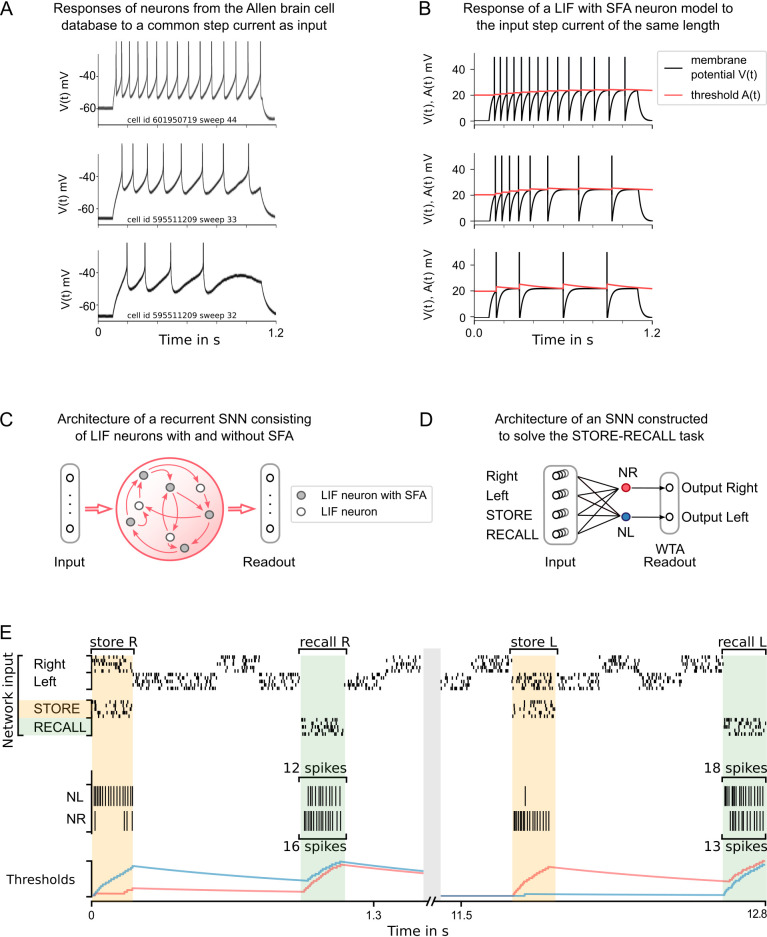
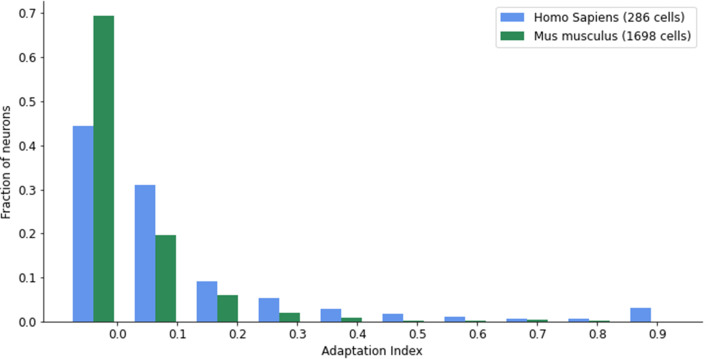
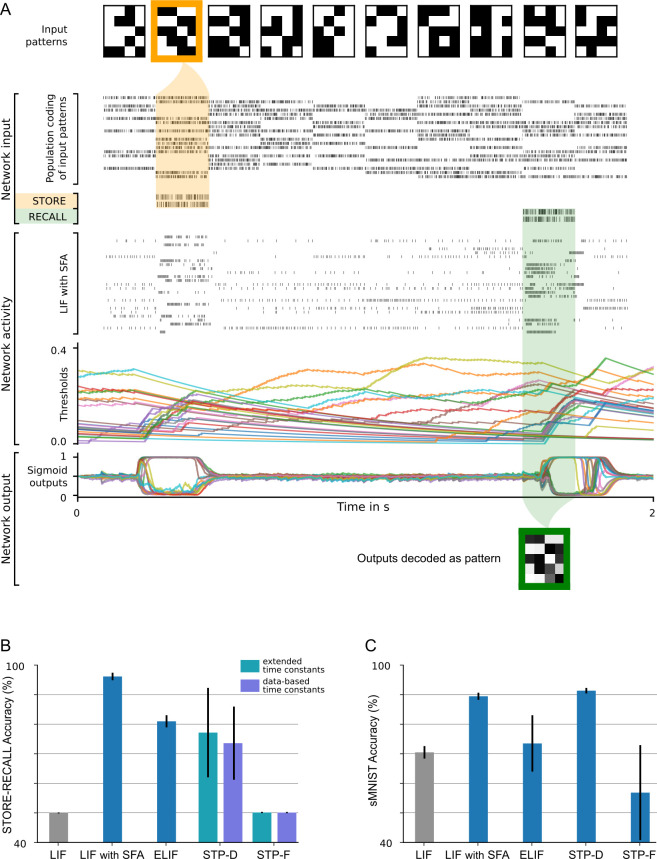
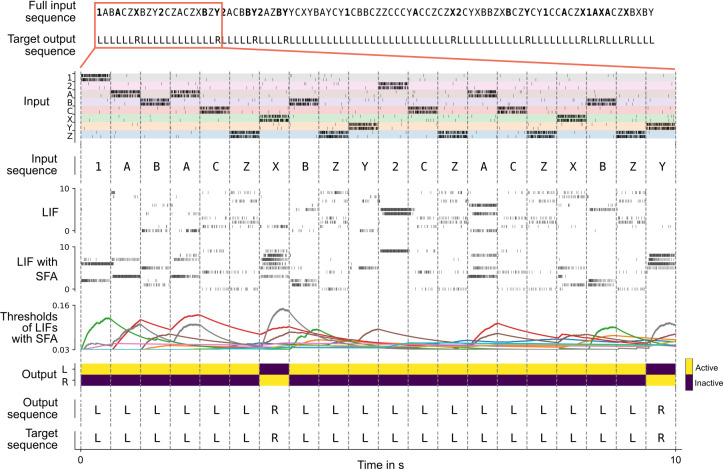
For solving tasks such as recognizing a song, answering a question, or inverting a sequence of symbols, cortical microcircuits need to integrate and manipulate information that was dispersed over time during the preceding seconds. Creating biologically realistic models for the underlying computations, especially with spiking neurons and for behaviorally relevant integration time spans, is notoriously difficult. We examine the role of spike frequency adaptation in such computations and find that it has a surprisingly large impact. The inclusion of this well-known property of a substantial fraction of neurons in the neocortex - especially in higher areas of the human neocortex - moves the performance of spiking neural network models for computations on network inputs that are temporally dispersed from a fairly low level up to the performance level of the human brain.
为了解决识别歌曲、回答问题或反转符号序列等任务,皮质微电路需要整合和处理在前几秒分散的信息。创建用于基础计算的具有生物现实性的模型,特别是对于具有尖峰神经元和行为相关的整合时间跨度的模型,是非常困难的。我们研究了尖峰频率适应在这些计算中的作用,发现它具有惊人的影响。将皮质中相当一部分神经元的这种众所周知的特性——特别是在人类大脑的高级区域——纳入到用于处理时间上分散的网络输入的尖峰神经网络模型中,会将其性能从相当低的水平提升到人类大脑的水平。