
HELLS 作为一个预后不良的生物标志物,其下调保留了胰腺癌的恶性表型。
HELLS serves as a poor prognostic biomarker and its downregulation reserves the malignant phenotype in pancreatic cancer.
机构信息
Department of Integrative Oncology, Fudan University Shanghai Cancer Center, 270 Dong An Road, Shanghai, 200032, China.
Department of Oncology, Shanghai Medical College, Fudan University, Shanghai, 200032, China.
出版信息
BMC Med Genomics. 2021 Jul 27;14(1):189. doi: 10.1186/s12920-021-01043-5.
BACKGROUND
SMARCAs, belonged to SWI/SNF2 subfamilies, are critical to cellular processes due to their modulation of chromatin remodeling processes. Although SMARCAs are implicated in the tumor progression of various cancer types, our understanding of how those members affect pancreatic carcinogenesis is quite limited and improving this requires bioinformatics analysis and biology approaches.
METHODS
To address this issue, we investigated the transcriptional and survival data of SMARCAs in patients with pancreatic cancer using ONCOMINE, GEPIA, Human Protein Atlas, and Kaplan-Meier plotter. We further verified the effect of significant biomarker on pancreatic cancer in vitro through functional experiment.
RESULTS
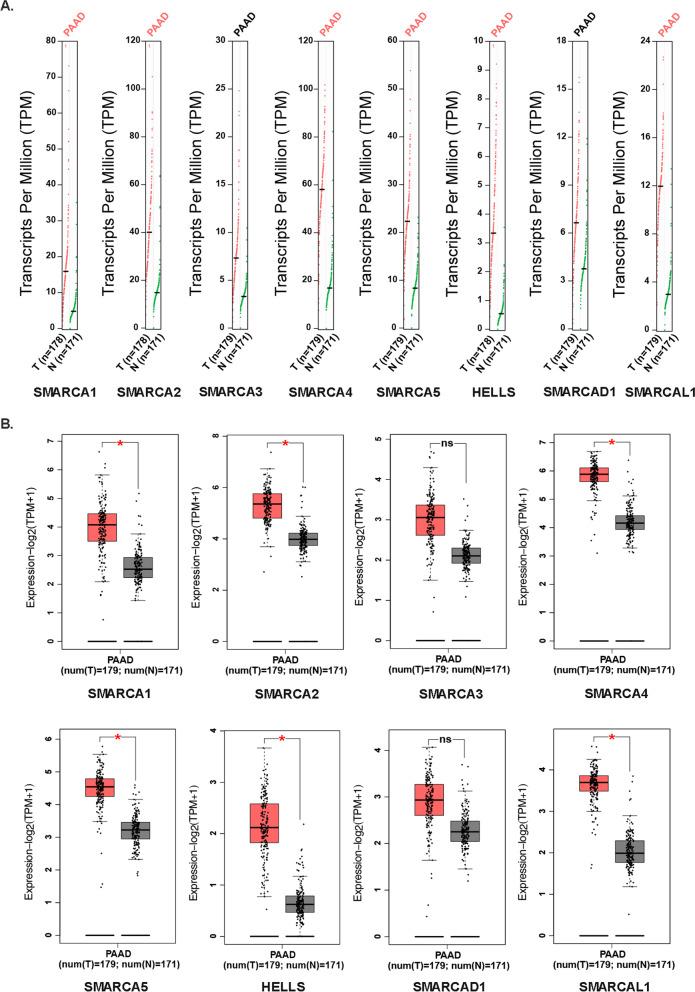
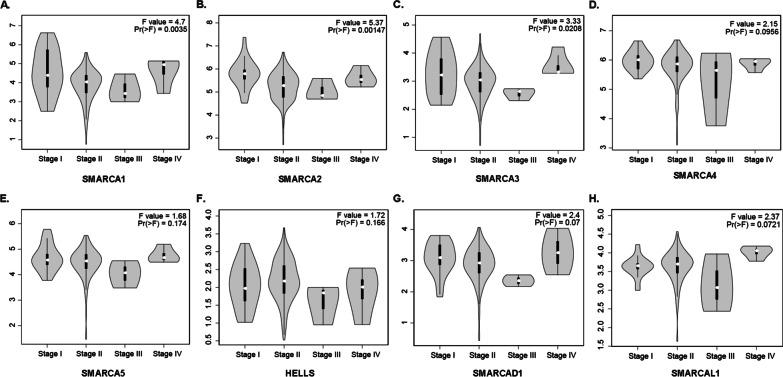
The Kaplan-Meier curve and log-rank test analyses showed a positive correlation between SMARCA1/2/3/SMARCAD1 and patients' overall survival (OS). On the other hand, mRNA expression of SMARCA6 (also known as HELLS) showed a negative correlation with OS. Meanwhile, no significant correlation was found between SMARCA4/5/SMARCAL1 and tumor stages and OS. The knockdown of HELLS impaired the colony formation ability, and inhibited pancreatic cancer cell proliferation by arresting cells at S phase.
CONCLUSIONS
Data mining analysis and cell function research demonstrated that HELLS played oncogenic roles in the development and progression of pancreatic cancer, and serve as a poor prognostic biomarker for pancreatic cancer. Our work laid a foundation for further clinical applications of HELLS in pancreatic cancer.
背景
SMARCAs 属于 SWI/SNF2 亚家族,由于其对染色质重塑过程的调节,对细胞过程至关重要。虽然 SMARCAs 与多种癌症类型的肿瘤进展有关,但我们对这些成员如何影响胰腺癌发生的理解相当有限,需要通过生物信息学分析和生物学方法来提高这方面的认识。
方法
为了解决这个问题,我们使用 ONCOMINE、GEPIA、Human Protein Atlas 和 Kaplan-Meier plotter 研究了 SMARCAs 在胰腺癌患者中的转录和生存数据。我们还通过功能实验进一步验证了显著生物标志物对胰腺癌的影响。
结果
Kaplan-Meier 曲线和对数秩检验分析显示,SMARCA1/2/3/SMARCAD1 与患者的总生存期(OS)呈正相关。另一方面,SMARCA6(也称为 HELLS)的 mRNA 表达与 OS 呈负相关。同时,SMARCA4/5/SMARCAL1 与肿瘤分期和 OS 之间没有显著相关性。HELLS 的敲低削弱了集落形成能力,并通过将细胞阻滞在 S 期来抑制胰腺癌细胞增殖。
结论
数据挖掘分析和细胞功能研究表明,HELLS 在胰腺癌的发生和发展中发挥致癌作用,是胰腺癌的不良预后生物标志物。我们的工作为进一步将 HELLS 应用于胰腺癌的临床提供了基础。




 Zotero 插件