• 文献检索
  • 文档翻译
  • 深度研究
  • 学术资讯
  • Suppr Zotero 插件Zotero 插件
  • 邀请有礼
  • 套餐&价格
  • 历史记录
应用&插件
Suppr Zotero 插件Zotero 插件浏览器插件Mac 客户端Windows 客户端微信小程序
定价
高级版会员购买积分包购买API积分包
服务
文献检索文档翻译深度研究API 文档MCP 服务
关于我们
关于 Suppr公司介绍联系我们用户协议隐私条款
关注我们

Suppr 超能文献

核心技术专利:CN118964589B侵权必究
粤ICP备2023148730 号-1Suppr @ 2026

文献检索

告别复杂PubMed语法,用中文像聊天一样搜索,搜遍4000万医学文献。AI智能推荐,让科研检索更轻松。

立即免费搜索

文件翻译

保留排版,准确专业,支持PDF/Word/PPT等文件格式,支持 12+语言互译。

免费翻译文档

深度研究

AI帮你快速写综述,25分钟生成高质量综述,智能提取关键信息,辅助科研写作。

立即免费体验

术中措施降低微创操作过程中 COVID-19 传播风险:对各学会推荐意见的系统评价和关键评估。

Intraoperative Measures to Reduce the Risk of COVID-19 Transmission During Minimally Invasive Procedures: A Systematic Review and Critical Appraisal of Societies' Recommendations.

机构信息

Medical Affairs, Ethicon Inc., Cincinnati, OH.

出版信息

Surg Laparosc Endosc Percutan Tech. 2021 Jul 28;31(6):765-777. doi: 10.1097/SLE.0000000000000972.

DOI:10.1097/SLE.0000000000000972
PMID:34320592
原文链接:https://pmc.ncbi.nlm.nih.gov/articles/PMC8635252/
Abstract

BACKGROUND

The coronavirus 2019 pandemic and the hypothetical risk of virus transmission through aerosolized CO2 or surgical smoke produced during minimally invasive surgery (MIS) procedures have prompted societies to issue recommendations on measures to reduce this risk. The aim of this systematic review is to identify, summarize and critically appraise recommendations from surgical societies on intraoperative measures to reduce the risk of severe acute respiratory syndrome coronavirus 2 transmission to the operative room (OR) staff during MIS.

METHODS

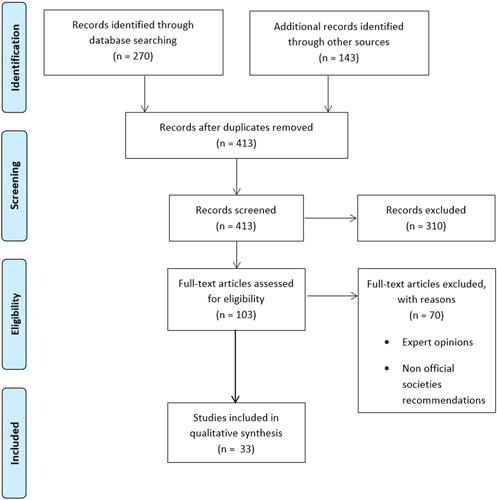
Medline, Embase, and Google Scholar databases were searched using a search strategy or free terms. The search was supplemented with searches of additional relevant records on coronavirus 2019 resource websites from Surgical Associations and Societies. Recommendations published by surgical societies that reported on the intraoperative methods to reduce the risk of severe acute respiratory syndrome coronavirus 2 transmission to the OR staff during MIS were also reviewed for inclusion. Expert opinion articles were excluded. A preliminary synthesis was performed of the extracted data to categorize and itemize the different types of recommendations. The results were then summarized in a narrative synthesis.

RESULTS

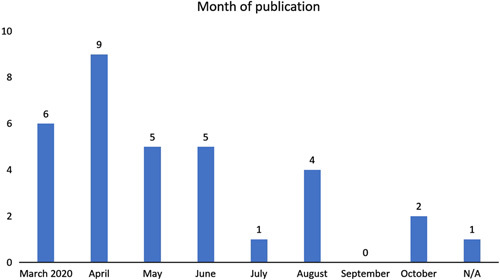
Thirty-three recommendation were included in the study. Most recommendations were targeted to general surgery (13) and gynecology (8). Areas covered by the documents were recommendations on performance of laparoscopic/robotic surgery versus open approach (28 documents), selection of surgical staff (13), management of pneumoperitoneum (33), use of energy devices (20), and management of surgical smoke and pneumoperitoneum desufflation (33) with varying degree of consensus on the specific recommendations among the documents.

CONCLUSIONS

While some of the early recommendations advised against the use of MIS, they were not strictly based on the available scientific evidence. After further consideration of the literature and of the well-known benefits of laparoscopy to the patient, later recommendations shifted to encouraging the use of MIS as long as adequate precautions could be taken to protect the safety of the OR staff. The release and implementation of recommendations should be based on evidence-based practices that allows health care systems to provide safe surgical and medical assistance.

摘要

背景

2019 年冠状病毒病大流行以及微创外科手术(MIS)过程中产生的气溶胶化二氧化碳或手术烟雾传播病毒的假设风险促使各协会发布了降低这种风险的措施建议。本系统评价的目的是确定、总结和批判性评估外科协会关于减少 MIS 术中手术室(OR)工作人员感染严重急性呼吸综合征冠状病毒 2 风险的术中措施的建议。

方法

使用搜索策略或自由词搜索 Medline、Embase 和 Google Scholar 数据库。还通过搜索外科协会和学会的 2019 年冠状病毒资源网站上的其他相关记录对搜索进行了补充。还审查了外科协会发表的报告减少 MIS 期间严重急性呼吸综合征冠状病毒 2 向 OR 工作人员传播风险的术中方法的建议,以纳入研究。排除专家意见文章。对提取的数据进行初步综合,对不同类型的建议进行分类和分项。然后以叙述性综合的方式总结结果。

结果

本研究共纳入 33 项建议。大多数建议针对普通外科(13 项)和妇科(8 项)。文件涵盖的领域包括腹腔镜/机器人手术与开放手术的选择(28 篇文献)、手术人员的选择(13 篇)、气腹管理(33 篇)、能量器械的使用(20 篇)以及手术烟雾和气腹放气的管理(33 篇),这些文件对具体建议的共识程度各不相同。

结论

尽管早期的一些建议反对使用 MIS,但它们并非严格基于现有科学证据。在进一步考虑文献和腹腔镜对患者的明显益处后,后来的建议转向鼓励使用 MIS,只要能够采取充分的预防措施来保护 OR 工作人员的安全。建议的发布和实施应基于循证实践,使医疗保健系统能够提供安全的手术和医疗援助。
https://cdn.ncbi.nlm.nih.gov/pmc/blobs/1e43/8635252/b46b849c0004/sle-31-765-g002.jpg
https://cdn.ncbi.nlm.nih.gov/pmc/blobs/1e43/8635252/d9c662c9e97a/sle-31-765-g001.jpg
https://cdn.ncbi.nlm.nih.gov/pmc/blobs/1e43/8635252/b46b849c0004/sle-31-765-g002.jpg
https://cdn.ncbi.nlm.nih.gov/pmc/blobs/1e43/8635252/d9c662c9e97a/sle-31-765-g001.jpg
https://cdn.ncbi.nlm.nih.gov/pmc/blobs/1e43/8635252/b46b849c0004/sle-31-765-g002.jpg

相似文献

1
Intraoperative Measures to Reduce the Risk of COVID-19 Transmission During Minimally Invasive Procedures: A Systematic Review and Critical Appraisal of Societies' Recommendations.术中措施降低微创操作过程中 COVID-19 传播风险:对各学会推荐意见的系统评价和关键评估。
Surg Laparosc Endosc Percutan Tech. 2021 Jul 28;31(6):765-777. doi: 10.1097/SLE.0000000000000972.
2
A critical review of the safety of minimally invasive surgery in the era of COVID-19.关于 COVID-19 时代微创外科安全性的批判性回顾。
Minim Invasive Ther Allied Technol. 2022 Mar;31(3):370-376. doi: 10.1080/13645706.2020.1838549. Epub 2020 Oct 27.
3
Society of Robotic Surgery review: recommendations regarding the risk of COVID-19 transmission during minimally invasive surgery.机器人外科学会综述:关于微创手术期间 COVID-19 传播风险的建议。
BJU Int. 2020 Aug;126(2):225-234. doi: 10.1111/bju.15105.
4
Outreach and Influence of Surgical Societies' Recommendations on Minimally Invasive Surgery During the COVID-19 Pandemic-An Anonymized International Urologic Expert Inquiry.外科协会建议在 COVID-19 大流行期间开展微创手术的推广和影响-一项匿名国际泌尿科专家调查。
Urology. 2020 Nov;145:73-78. doi: 10.1016/j.urology.2020.07.043. Epub 2020 Aug 8.
5
[Robotic and laparosocpic urological surgery during COVID-19 pandemia.].[新型冠状病毒肺炎大流行期间的机器人及腹腔镜泌尿外科手术。]
Arch Esp Urol. 2020 Jun;73(5):463-470.
6
Intraoperative aerosol viral transmission in minimally invasive surgery: a scoping review and impact on clinical guidelines and practice during the onset of the coronavirus disease 2019 (COVID-19) pandemic.微创手术中的术中气溶胶病毒传播:在 2019 年冠状病毒病(COVID-19)大流行期间对临床指南和实践的影响的范围综述。
BJU Int. 2021 Mar;127(3):349-360. doi: 10.1111/bju.15247. Epub 2020 Oct 4.
7
Risk of Virus Contamination Through Surgical Smoke During Minimally Invasive Surgery: A Systematic Review of the Literature on a Neglected Issue Revived in the COVID-19 Pandemic Era.微创手术中外科烟雾导致病毒污染的风险:COVID-19 大流行时代重新引发的被忽视问题的文献系统综述。
Eur Urol Focus. 2020 Sep 15;6(5):1058-1069. doi: 10.1016/j.euf.2020.05.021. Epub 2020 Jun 5.
8
What Is the Appropriate Use of Laparoscopy over Open Procedures in the Current COVID-19 Climate?在当前 COVID-19 大流行背景下,腹腔镜相对于开放性手术的适当应用是什么?
J Gastrointest Surg. 2020 Jul;24(7):1686-1691. doi: 10.1007/s11605-020-04592-9. Epub 2020 Apr 13.
9
Folic acid supplementation and malaria susceptibility and severity among people taking antifolate antimalarial drugs in endemic areas.在流行地区,服用抗叶酸抗疟药物的人群中,叶酸补充剂与疟疾易感性和严重程度的关系。
Cochrane Database Syst Rev. 2022 Feb 1;2(2022):CD014217. doi: 10.1002/14651858.CD014217.
10
International Society for Gynecologic Endoscopy (ISGE) guidelines and recommendations on gynecological endoscopy during the evolutionary phases of the SARS-CoV-2 pandemic.国际妇科内镜学会(ISGE)关于 SARS-CoV-2 大流行进化阶段妇科内镜检查的指南和建议。
Eur J Obstet Gynecol Reprod Biol. 2020 Oct;253:133-140. doi: 10.1016/j.ejogrb.2020.08.039. Epub 2020 Aug 26.

引用本文的文献

1
Reflections on Surgical Practices in Gynecologic Oncology during the COVID-19 Pandemic: Insights from Dogan's Survey.对新冠疫情期间妇科肿瘤外科手术实践的思考:多安调查的见解
Asian Pac J Cancer Prev. 2024 Sep 1;25(9):2963-2965. doi: 10.31557/APJCP.2024.25.9.2963.
2
Characterisation and mitigation of gas leaks at laparoscopy: an international prospective, multi-center cohort clinical trial.腹腔镜检查中气体泄漏的特征分析与缓解:一项国际前瞻性多中心队列临床试验
Surg Endosc. 2024 Jan;38(1):426-436. doi: 10.1007/s00464-023-10536-6. Epub 2023 Nov 20.
3
The impact of partial and complete lockdown during the COVID-19 pandemic on acute surgical services: a retrospective cohort study.
《COVID-19 大流行期间部分和完全封锁对急性外科服务的影响:一项回顾性队列研究》
Eur J Med Res. 2023 Jan 7;28(1):13. doi: 10.1186/s40001-022-00971-x.
4
Robotic Abdominal Surgery and COVID-19: A Systematic Review of Published Literature and Peer-Reviewed Guidelines during the SARS-CoV-2 Pandemic.机器人腹部手术与COVID-19:对SARS-CoV-2大流行期间已发表文献和同行评审指南的系统评价
J Clin Med. 2022 May 24;11(11):2957. doi: 10.3390/jcm11112957.