Wang Huilei, Chen James, Jandu Sandeep, Melucci Sean, Savage William, Nandakumar Kavitha, Kang Sara K, Barreto-Ortiz Sebastian, Poe Alan, Rastogi Shivam, Bauer Maria, Steppan Jochen, Santhanam Lakshmi
Department of Biomedical Engineering, Johns Hopkins University, Baltimore, MD, USA.
Department of Anesthesiology & Critical Care Medicine, Johns Hopkins University, Baltimore, MD, USA.
Cell Death Discov. 2021 Jul 29;7(1):197. doi: 10.1038/s41420-021-00543-8.
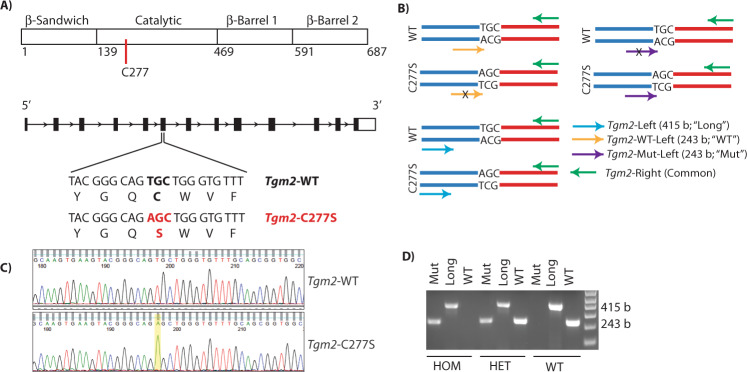
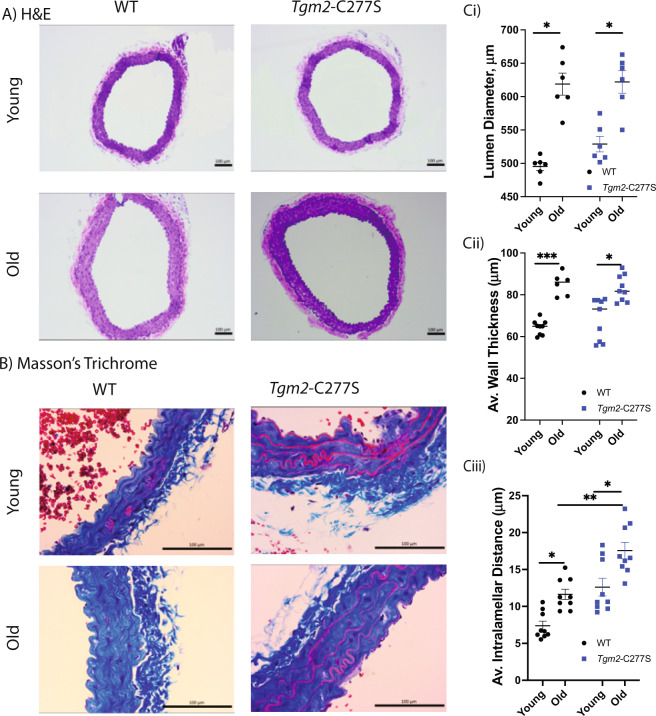
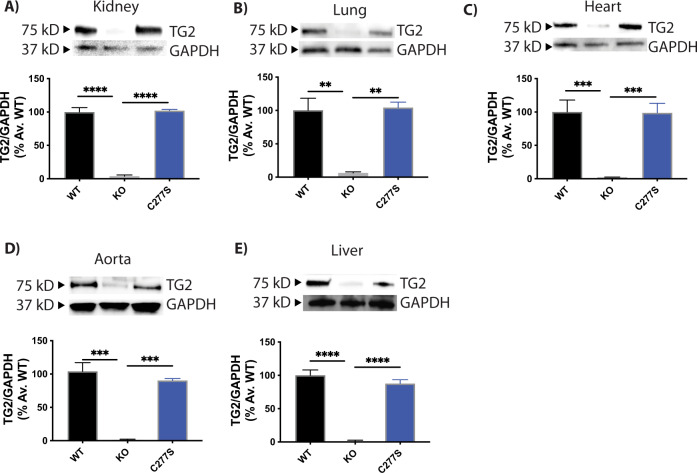
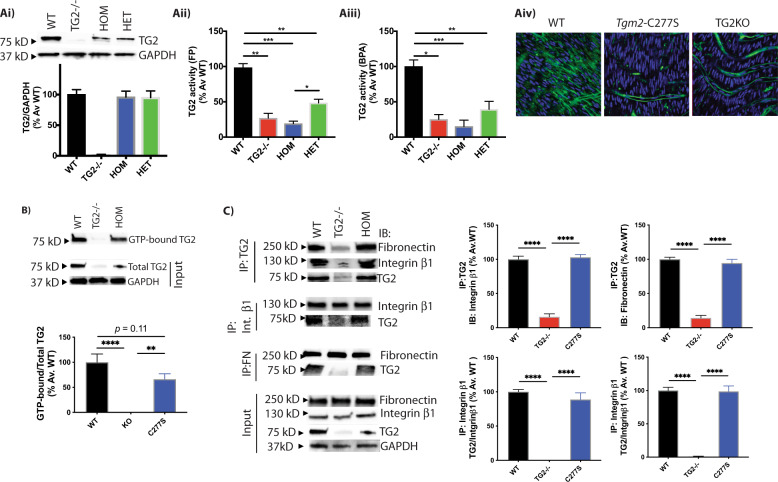
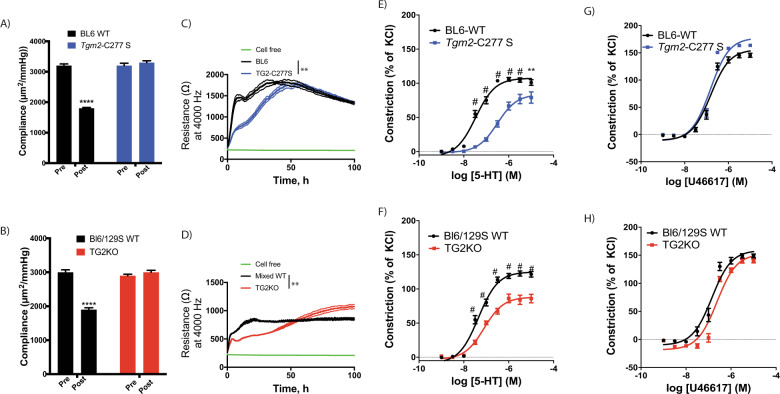
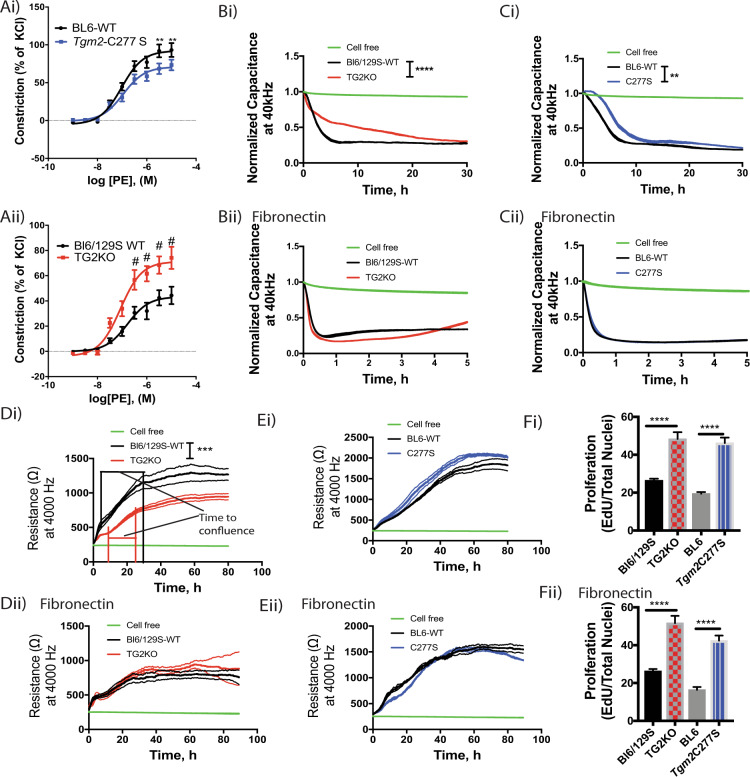
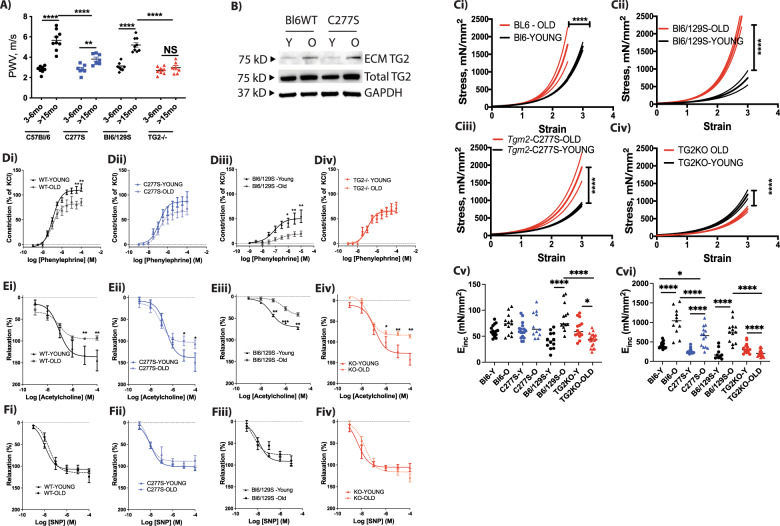
Tissue transglutaminase (TG2), a multifunctional protein of the transglutaminase family, has putative transamidation-independent functions in aging-associated vascular stiffening and dysfunction. Developing preclinical models will be critical to fully understand the physiologic relevance of TG2's transamidation-independent activity and to identify the specific function of TG2 for therapeutic targeting. Therefore, in this study, we harnessed CRISPR-Cas9 gene editing technology to introduce a mutation at cysteine 277 in the active site of the mouse Tgm2 gene. Heterozygous and homozygous Tgm2-C277S mice were phenotypically normal and were born at the expected Mendelian frequency. TG2 protein was ubiquitously expressed in the Tgm2-C277S mice at levels similar to those of wild-type (WT) mice. In the Tgm2-C277S mice, TG2 transglutaminase function was successfully obliterated, but the transamidation-independent functions ascribed to GTP, fibronectin, and integrin binding were preserved. In vitro, a remodeling stimulus led to the significant loss of vascular compliance in WT mice, but not in the Tgm2-C277S or TG2 mice. Vascular stiffness increased with age in WT mice, as measured by pulse-wave velocity and tensile testing. Tgm2-C277S mice were protected from age-associated vascular stiffening, and TG2 knockout yielded further protection. Together, these studies show that TG2 contributes significantly to overall vascular modulus and vasoreactivity independent of its transamidation function, but that transamidation activity is a significant cause of vascular matrix stiffening during aging. Finally, the Tgm2-C277S mice can be used for in vivo studies to explore the transamidation-independent roles of TG2 in physiology and pathophysiology.
组织转谷氨酰胺酶(TG2)是转谷氨酰胺酶家族的一种多功能蛋白质,在衰老相关的血管硬化和功能障碍中具有假定的非转酰胺化功能。建立临床前模型对于充分理解TG2非转酰胺化活性的生理相关性以及确定TG2的特定功能以进行治疗靶向至关重要。因此,在本研究中,我们利用CRISPR-Cas9基因编辑技术在小鼠Tgm2基因的活性位点半胱氨酸277处引入突变。杂合和纯合的Tgm2-C277S小鼠表型正常,出生频率符合预期孟德尔频率。TG2蛋白在Tgm2-C277S小鼠中广泛表达,水平与野生型(WT)小鼠相似。在Tgm2-C277S小鼠中,TG2转谷氨酰胺酶功能成功消除,但归因于GTP、纤连蛋白和整合素结合的非转酰胺化功能得以保留。在体外,重塑刺激导致WT小鼠血管顺应性显著丧失,但Tgm2-C277S或TG2小鼠未出现这种情况。通过脉搏波速度和拉伸试验测量,WT小鼠血管硬度随年龄增加。Tgm2-C277S小鼠可免受年龄相关的血管硬化影响,TG2基因敲除提供了进一步的保护。总之,这些研究表明,TG2在不依赖其转酰胺化功能的情况下对整体血管模量和血管反应性有显著贡献,但转酰胺化活性是衰老过程中血管基质硬化的重要原因。最后,Tgm2-C277S小鼠可用于体内研究,以探索TG2在生理和病理生理中的非转酰胺化作用。