Department of Economics & Finance, University of Iowa, Iowa City, Iowa, United States of America.
Department of Industrial and Systems Engineering, University of Iowa, Iowa City, Iowa, United States of America.
PLoS One. 2021 Jul 30;16(7):e0254785. doi: 10.1371/journal.pone.0254785. eCollection 2021.
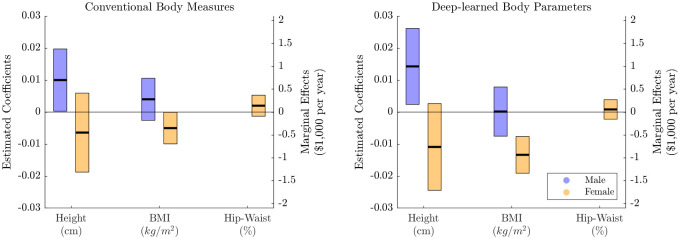
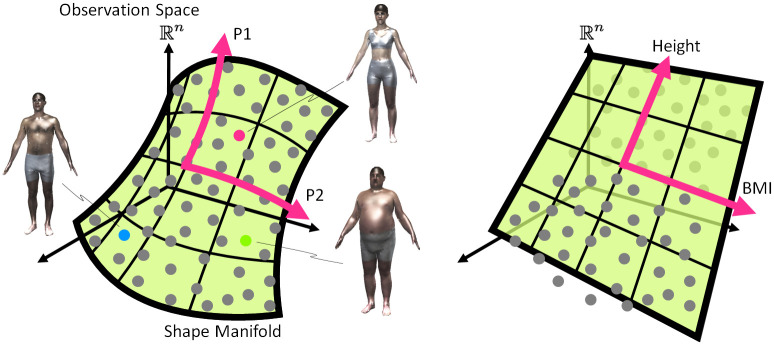
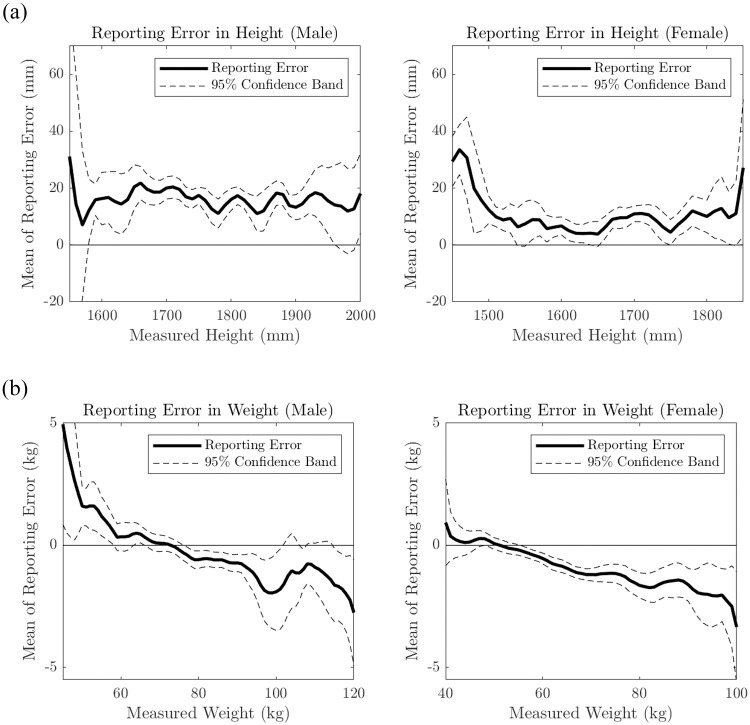
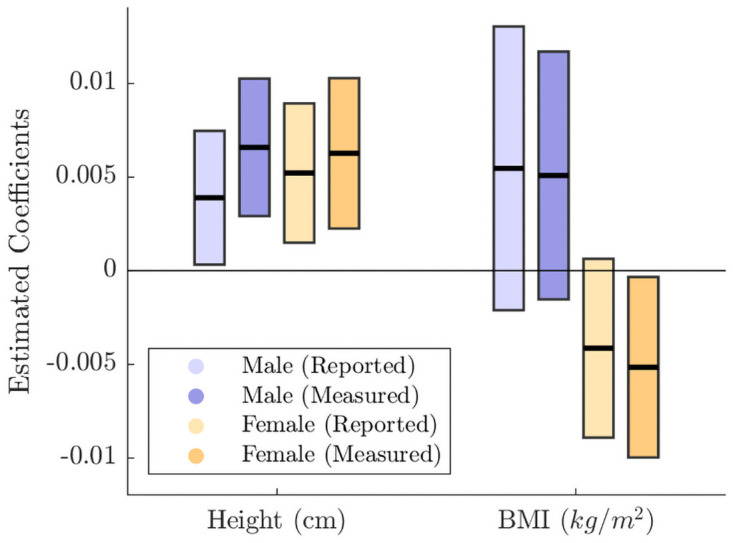
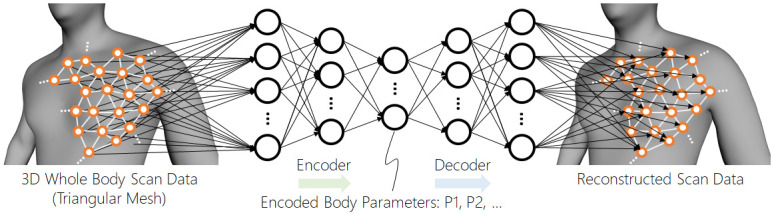
The association between physical appearance and income has been of central interest in social science. However, most previous studies often measured physical appearance using classical proxies from subjective opinions based on surveys. In this study, we use novel data, called CAESAR, which contains three-dimensional (3D) whole-body scans to mitigate possible reporting and measurement errors. We demonstrate the existence of significant nonclassical reporting errors in the reported heights and weights by comparing them with measured counterparts, and show that these discrete measurements are too sparse to provide a complete description of the body shape. Instead, we use a graphical autoencoder to obtain intrinsic features, consisting of human body shapes directly from 3D scans and estimate the relationship between body shapes and family income. We also take into account a possible issue of endogenous body shapes using proxy variables and control functions. The estimation results reveal a statistically significant relationship between physical appearance and family income and that these associations differ across genders. This supports the hypothesis on the physical attractiveness premium in labor market outcomes and its heterogeneity across genders.
外貌与收入之间的关系一直是社会科学关注的核心问题。然而,大多数先前的研究通常使用基于调查的主观意见的经典代理来衡量外貌。在这项研究中,我们使用了称为 CAESAR 的新数据,其中包含三维(3D)全身扫描,以减轻可能存在的报告和测量误差。我们通过将报告的身高和体重与测量值进行比较,证明了报告的身高和体重存在显著的非经典报告误差,并且表明这些离散测量值过于稀疏,无法完整描述身体形状。相反,我们使用图形自动编码器直接从 3D 扫描中获取内在特征,包括人体形状,并估计身体形状与家庭收入之间的关系。我们还考虑了使用代理变量和控制函数的可能的内生身体形状问题。估计结果表明,外貌与家庭收入之间存在统计学上显著的关系,并且这些关联在性别之间存在差异。这支持了劳动力市场结果中身体吸引力溢价的假设及其在性别之间的异质性。