Department of Biology, Stanford University, Stanford, CA, USA.
Department of Biology, Stanford University, Stanford, CA, USA.
Mutat Res. 2021 Jul-Dec;823:111758. doi: 10.1016/j.mrfmmm.2021.111758. Epub 2021 Jul 17.
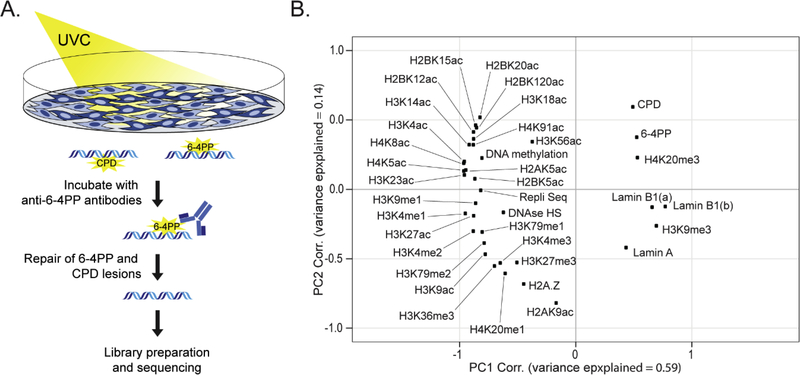
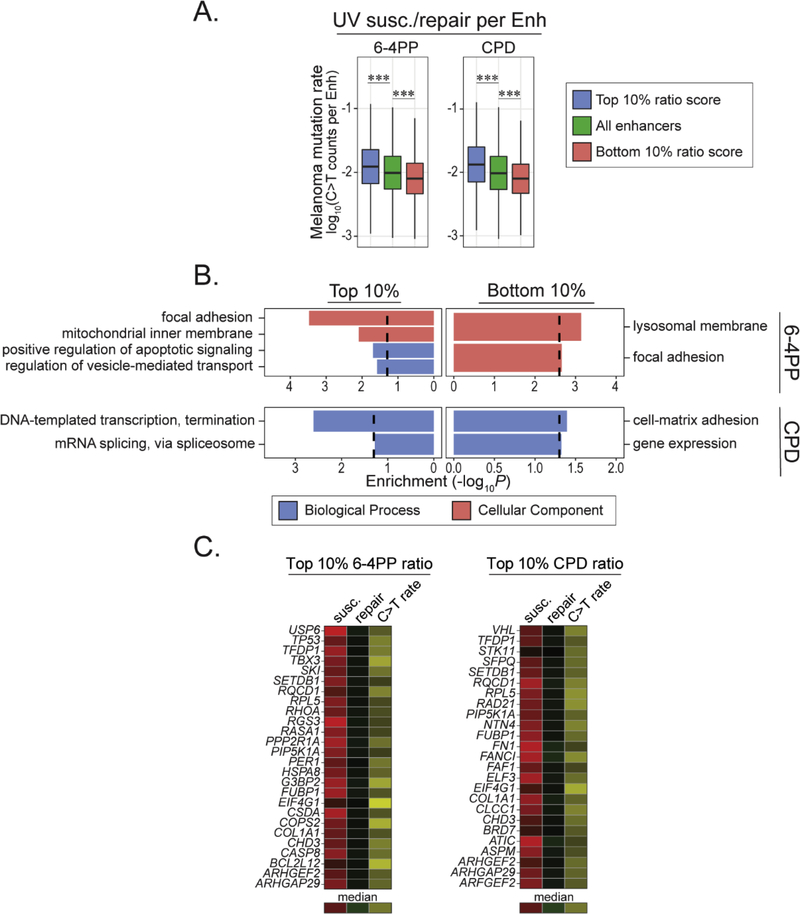
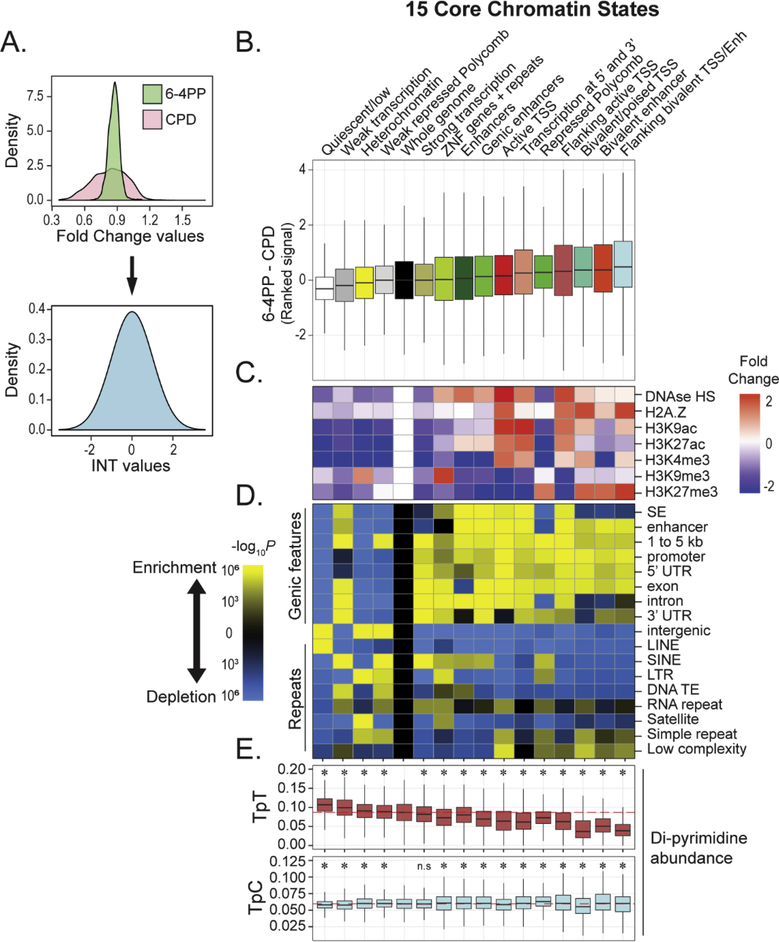
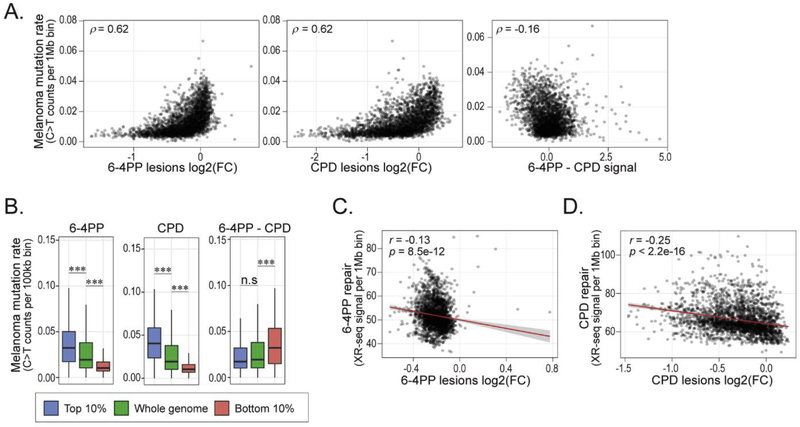
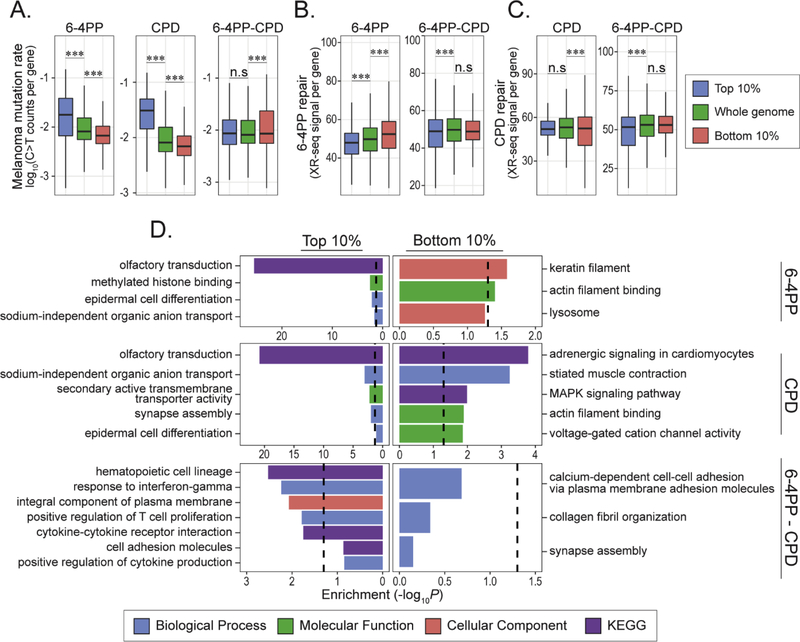
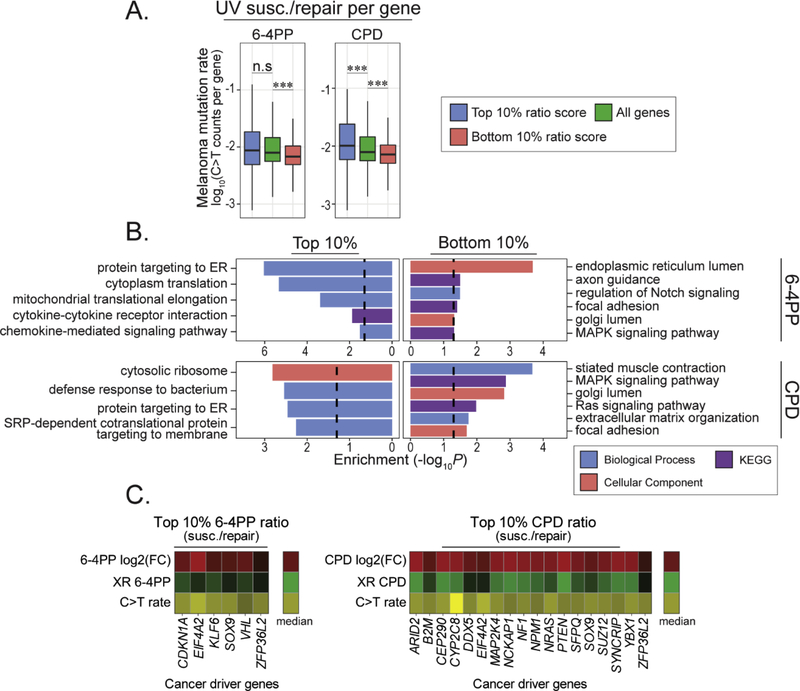
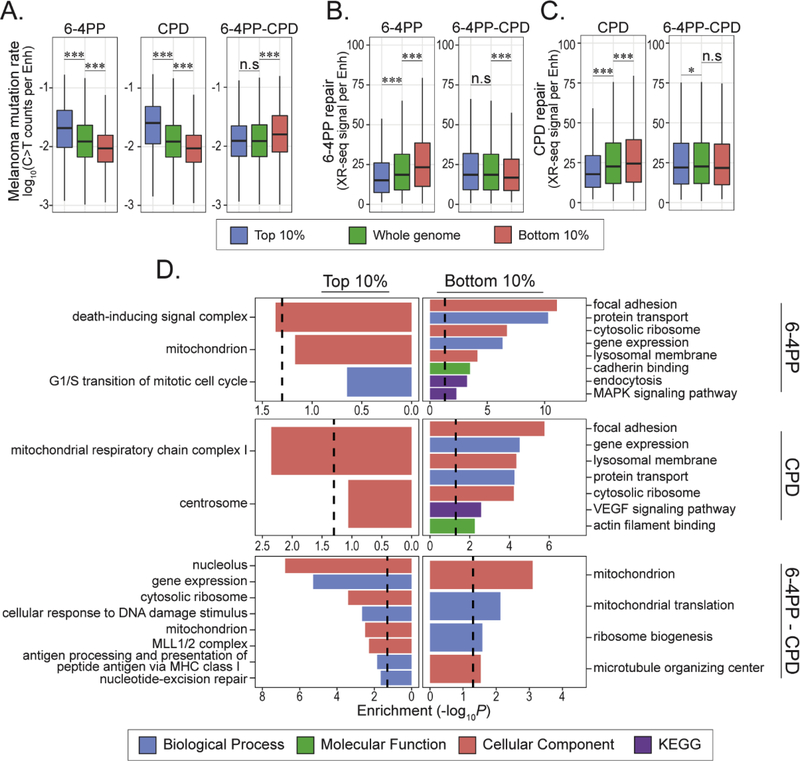
Exposure to the ultraviolet (UV) radiation in sunlight creates DNA lesions, which if left unrepaired can induce mutations and contribute to skin cancer. The two most common UV-induced DNA lesions are the cis-syn cyclobutane pyrimidine dimers (CPDs) and pyrimidine (6-4) pyrimidone photoproducts (6-4PPs), both of which can initiate mutations. Interestingly, mutation frequency across the genomes of many cancers is heterogenous with significant increases in heterochromatin. Corresponding increases in UV lesion susceptibility and decreases in repair are observed in heterochromatin versus euchromatin. However, the individual contributions of CPDs and 6-4PPs to mutagenesis have not been systematically examined in specific genomic and epigenomic contexts. In this study, we compared genome-wide maps of 6-4PP and CPD lesion abundances in primary cells and conducted comprehensive analyses to determine the genetic and epigenetic features associated with susceptibility. Overall, we found a high degree of similarity between 6-4PP and CPD formation, with an enrichment of both in heterochromatin regions. However, when examining the relative levels of the two UV lesions, we found that bivalent and Polycomb-repressed chromatin states were uniquely more susceptible to 6-4PPs. Interestingly, when comparing UV susceptibility and repair with melanoma mutation frequency in these regions, disparate patterns were observed in that susceptibility was not always inversely associated with repair and mutation frequency. Functional enrichment analysis hint at mechanisms of negative selection for these regions that are essential for cell viability, immune function and induce cell death when mutated. Ultimately, these results reveal both the similarities and differences between UV-induced lesions that contribute to melanoma.
暴露在阳光中的紫外线 (UV) 会造成 DNA 损伤,如果这些损伤得不到修复,可能会导致突变,并促成皮肤癌。两种最常见的由 UV 引起的 DNA 损伤是顺式-同型嘧啶二聚体 (CPDs) 和嘧啶 (6-4) 嘧啶酮光产物 (6-4PPs),它们都可以引发突变。有趣的是,许多癌症基因组中的突变频率是不均匀的,异染色质显著增加。与常染色质相比,异染色质中观察到 UV 损伤易感性增加和修复减少。然而,在特定的基因组和表观基因组背景下,CPDs 和 6-4PPs 对诱变的个体贡献尚未得到系统研究。在这项研究中,我们比较了初级细胞中 6-4PP 和 CPD 损伤丰度的全基因组图谱,并进行了全面分析,以确定与易感性相关的遗传和表观遗传特征。总的来说,我们发现 6-4PP 和 CPD 形成之间具有高度的相似性,两者在异染色质区域都有富集。然而,当我们检查这两种 UV 损伤的相对水平时,我们发现双价和多梳抑制染色质状态对 6-4PPs 具有独特的易感性。有趣的是,当我们将这些区域的 UV 易感性和修复与黑色素瘤突变频率进行比较时,我们观察到了不同的模式,即易感性并不总是与修复和突变频率呈负相关。功能富集分析暗示了这些区域的负选择机制,这些机制对于细胞存活、免疫功能至关重要,并且当突变时会诱导细胞死亡。最终,这些结果揭示了导致黑色素瘤的由 UV 引起的损伤之间的相似性和差异性。