Department of Anatomy and Neurobiology, Hearing Research Focus Group, Northeast Ohio Medical University, Rootstown, OH, United States.
Brain Health Research Institute, Kent State University, Kent, OH, United States.
Front Neural Circuits. 2021 Jul 15;15:715369. doi: 10.3389/fncir.2021.715369. eCollection 2021.
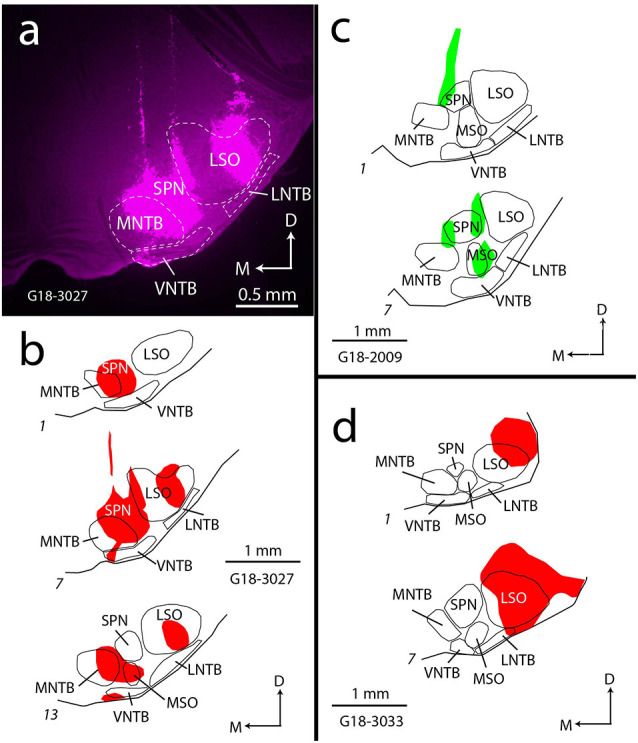
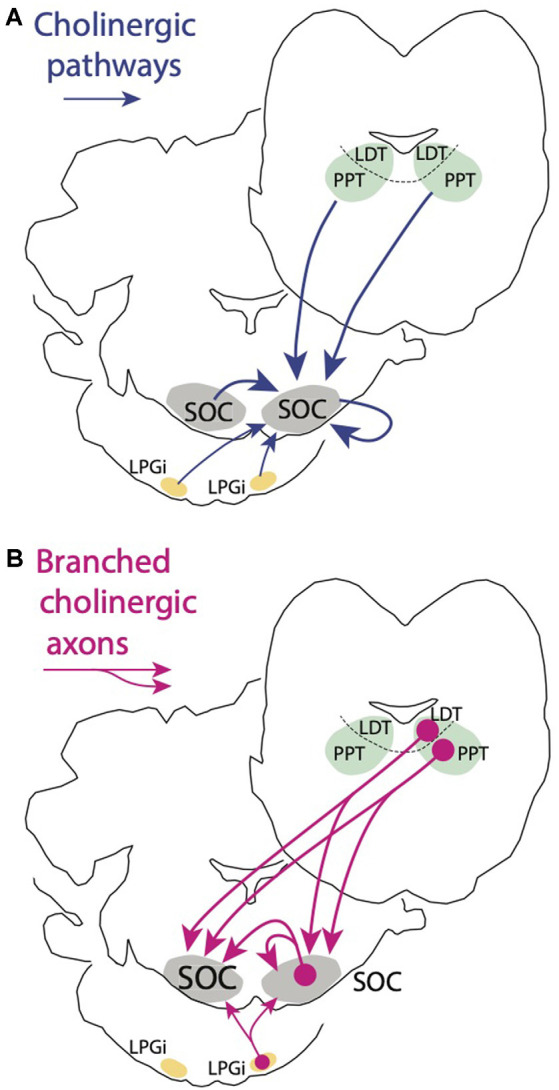
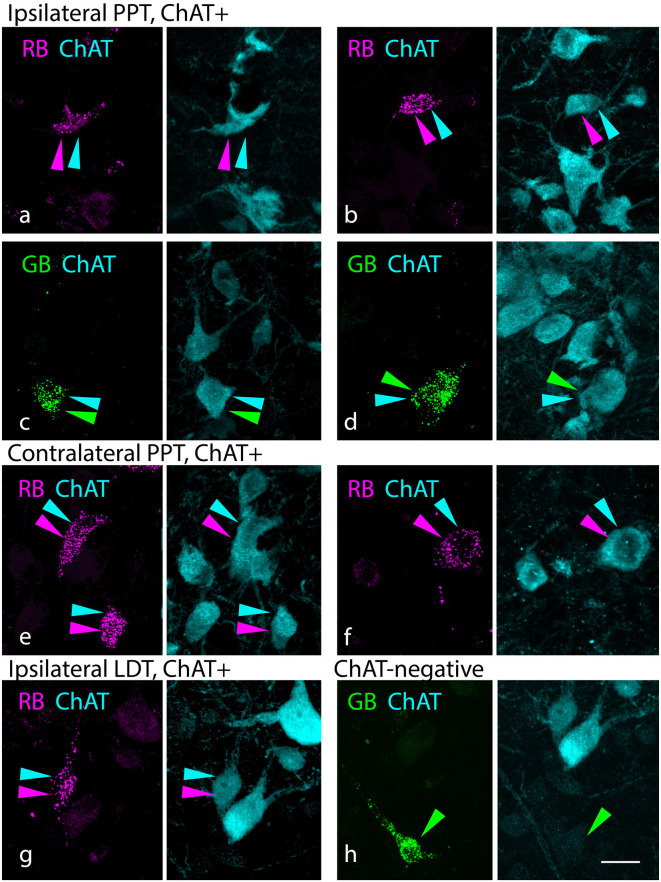
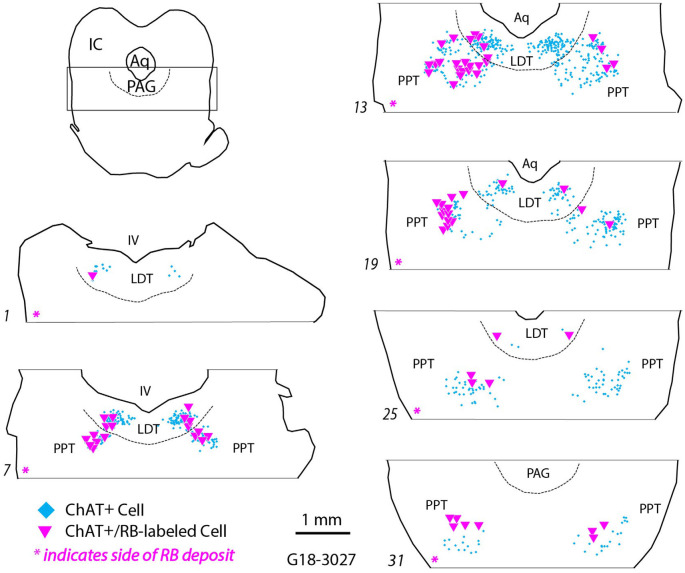
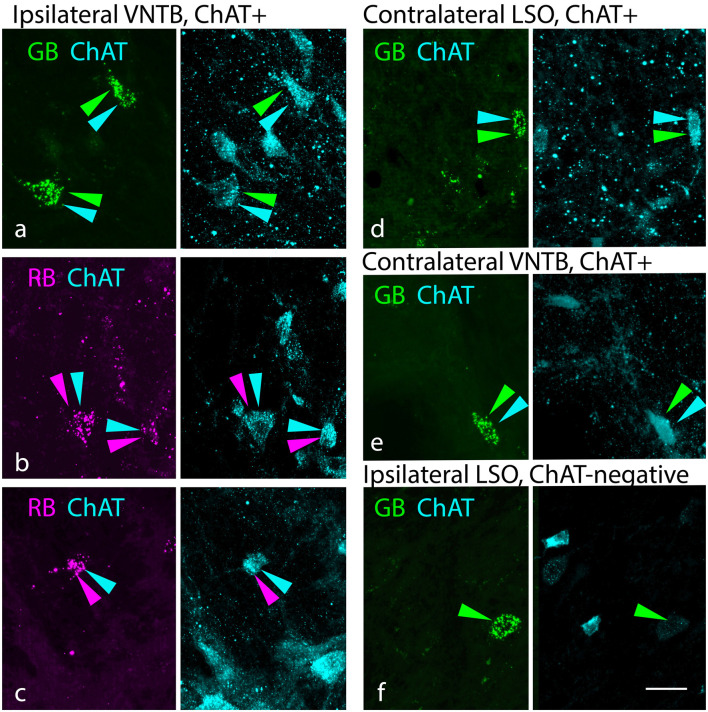
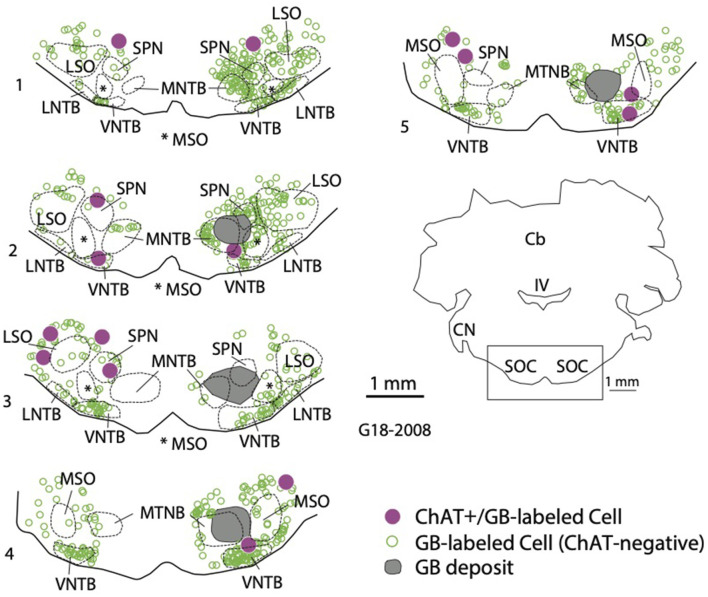
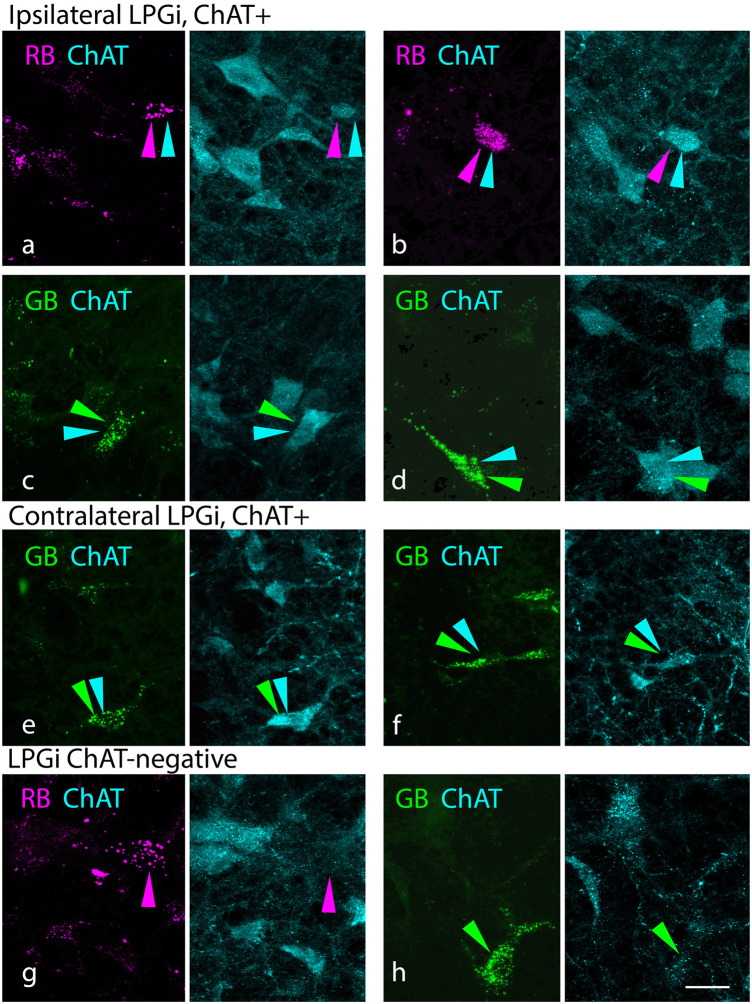
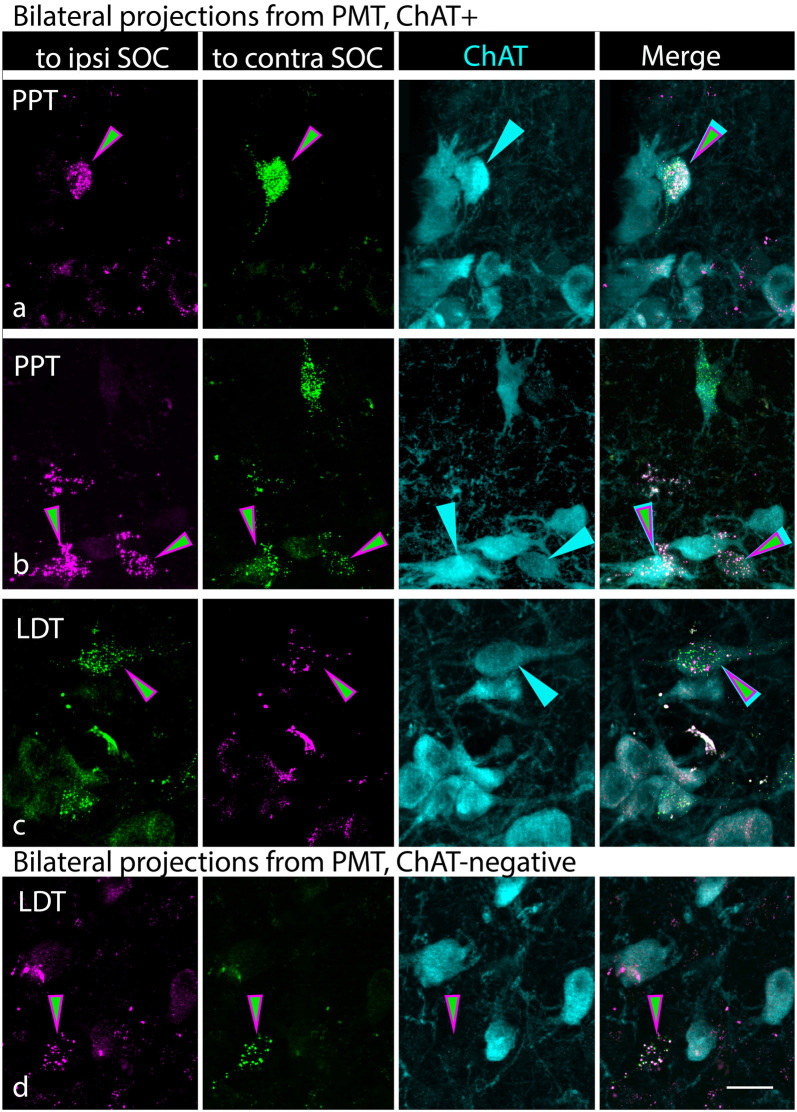
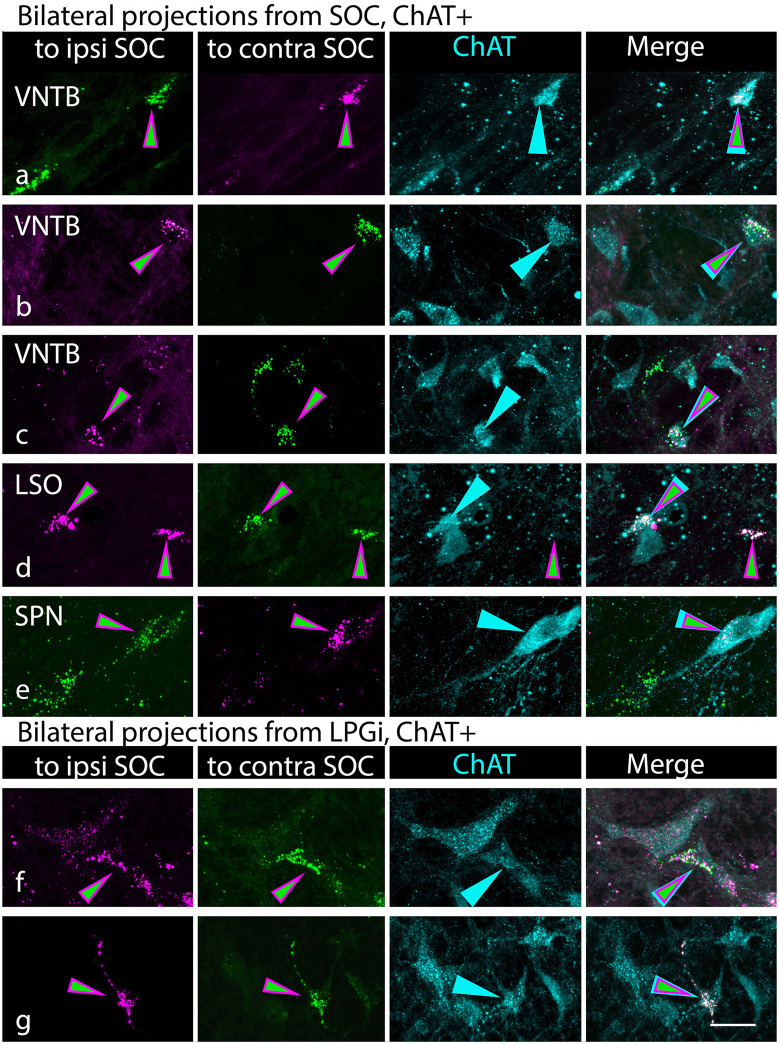
The superior olivary complex (SOC) is a major computation center in the brainstem auditory system. Despite previous reports of high expression levels of cholinergic receptors in the SOC, few studies have addressed the functional role of acetylcholine in the region. The source of the cholinergic innervation is unknown for all but one of the nuclei of the SOC, limiting our understanding of cholinergic modulation. The medial nucleus of the trapezoid body, a key inhibitory link in monaural and binaural circuits, receives cholinergic input from other SOC nuclei and also from the pontomesencephalic tegmentum. Here, we investigate whether these same regions are sources of cholinergic input to other SOC nuclei. We also investigate whether individual cholinergic cells can send collateral projections bilaterally (i.e., into both SOCs), as has been shown at other levels of the subcortical auditory system. We injected retrograde tract tracers into the SOC in gerbils, then identified retrogradely-labeled cells that were also immunolabeled for choline acetyltransferase, a marker for cholinergic cells. We found that both the SOC and the pontomesencephalic tegmentum (PMT) send cholinergic projections into the SOC, and these projections appear to innervate all major SOC nuclei. We also observed a small cholinergic projection into the SOC from the lateral paragigantocellular nucleus of the reticular formation. These various sources likely serve different functions; e.g., the PMT has been associated with things such as arousal and sensory gating whereas the SOC may provide feedback more closely tuned to specific auditory stimuli. Further, individual cholinergic neurons in each of these regions can send branching projections into both SOCs. Such projections present an opportunity for cholinergic modulation to be coordinated across the auditory brainstem.
上橄榄复合体(SOC)是脑干听觉系统的主要计算中心。尽管先前有报道称 SOC 中的胆碱能受体表达水平较高,但很少有研究探讨乙酰胆碱在该区域的功能作用。除 SOC 的一个核团外,所有核团的胆碱能神经支配来源都未知,这限制了我们对胆碱能调制的理解。梯形束的内侧核是单耳和双耳回路中的关键抑制性连接,它接收来自 SOC 其他核团以及桥脑被盖腹侧部的胆碱能输入。在这里,我们研究了这些相同的区域是否是 SOC 其他核团胆碱能输入的来源。我们还研究了单个胆碱能细胞是否可以向双侧(即 SOC 双侧)发出侧支投射,就像在皮质下听觉系统的其他水平上已经显示的那样。我们向沙鼠的 SOC 内注射逆行束示踪剂,然后鉴定出同时被胆碱乙酰转移酶免疫标记的逆行标记细胞,胆碱乙酰转移酶是胆碱能细胞的标志物。我们发现 SOC 和桥脑被盖腹侧部(PMT)都向 SOC 发出胆碱能投射,这些投射似乎支配 SOC 的所有主要核团。我们还观察到来自网状结构外侧巨细胞旁核的小胆碱能投射进入 SOC。这些不同的来源可能具有不同的功能;例如,PMT 与觉醒和感觉门控等有关,而 SOC 可能提供更紧密地与特定听觉刺激相匹配的反馈。此外,这些区域中的每个单个胆碱能神经元都可以向 SOC 的两个分支投射。这种投射为协调听觉脑干中的胆碱能调制提供了机会。