Ding Ning, Zhao Boyang, Ban Xiaofeng, Li Caiming, Venkataram Prasad B V, Gu Zhengbiao, Li Zhaofeng
State Key Laboratory of Food Science and Technology, Jiangnan University, Wuxi, China.
School of Food Science and Technology, Jiangnan University, Wuxi, China.
Front Microbiol. 2021 Jul 14;12:708480. doi: 10.3389/fmicb.2021.708480. eCollection 2021.
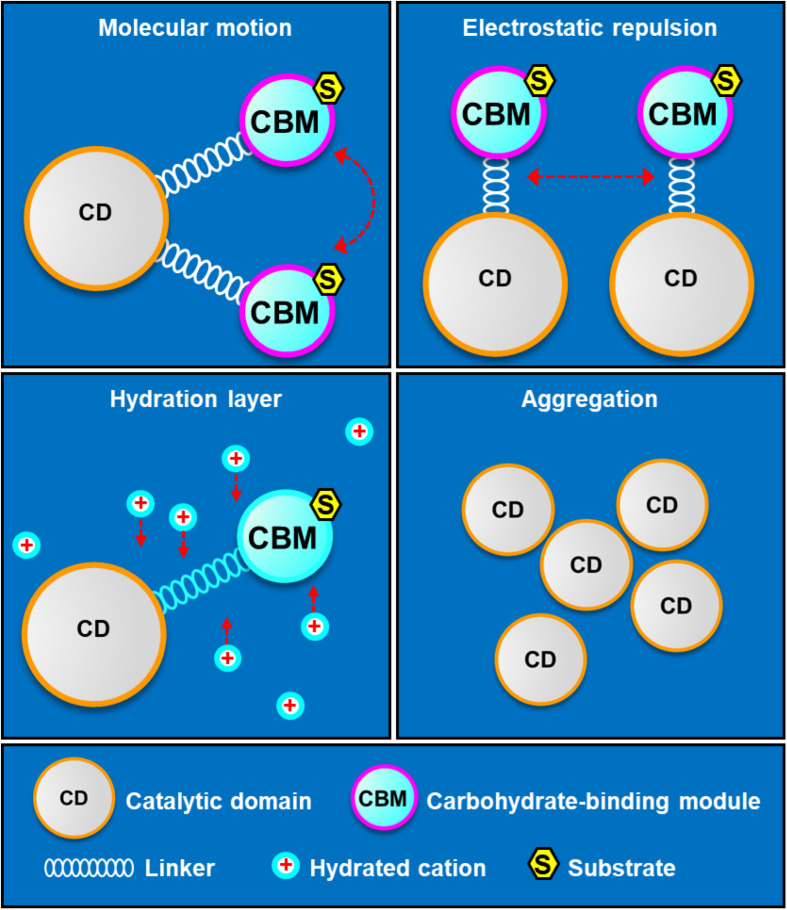
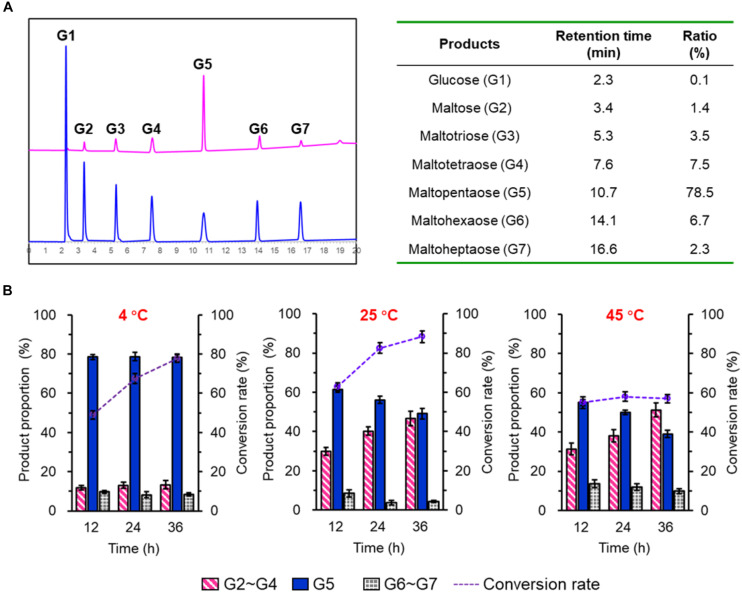
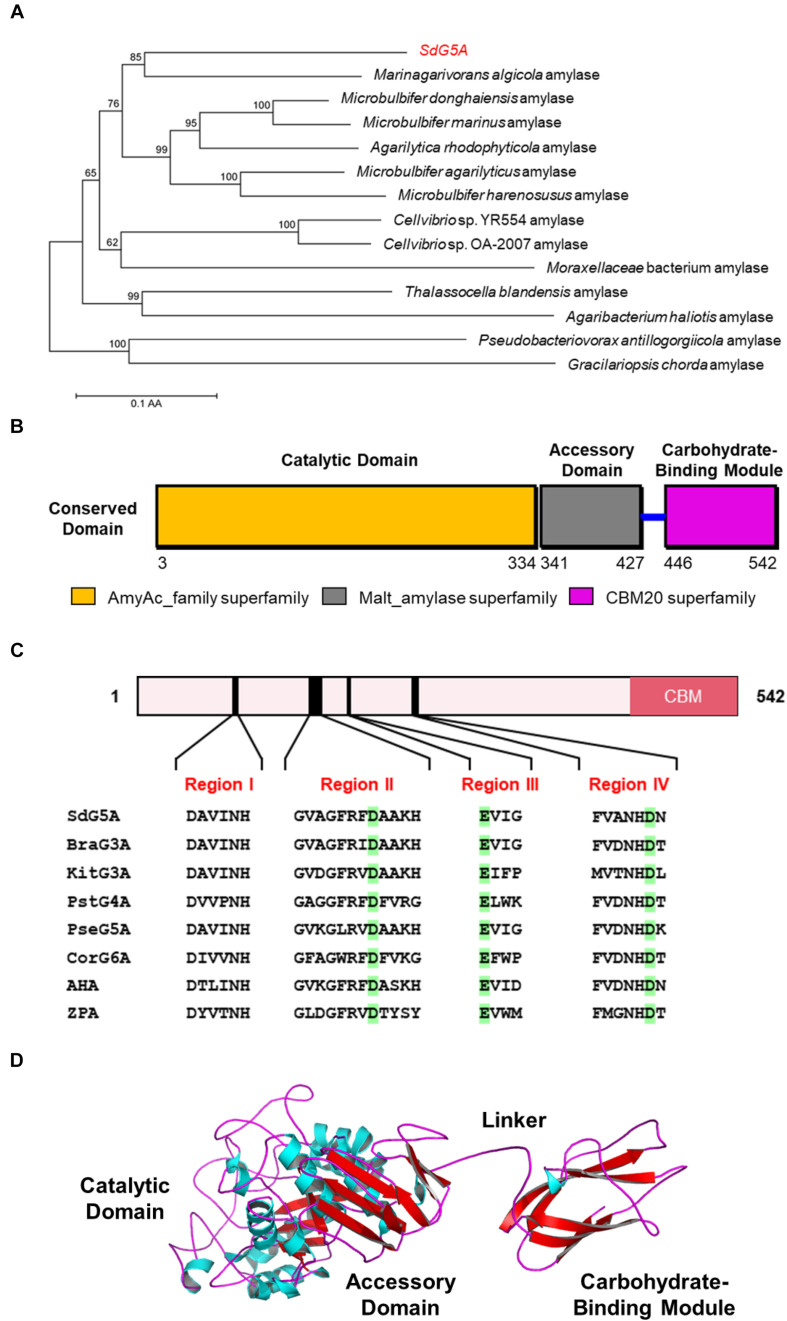
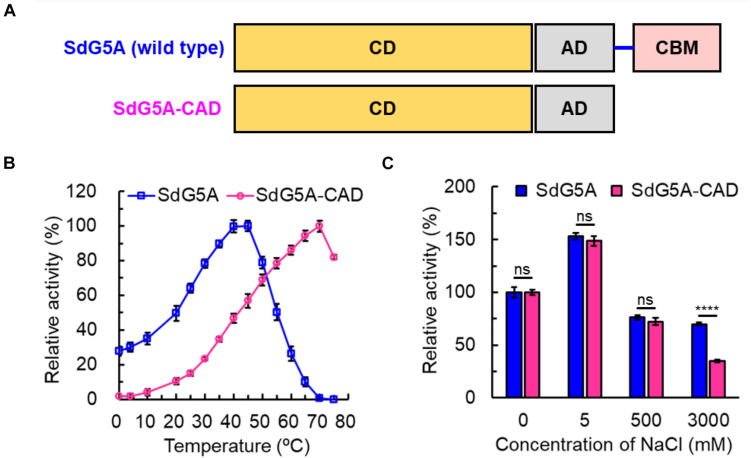
Marine extremophiles produce cold-adapted and/or salt-tolerant enzymes to survive in harsh conditions. These enzymes are naturally evolved with unique structural features that confer a high level of flexibility, solubility and substrate-binding ability compared to mesophilic and thermostable homologs. Here, we identified and characterized an amylase, SdG5A, from the marine bacterium 2-40 . We expressed the protein in and found that the purified SdG5A enabled highly specific production of maltopentaose, an important health-promoting food and nutrition component. Notably, SdG5A exhibited outstanding cold adaptation and salt tolerance, retaining approximately 30 and 70% of its maximum activity at 4°C and in 3 M NaCl, respectively. It converted 68 and 83% of starch into maltooligosaccharides at 4 and 25°C, respectively, within 24 h, with 79% of the yield being the maltopentaose. By analyzing the structure of SdG5A, we found that the C-terminal carbohydrate-binding module (CBM) coupled with an extended linker, displayed a relatively high negative charge density and superior conformational flexibility compared to the whole protein and the catalytic domain. Consistent with our bioinformatics analysis, truncation of the linker-CBM region resulted in a significant loss in activities at low temperature and high salt concentration. This highlights the linker-CBM acting as the critical component for the protein to carry out its activity in biologically unfavorable condition. Together, our study indicated that these unique properties of SdG5A have great potential for both basic research and industrial applications in food, biology, and medical and pharmaceutical fields.
海洋极端微生物产生适应低温和/或耐盐的酶以在恶劣条件下生存。与嗜温及耐热的同源物相比,这些酶通过自然进化具有独特的结构特征,赋予了高水平的灵活性、溶解性和底物结合能力。在此,我们从海洋细菌2-40中鉴定并表征了一种淀粉酶SdG5A。我们在[具体表达宿主]中表达了该蛋白,发现纯化后的SdG5A能够高效特异性地产生麦芽五糖,这是一种重要的促进健康的食品和营养成分。值得注意的是,SdG5A表现出出色的低温适应性和耐盐性,在4°C和3 M NaCl中分别保留其最大活性的约30%和70%。在24小时内,它在4°C和25°C下分别将68%和83%的淀粉转化为麦芽低聚糖,其中79%的产量为麦芽五糖。通过分析SdG5A的结构,我们发现与延伸的连接子相连的C端碳水化合物结合模块(CBM)与整个蛋白质和催化结构域相比,显示出相对较高的负电荷密度和优异的构象灵活性。与我们的生物信息学分析一致,连接子-CBM区域的截短导致在低温和高盐浓度下活性显著丧失。这突出了连接子-CBM作为蛋白质在生物学不利条件下发挥活性的关键组分。总之,我们的研究表明,SdG5A的这些独特性质在食品、生物学以及医学和制药领域的基础研究和工业应用中都具有巨大潜力。