Department of Neurology, The First Affiliated Hospital of Zhengzhou University, Zhengzhou, China.
Department of Neurology, Renji Hospital, School of Medicine, Shanghai Jiaotong University, Shanghai, China.
Front Immunol. 2021 Jul 14;12:677190. doi: 10.3389/fimmu.2021.677190. eCollection 2021.
Neuromyelitis optica spectrum disorders (NMOSDs) are severe inflammatory diseases mediated mainly by humoral and cellular immunity. Circulating follicular helper T (Tfh) cells are thought to be involved in the pathogenesis of NMOSD, and serum C-X-C motif ligand 13 (CXCL13) levels reflect the effects of Tfh cells on B-cell-mediated humoral immunity. Immune cell and cytokine changes during the dynamic relapsing and remitting processes in NMOSD require further exploration.
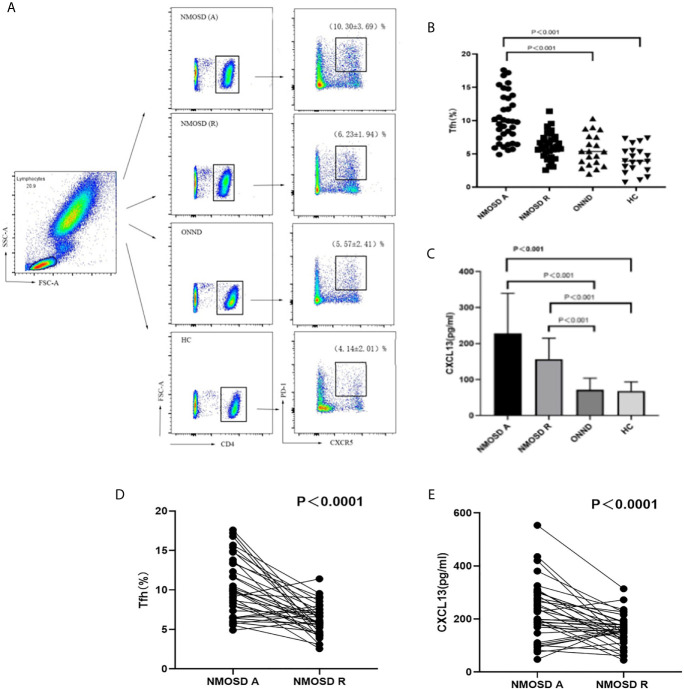
Blood samples were collected from 36 patients in acute and recovery phases of NMOSD, 20 patients with other noninflammatory neurological diseases (ONND) and 20 age- and sex-matched healthy volunteers. CD4+CXCR5+PD-1+ Tfh cells were detected by flow cytometry, and serum CXCL13 levels were assessed by enzyme-linked immunosorbent assay (ELISA).
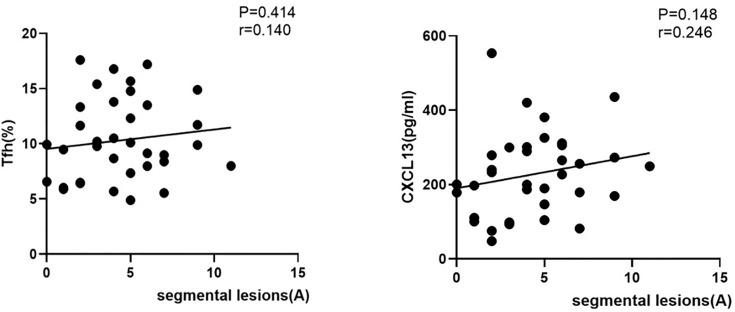
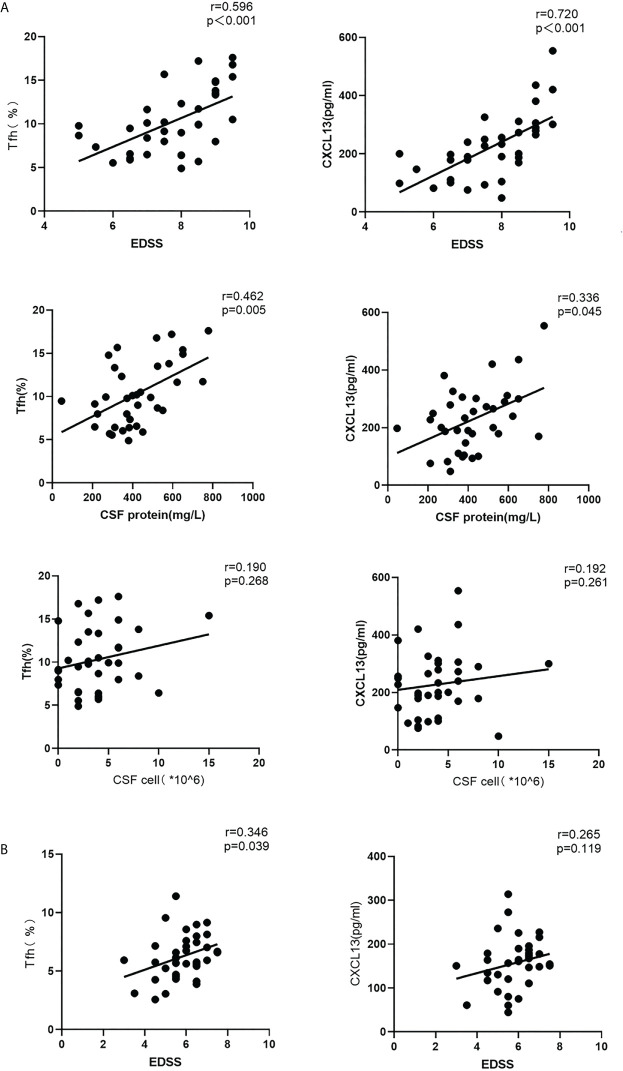
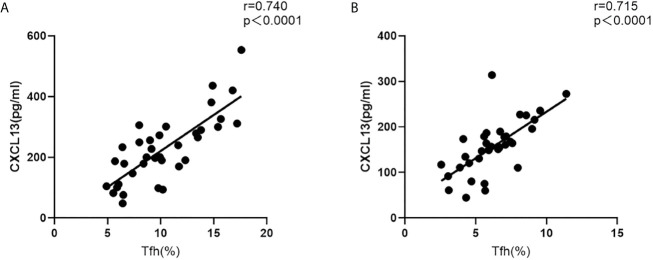
The percentage of CD4+CXCR5+PD-1+ Tfh cells was significantly higher during the acute phase than during the recovery phase, and serum CXCL13 levels were significantly higher in patients in the acute and recovery phases of NMOSD than in the ONND and control groups. The Tfh cell percentage was positively correlated with CXCL13 levels, and both were positively correlated with Expanded Disability Status Scale (EDSS) scores and cerebrospinal fluid protein levels in patients with acute NMOSD.
Circulating Tfh cells level has the potential to be a biomarker of disease severity.
视神经脊髓炎谱系疾病(NMOSD)是一种主要由体液和细胞免疫介导的严重炎症性疾病。循环滤泡辅助 T(Tfh)细胞被认为参与了 NMOSD 的发病机制,血清 C-X-C 基元配体 13(CXCL13)水平反映了 Tfh 细胞对 B 细胞介导的体液免疫的影响。NMOSD 动态缓解和复发过程中的免疫细胞和细胞因子变化需要进一步探索。
收集了 36 例 NMOSD 急性和恢复期、20 例其他非炎症性神经疾病(ONND)和 20 例年龄和性别匹配的健康志愿者的血液样本。采用流式细胞术检测 CD4+CXCR5+PD-1+Tfh 细胞,酶联免疫吸附试验(ELISA)检测血清 CXCL13 水平。
CD4+CXCR5+PD-1+Tfh 细胞在急性期明显高于恢复期,NMOSD 急性和恢复期患者血清 CXCL13 水平明显高于 ONND 和对照组。Tfh 细胞百分比与 CXCL13 水平呈正相关,两者均与急性 NMOSD 患者的扩展残疾状况量表(EDSS)评分和脑脊液蛋白水平呈正相关。
循环 Tfh 细胞水平有可能成为疾病严重程度的生物标志物。