Zhang Min, Dai Rongxin, Zhao Qin, Zhou Lina, An Yunfei, Tang Xuemei, Zhao Xiaodong
Department of Pediatric Research Institute, Ministry of Education Key Laboratory of Child Development and Disorders, National Clinical Research Center for Child Health and Disorders, China International Science and Technology Cooperation Base of Child Development and Critical Disorders, Children's Hospital of Chongqing Medical University, Chongqing, China.
Chongqing Key Laboratory of Child Infection and Immunity, Children's Hospital of Chongqing Medical University, Chongqing, China.
Front Mol Biosci. 2021 Jul 14;8:681526. doi: 10.3389/fmolb.2021.681526. eCollection 2021.
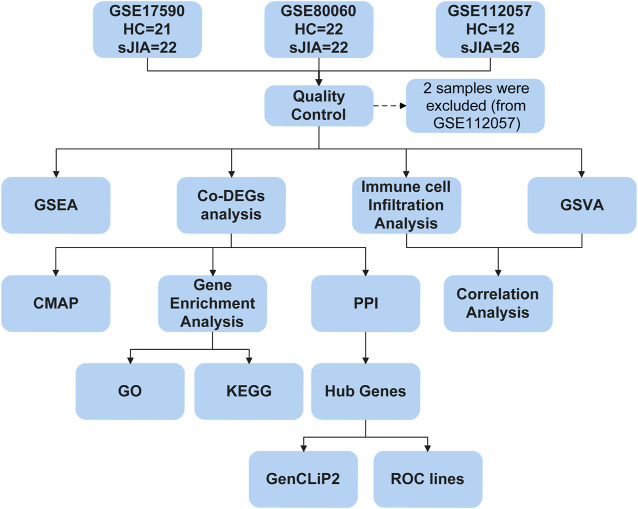
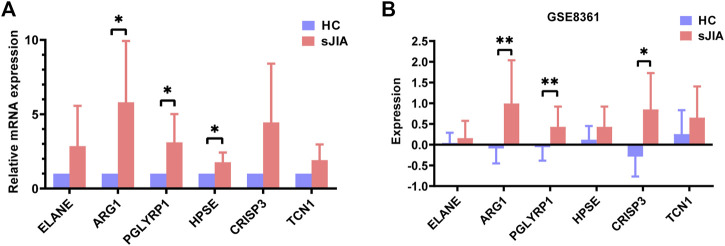
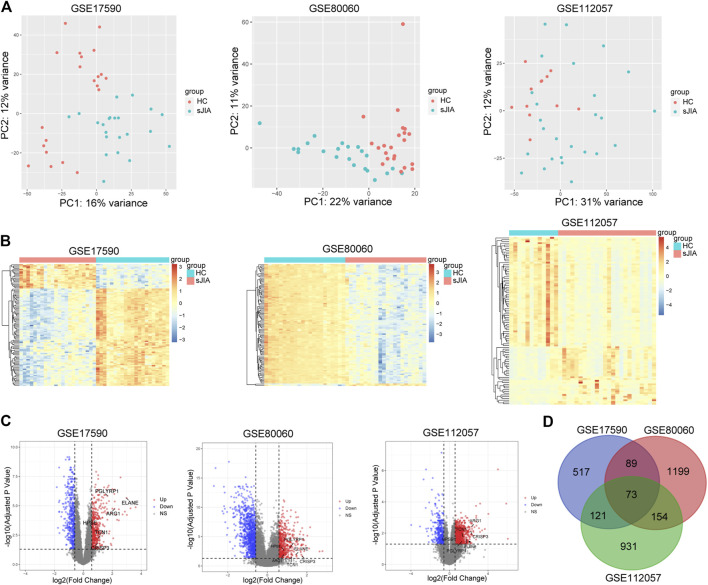
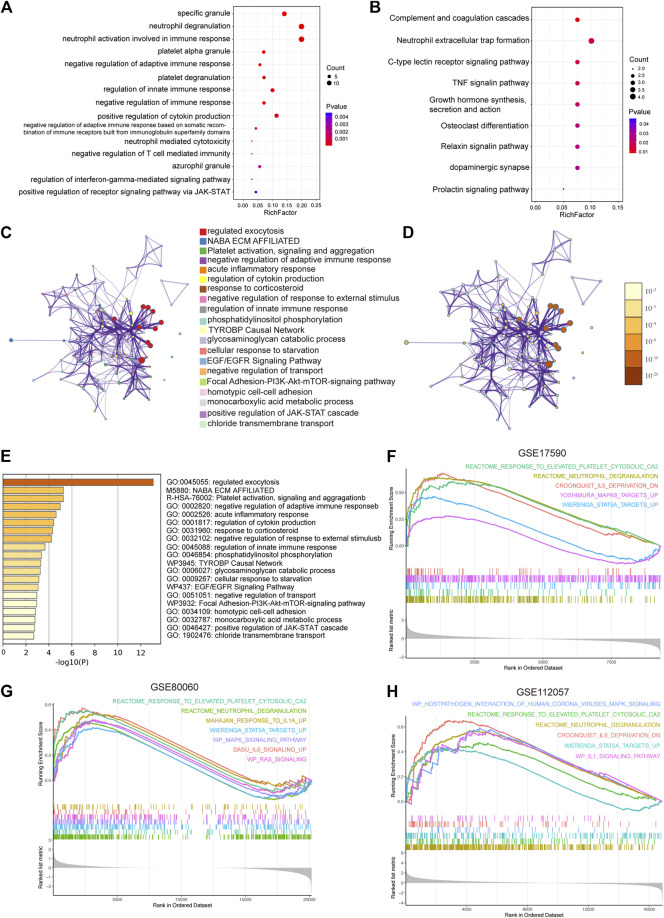
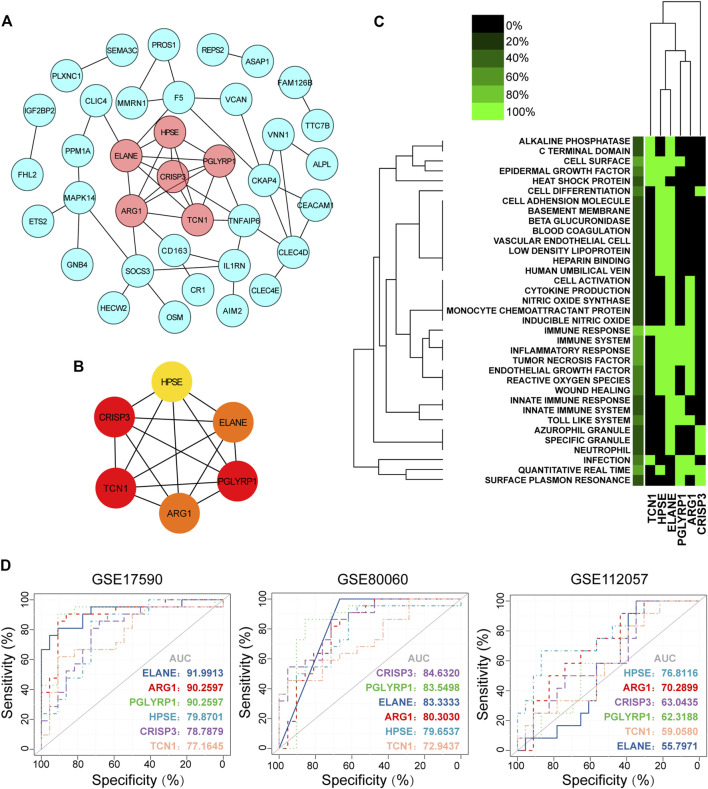
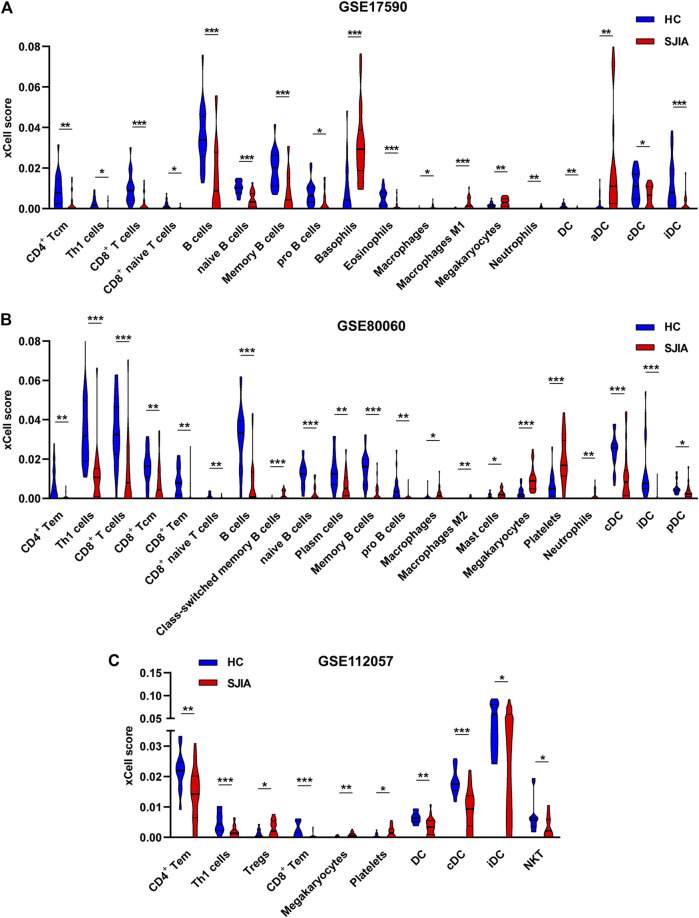
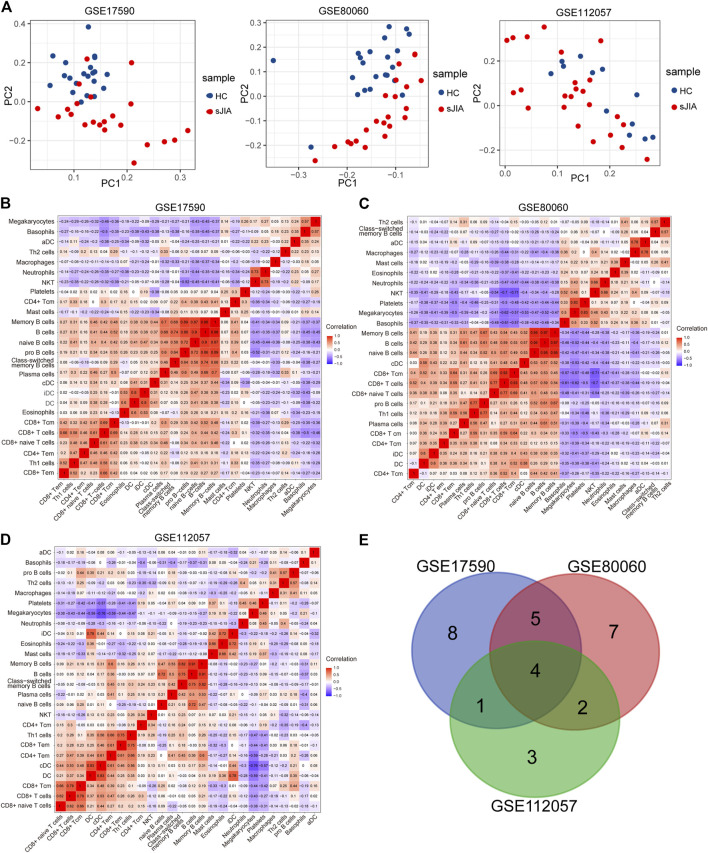
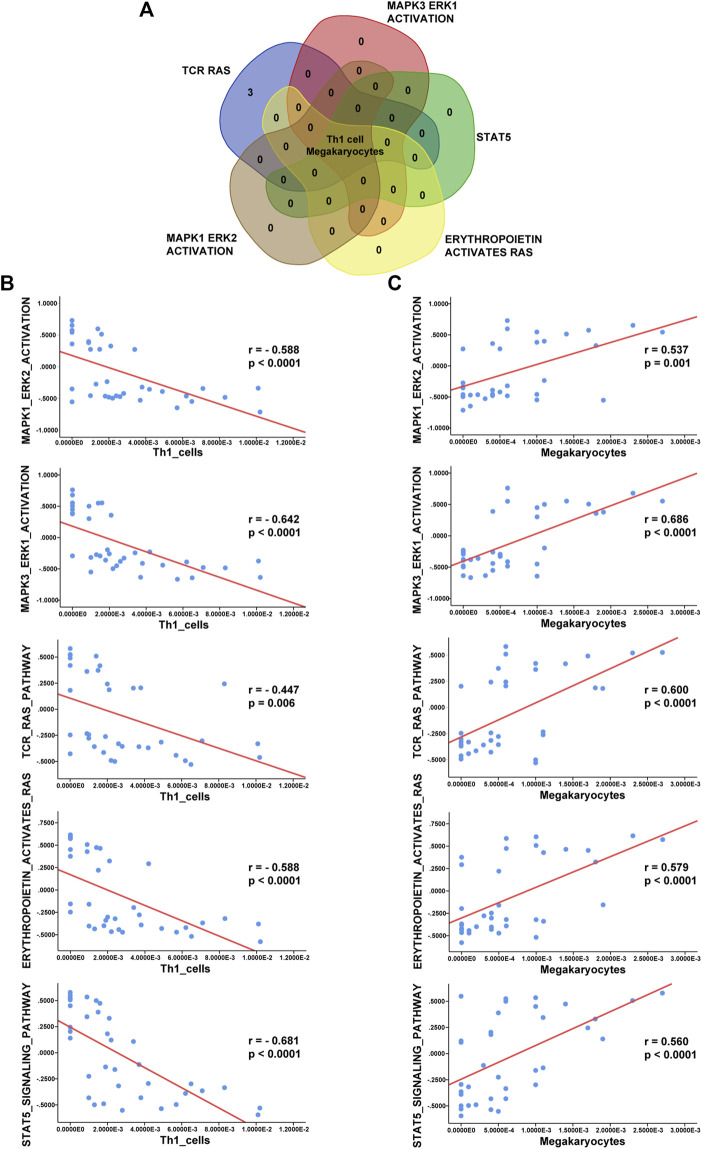
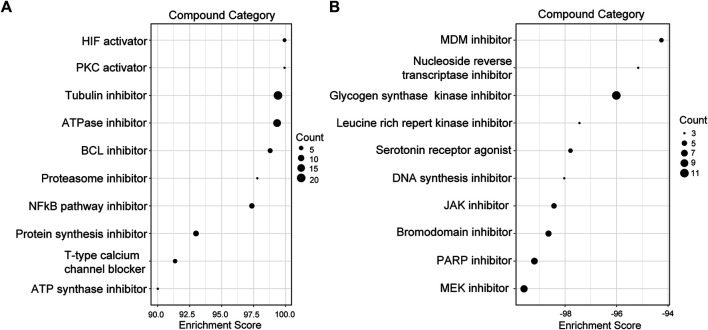
Systemic juvenile idiopathic arthritis (sJIA) is a rare and serious type of JIA characterized by an unknown etiology and atypical manifestations in the early stage, and early diagnosis and effective treatment are needed. We aimed to identify diagnostic biomarkers, immune cells and pathways involved in sJIA pathogenesis as well as potential treatment targets. The GSE17590, GSE80060, and GSE112057 gene expression profiles from the Gene Expression Omnibus (GEO) database were screened to obtain differentially expressed genes (DEGs) between sJIA and healthy controls. Common DEGs were subjected to pathway enrichment analysis; a protein-protein interaction network was constructed, and hub genes were identified. In addition, functional annotation of hub genes was performed with GenCLiP2. Immune infiltration analysis was then conducted with xCell, and correlation analysis between immune cells and the enriched pathways identified from gene set variation analysis was performed. The Connectivity Map database was used to identify candidate molecules for treating sJIA patients. Finally, quantitative reverse transcription-polymerase chain reaction (qRT-PCR) was carried out, and the GEO dataset GSE8361 was applied for validation of hub gene expression levels in blood samples from healthy individuals with sJIA. A total of 73 common DEGs were identified, and analysis indicated enrichment of neutrophil and platelet functions and the MAPK pathway in sJIA. Six hub genes were identified, of which three had high diagnostic sensitivity and specificity; ARG1 and PGLYRP1 were validated by qRT-PCR and microarray data of the GSE8361 dataset. We found that increased megakaryocytes and decreased Th1 cells correlated positively and negatively with the MAPK pathway, respectively. Furthermore, MEK inhibitors and some kinase inhibitors of the MAPK family were identified as candidate agents for sJIA treatment. Our results indicate two candidate markers for sJIA diagnosis and reveal the important roles of platelets and the MAPK pathway in the pathogenesis of sJIA, providing a new perspective for exploring potential molecular targets for sJIA treatment.
全身型幼年特发性关节炎(sJIA)是一种罕见且严重的幼年特发性关节炎类型,其病因不明,早期表现不典型,需要早期诊断和有效治疗。我们旨在鉴定参与sJIA发病机制的诊断生物标志物、免疫细胞和通路以及潜在治疗靶点。从基因表达综合数据库(GEO)中筛选出GSE17590、GSE80060和GSE112057基因表达谱,以获得sJIA患者与健康对照之间的差异表达基因(DEG)。对共同的DEG进行通路富集分析;构建蛋白质-蛋白质相互作用网络,并鉴定枢纽基因。此外,使用GenCLiP2对枢纽基因进行功能注释。然后用xCell进行免疫浸润分析,并对免疫细胞与基因集变异分析确定的富集通路之间进行相关性分析。利用连接图谱数据库鉴定治疗sJIA患者的候选分子。最后,进行定量逆转录-聚合酶链反应(qRT-PCR),并应用GEO数据集GSE8361验证健康个体和sJIA患者血液样本中枢纽基因的表达水平。共鉴定出73个共同的DEG,分析表明sJIA中中性粒细胞和血小板功能以及MAPK通路富集。鉴定出6个枢纽基因,其中3个具有较高的诊断敏感性和特异性;ARG1和PGLYRP1通过qRT-PCR和GSE8361数据集的微阵列数据得到验证。我们发现巨核细胞增加和Th1细胞减少分别与MAPK通路呈正相关和负相关。此外,MEK抑制剂和MAPK家族的一些激酶抑制剂被鉴定为sJIA治疗的候选药物。我们的结果表明了sJIA诊断的两个候选标志物,并揭示了血小板和MAPK通路在sJIA发病机制中的重要作用,为探索sJIA治疗的潜在分子靶点提供了新的视角。