Kjeldsen Sasha A S, Hansen Lasse H, Esser Nathalie, Mongovin Steve, Winther-Sørensen Marie, Galsgaard Katrine D, Hunt Jenna E, Kissow Hannelouise, Ceutz Frederik R, Terzic Dijana, Mark Peter D, Plomgaard Peter, Goetze Jens P, Goossens Gijs H, Blaak Ellen E, Deacon Carolyn F, Rosenkilde Mette M, Zraika Sakeneh, Holst Jens J, Wewer Albrechtsen Nicolai J
Department of Biomedical Sciences, Faculty of Health and Medical Sciences, University of Copenhagen, 2200 Copenhagen,Denmark.
Novo Nordisk Foundation Center for Protein Research, Faculty of Health and Medical Sciences, University of Copenhagen, 2200 Copenhagen,Denmark.
J Endocr Soc. 2021 May 16;5(9):bvab084. doi: 10.1210/jendso/bvab084. eCollection 2021 Sep 1.
Inhibitors of the protease neprilysin (NEP) are used for treating heart failure, but are also linked to improvements in metabolism. NEP may cleave proglucagon-derived peptides, including the glucose and amino acid (AA)-regulating hormone glucagon. Studies investigating NEP inhibition on glucagon metabolism are warranted.
This work aims to investigate whether NEP inhibition increases glucagon levels.
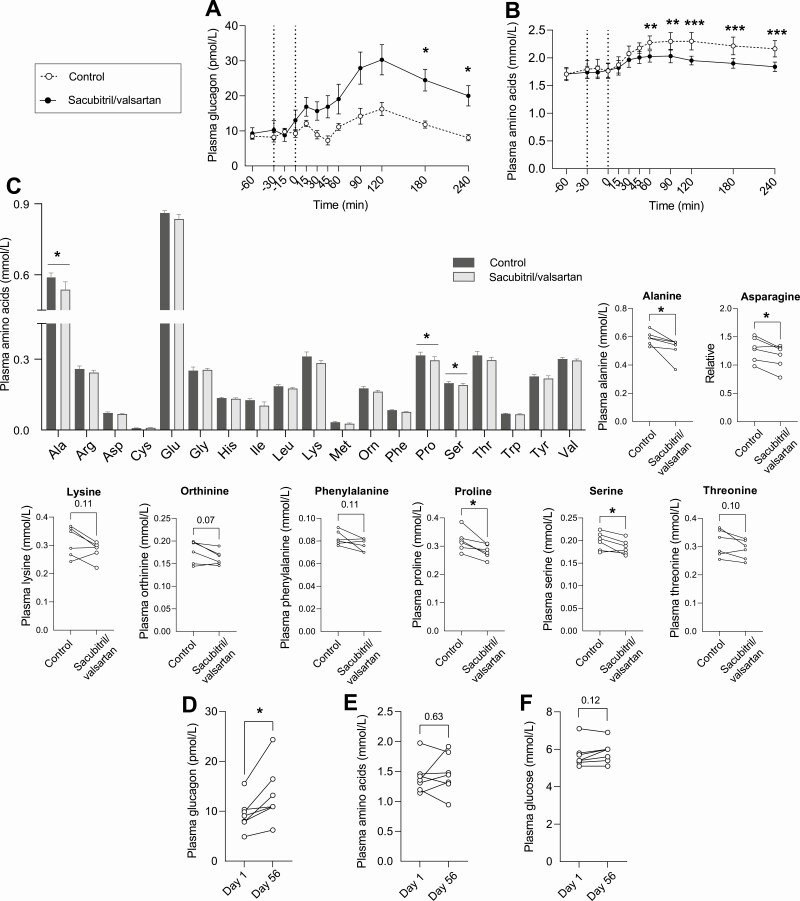
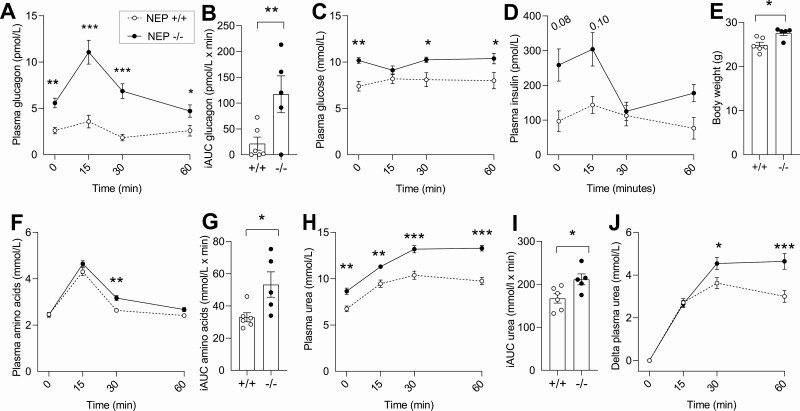
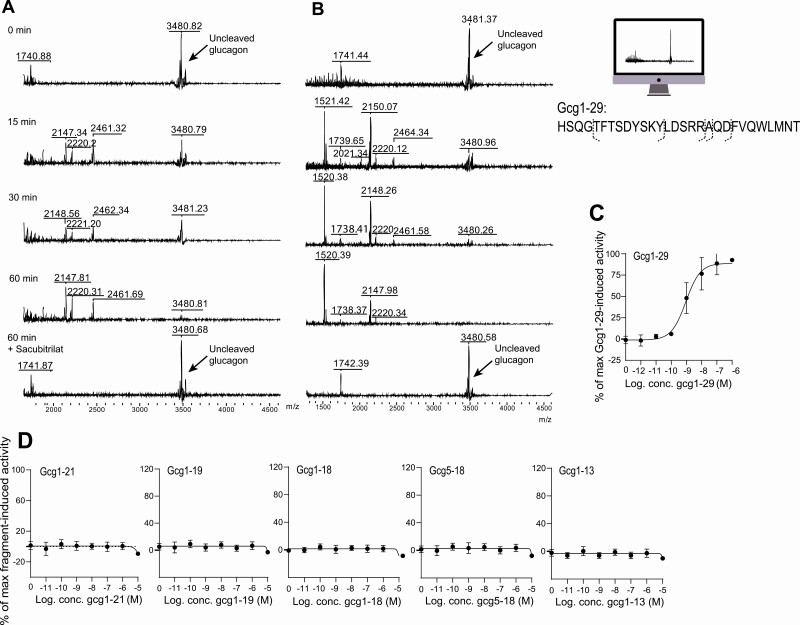
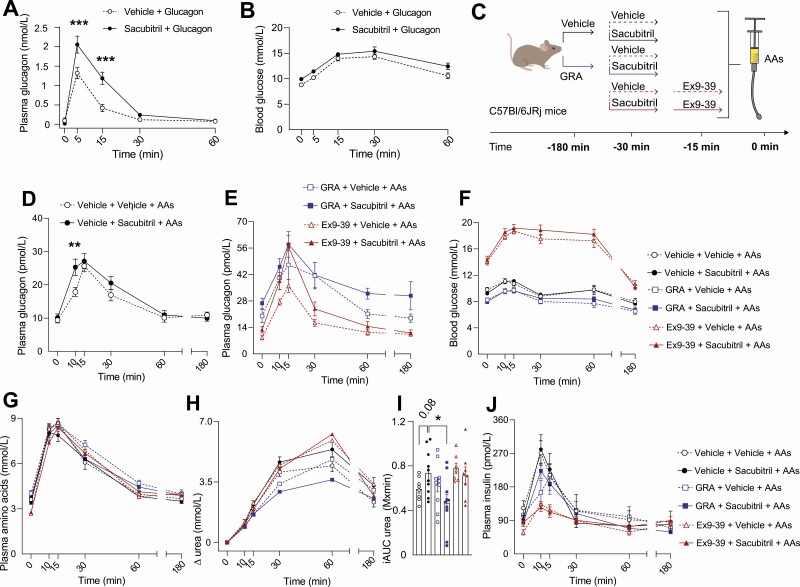
Plasma concentrations of glucagon and AAs were measured in eight healthy men during a mixed meal with and without a single dose of the NEP inhibitor/angiotensin II type 1 receptor antagonist, sacubitril/valsartan (194 mg/206 mg). Long-term effects of sacubitril/valsartan (8 weeks) were investigated in individuals with obesity (n = 7). Mass spectrometry was used to investigate NEP-induced glucagon degradation, and the derived glucagon fragments were tested pharmacologically in cells transfected with the glucagon receptor (GCGR). Genetic deletion or pharmacological inhibition of NEP with or without concomitant GCGR antagonism was tested in mice to evaluate effects on AA metabolism.
In healthy men, a single dose of sacubitril/valsartan significantly increased postprandial concentrations of glucagon by 228%, concomitantly lowering concentrations of AAs including glucagonotropic AAs. Eight-week sacubitril/valsartan treatment increased fasting glucagon concentrations in individuals with obesity. NEP cleaved glucagon into 5 inactive fragments (in vitro). Pharmacological NEP inhibition protected both exogenous and endogenous glucagon in mice after an AA challenge, while NEP-deficient mice showed elevated fasting and AA-stimulated plasma concentrations of glucagon and urea compared to controls.
NEP cleaves glucagon, and inhibitors of NEP result in hyperglucagonemia and may increase postprandial AA catabolism without affecting glycemia.
中性肽链内切酶(NEP)抑制剂用于治疗心力衰竭,但也与代谢改善有关。NEP可能裂解胰高血糖素原衍生肽,包括调节葡萄糖和氨基酸(AA)的激素胰高血糖素。有必要开展研究探讨NEP抑制对胰高血糖素代谢的影响。
本研究旨在探讨抑制NEP是否会升高胰高血糖素水平。
在8名健康男性进食混合餐期间,测定其服用和未服用单剂量NEP抑制剂/血管紧张素II 1型受体拮抗剂沙库巴曲/缬沙坦(194毫克/206毫克)时血浆中胰高血糖素和氨基酸的浓度。在肥胖个体(n = 7)中研究了沙库巴曲/缬沙坦的长期作用(8周)。采用质谱法研究NEP诱导的胰高血糖素降解,并在转染了胰高血糖素受体(GCGR)的细胞中对衍生的胰高血糖素片段进行药理学测试。在小鼠中测试了NEP的基因缺失或药理学抑制,以及是否同时存在GCGR拮抗作用,以评估对氨基酸代谢的影响。
在健康男性中,单剂量沙库巴曲/缬沙坦使餐后胰高血糖素浓度显著升高228%,同时降低了包括促胰高血糖素分泌性氨基酸在内的氨基酸浓度。沙库巴曲/缬沙坦治疗8周可提高肥胖个体的空腹胰高血糖素浓度。NEP在体外将胰高血糖素裂解为5个无活性片段。在给予氨基酸刺激后,药理学抑制NEP可保护小鼠体内的外源性和内源性胰高血糖素,而与对照组相比,NEP缺陷小鼠的空腹和氨基酸刺激后的血浆胰高血糖素和尿素浓度升高。
NEP可裂解胰高血糖素,NEP抑制剂会导致高胰高血糖素血症,并可能增加餐后氨基酸分解代谢,而不影响血糖水平。