Skåra Karoline H, Bech Claus, Fjelldal Mari Aas, van der Kooij Jeroen, Sørås Rune, Stawski Clare
Department of Biology, Norwegian University of Science and Technology, Trondheim NO-7491, Norway.
Naturformidling van der Kooij, Rudsteinveien 67, Slattum NO-1480, Norway.
Biol Open. 2021 Aug 15;10(8). doi: 10.1242/bio.058640. Epub 2021 Jul 29.
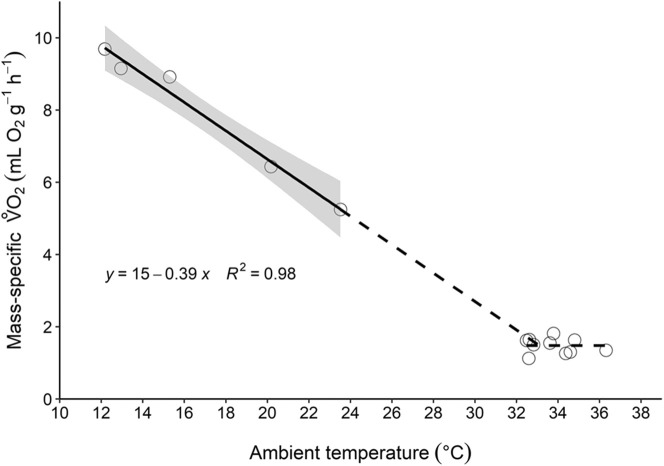
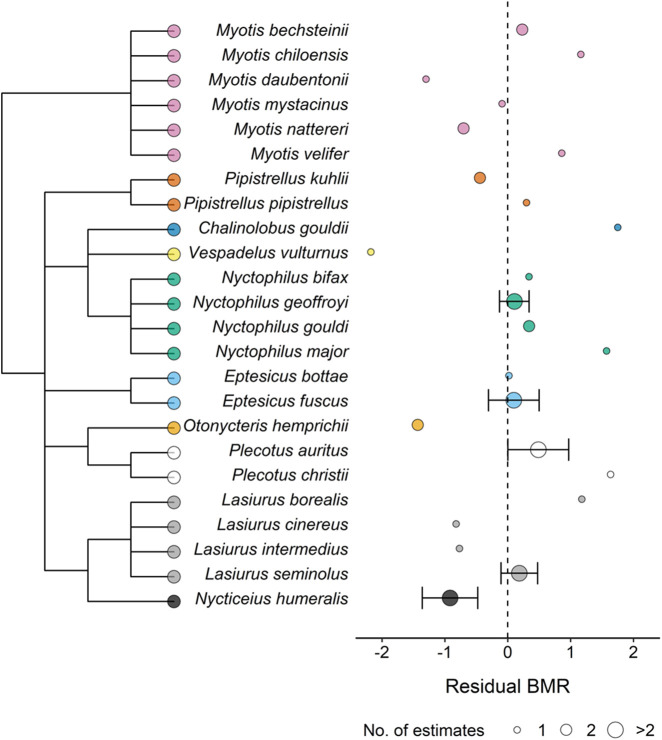
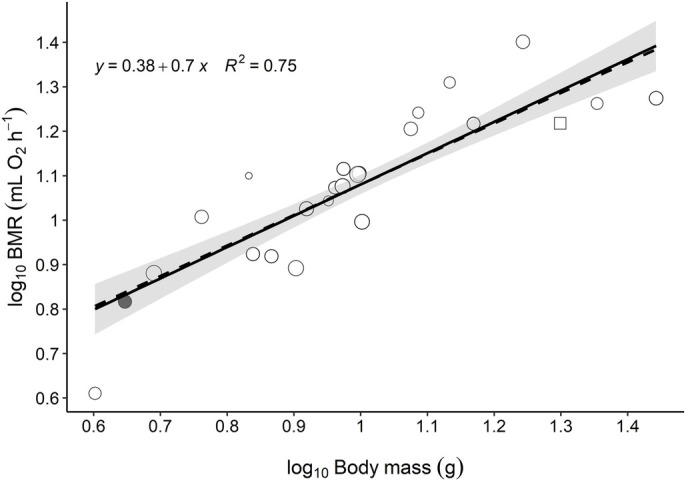
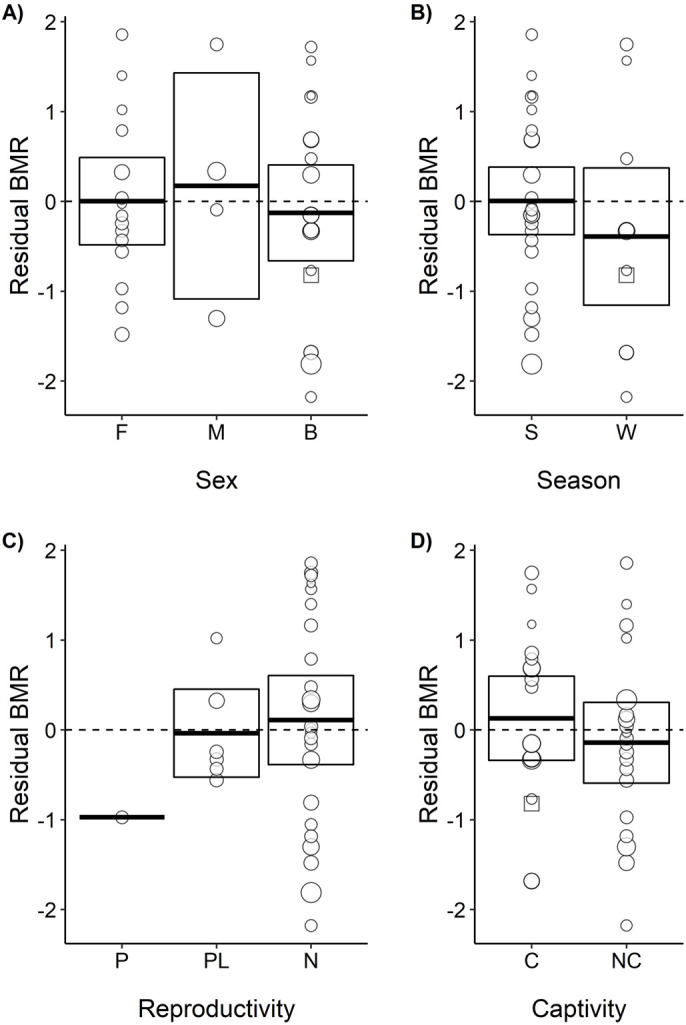
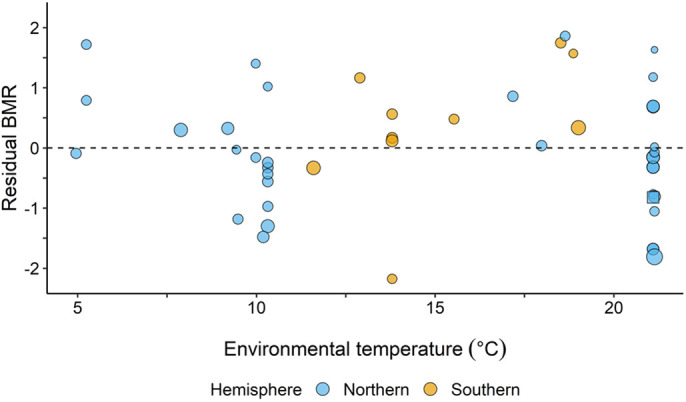
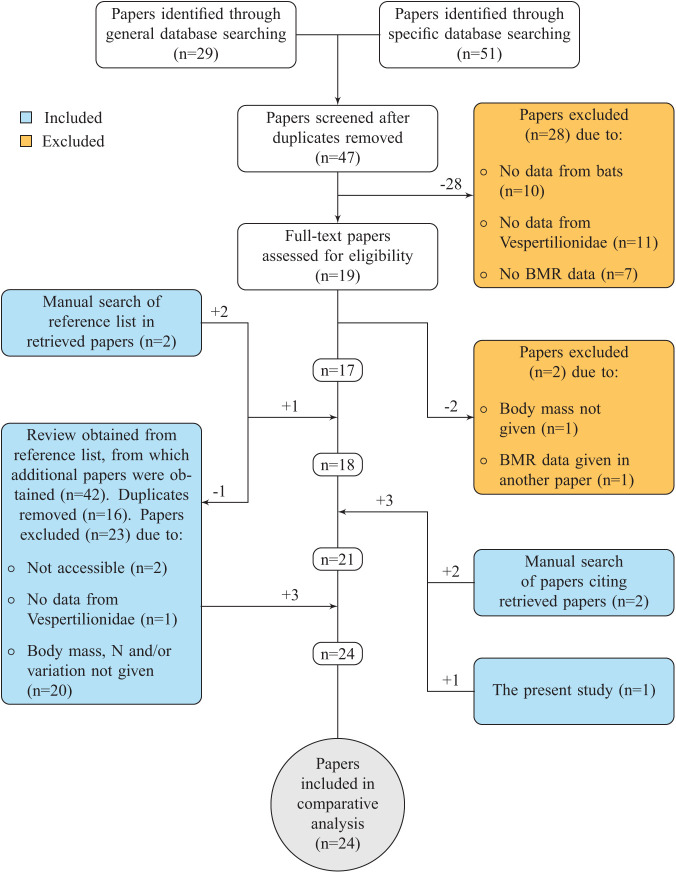
Bats inhabit a variety of climate types, ranging from tropical to temperate zones, and environmental differences may therefore affect the basal metabolic rate (BMR) of bats from different populations. In the present study, we provide novel data on the energetics of whiskered bats (Myotis mystacinus), which is the smallest species within Chiroptera measured to date. We investigated the thermoregulatory strategies of M. mystacinus close to the northern limits of this species' distribution range and compared these data to other vespertilionid bats living in different climates. As mammals living in colder areas experience elevated thermoregulatory costs, often leading to an increase in BMR, we hypothesised that BMR of this northern population of whiskered bats would be higher than that of bats from climates with warm environmental temperatures. From a systematic literature search we obtained BMR estimates (N=47) from 24 species within Vespertilionidae. Our metabolic measurements of M. mystacinus in Norway (body mass of 4.4 g; BMR of 1.48 ml O2 g-1 h-1) were not different from other vespertilionid bats, based on the allometric equation obtained from the systematic literature search. Further, there was no effect of environmental temperature on BMR within Vespertilionidae. How these tiny bats adapt metabolically to high latitude living is thus still an open question. Bats do have a suite of physiological strategies used to cope with the varying climates which they inhabit, and one possible factor could be that instead of adjusting BMR they could express more torpor. This article has an associated First Person interview with the first author of the paper.
蝙蝠栖息于从热带到温带的多种气候类型中,因此环境差异可能会影响不同种群蝙蝠的基础代谢率(BMR)。在本研究中,我们提供了有关须鼠耳蝠(Myotis mystacinus)能量学的新数据,须鼠耳蝠是迄今为止测量的翼手目中最小的物种。我们研究了接近该物种分布范围北界的须鼠耳蝠的体温调节策略,并将这些数据与生活在不同气候中的其他蝙蝠科蝙蝠进行了比较。由于生活在较寒冷地区的哺乳动物体温调节成本升高,通常会导致基础代谢率增加,我们假设这个北方须鼠耳蝠种群的基础代谢率会高于生活在温暖环境温度气候中的蝙蝠。通过系统的文献检索,我们获得了蝙蝠科24个物种的基础代谢率估计值(N = 47)。根据从系统文献检索中获得的异速生长方程,我们在挪威对须鼠耳蝠的代谢测量结果(体重4.4克;基础代谢率1.48毫升氧气·克⁻¹·小时⁻¹)与其他蝙蝠科蝙蝠没有差异。此外,蝙蝠科内环境温度对基础代谢率没有影响。因此,这些小蝙蝠如何在代谢上适应高纬度生活仍然是一个悬而未决的问题。蝙蝠确实有一系列用于应对其所栖息的不同气候的生理策略,一个可能的因素是它们可能不是通过调整基础代谢率,而是通过表现出更多的蛰伏状态来适应。本文有对该论文第一作者的相关第一人称访谈。