Department of Psychiatry, University of California, San Diego, California, USA.
VA Center of Excellence for Stress and Mental Health, Veterans Administration San Diego HealthCare System, San Diego, California, USA.
Int J Neuropsychopharmacol. 2021 Nov 12;24(11):894-906. doi: 10.1093/ijnp/pyab053.
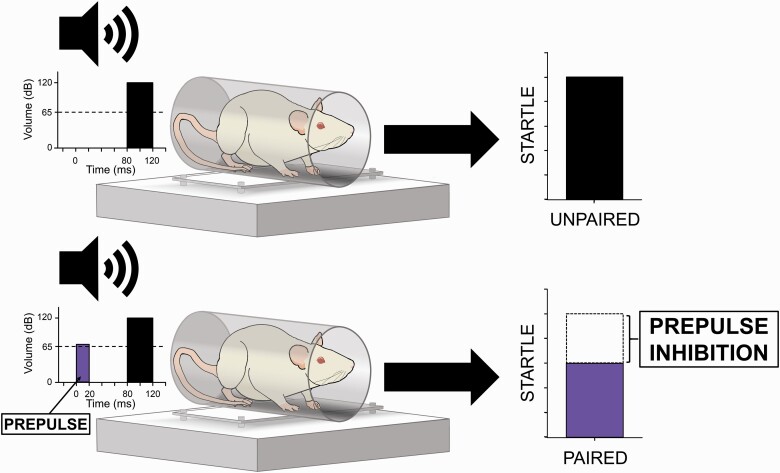
HIV-associated neurocognitive disorder (HAND) is commonly observed in persons living with HIV (PWH) and is characterized by cognitive deficits implicating disruptions of fronto-striatal neurocircuitry. Such circuitry is also susceptible to alteration by cannabis and other drugs of abuse. PWH use cannabis at much higher rates than the general population, thus prioritizing the characterization of any interactions between HIV and cannabinoids on cognitively relevant systems. Prepulse inhibition (PPI) of the startle response, the process by which the motor response to a startling stimulus is attenuated by perception of a preceding non-startling stimulus, is an operational assay of fronto-striatal circuit integrity that is translatable across species. PPI is reduced in PWH. The HIV transgenic (HIVtg) rat model of HIV infection mimics numerous aspects of HAND, although to date the PPI deficit observed in PWH has yet to be fully recreated in animals.
PPI was measured in male and female HIVtg rats and wild-type controls following acute, nonconcurrent treatment with the primary constituents of cannabis: Δ 9-tetrahydrocannabinol (THC; 1 and 3 mg/kg, s.c.) and cannabidiol (1, 10, and 30 mg/kg, i.p.).
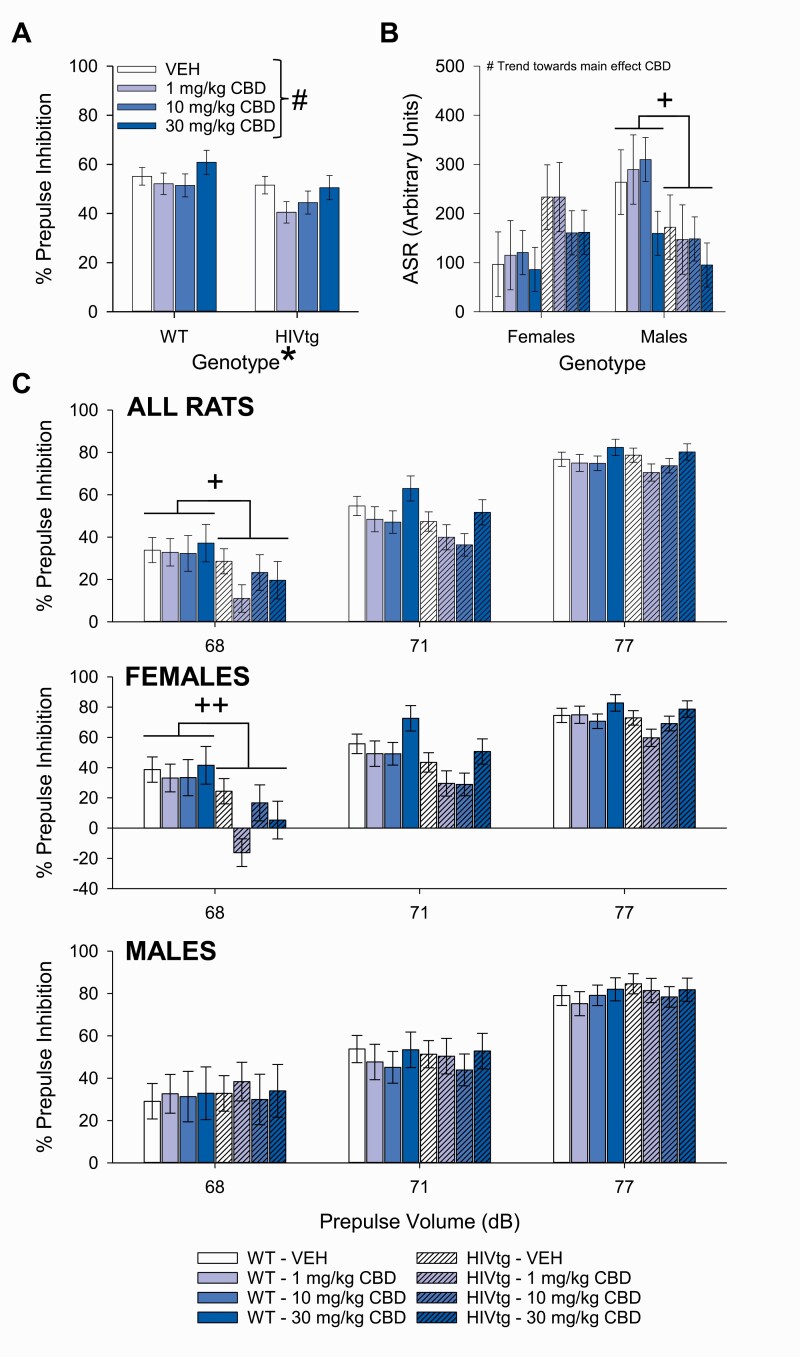
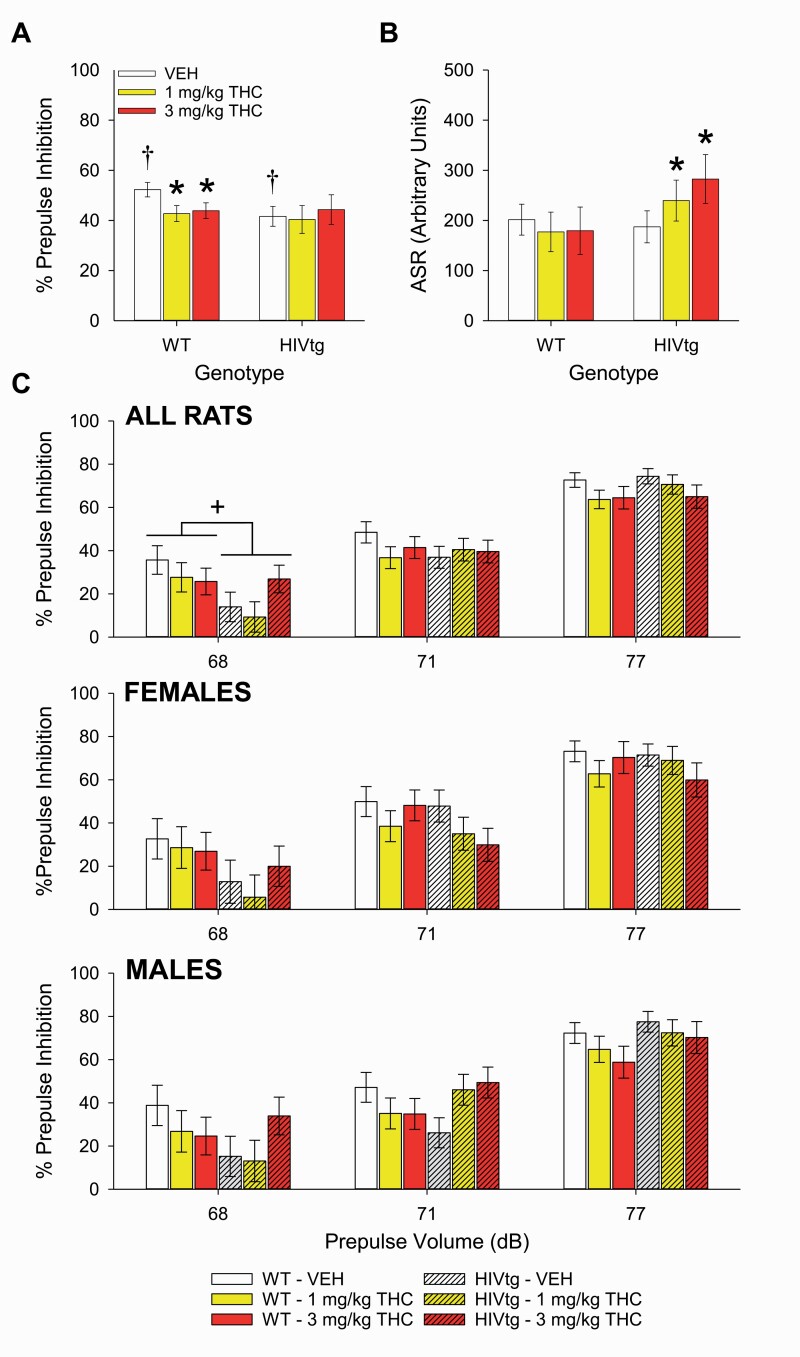
HIVtg rats exhibited a significant PPI deficit relative to wild-type controls. THC reduced PPI in controls but not HIVtg rats. Cannabidiol exerted only minor, genotype-independent effects on PPI.
HIVtg rats exhibit a relative insensitivity to the deleterious effects of THC on the fronto-striatal function reflected by PPI, which may partially explain the higher rates of cannabis use among PWH.
HIV 相关神经认知障碍(HAND)在 HIV 感染者(PWH)中很常见,其特征是认知缺陷,涉及额纹状体神经回路的中断。这种回路也容易受到大麻和其他滥用药物的改变。PWH 使用大麻的比例远高于普通人群,因此优先描述 HIV 和大麻素对认知相关系统的任何相互作用。惊吓反应的预脉冲抑制(PPI),即对令人惊讶的刺激的运动反应被感知到的先前非令人惊讶的刺激减弱的过程,是一种额纹状体回路完整性的操作性测定,可在物种间转化。PPI 在 PWH 中降低。HIV 转基因(HIVtg)大鼠 HIV 感染模型模拟了 HAND 的许多方面,尽管迄今为止,PWH 中观察到的 PPI 缺陷尚未在动物中完全重现。
在急性、非同时给予大麻的主要成分后,测量雄性和雌性 HIVtg 大鼠和野生型对照的 PPI:Δ-9-四氢大麻酚(THC;1 和 3mg/kg,皮下注射)和大麻二酚(1、10 和 30mg/kg,腹腔注射)。
HIVtg 大鼠与野生型对照相比表现出明显的 PPI 缺陷。THC 降低了对照组的 PPI,但不降低 HIVtg 大鼠的 PPI。大麻二酚仅对 PPI 产生轻微的、与基因型无关的影响。
HIVtg 大鼠对 PPI 反映的 THC 对额纹状体功能的有害影响相对不敏感,这可能部分解释了 PWH 中更高的大麻使用率。