Czekala Lukasz, Wieczorek Roman, Simms Liam, Yu Fan, Budde Jessica, Trelles Sticken Edgar, Rudd Kathryn, Verron Thomas, Brinster Oleg, Stevenson Matthew, Walele Tanvir
Imperial Brands PLC, 121 Winterstoke Road, Bristol BS3 2LL, United Kingdom.
Reemtsma Cigarettenfabriken GmbH, An Imperial Brands PLC Company, Albert-EinsteinRing-7, D-22761 Hamburg, Germany.
Curr Res Toxicol. 2021 Feb 20;2:99-115. doi: 10.1016/j.crtox.2021.02.004. eCollection 2021.
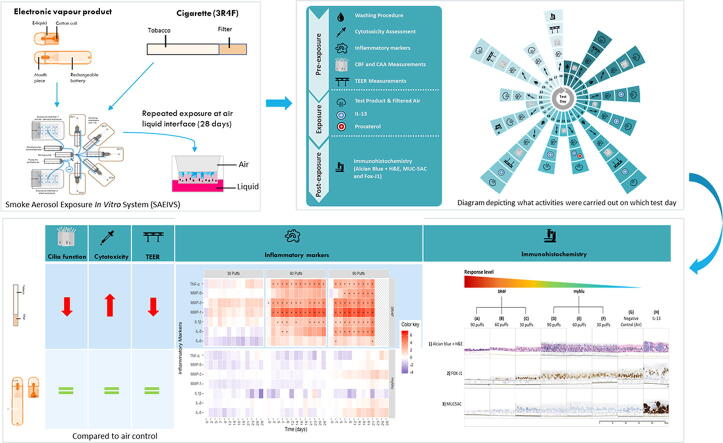
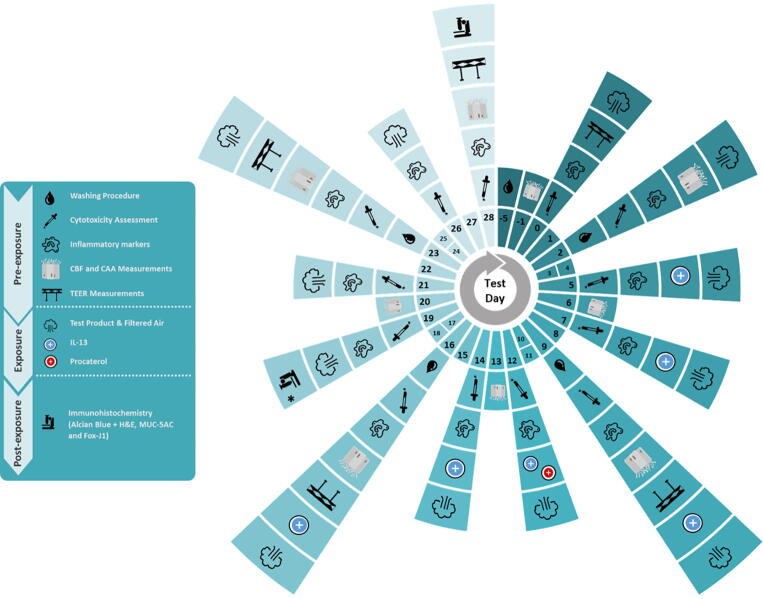
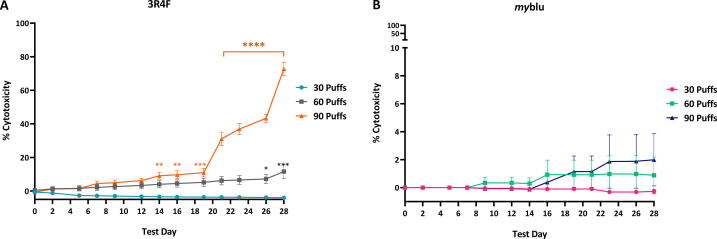
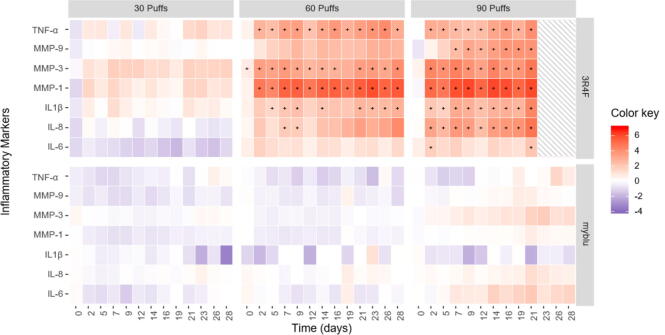
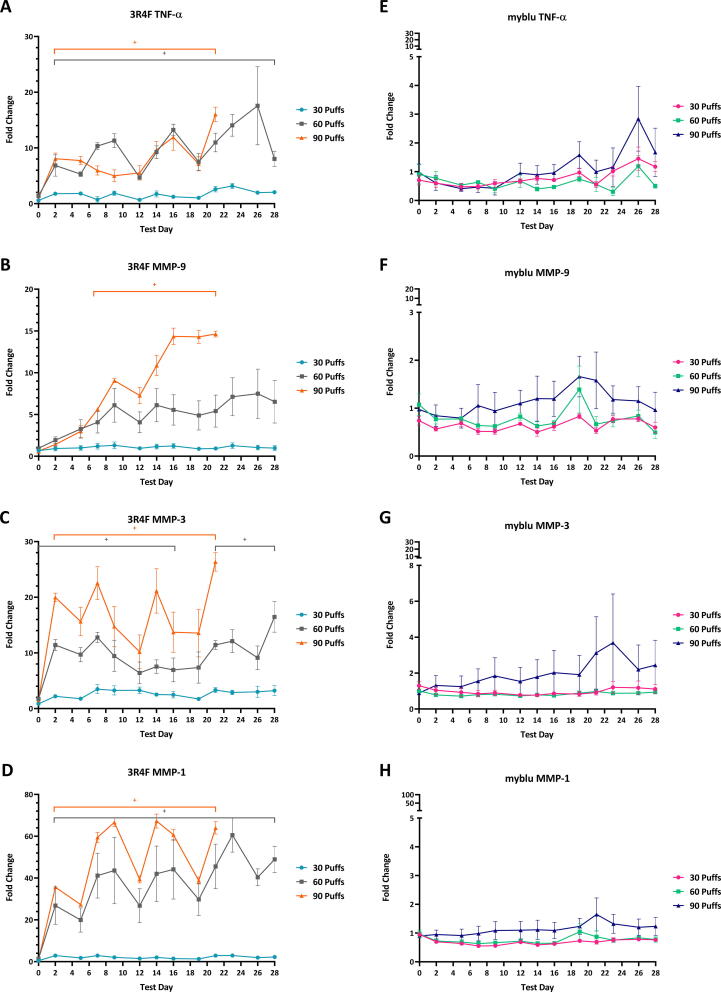
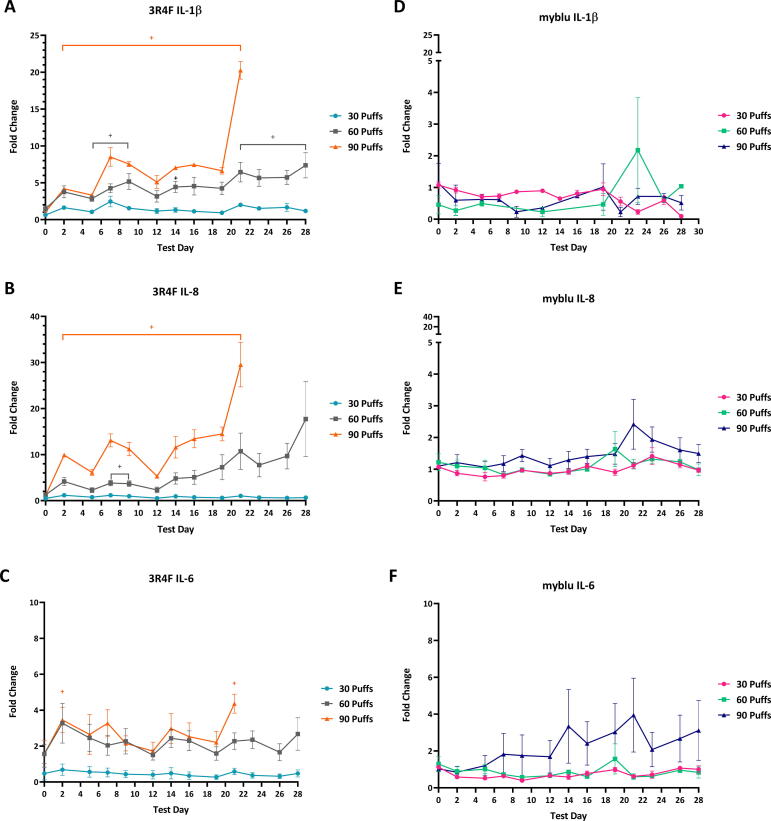
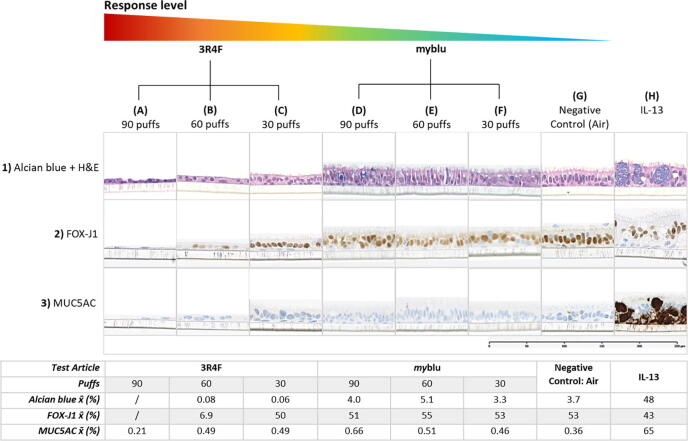
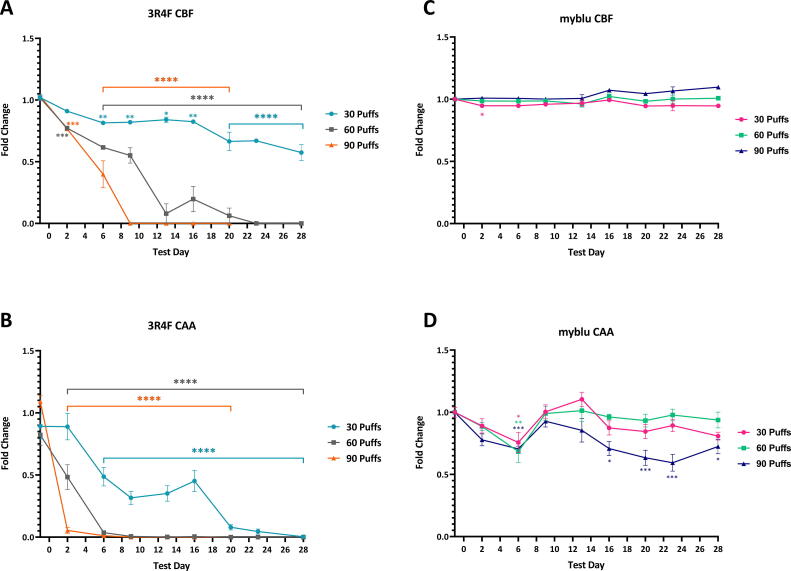
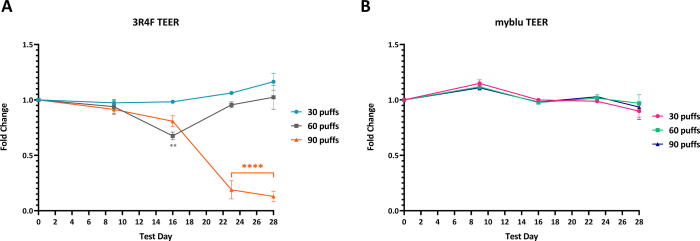
Smoking is a cause of serious diseases in smokers including chronic respiratory diseases. This study aimed to evaluate the tobacco harm reduction (THR) potential of an electronic vapor product (EVP, blu™) compared to a Kentucky Reference Cigarette (3R4F), and assessed endpoints related to chronic respiratory diseases. Endpoints included: cytotoxicity, barrier integrity (TEER), cilia function, immunohistochemistry, and pro-inflammatory markers. In order to more closely represent the user exposure scenario, we have employed the 3D organotypic model of human airway epithelium (MucilAir™, Epithelix) for respiratory assessment. The model was repeatedly exposed to either whole aerosol of the EVP, or whole 3R4F smoke, at the air liquid interface (ALI), for 4 weeks to either 30, 60 or 90 puffs on 3-exposure-per-week basis. 3R4F smoke generation used the ISO 20778:2018 regime and EVP aerosol used the ISO 20768:2018 vaping regime. Exposure to undiluted whole EVP aerosol did not trigger any significant changes in the level of pro-inflammatory mediators, cilia beating function, barrier integrity and cytotoxicity when compared with air controls. In contrast, exposure to diluted (1:17) whole cigarette smoke caused significant changes to all the endpoints mentioned above. To our knowledge, this is the first study evaluating the effects of repeated whole cigarette smoke and whole EVP aerosol exposure to a 3D lung model at the ALI. Our results add to the growing body of scientific literature supporting the THR potential of EVPs relative to combustible cigarettes and the applicability of the 3D lung models in human-relevant product risk assessments.
吸烟是吸烟者患严重疾病的一个原因,这些疾病包括慢性呼吸道疾病。本研究旨在评估一种电子雾化产品(EVP,blu™)相对于肯塔基参考卷烟(3R4F)的烟草危害降低(THR)潜力,并评估与慢性呼吸道疾病相关的终点指标。终点指标包括:细胞毒性、屏障完整性(跨上皮电阻,TEER)、纤毛功能、免疫组织化学和促炎标志物。为了更贴近用户的接触场景,我们采用了人呼吸道上皮的3D器官型模型(MucilAir™,Epithelix)进行呼吸道评估。该模型在气液界面(ALI)每周暴露3次,连续4周,每次暴露30、60或90口,分别暴露于EVP的全气溶胶或3R4F的全烟雾中。3R4F烟雾产生采用ISO 20778:2018方案,EVP气溶胶采用ISO 20768:2018雾化方案。与空气对照相比,暴露于未稀释的全EVP气溶胶不会引发促炎介质水平、纤毛摆动功能、屏障完整性和细胞毒性的任何显著变化。相比之下,暴露于稀释(1:17)的全卷烟烟雾会导致上述所有终点指标发生显著变化。据我们所知,这是第一项评估在ALI条件下,重复暴露于全卷烟烟雾和全EVP气溶胶对3D肺模型影响的研究。我们的结果进一步丰富了科学文献,支持EVP相对于可燃卷烟的THR潜力,以及3D肺模型在与人类相关的产品风险评估中的适用性。