Ciampoli Mariasole, Scheggia Diego, Papaleo Francesco
Genetics of Cognition Laboratory, Neuroscience Area, Istituto Italiano di Tecnologia, Genoa, Italy.
Department of Pharmacological and Biomolecular Sciences, University of Milan, Milan, Italy.
Front Behav Neurosci. 2021 Jul 19;15:704684. doi: 10.3389/fnbeh.2021.704684. eCollection 2021.
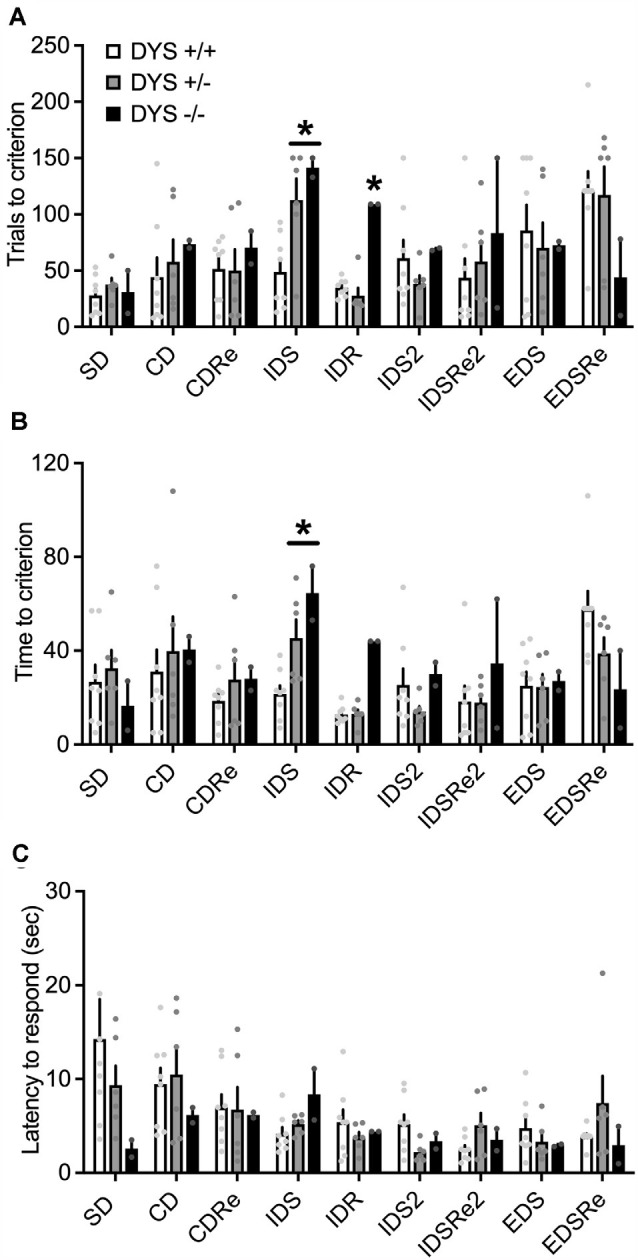
Adolescence is a developmental period crucial for the maturation of higher-order cognitive functions. Indeed, adolescence deficits in executive functions are strong predictors of increased vulnerability to several mental disabilities later in life. Here, we tested adolescent mice in a fully-automated attentional set-shifting task equivalent to the humans' Wisconsin Card Sorting Test (WCST) and the Cambridge Neuropsychological Test Automated Battery Intra-/Extra-Dimensional set-shift task (ID/ED). Compared to an adult, adolescent mice required more time to complete the task (≈16 days), and a higher percentage failed to finish the entire task. Nevertheless, adolescent mice completing this demanding task showed an increased effort in solving the extradimensional shift stage (EDS) compared to previous stages. Moreover, we found that this paradigm can be used to detect early cognitive dysfunctions in adolescent genetically modified mice. Thus, this automatic paradigm provides a further tool to assess attentional control in adolescent mice, and the development of dysfunctional executive functions from adolescence to adulthood.
青春期是高阶认知功能成熟的关键发育时期。事实上,青春期执行功能的缺陷是日后生活中易患多种精神障碍的有力预测指标。在此,我们在一项完全自动化的注意力转换任务中对青春期小鼠进行测试,该任务等同于人类的威斯康星卡片分类测验(WCST)和剑桥神经心理测试自动化成套测验中的维度内/维度间转换任务(ID/ED)。与成年小鼠相比,青春期小鼠完成任务所需时间更长(约16天),且未完成整个任务的比例更高。然而,完成这项艰巨任务的青春期小鼠在解决维度间转换阶段(EDS)时比之前阶段付出了更多努力。此外,我们发现该范式可用于检测青春期基因改造小鼠的早期认知功能障碍。因此,这种自动化范式为评估青春期小鼠的注意力控制以及从青春期到成年期执行功能障碍的发展提供了进一步的工具。