Jia Zhirong, Wang Kaiwei, Zhang Yameng, Duan Yalei, Xiao Kang, Liu Shuo, Ding Xuansheng
School of Basic Medicine and Clinical Pharmacy, China Pharmaceutical University, Nanjing, China.
Precision Medicine Laboratory, School of Basic Medicine and Clinical Pharmacy, China Pharmaceutical University, Nanjing, China.
Front Pharmacol. 2021 Jul 19;12:720387. doi: 10.3389/fphar.2021.720387. eCollection 2021.
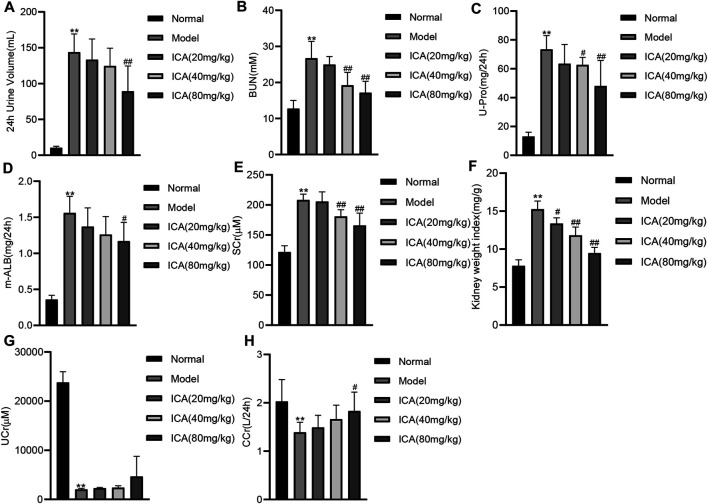
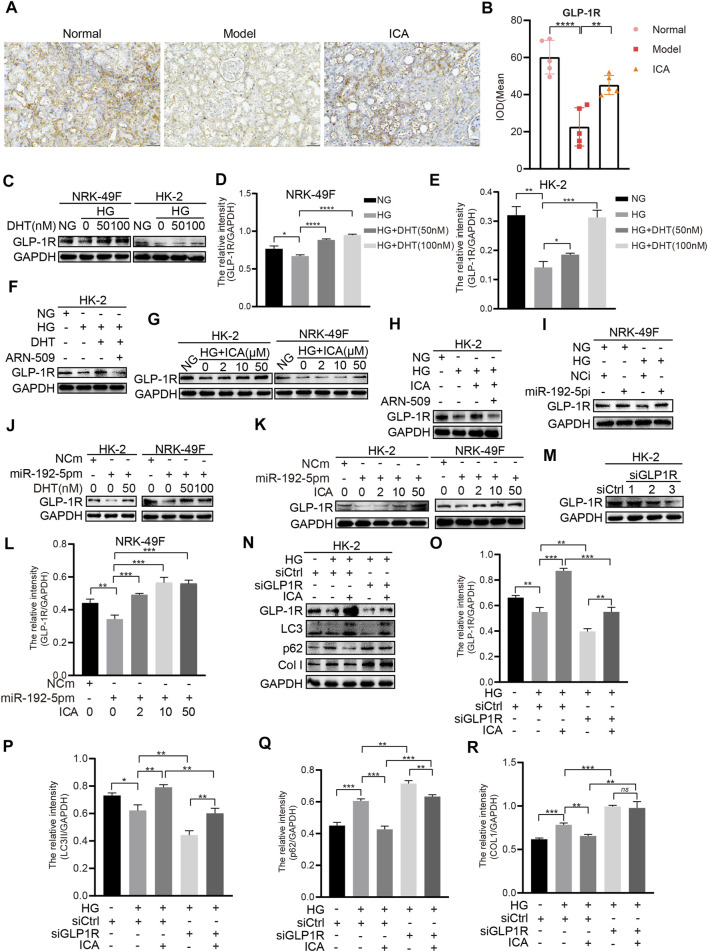
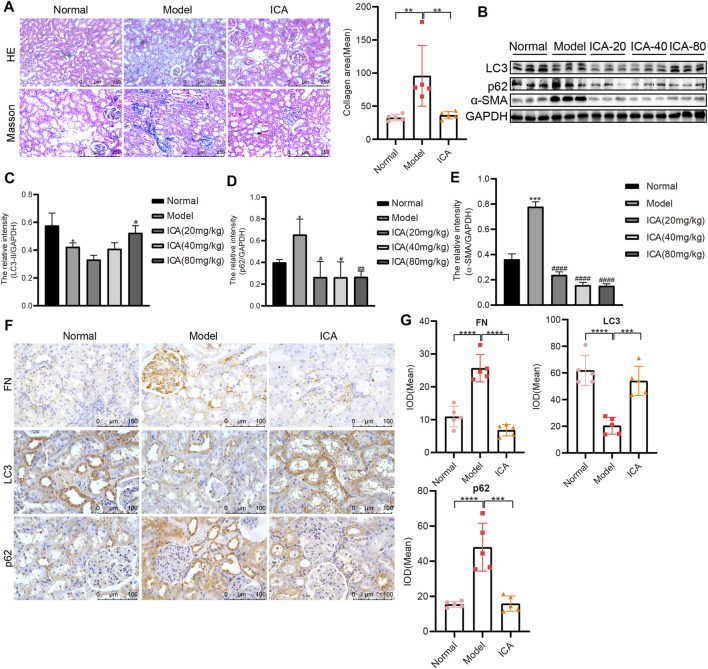
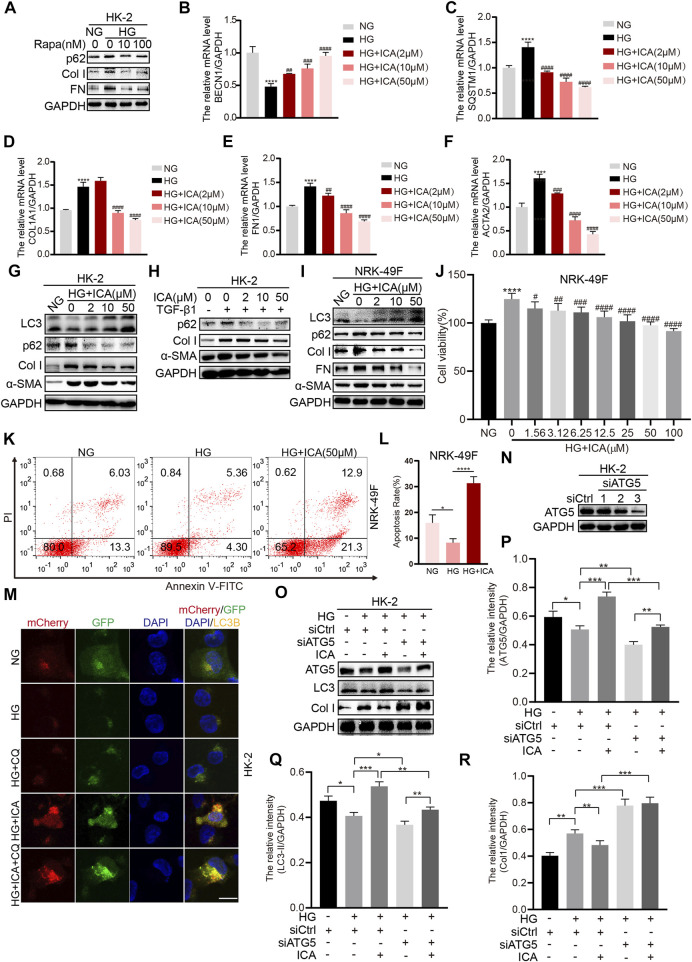
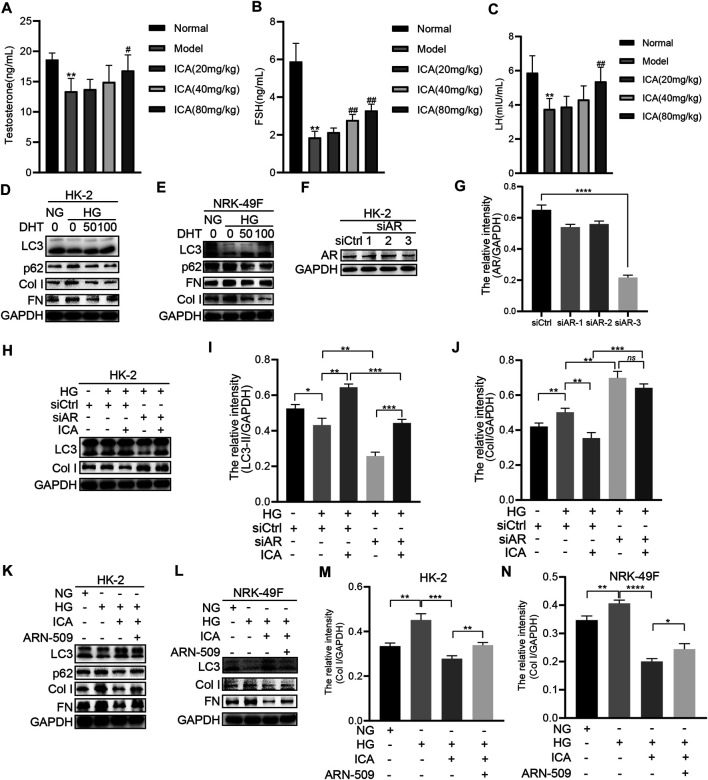
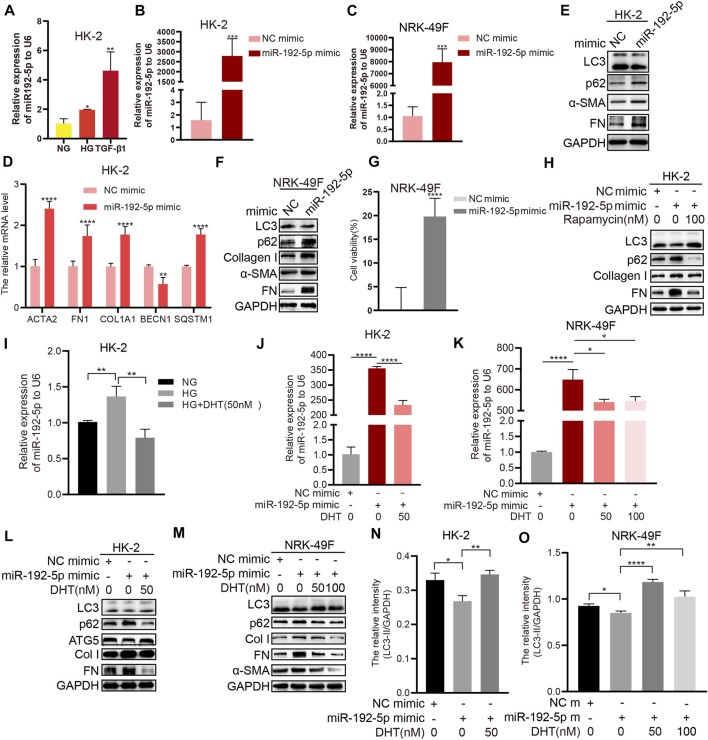
Tubulointerstitial fibrosis is one of the most common pathological features of diabetic nephropathy. Autophagy, an intracellular mechanism to remove damaged or dysfunctional cell parts and maintain metabolic homeostasis, is inhibited in diabetic neuropathy. Icariin is a traditional Chinese medicine extract known for nourishing the kidney and reinforcing Yang. In this study, we investigated the effects and mechanism of Icariin on renal function, autophagy, and fibrosis in type 2 diabetic nephropathic rats and in high-glucose-incubated human renal tubular epithelial cells and rat renal fibroblasts (). Icariin improved diabetes, renal function, restored autophagy, and alleviated fibrosis in type 2 diabetic neuropathic rats and . After we applied autophagy-related gene 5-small interfering RNA, we found that fibrosis improvement by Icariin was related to autophagy restoration. By detecting serum sex hormone levels, and using dihydrotestosterone, siRNA for androgen receptor, and the androgen receptor antagonist Apalutamide (ARN-509), we found that Icariin had an androgen-like effect and restored autophagy and reduced fibrosis by regulating the androgen receptor. In addition, miR-192-5p levels were increased under high glucose but reduced after dihydrotestosterone and Icariin treatment. Furthermore, dihydrotestosterone and Icariin inhibited miR-192-5p overexpression-induced fibrosis production and autophagy limitation. Glucagon-like peptide-1 receptor (GLP-1R) was downregulated by high glucose and overexpression of miR-192-5p and could be restored by dihydrotestosterone and Icariin. By using ARN-509, we found that Icariin increased GLP-1R expression by regulating the androgen receptor. GLP-1R-siRNA transfection weakened the effects of Icariin on autophagy and fibrosis. These findings indicate that Icariin alleviates tubulointerstitial fibrosis by restoring autophagy through the miR-192-5p/GLP-1R pathway and is a novel therapeutic option for diabetic fibrosis.
肾小管间质纤维化是糖尿病肾病最常见的病理特征之一。自噬是一种细胞内清除受损或功能失调细胞成分并维持代谢稳态的机制,在糖尿病神经病变中受到抑制。淫羊藿苷是一种以补肾壮阳著称的中药提取物。在本研究中,我们调查了淫羊藿苷对2型糖尿病肾病大鼠以及高糖培养的人肾小管上皮细胞和大鼠肾成纤维细胞的肾功能、自噬和纤维化的影响及机制。淫羊藿苷改善了2型糖尿病神经病变大鼠的糖尿病状况和肾功能,恢复了自噬,并减轻了纤维化。在应用自噬相关基因5-小干扰RNA后,我们发现淫羊藿苷对纤维化的改善与自噬的恢复有关。通过检测血清性激素水平,并使用双氢睾酮、雄激素受体的小干扰RNA以及雄激素受体拮抗剂阿帕鲁胺(ARN-509),我们发现淫羊藿苷具有雄激素样作用,并通过调节雄激素受体恢复自噬并减少纤维化。此外,高糖条件下miR-192-5p水平升高,但双氢睾酮和淫羊藿苷处理后降低。此外,双氢睾酮和淫羊藿苷抑制了miR-192-5p过表达诱导的纤维化产生和自噬限制。胰高血糖素样肽-1受体(GLP-1R)在高糖和miR-192-5p过表达时下调,双氢睾酮和淫羊藿苷可使其恢复。通过使用ARN-509,我们发现淫羊藿苷通过调节雄激素受体增加GLP-1R表达。GLP-1R-小干扰RNA转染减弱了淫羊藿苷对自噬和纤维化的作用。这些发现表明,淫羊藿苷通过miR-192-/GLP-1R途径恢复自噬来减轻肾小管间质纤维化,是糖尿病纤维化的一种新的治疗选择。