Seo Hye-Rim, Nam Ah-Rong, Bang Ju-Hee, Oh Kyoung-Seok, Kim Jae-Min, Yoon Jeesun, Kim Tae-Yong, Oh Do-Youn
Cancer Research Institute, Seoul National University College of Medicine, Seoul, Korea.
Integrated Major in Innovative Medical Science, Seoul National University College of Medicine, Seoul, Korea.
Cancer Res Treat. 2022 Apr;54(2):541-553. doi: 10.4143/crt.2021.473. Epub 2021 Aug 6.
Up to 20% of patients with biliary tract cancer (BTC) have alterations in DNA damage response (DDR) genes, including homologous recombination (HR) genes. Therefore, the DDR pathway could be a promising target for new drug development in BTC. We aim to investigate the anti-tumor effects using poly(ADP-ribose) polymerase (PARP) and WEE1 inhibitors in BTC.
We used 10 BTC cell lines to evaluate an anti-tumor effect of olaparib (a PARP inhibitor) and AZD1775 (a WEE1 inhibitor) in in vitro. Additionally, we established SNU869 xenograft model for in vivo experiments.
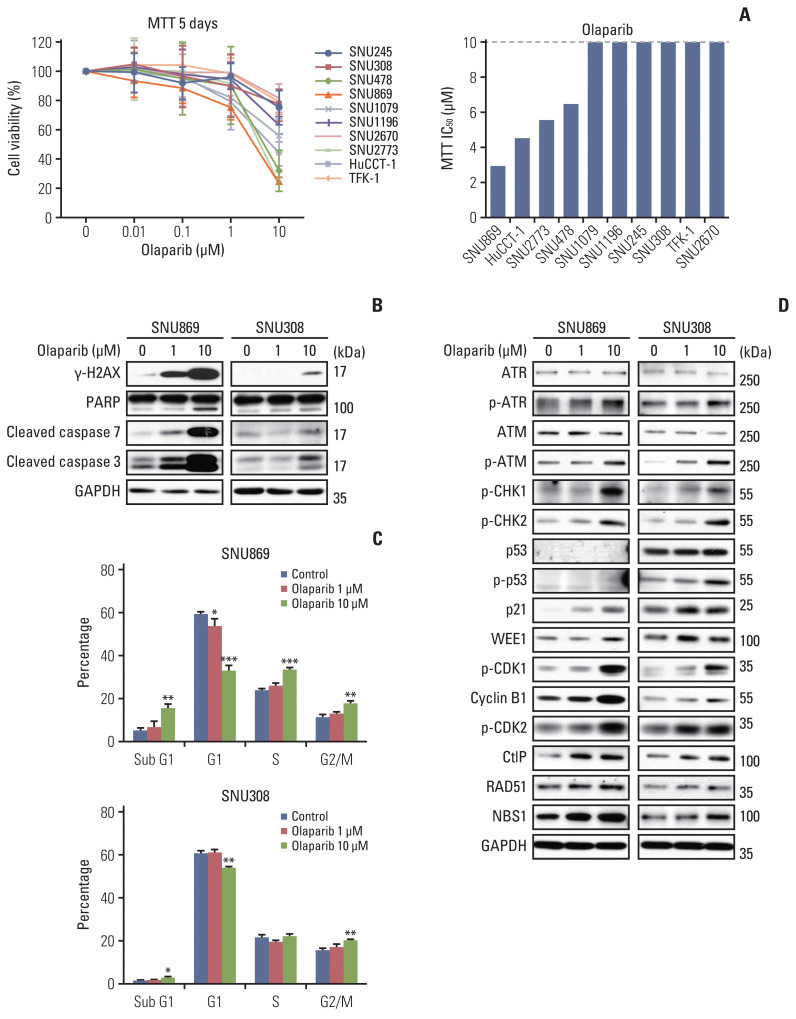
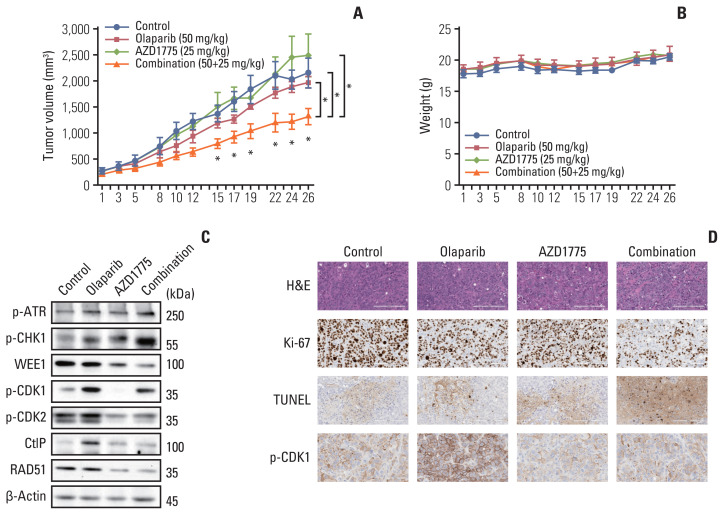
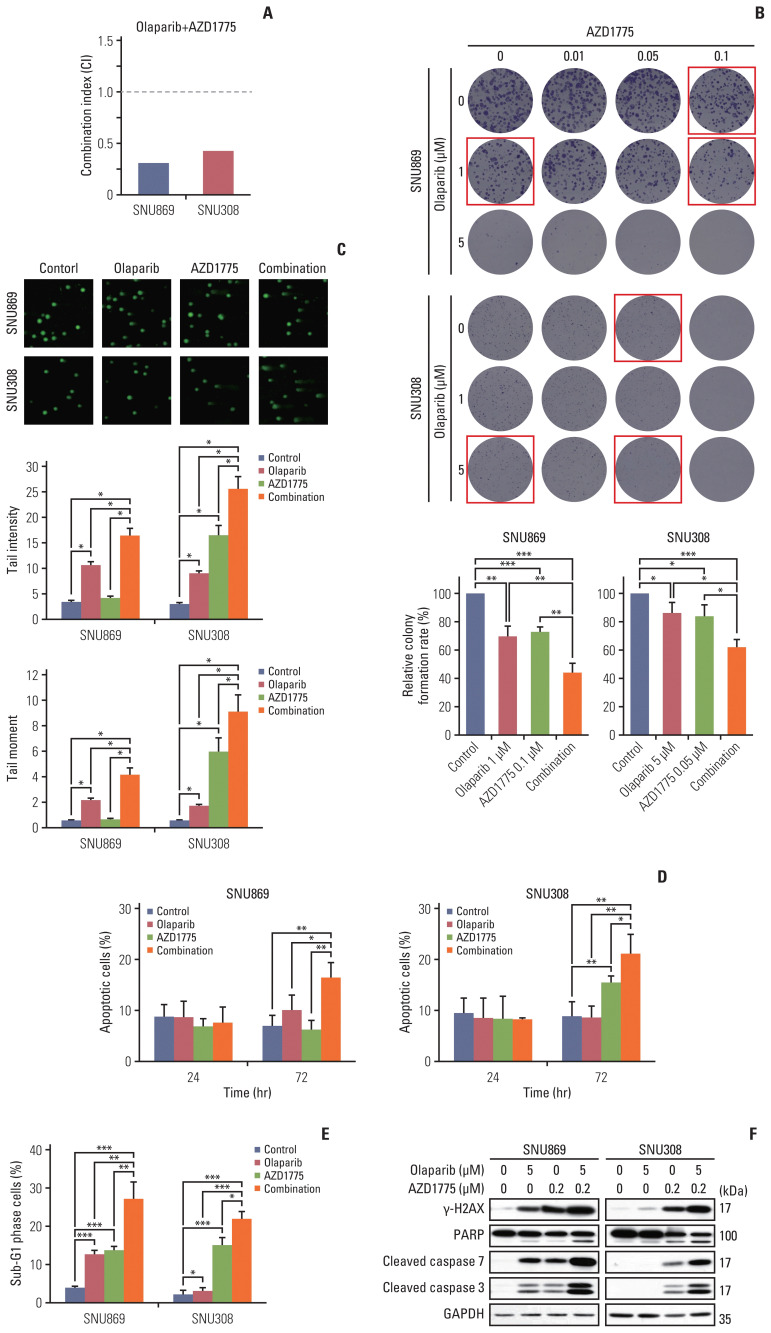
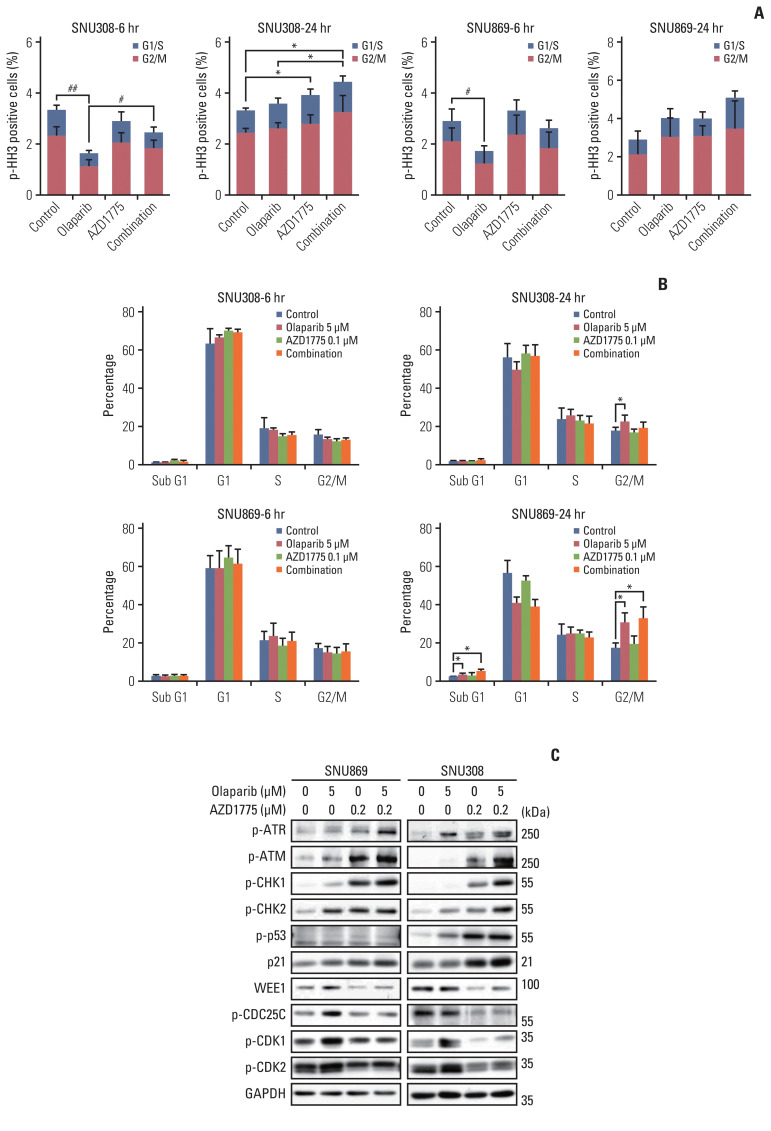
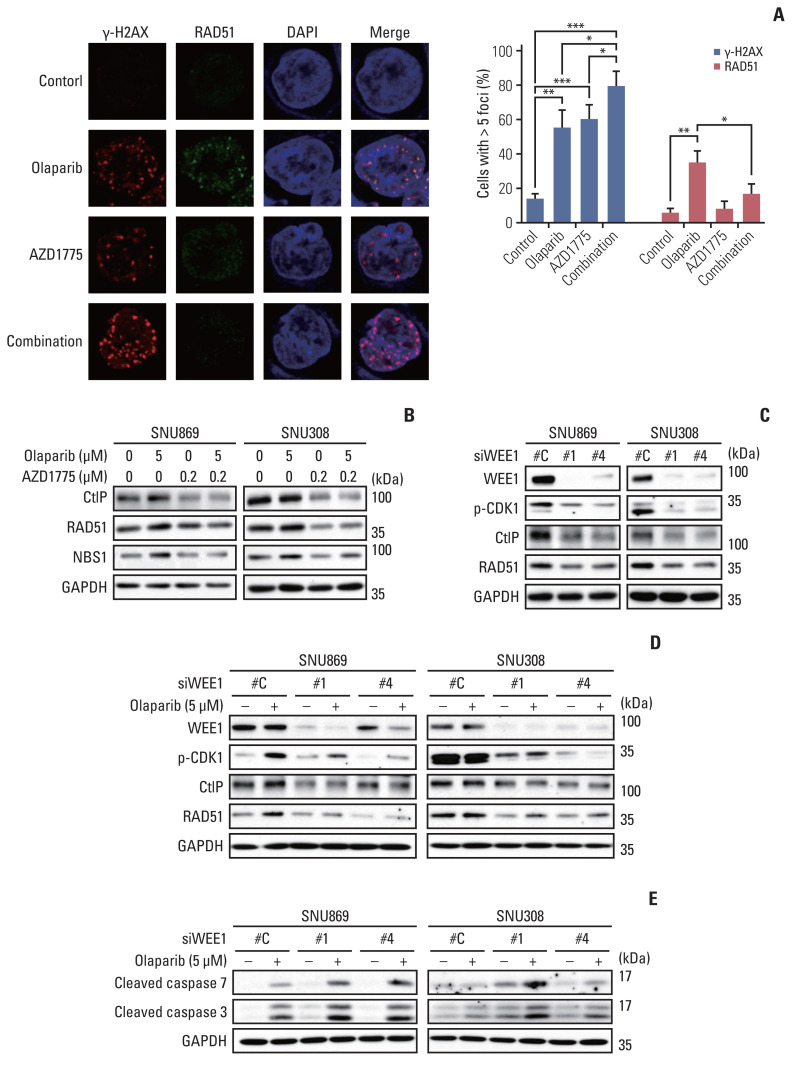
In this study, we observed a modest anti-proliferative effect of olaparib. DNA double-strand break (DSB) and apoptosis were increased by olaparib in BTC cells. However, olaparib-induced DNA DSB was repaired through the HR pathway, and G2 arrest was induced to secure the time for repair. As AZD1775 typically regulates the G2/M checkpoint, we combined olaparib with AZD1775 to abrogate G2 arrest. We observed that AZD1775 downregulated p-CDK1, a G2/M cell cycle checkpoint protein, and induced early mitotic entry. AZD1775 also decreased CtIP and RAD51 expression and disrupted HR repair. In xenograft model, olaparib plus AZD1775 treatment reduced tumor growth more potently than did monotherapy with either drug.
This is the first study to suggest that olaparib combined with AZD1775 can induce synergistic anti-tumor effects against BTC. Combination therapy that blocks dual PARP and WEE1 has the potential to be further clinically developed for BTC patients.
高达20%的胆管癌(BTC)患者存在DNA损伤反应(DDR)基因改变,包括同源重组(HR)基因。因此,DDR途径可能是BTC新药开发的一个有前景的靶点。我们旨在研究聚(ADP-核糖)聚合酶(PARP)和WEE1抑制剂在BTC中的抗肿瘤作用。
我们使用10种BTC细胞系在体外评估奥拉帕利(一种PARP抑制剂)和AZD1775(一种WEE1抑制剂)的抗肿瘤作用。此外,我们建立了SNU869异种移植模型用于体内实验。
在本研究中,我们观察到奥拉帕利有适度的抗增殖作用。奥拉帕利可增加BTC细胞中的DNA双链断裂(DSB)和凋亡。然而,奥拉帕利诱导的DNA DSB通过HR途径修复,并诱导G2期阻滞以确保修复时间。由于AZD1775通常调节G2/M检查点,我们将奥拉帕利与AZD1775联合使用以消除G2期阻滞。我们观察到AZD1775下调了G2/M细胞周期检查点蛋白p-CDK1,并诱导早期有丝分裂进入。AZD1775还降低了CtIP和RAD51的表达并破坏了HR修复。在异种移植模型中,奥拉帕利加AZD1775治疗比单独使用任何一种药物的单药治疗更有效地抑制肿瘤生长。
这是第一项表明奥拉帕利与AZD1775联合可诱导对BTC的协同抗肿瘤作用的研究。阻断PARP和WEE1双重作用的联合疗法有可能为BTC患者进一步开展临床研究。