Szabó Zoltán-István, Orbán György, Borbás Enikő, Csicsák Dóra, Kádár Szabina, Fiser Béla, Dobó Máté, Horváth Péter, Kiss Eszter, Budai Lívia, Dobos Judit, Pálla Tamás, Őrfi László, Völgyi Gergely, Tóth Gergő
Department of Pharmaceutical Industry and Management, George Emil Palade University of Medicine, Pharmacy, Science and Technology of Targu Mures, Gh. Marinescu 38, RO-540139, Targu Mures, Romania.
Department of Pharmaceutical Chemistry, Semmelweis University, Hőgyes E. u. 9, Budapest H-1092, Hungary.
Heliyon. 2021 Jul 15;7(7):e07581. doi: 10.1016/j.heliyon.2021.e07581. eCollection 2021 Jul.
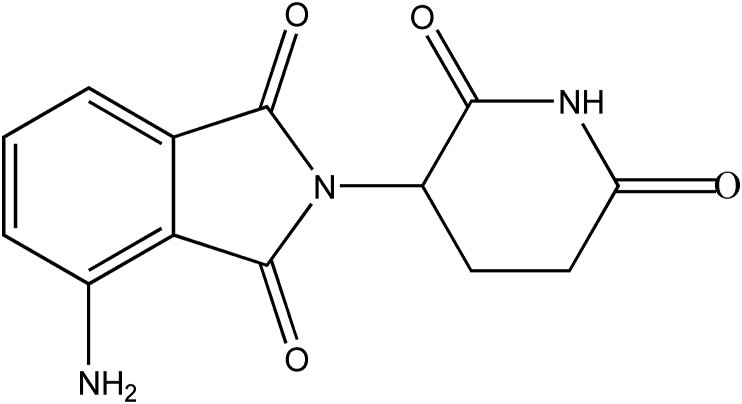
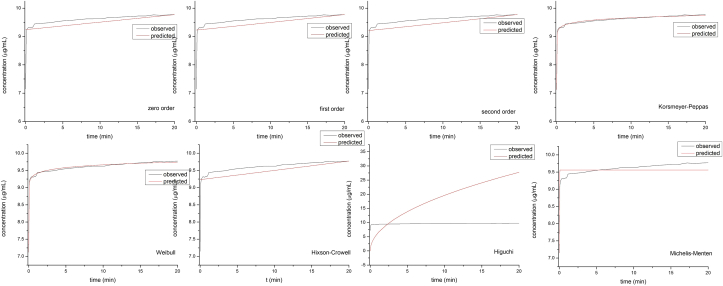
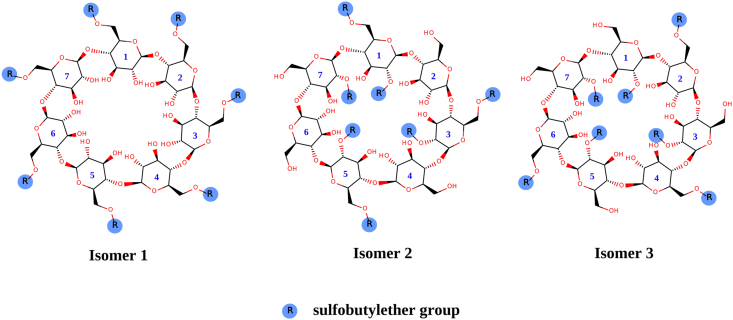
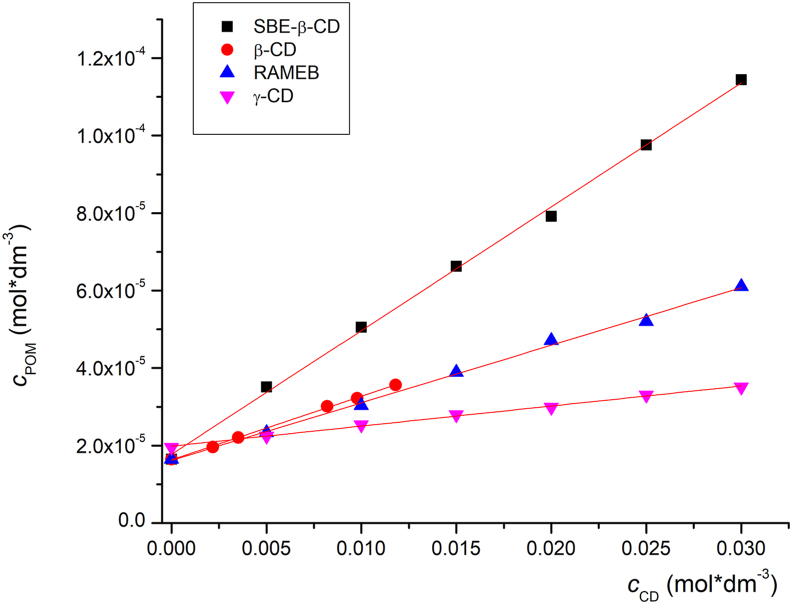
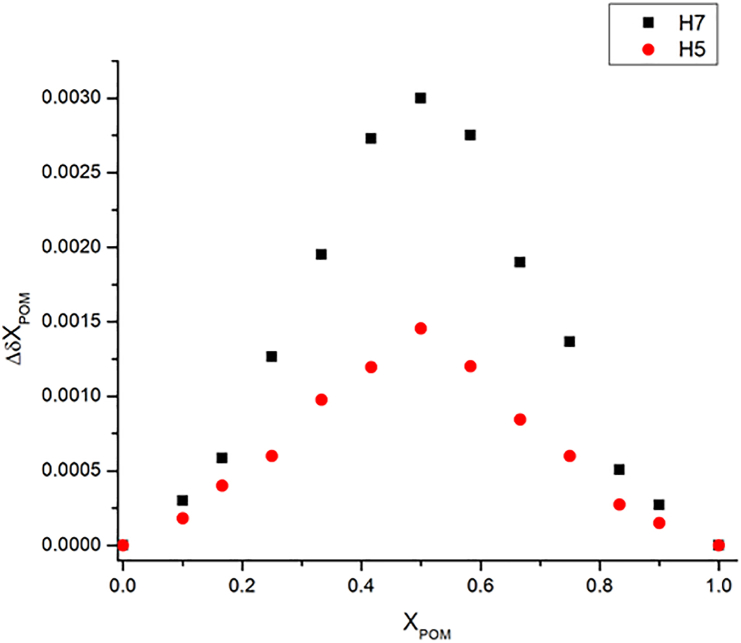
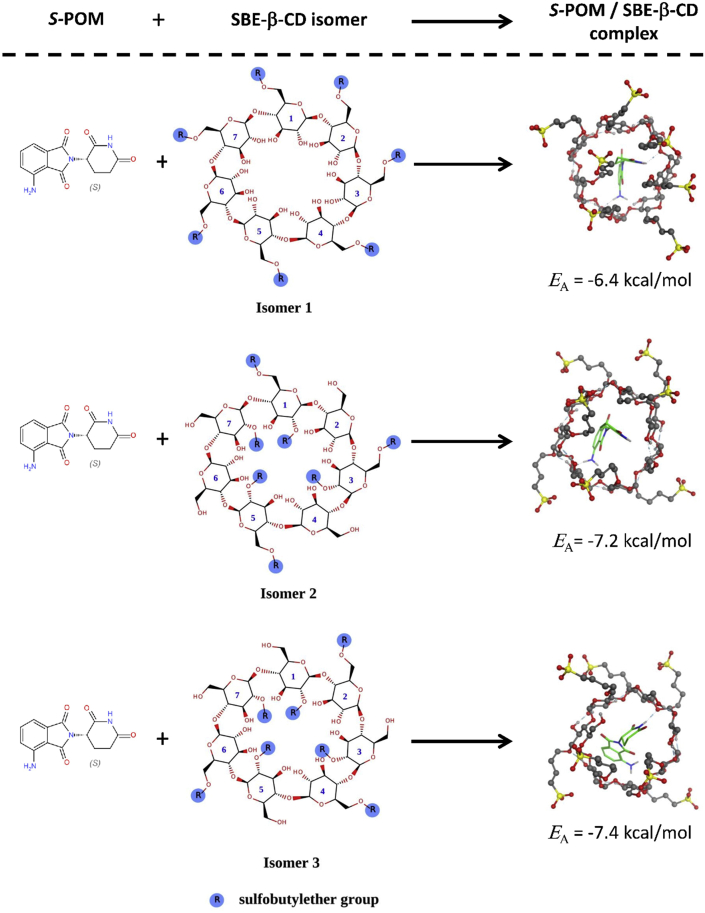
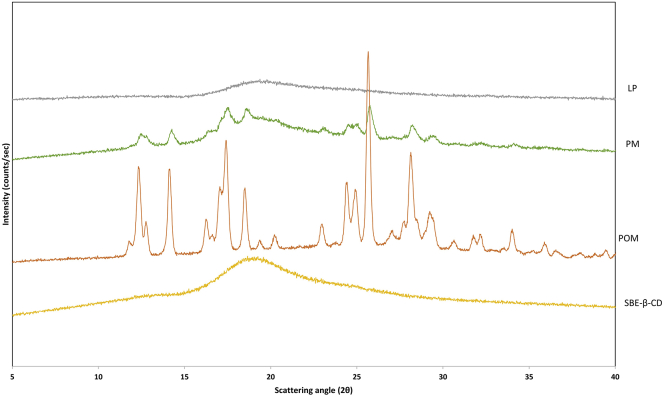
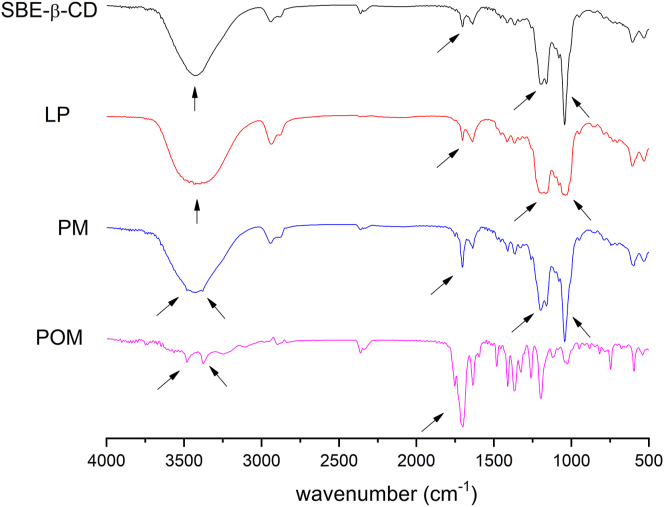
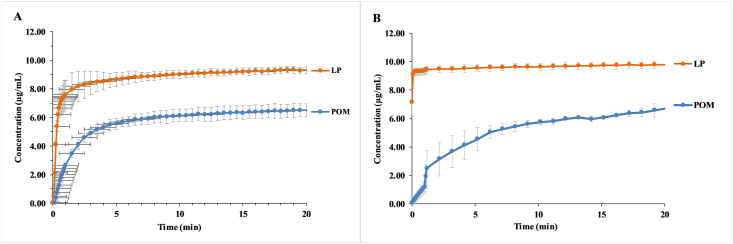
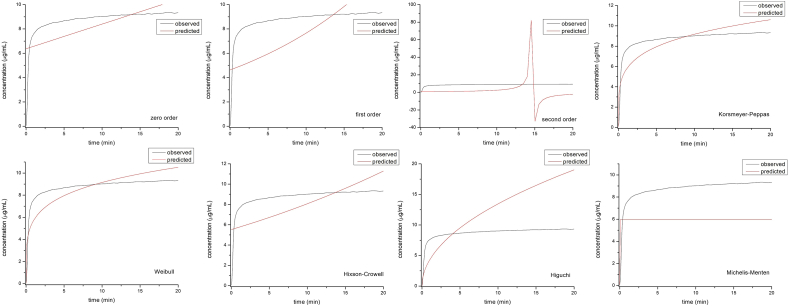
Pomalidomide (POM), a potent anticancer thalidomide analogue was characterized in terms of cyclodextrin complexation to improve its aqueous solubility and maintain its anti-angiogenic activity. The most promising cyclodextrin derivatives were selected by phase-solubility studies. From the investigated nine cyclodextrins - differing in cavity size, nature of substituents, degree of substitution and charge - the highest solubility increase was observed with sulfobutylether-β-cyclodextrin (SBE-β-CD). The inclusion complexation between POM and SBE-β-CD was further characterized with a wide variety of state-of-the-art analytical techniques, such as nuclear magnetic resonance spectroscopy (NMR), infrared spectroscopy (IR), circular dichroism spectroscopy, fluorescence spectroscopy as well as X-ray powder diffraction method (XRD). Job plot titration by NMR and the A-type phase-solubility diagram indicated 1:1 stoichiometry in a liquid state. Complementary analytical methods were employed for the determination of the stability constant of the complex; the advantages and disadvantages of the different approaches are also discussed. Inclusion complex formation was also assessed by molecular modelling study. Solid state complexation in a 1:1 M ratio was carried out by lyophilization and investigated by IR and XRD. The complex exhibited fast-dissolution with immediate release of POM, when compared to the pure drug at acidic and neutral pH. Kinetic analysis of POM release from lyophilized complex shows that Korsmeyer-Peppas and Weibull model described the best the dissolution kinetics. The cytotoxicity of the complex was tested against the LP-1 human myeloma cell line which revealed that supramolecular interactions did not significantly affect the anti-cancer activity of the drug. Overall, our results suggest that the inclusion complexation of POM with SBE-β-CD could be a promising approach for developing more effective POM formulations with increased solubility.
泊马度胺(POM)是一种有效的抗癌沙利度胺类似物,通过环糊精包合作用对其进行表征,以提高其水溶性并保持其抗血管生成活性。通过相溶解度研究选择了最有前景的环糊精衍生物。在所研究的九种环糊精中——它们在空腔大小、取代基性质、取代度和电荷方面存在差异——观察到磺丁基醚-β-环糊精(SBE-β-CD)使溶解度增加最高。POM与SBE-β-CD之间的包合作用通过多种先进的分析技术进一步表征,如核磁共振光谱(NMR)、红外光谱(IR)、圆二色光谱、荧光光谱以及X射线粉末衍射法(XRD)。通过NMR进行的Job曲线滴定和A型相溶解度图表明在液态下化学计量比为1:1。采用互补分析方法测定复合物的稳定常数;还讨论了不同方法的优缺点。通过分子建模研究评估了包合复合物的形成。通过冻干进行1:M比例的固态包合,并通过IR和XRD进行研究。与纯药物在酸性和中性pH下相比,该复合物表现出快速溶解并能立即释放POM。对冻干复合物中POM释放的动力学分析表明,Korsmeyer-Peppas模型和Weibull模型最能描述溶解动力学。测试了该复合物对LP-1人骨髓瘤细胞系的细胞毒性,结果表明超分子相互作用并未显著影响该药物的抗癌活性。总体而言,我们的结果表明,POM与SBE-β-CD的包合作用可能是开发更有效的、溶解度增加的POM制剂的一种有前景的方法。