• 文献检索
  • 文档翻译
  • 深度研究
  • 学术资讯
  • Suppr Zotero 插件Zotero 插件
  • 邀请有礼
  • 套餐&价格
  • 历史记录
应用&插件
Suppr Zotero 插件Zotero 插件浏览器插件Mac 客户端Windows 客户端微信小程序
定价
高级版会员购买积分包购买API积分包
服务
文献检索文档翻译深度研究API 文档MCP 服务
关于我们
关于 Suppr公司介绍联系我们用户协议隐私条款
关注我们

Suppr 超能文献

核心技术专利:CN118964589B侵权必究
粤ICP备2023148730 号-1Suppr @ 2026

文献检索

告别复杂PubMed语法,用中文像聊天一样搜索,搜遍4000万医学文献。AI智能推荐,让科研检索更轻松。

立即免费搜索

文件翻译

保留排版,准确专业,支持PDF/Word/PPT等文件格式,支持 12+语言互译。

免费翻译文档

深度研究

AI帮你快速写综述,25分钟生成高质量综述,智能提取关键信息,辅助科研写作。

立即免费体验

性别差异与游戏体验对小学生空间认知能力的影响:一项探索性研究

Sex Differences and the Role of Gaming Experience in Spatial Cognition Performance in Primary School Children: An Exploratory Study.

作者信息

van Dun Claudia, van Kraaij Alex, Wegman Joost, Kuipers Jorrit, Aarts Esther, Janzen Gabriele

机构信息

Donders Institute for Cognitive Neuroimaging, Radboud University Nijmegen, 6525 XZ Nijmegen, The Netherlands.

Green Dino, 6708 PB Wageningen, The Netherlands.

出版信息

Brain Sci. 2021 Jul 1;11(7):886. doi: 10.3390/brainsci11070886.

DOI:10.3390/brainsci11070886
PMID:34356121
原文链接:https://pmc.ncbi.nlm.nih.gov/articles/PMC8301968/
Abstract

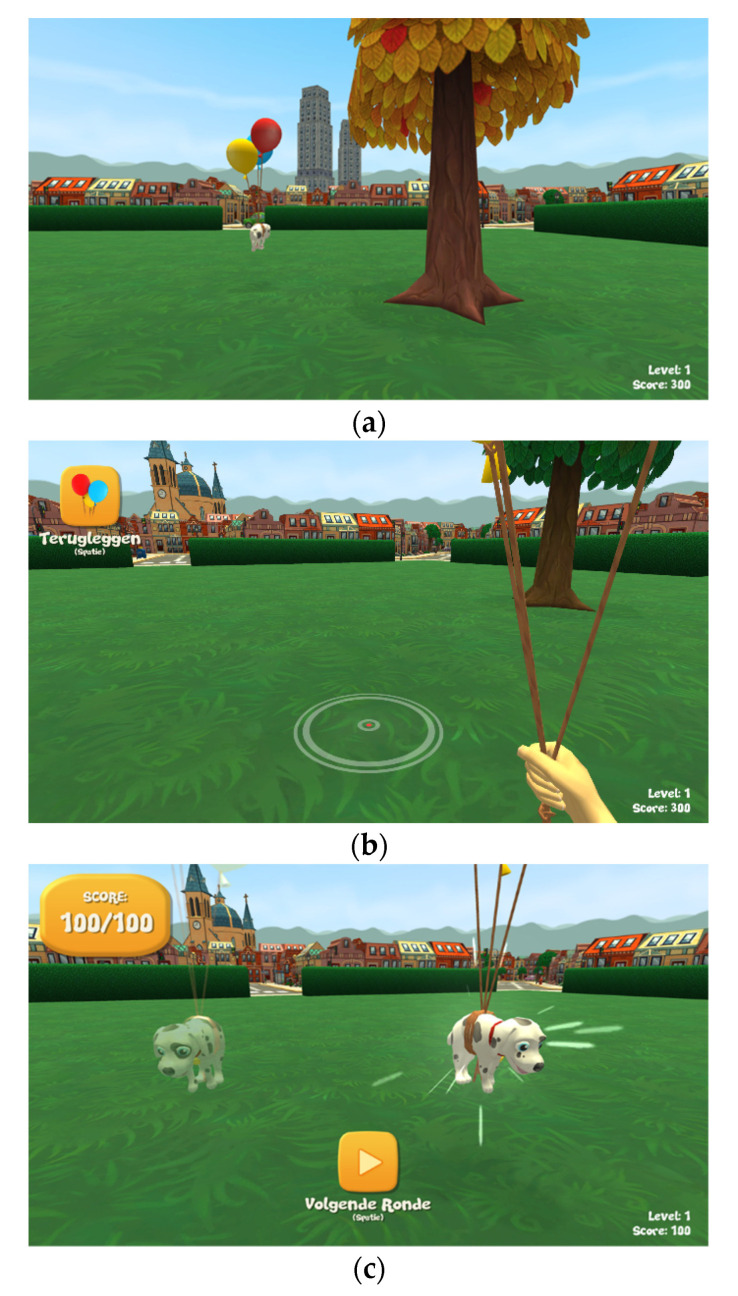
Sex differences are repeatedly observed in spatial cognition tasks. However, the role of environmental factors such as gaming experience remains unclear. In this exploratory study, navigation and object-relocation were combined in a naturalistic virtual reality-based spatial task. The sample consisted of = 53 Dutch children aged 9-11 years. Overall, girls ( = 24) and boys ( = 29) performed equally accurately, although there was an increase in accuracy with age for boys ( = 0.09). Boys navigated faster than girls ( = 0.29), and this difference increased with age ( = 0.07). More gaming experience in boys versus girls (Cohen's = 0.88) did not explain any result observed. We encourage future confirmatory studies to use the paradigm presented here to investigate the current results in a larger sample. These findings could be beneficial for optimizing spatial cognition training interventions.

摘要

在空间认知任务中反复观察到性别差异。然而,诸如游戏体验等环境因素的作用仍不明确。在这项探索性研究中,导航和物体重新定位被结合在一个基于自然主义虚拟现实的空间任务中。样本包括53名9至11岁的荷兰儿童。总体而言,女孩(n = 24)和男孩(n = 29)的表现同样准确,尽管男孩的准确性随年龄增长而提高(r = 0.09)。男孩的导航速度比女孩快(r = 0.29),且这种差异随年龄增长而增大(r = 0.07)。男孩比女孩有更多的游戏体验(科恩d = 0.88),但这并不能解释所观察到的任何结果。我们鼓励未来的验证性研究使用这里提出的范式,在更大的样本中调查当前的结果。这些发现可能有助于优化空间认知训练干预措施。

https://cdn.ncbi.nlm.nih.gov/pmc/blobs/9738/8301968/600fad4b14f8/brainsci-11-00886-g005.jpg
https://cdn.ncbi.nlm.nih.gov/pmc/blobs/9738/8301968/0db6b8bcce87/brainsci-11-00886-g001.jpg
https://cdn.ncbi.nlm.nih.gov/pmc/blobs/9738/8301968/ce0ed101a192/brainsci-11-00886-g002.jpg
https://cdn.ncbi.nlm.nih.gov/pmc/blobs/9738/8301968/7f2f4629af59/brainsci-11-00886-g003.jpg
https://cdn.ncbi.nlm.nih.gov/pmc/blobs/9738/8301968/a64da1e9102d/brainsci-11-00886-g004.jpg
https://cdn.ncbi.nlm.nih.gov/pmc/blobs/9738/8301968/600fad4b14f8/brainsci-11-00886-g005.jpg
https://cdn.ncbi.nlm.nih.gov/pmc/blobs/9738/8301968/0db6b8bcce87/brainsci-11-00886-g001.jpg
https://cdn.ncbi.nlm.nih.gov/pmc/blobs/9738/8301968/ce0ed101a192/brainsci-11-00886-g002.jpg
https://cdn.ncbi.nlm.nih.gov/pmc/blobs/9738/8301968/7f2f4629af59/brainsci-11-00886-g003.jpg
https://cdn.ncbi.nlm.nih.gov/pmc/blobs/9738/8301968/a64da1e9102d/brainsci-11-00886-g004.jpg
https://cdn.ncbi.nlm.nih.gov/pmc/blobs/9738/8301968/600fad4b14f8/brainsci-11-00886-g005.jpg

相似文献

1
Sex Differences and the Role of Gaming Experience in Spatial Cognition Performance in Primary School Children: An Exploratory Study.性别差异与游戏体验对小学生空间认知能力的影响:一项探索性研究
Brain Sci. 2021 Jul 1;11(7):886. doi: 10.3390/brainsci11070886.
2
A Virtual Object-Location Task for Children: Gender and Videogame Experience Influence Navigation; Age Impacts Memory and Completion Time.一项针对儿童的虚拟物体定位任务:性别和电子游戏体验会影响导航;年龄会影响记忆和完成时间。
Front Psychol. 2018 Apr 4;9:451. doi: 10.3389/fpsyg.2018.00451. eCollection 2018.
3
Sex Differences in Using Spatial and Verbal Abilities Influence Route Learning Performance in a Virtual Environment: A Comparison of 6- to 12-Year Old Boys and Girls.6至12岁男孩与女孩在虚拟环境中运用空间和语言能力的性别差异对路线学习表现的影响
Front Psychol. 2016 Feb 25;7:258. doi: 10.3389/fpsyg.2016.00258. eCollection 2016.
4
Developmental gender differences in children in a virtual spatial memory task.儿童在虚拟空间记忆任务中的发育性别差异。
Neuropsychology. 2014 Jul;28(4):485-95. doi: 10.1037/neu0000054. Epub 2014 Mar 3.
5
Spatial Navigation in Children and Young Adults with Fetal Alcohol Spectrum Disorders.胎儿酒精谱系障碍儿童和青少年的空间导航。
Alcohol Clin Exp Res. 2019 Dec;43(12):2536-2546. doi: 10.1111/acer.14210. Epub 2019 Oct 23.
6
Evaluation of a conceptual framework for predicting navigation performance in virtual reality.用于预测虚拟现实中导航性能的概念框架评估。
PLoS One. 2017 Sep 15;12(9):e0184682. doi: 10.1371/journal.pone.0184682. eCollection 2017.
7
Screen-based behaviors in Australian adolescents: Longitudinal trends from a 4-year follow-up study.澳大利亚青少年的屏幕行为:一项为期 4 年的随访研究的纵向趋势。
Prev Med. 2020 Dec;141:106258. doi: 10.1016/j.ypmed.2020.106258. Epub 2020 Oct 3.
8
Age-related similarities and differences in monitoring spatial cognition.与年龄相关的空间认知监测方面的异同。
Neuropsychol Dev Cogn B Aging Neuropsychol Cogn. 2018 May;25(3):351-377. doi: 10.1080/13825585.2017.1305086. Epub 2017 Mar 31.
9
Virtual navigation tested on a mobile app is predictive of real-world wayfinding navigation performance.移动应用程序上的虚拟导航测试可预测现实世界中的寻路导航性能。
PLoS One. 2019 Mar 18;14(3):e0213272. doi: 10.1371/journal.pone.0213272. eCollection 2019.
10
Gender, videogames and navigation in virtual space.性别、电子游戏与虚拟空间中的导航
Acta Psychol (Amst). 2019 Aug;199:102895. doi: 10.1016/j.actpsy.2019.102895. Epub 2019 Aug 1.

引用本文的文献

1
Application of Virtual Reality in Spatial Memory.虚拟现实在空间记忆中的应用。
Brain Sci. 2023 Nov 23;13(12):1621. doi: 10.3390/brainsci13121621.
2
Development of Landmark Use for Navigation in Children: Effects of Age, Sex, Working Memory and Landmark Type.儿童导航中地标使用的发展:年龄、性别、工作记忆和地标类型的影响。
Brain Sci. 2022 Jun 13;12(6):776. doi: 10.3390/brainsci12060776.
3
Eye-Movements During Navigation in a Virtual Environment: Sex Differences and Relationship to Sex Hormones.虚拟环境中导航时的眼动:性别差异及其与性激素的关系。

本文引用的文献

1
A meta-analysis of sex differences in human navigation skills.人类导航技能性别差异的荟萃分析。
Psychon Bull Rev. 2019 Oct;26(5):1503-1528. doi: 10.3758/s13423-019-01633-6.
2
Spatial orientation assessment in preschool children: Egocentric and allocentric frameworks.学龄前儿童的空间定向评估:自我中心和他我中心框架
Appl Neuropsychol Child. 2021 Apr;10(2):171-193. doi: 10.1080/21622965.2019.1630278. Epub 2019 Jul 3.
3
Neural correlates of egocentric and allocentric frames of reference combined with metric and non-metric spatial relations.
Front Neurosci. 2022 Apr 29;16:755393. doi: 10.3389/fnins.2022.755393. eCollection 2022.
与度量和非度量空间关系相结合的自我中心和以他人为中心参照系的神经关联。
Neuroscience. 2019 Jun 15;409:235-252. doi: 10.1016/j.neuroscience.2019.04.021. Epub 2019 Apr 17.
4
Development of spatial orientation skills: an fMRI study.空间定位技能的发展:一项 fMRI 研究。
Brain Imaging Behav. 2019 Dec;13(6):1590-1601. doi: 10.1007/s11682-018-0028-5.
5
Object recognition and location: Which component of object location memory for landmarks is affected by gender? Evidence from four to ten year-old children.物体识别与定位:地标性物体定位记忆的哪个组成部分会受到性别的影响?来自4至10岁儿童的证据。
Appl Neuropsychol Child. 2020 Jan-Mar;9(1):31-40. doi: 10.1080/21622965.2018.1504218. Epub 2018 Oct 30.
6
Virtual reality assessment of walking and non-walking space in men and women with virtual reality-based tasks.基于虚拟现实任务的男性和女性行走和非行走空间的虚拟现实评估。
PLoS One. 2018 Oct 2;13(10):e0204995. doi: 10.1371/journal.pone.0204995. eCollection 2018.
7
Global Determinants of Navigation Ability.导航能力的全球决定因素。
Curr Biol. 2018 Sep 10;28(17):2861-2866.e4. doi: 10.1016/j.cub.2018.06.009. Epub 2018 Aug 9.
8
A Virtual Object-Location Task for Children: Gender and Videogame Experience Influence Navigation; Age Impacts Memory and Completion Time.一项针对儿童的虚拟物体定位任务:性别和电子游戏体验会影响导航;年龄会影响记忆和完成时间。
Front Psychol. 2018 Apr 4;9:451. doi: 10.3389/fpsyg.2018.00451. eCollection 2018.
9
Gender Gap in Science, Technology, Engineering, and Mathematics (STEM): Current Knowledge, Implications for Practice, Policy, and Future Directions.科学、技术、工程和数学(STEM)领域的性别差距:当前认知、对实践、政策及未来方向的影响
Educ Psychol Rev. 2017 Mar;29(1):119-140. doi: 10.1007/s10648-015-9355-x. Epub 2016 Jan 13.
10
MnemoCity Task: Assessment of Childrens Spatial Memory Using Stereoscopy and Virtual Environments.记忆之城任务:利用立体视觉和虚拟环境评估儿童的空间记忆
PLoS One. 2016 Aug 31;11(8):e0161858. doi: 10.1371/journal.pone.0161858. eCollection 2016.