Capriglia Francesco, Rizzo Francesca, Petrosillo Giuseppe, Morea Veronica, d'Amati Giulia, Cantatore Palmiro, Roberti Marina, Loguercio Polosa Paola, Bruni Francesco
Department of Biosciences, Biotechnologies and Biopharmaceutics, University of Bari Aldo Moro, 70125 Bari, Italy.
Institute of Biomembranes, Bioenergetics and Molecular Biotechnologies (IBIOM), National Research Council (CNR), 70125 Bari, Italy.
Life (Basel). 2021 Jul 10;11(7):674. doi: 10.3390/life11070674.
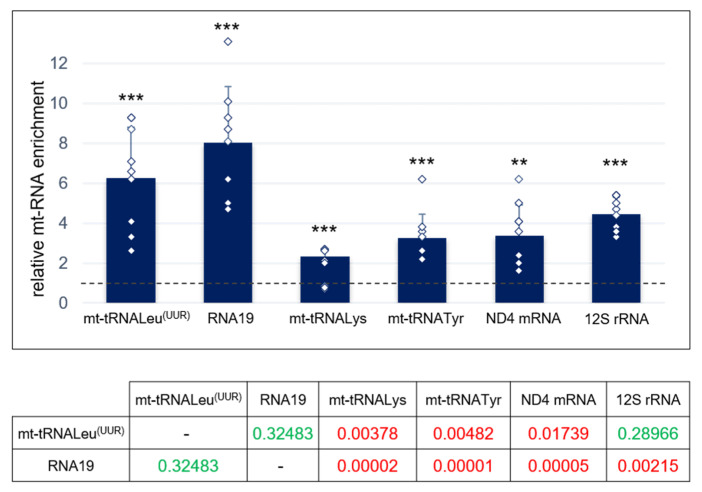
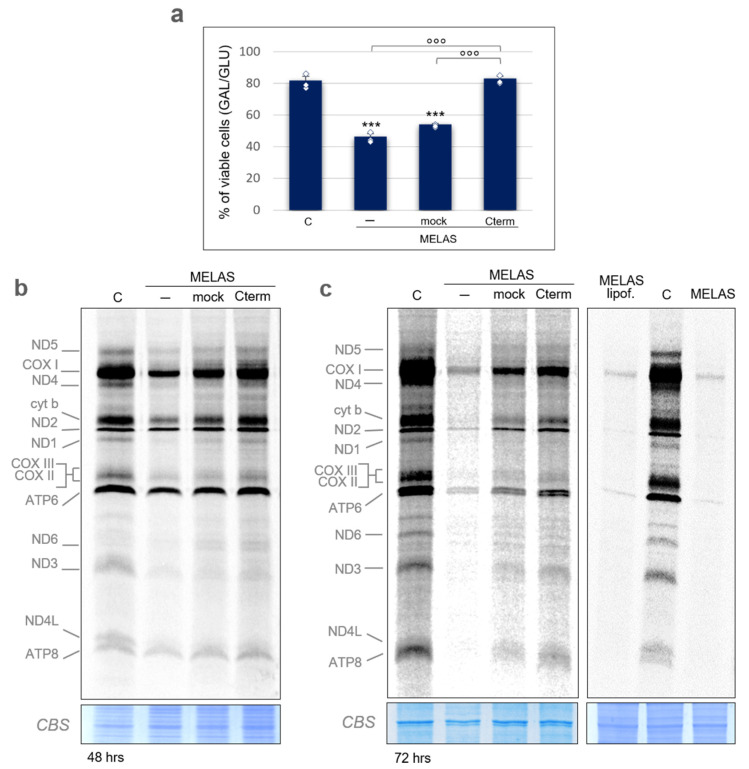
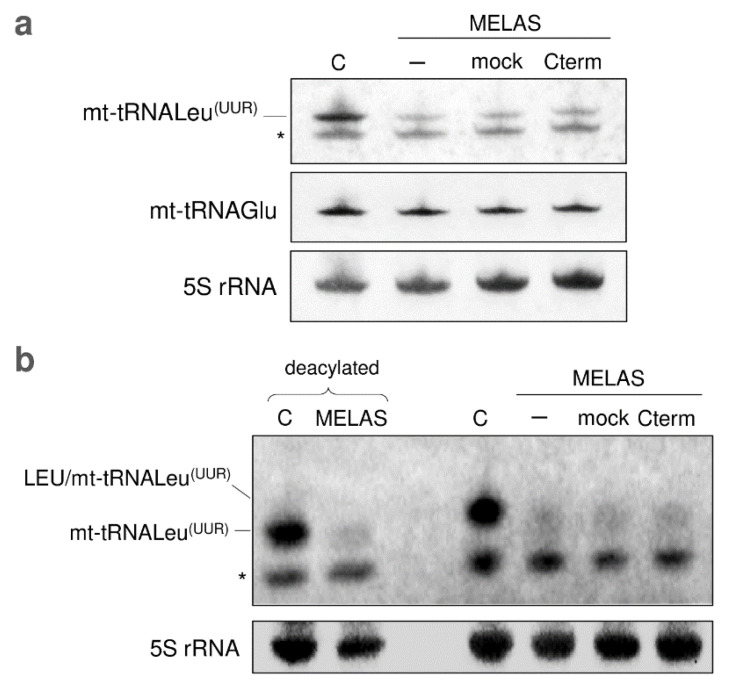
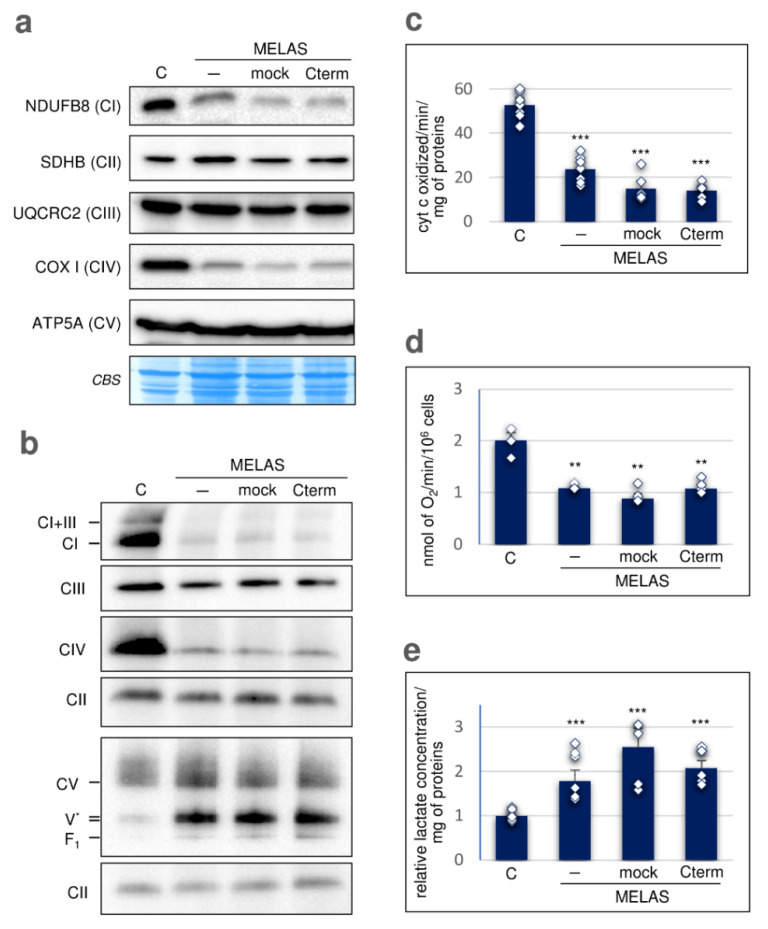
The m.3243A>G mutation within the mitochondrial mt-tRNALeu gene is the most prevalent variant linked to mitochondrial encephalopathy with lactic acidosis and stroke-like episodes (MELAS) syndrome. This pathogenic mutation causes severe impairment of mitochondrial protein synthesis due to alterations of the mutated tRNA, such as reduced aminoacylation and a lack of post-transcriptional modification. In transmitochondrial cybrids, overexpression of human mitochondrial leucyl-tRNA synthetase (LARS2) has proven effective in rescuing the phenotype associated with m.3243A>G substitution. The rescuing activity resides in the carboxy-terminal domain (Cterm) of the enzyme; however, the precise molecular mechanisms underlying this process have not been fully elucidated. To deepen our knowledge on the rescuing mechanisms, we demonstrated the interactions of the Cterm with mutated mt-tRNALeu and its precursor in MELAS cybrids. Further, the effect of Cterm expression on mitochondrial functions was evaluated. We found that Cterm ameliorates de novo mitochondrial protein synthesis, whilst it has no effect on mt-tRNALeu steady-state levels and aminoacylation. Despite the complete recovery of cell viability and the increase in mitochondrial translation, Cterm-overexpressing cybrids were not able to recover bioenergetic competence. These data suggest that, in our MELAS cell model, the beneficial effect of Cterm may be mediated by factors that are independent of the mitochondrial bioenergetics.
线粒体mt - tRNALeu基因内的m.3243A>G突变是与线粒体脑肌病伴乳酸酸中毒和卒中样发作(MELAS)综合征相关的最常见变异。这种致病突变由于突变tRNA的改变,如氨酰化减少和缺乏转录后修饰,导致线粒体蛋白质合成严重受损。在转线粒体杂交细胞中,人线粒体亮氨酰 - tRNA合成酶(LARS2)的过表达已被证明可有效挽救与m.3243A>G替代相关的表型。挽救活性存在于该酶的羧基末端结构域(Cterm);然而,这一过程背后的确切分子机制尚未完全阐明。为了加深我们对挽救机制的了解,我们证明了Cterm与MELAS杂交细胞中突变的mt - tRNALeu及其前体的相互作用。此外,评估了Cterm表达对线粒体功能的影响。我们发现Cterm改善了线粒体蛋白质的从头合成,而对mt - tRNALeu的稳态水平和氨酰化没有影响。尽管细胞活力完全恢复且线粒体翻译增加,但过表达Cterm的杂交细胞无法恢复生物能量能力。这些数据表明,在我们的MELAS细胞模型中,Cterm的有益作用可能由独立于线粒体生物能量学的因素介导。