Pacheco Mariana Brütt, Camilo Vânia, Lopes Nair, Moreira-Silva Filipa, Correia Margareta P, Henrique Rui, Jerónimo Carmen
Cancer Biology and Epigenetics Group, Research Center of IPO Porto (CI-IPOP)/RISE@CI-IPOP (Health Research Network), Portuguese Oncology Institute of Porto (IPO Porto)/Porto Comprehensive Cancer Center (Porto.CCC), Rua Dr. António Bernardino de Almeida, 4200-072 Porto, Portugal.
Department of Pathology and Molecular Immunology, School of Medicine and Biomedical Sciences, University of Porto (ICBAS-UP), Rua Jorge Viterbo Ferreira 228, 4050-513 Porto, Portugal.
Pharmaceuticals (Basel). 2021 Jul 13;14(7):670. doi: 10.3390/ph14070670.
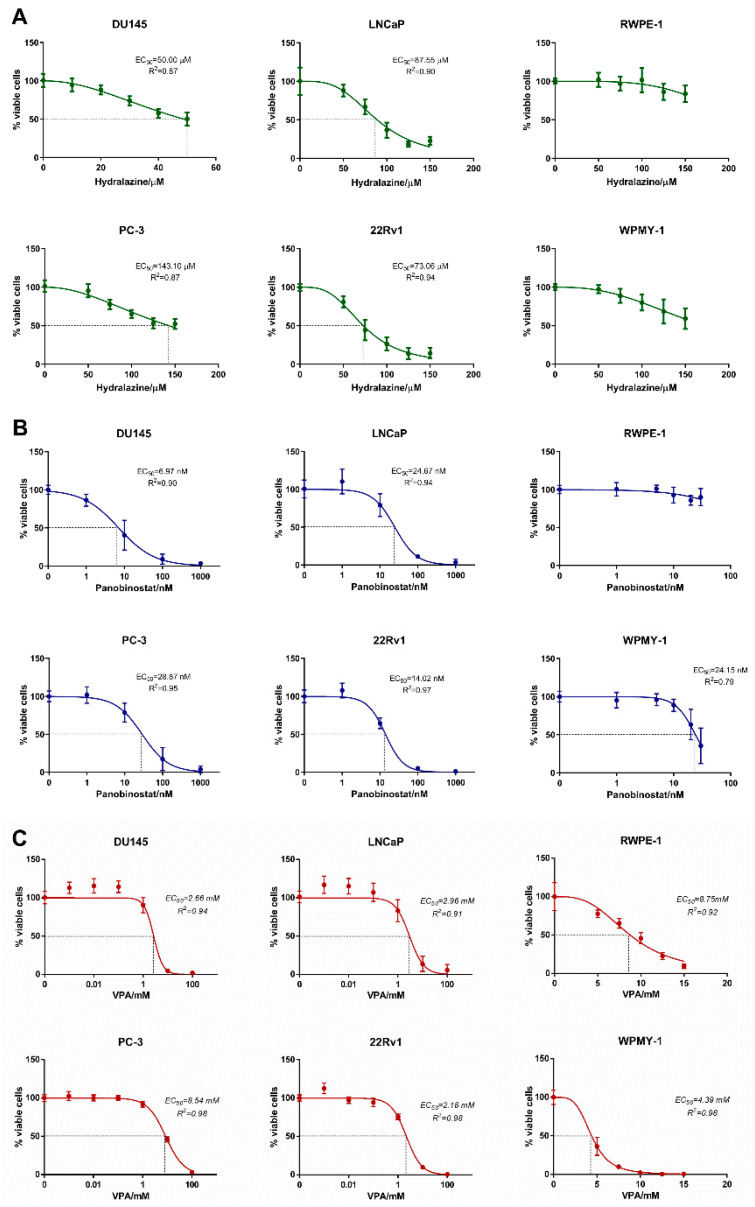
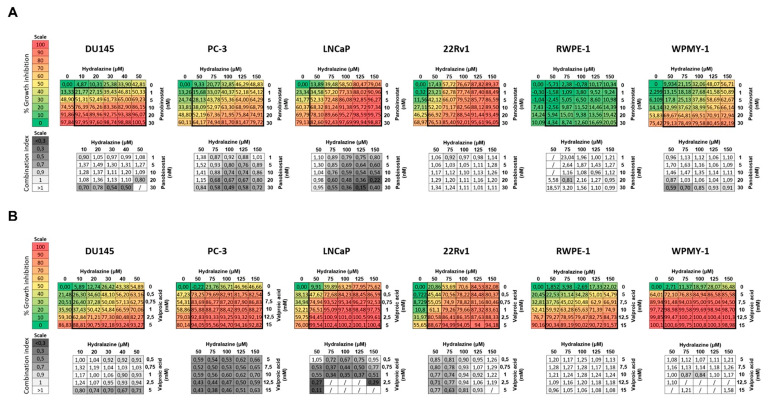
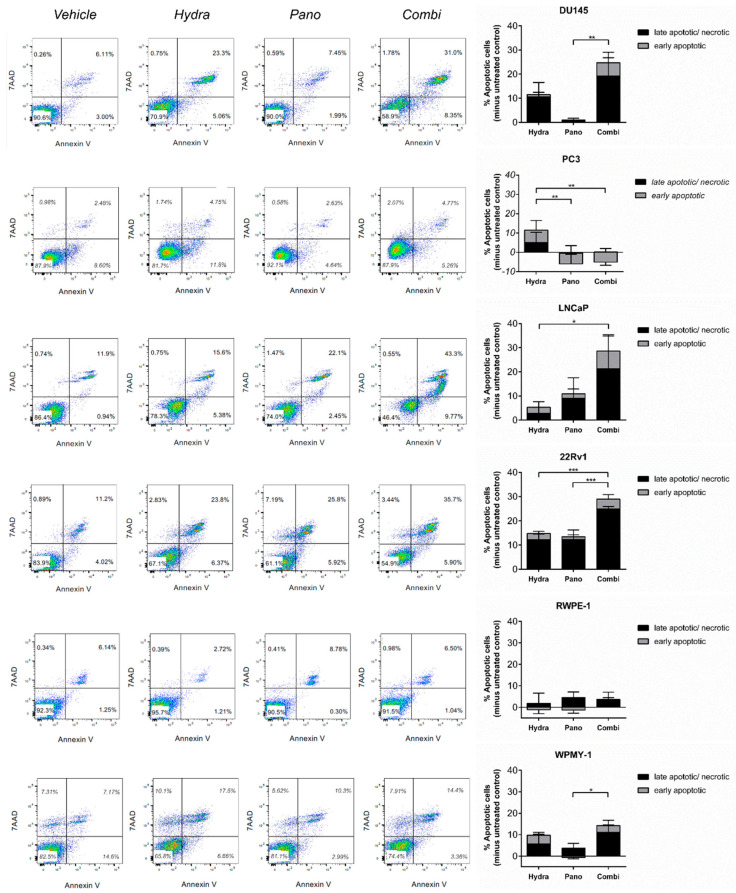
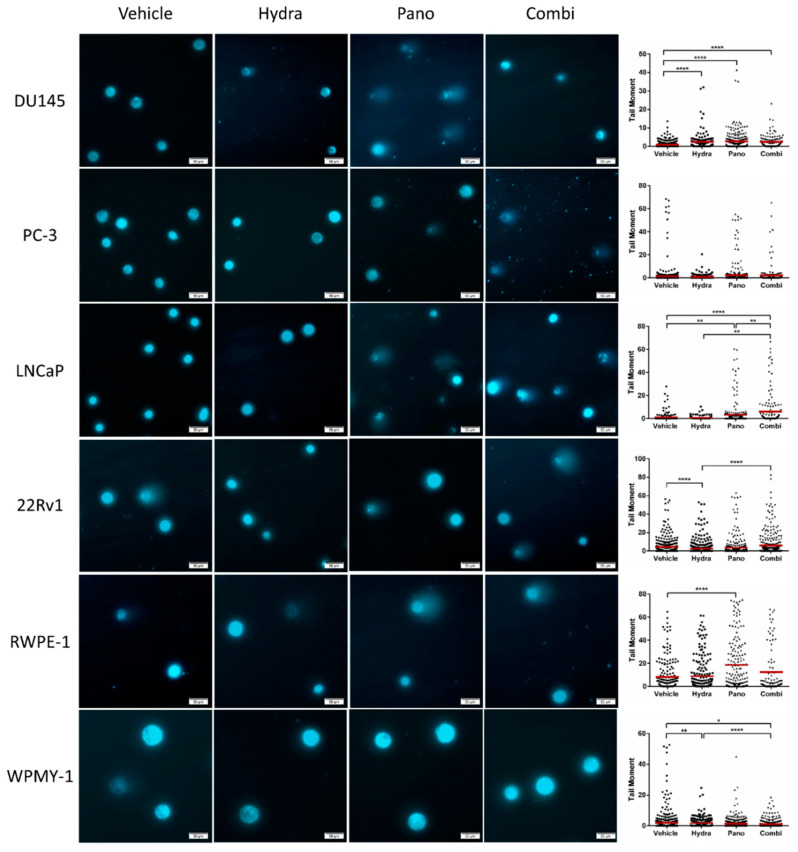
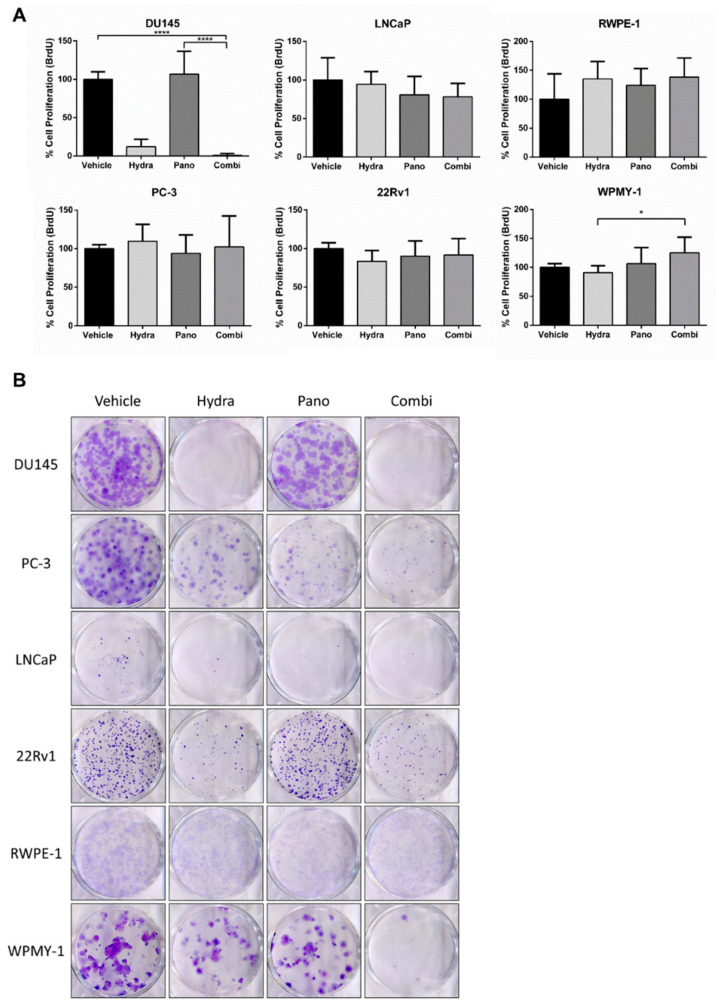
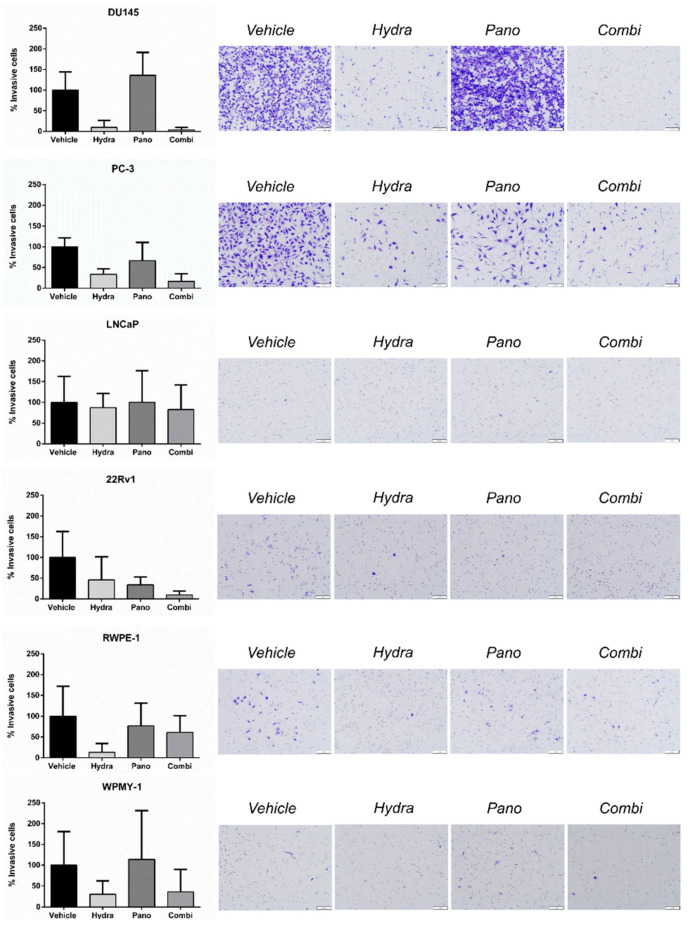
Among the well-established alterations contributing to prostate cancer (PCa) pathogenesis, epigenetics is an important player in its development and aggressive disease state. Moreover, since no curative therapies are available for advanced stage disease, there is an urgent need for novel therapeutic strategies targeting this subset of patients. Thus, we aimed to evaluate the combined antineoplastic effects of DNA methylation inhibitor hydralazine and histone deacetylase inhibitors panobinostat and valproic acid in several prostate cell lines. The effect of these drugs was assessed in four PCa (LNCaP, 22Rv1, DU145 and PC-3) cell lines, as well as in non-malignant epithelial (RWPE-1) and stromal (WPMY-1) cell lines, using several assays to evaluate cell viability, apoptosis, proliferation, DNA damage and clonogenic potential. We found that exposure to each epidrug separately reduced viability of all PCa cells in a dose-dependent manner and that combined treatments led to synergic growth inhibitory effects, impacting also on colony formation, invasion, apoptotic and proliferation rates. Interestingly, antitumoral effects of combined treatment were particularly expressive in DU145 cells. We concluded that hydralazine and panobinostat attenuate malignant properties of PCa cells, constituting a potential therapeutic tool to counteract PCa progression.
在导致前列腺癌(PCa)发病机制的既定改变中,表观遗传学在其发展和侵袭性疾病状态中起着重要作用。此外,由于晚期疾病尚无治愈性疗法,迫切需要针对这类患者的新型治疗策略。因此,我们旨在评估DNA甲基化抑制剂肼屈嗪与组蛋白脱乙酰酶抑制剂帕比司他和丙戊酸在几种前列腺癌细胞系中的联合抗肿瘤作用。使用多种检测方法评估细胞活力、凋亡、增殖、DNA损伤和克隆形成潜力,在四种PCa(LNCaP、22Rv1、DU145和PC-3)细胞系以及非恶性上皮(RWPE-1)和基质(WPMY-1)细胞系中评估了这些药物的作用。我们发现,单独使用每种表观遗传药物均可剂量依赖性地降低所有PCa细胞的活力,联合治疗可产生协同生长抑制作用,对集落形成、侵袭、凋亡和增殖率也有影响。有趣的是,联合治疗的抗肿瘤作用在DU145细胞中尤为明显。我们得出结论,肼屈嗪和帕比司他可减弱PCa细胞的恶性特性,构成对抗PCa进展的潜在治疗工具。