State Key Laboratory of Agricultural Microbiology, College of Life Science and Technology, Huazhong Agricultural University, Wuhan 430070, China.
Int J Mol Sci. 2021 Jul 21;22(15):7766. doi: 10.3390/ijms22157766.
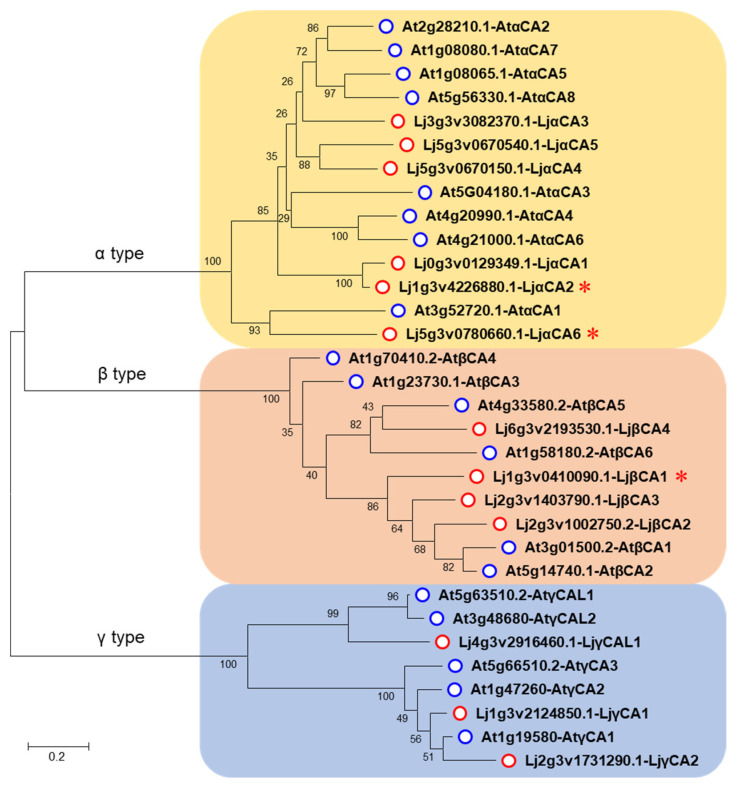
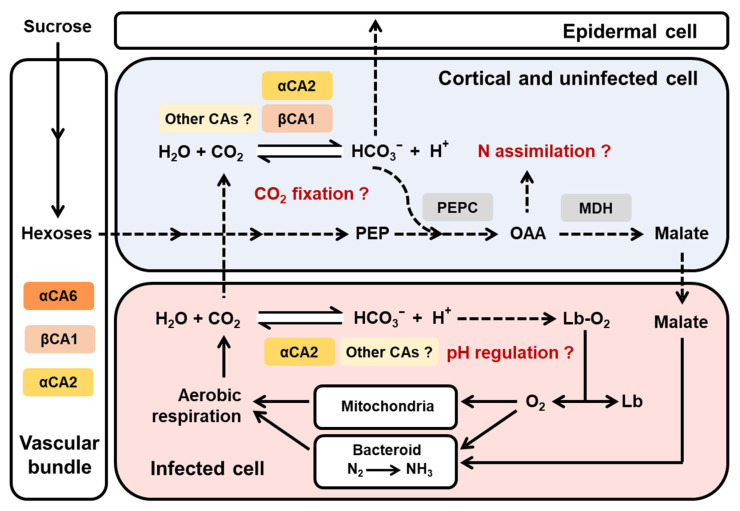
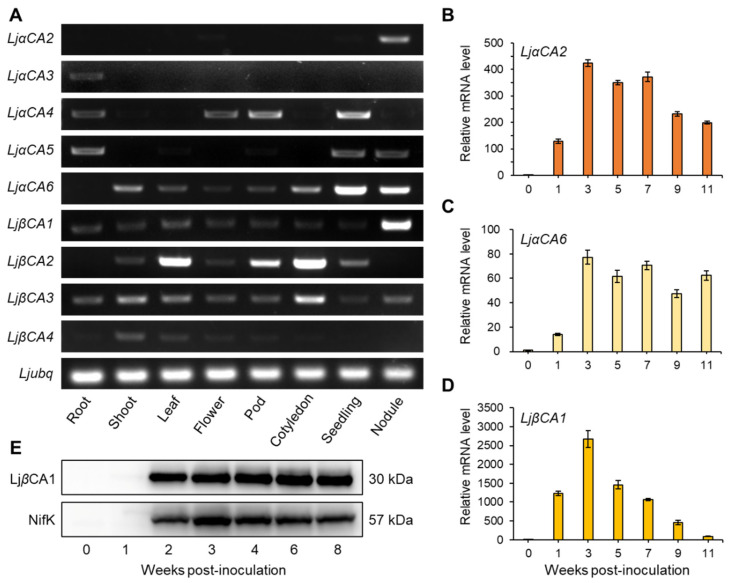
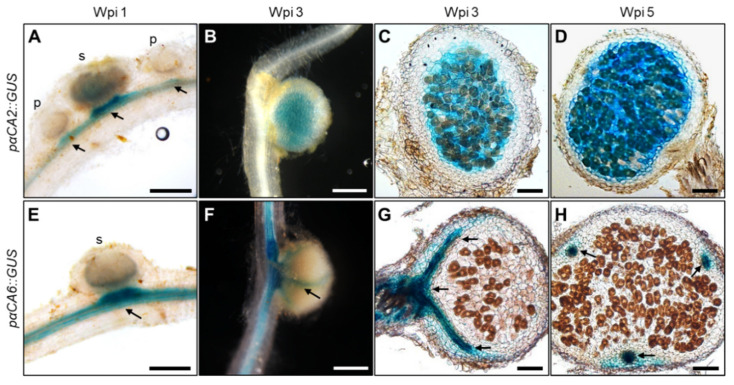
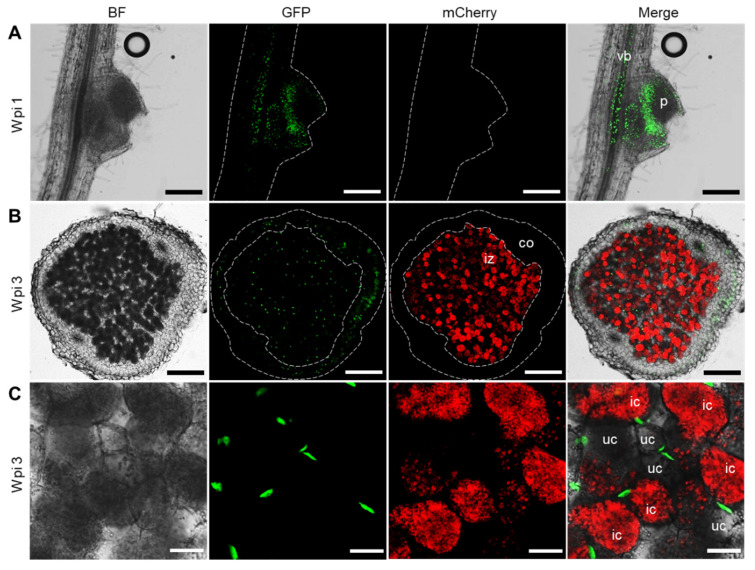
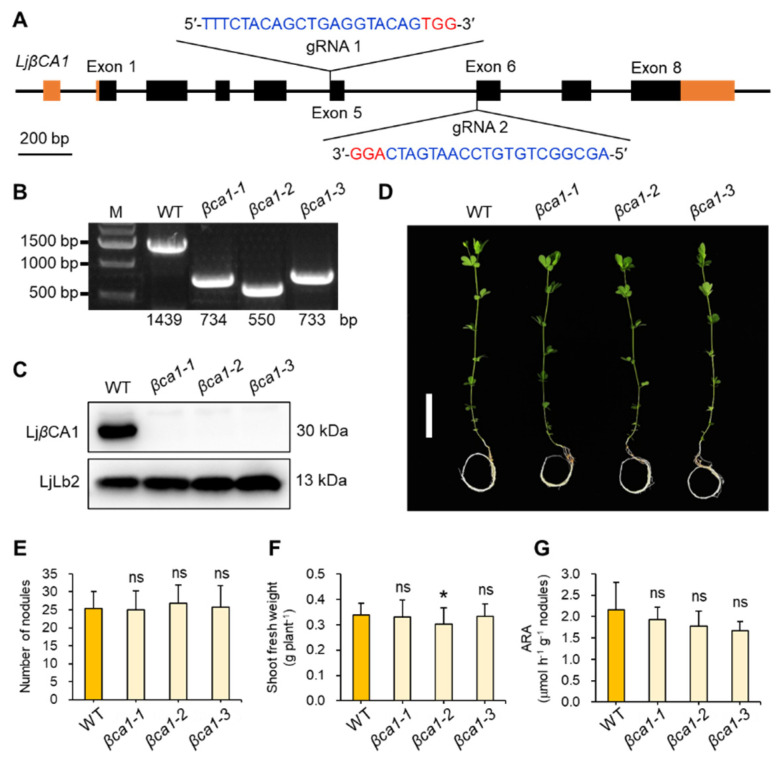
Carbonic anhydrase (CA) plays a vital role in photosynthetic tissues of higher plants, whereas its non-photosynthetic role in the symbiotic root nodule was rarely characterized. In this study, 13 CA genes were identified in the model legume by comparison with Arabidopsis CA genes. Using qPCR and promoter-reporter fusion methods, three previously identified nodule-enhanced CA genes (, , and ) have been further characterized, which exhibit different spatiotemporal expression patterns during nodule development. was expressed in the central infection zone of the mature nodule, including both infected and uninfected cells. was restricted to the vascular bundle of the root and nodule. As for , it was expressed in most cell types of nodule primordia but only in peripheral cortical cells and uninfected cells of the mature nodule. Using CRISPR/Cas9 technology, the knockout of or both and its homolog, , did not result in abnormal symbiotic phenotype compared with the wild-type plants, suggesting that LjβCA1 or LjαCA1/2 are not essential for the nitrogen fixation under normal symbiotic conditions. Nevertheless, the nodule-enhanced expression patterns and the diverse distributions in different types of cells imply their potential functions during root nodule symbiosis, such as CO fixation, N assimilation, and pH regulation, which await further investigations.
碳酸酐酶(CA)在高等植物的光合作用组织中起着至关重要的作用,而其在共生根瘤中的非光合作用作用很少被描述。在这项研究中,通过与拟南芥 CA 基因的比较,在模式豆科植物中鉴定出了 13 个 CA 基因。使用 qPCR 和启动子报告融合方法,进一步表征了三个先前鉴定的结瘤增强 CA 基因(、和),它们在结瘤发育过程中表现出不同的时空表达模式。在成熟结瘤的中央感染区表达,包括感染和未感染的细胞。局限于根和结瘤的维管束。至于,它在根原基的大多数细胞类型中表达,但仅在成熟结瘤的周围皮层细胞和未感染的细胞中表达。使用 CRISPR/Cas9 技术,与野生型植物相比,或同时敲除和其同源物、并不会导致异常的共生表型,这表明 LjβCA1 或 LjαCA1/2 在正常共生条件下不是固氮所必需的。然而,结瘤增强的表达模式和在不同类型细胞中的不同分布暗示了它们在根瘤共生中的潜在功能,如 CO2 固定、N 同化和 pH 调节,这有待进一步研究。