Lecat Catherine S Y, Taube Jessica B, Wilson William, Carmichael Jonathan, Parrish Christopher, Wallis Gabriel, Kyriakou Charalampia, Lee Lydia, Mahmood Shameem, Papanikolaou Xenofon, Rabin Neil K, Sive Jonathan, Wechalekar Ashutosh D, Yong Kwee, Cook Gordon, Popat Rakesh
Department of Haematology, University College London Hospitals NHS Foundation Trust, London, United Kingdom.
Department of Haematology, University College London Cancer Institute, London, United Kingdom.
Front Oncol. 2021 Jul 21;11:703233. doi: 10.3389/fonc.2021.703233. eCollection 2021.
The treatment paradigm for multiple myeloma (MM) continues to evolve with the development of novel therapies and the earlier adoption of continuous treatments into the treatment pathway. Lenalidomide-refractory patients now represent a challenge with inferior progression free survival (PFS) reported to subsequent treatments. We therefore sought to describe the natural history of MM patients following lenalidomide in the real world.
This was a retrospective cohort review of patients with relapsed MM who received lenalidomide-based treatments in the U.K. Data were collected for demographics, subsequent therapies, treatment responses, survival outcomes and clinical trial enrollment.
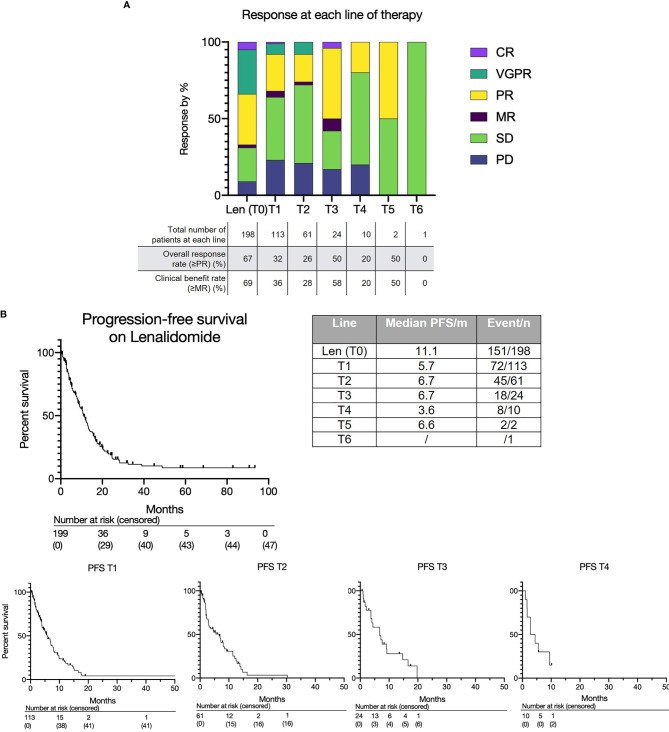
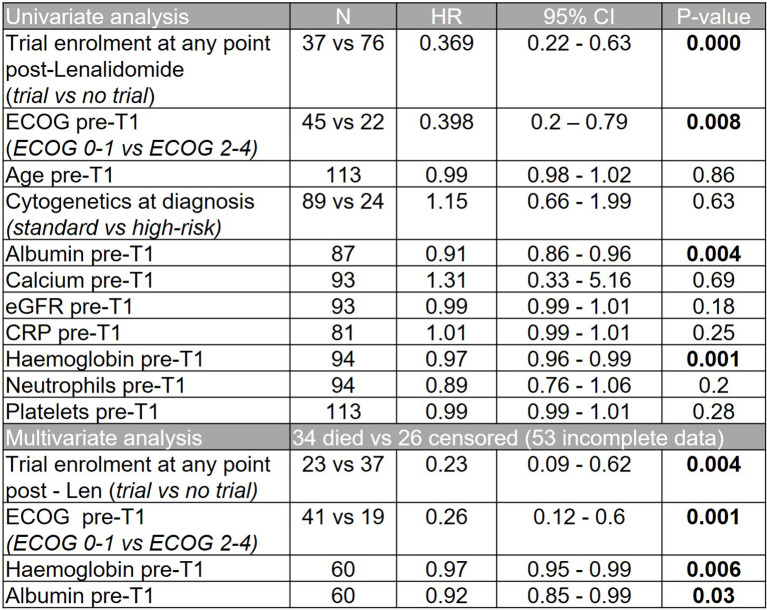
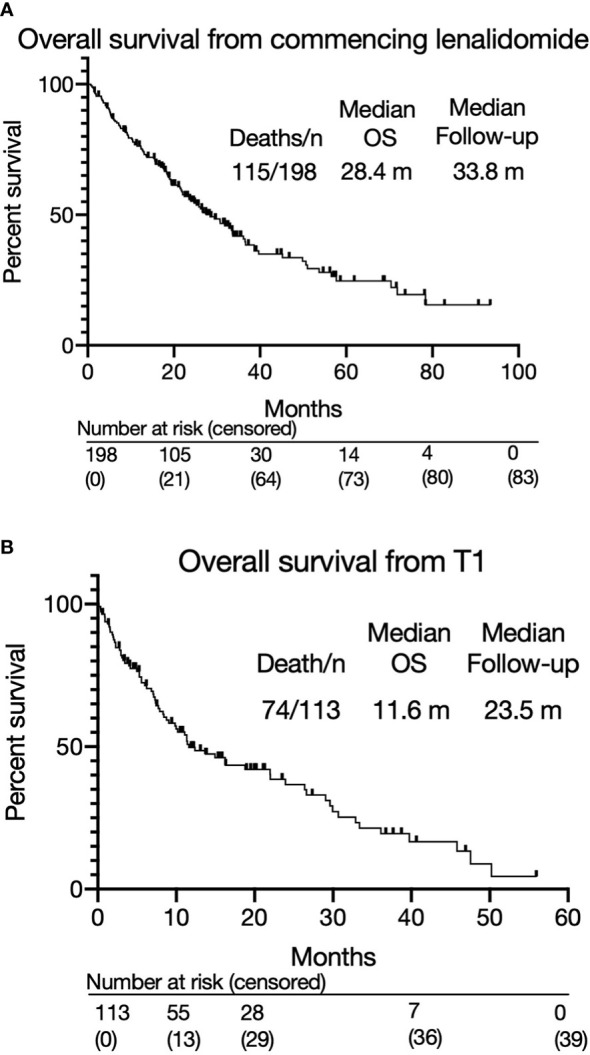
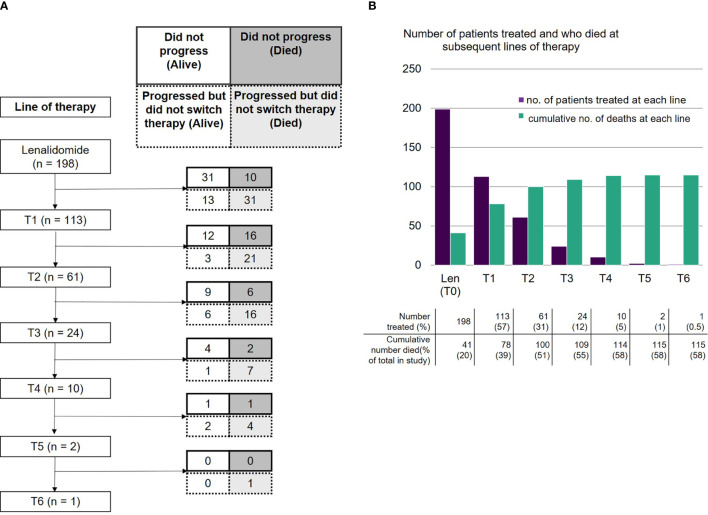
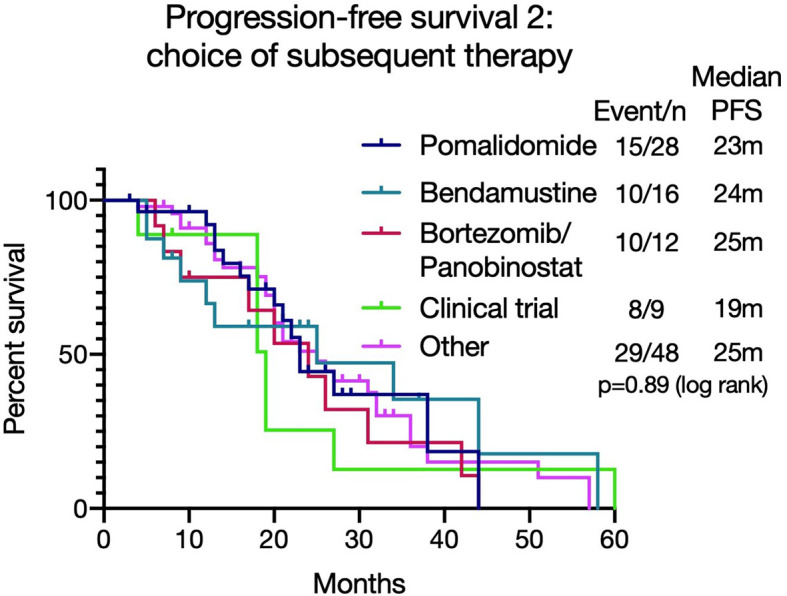
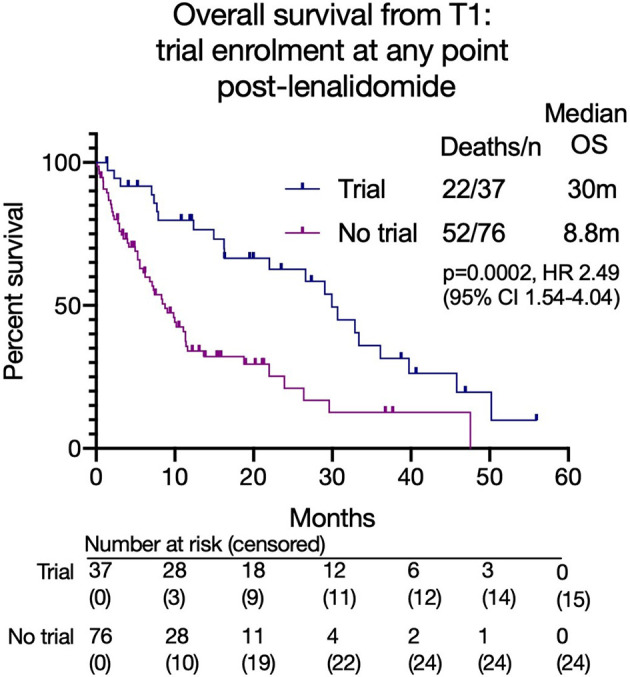
198 patients received lenalidomide-based treatments at a median of 2 prior lines of therapy at a median of 41 months (range 0.5-210) from diagnosis. 114 patients (72% of 158 evaluable) became refractory to lenalidomide. The overall survival (OS) after lenalidomide failure was 14.7 months having received between 0-6 subsequent lines of therapy. Few deep responses were observed with subsequent treatments and the PFS to each further line was < 7 months. There was a steep reduction in numbers of patients able to receive further treatment, with an associated increase in number of deaths. The OS of patients progressing on lenalidomide who did not enter a clinical trial incorporating novel agents was very poor (8.8 months versus 30 months, p 0.0002), although the trials group were a biologically fitter group.
These data demonstrate the poor outcomes of patients failing lenalidomide-based treatments in the real world, the highlight need for more effective treatments.
随着新型疗法的发展以及在治疗路径中更早地采用持续治疗,多发性骨髓瘤(MM)的治疗模式不断演变。来那度胺难治性患者目前是一个挑战,据报道后续治疗的无进展生存期(PFS)较差。因此,我们试图描述现实世界中来那度胺治疗后MM患者的自然病程。
这是一项对在英国接受基于来那度胺治疗的复发MM患者的回顾性队列研究。收集了人口统计学、后续治疗、治疗反应、生存结果和临床试验入组的数据。
198例患者接受了基于来那度胺的治疗,从诊断开始的中位时间为41个月(范围0.5 - 210个月),中位接受过2线先前治疗。114例患者(158例可评估患者中的72%)对来那度胺难治。来那度胺治疗失败后的总生存期(OS)为14.7个月,后续接受了0 - 6线治疗。后续治疗很少观察到深度缓解,每一线后续治疗的PFS均<7个月。能够接受进一步治疗的患者数量急剧减少,死亡人数相应增加。未进入包含新型药物的临床试验的来那度胺进展患者的OS非常差(8.8个月对30个月,p = 0.0002),尽管试验组是生物学上更健康 的一组。
这些数据表明,在现实世界中,基于来那度胺治疗失败的患者预后较差,突出了对更有效治疗的需求。