Department of Life Sciences, University of Trieste, Trieste, Italy. giulia.d'
Laboratory of Cognitive Neuroscience, Department of Languages and Literatures, Communication, Education and Society, University of Udine, via Margreth, 3, 33100, Udine, Italy. giulia.d'
Psychol Res. 2022 Jun;86(4):1184-1202. doi: 10.1007/s00426-021-01569-4. Epub 2021 Aug 13.
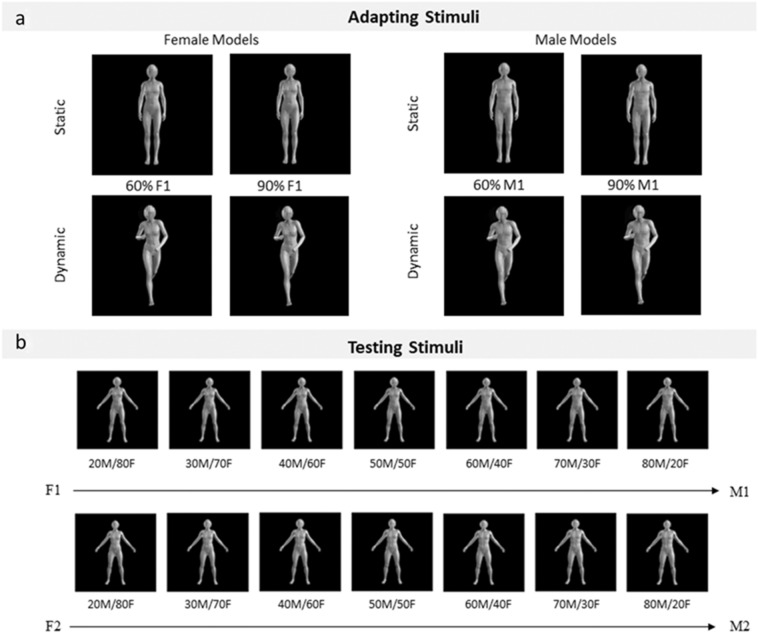
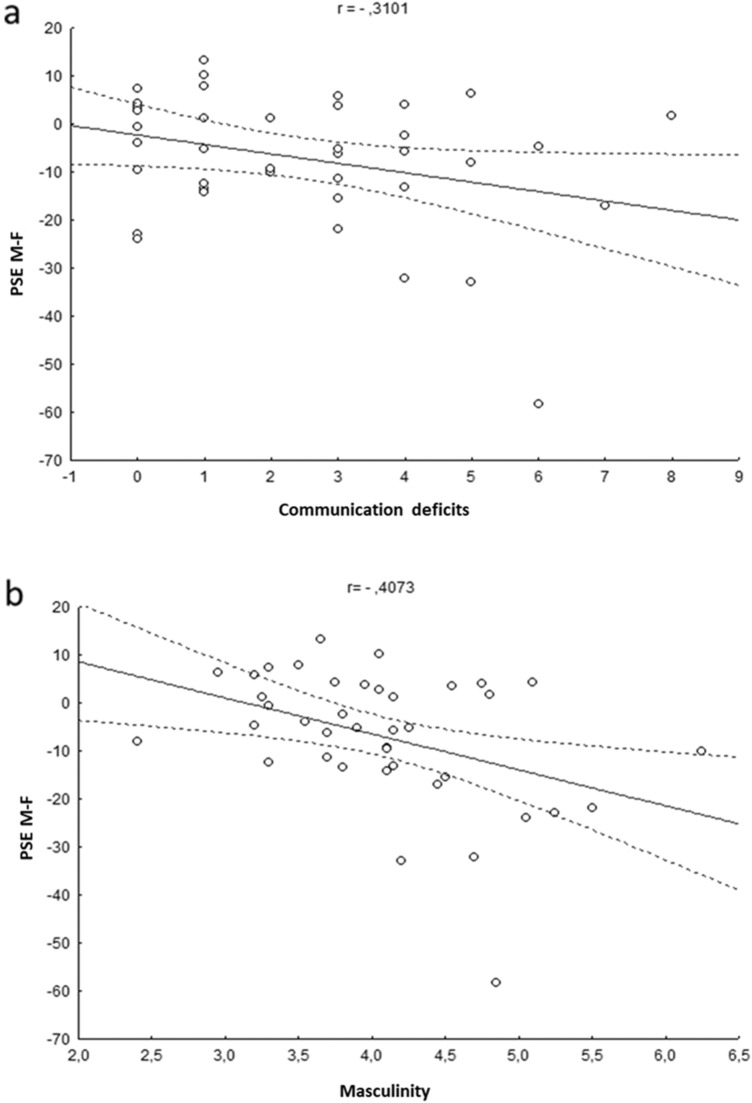
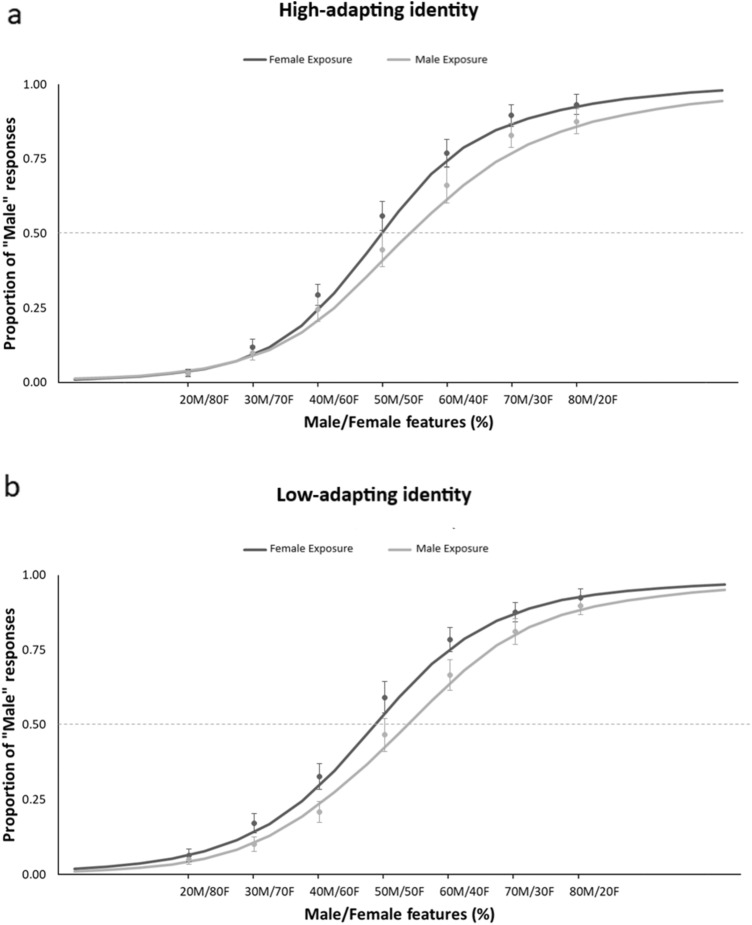
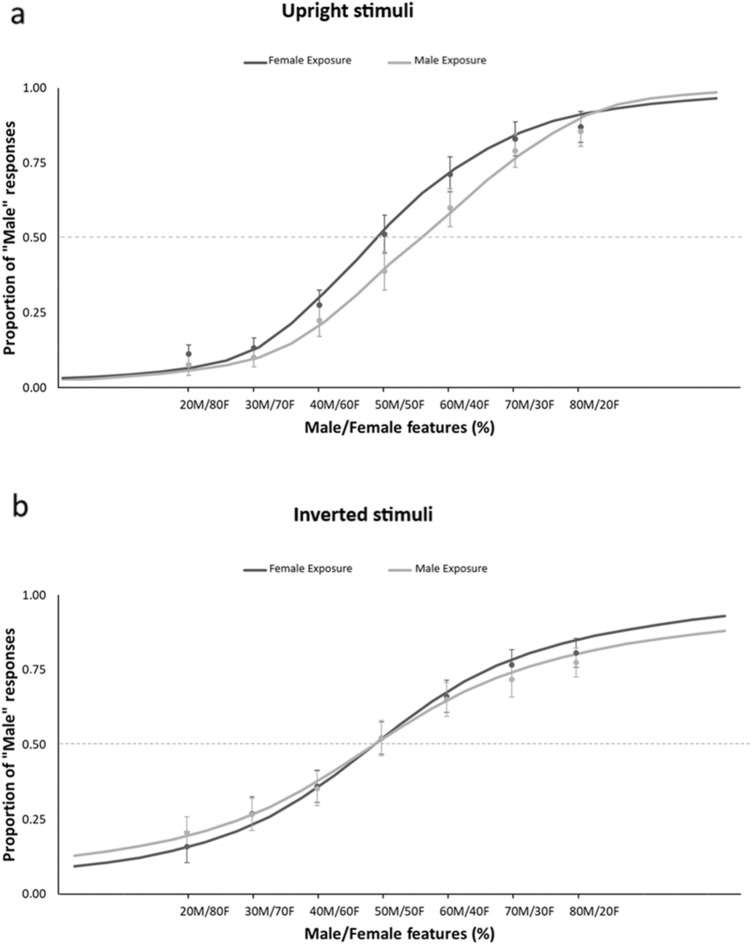
Protracted exposure to specific stimuli causes biased visual aftereffects at both low- and high-level dimensions of a stimulus. Recently, it has been proposed that alterations of these aftereffects could play a role in body misperceptions. However, since previous studies have mainly addressed manipulations of body size, the relative contribution of low-level retinotopic and/or high-level object-based mechanisms is yet to be understood. In three experiments, we investigated visual aftereffects for body-gender perception, testing for the tuning of visual aftereffects across different characters and orientation. We found that exposure to a distinctively female (or male) body makes androgynous bodies appear as more masculine (or feminine) and that these aftereffects were not specific for the individual characteristics of the adapting body (Exp.1). Furthermore, exposure to only upright bodies (Exp.2) biased the perception of upright, but not of inverted bodies, while exposure to both upright and inverted bodies (Exp.3) biased perception for both. Finally, participants' sensitivity to body aftereffects was lower in individuals with greater communication deficits and deeper internalization of a male gender role. Overall, our data reveals the orientation-, but not identity-tuning of body-gender aftereffects and points to the association between alterations of the malleability of body gender perception and social deficits.
长时间暴露于特定刺激会导致刺激的低水平和高水平维度的视觉后效产生偏差。最近,有人提出这些后效的改变可能在身体感知错误中起作用。然而,由于之前的研究主要集中在对身体大小的操纵上,因此,低水平视网膜和/或高水平基于对象的机制的相对贡献尚不清楚。在三项实验中,我们研究了身体性别感知的视觉后效,测试了不同字符和方向的视觉后效的调谐。我们发现,暴露于独特的女性(或男性)身体会使雌雄同体的身体显得更男性化(或女性化),并且这些后效并不是特定于适应身体的个体特征的(实验 1)。此外,仅暴露于直立的身体(实验 2)会使对直立身体的感知产生偏差,但不会使对倒置身体的感知产生偏差,而暴露于直立和倒置的身体(实验 3)会使对两者的感知产生偏差。最后,参与者对身体后效的敏感性在具有更大沟通缺陷和更深入内化男性性别角色的个体中较低。总体而言,我们的数据揭示了身体性别后效的定向但不是身份调谐,并指出了身体性别感知的可塑性质的改变与社会缺陷之间的关联。