Zhang Qiufang, Luo Dawei, Yang Liuming, Xie Jinsheng, Yang Zhijie, Zhou Jiacong, Li Xiaojie, Xiong Decheng, Chen Yuehmin, Yang Yusheng
College of Geographical Science, Fujian Normal University, Fuzhou, China.
State Key Laboratory of Subtropical Mountain Ecology (Funded by Ministry of Science and Technology and Fujian Province), Fujian Normal University, Fuzhou, China.
Front Plant Sci. 2021 Jul 30;12:705861. doi: 10.3389/fpls.2021.705861. eCollection 2021.
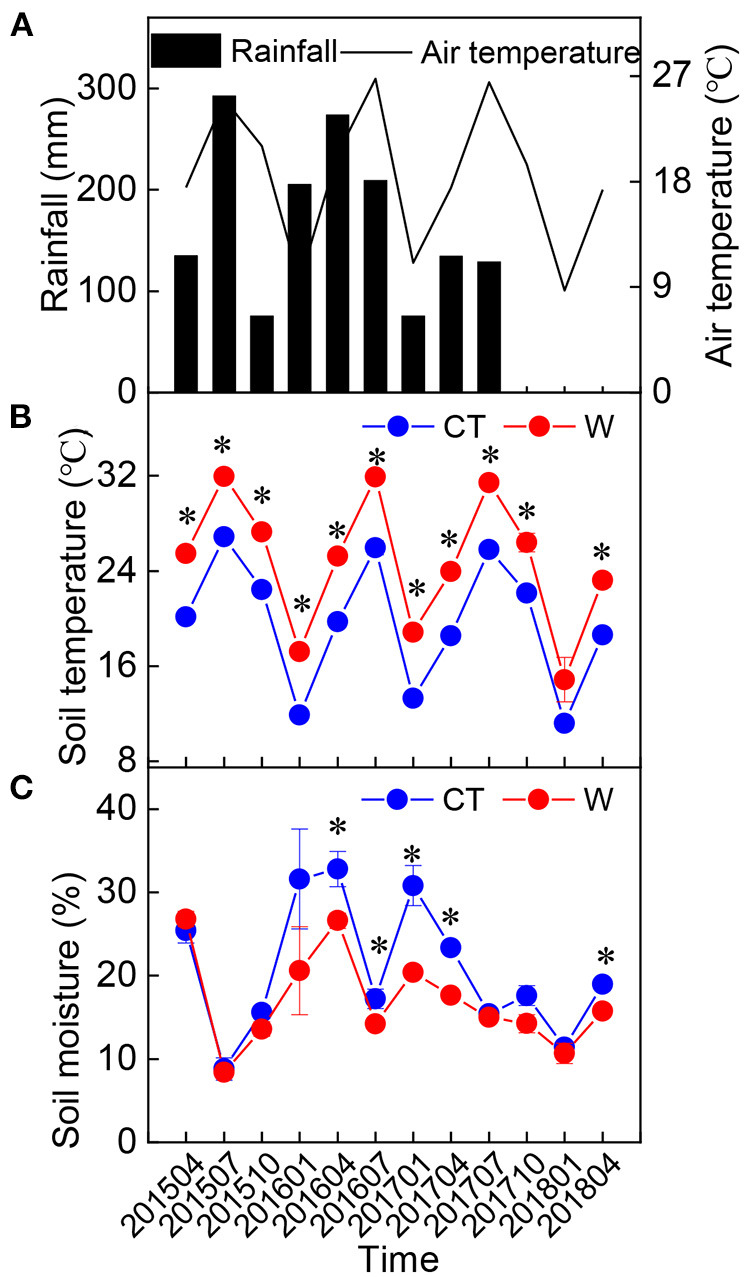
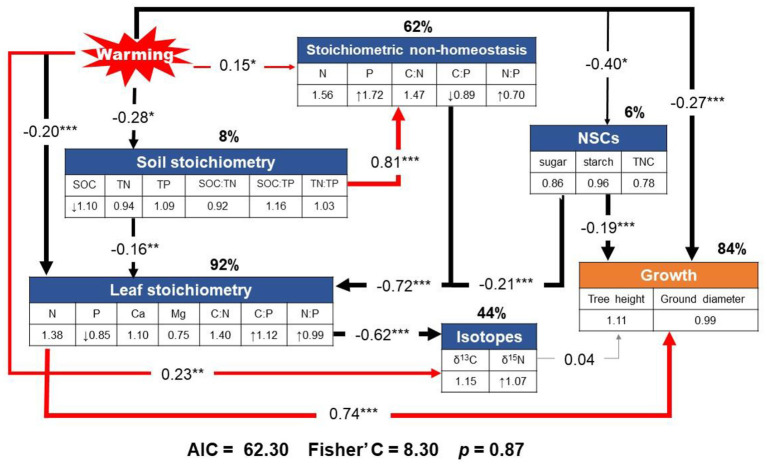
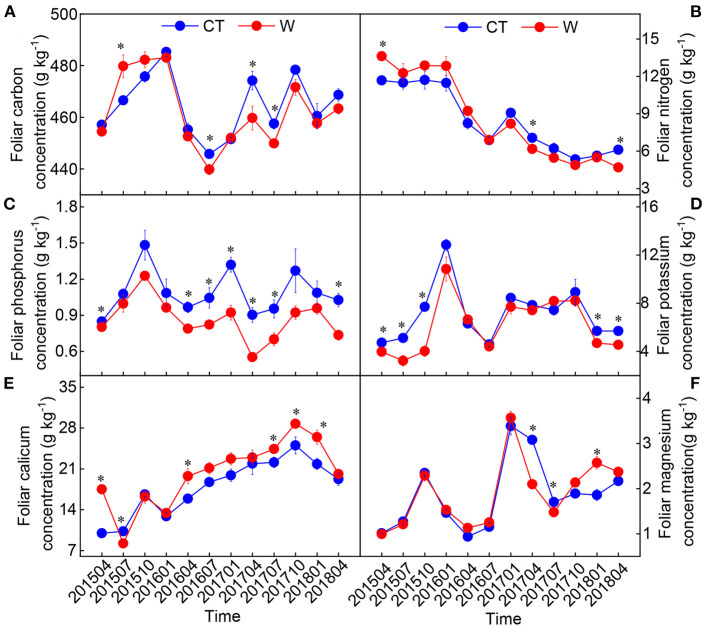
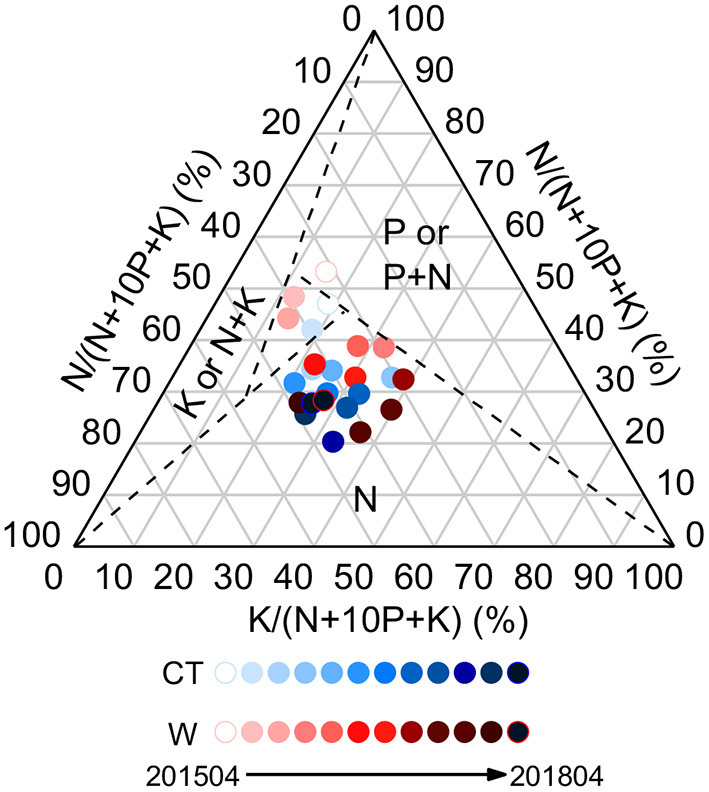
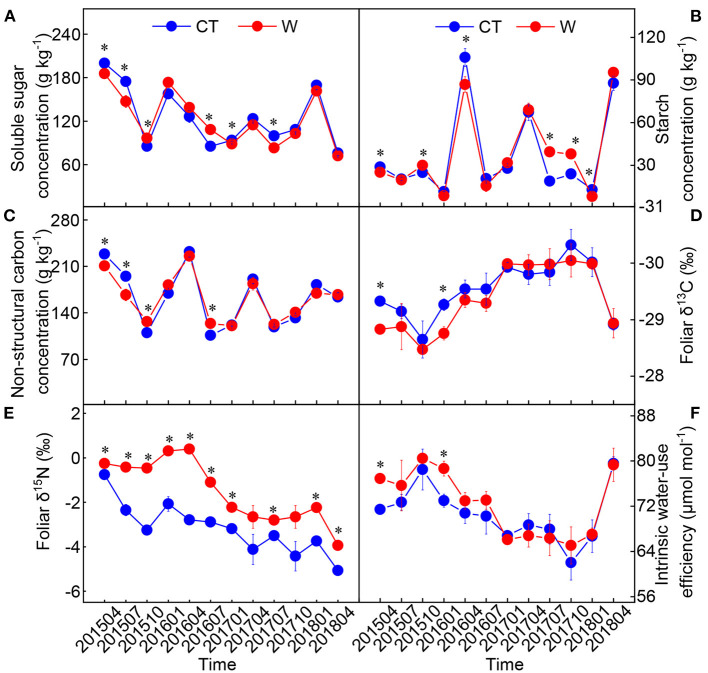
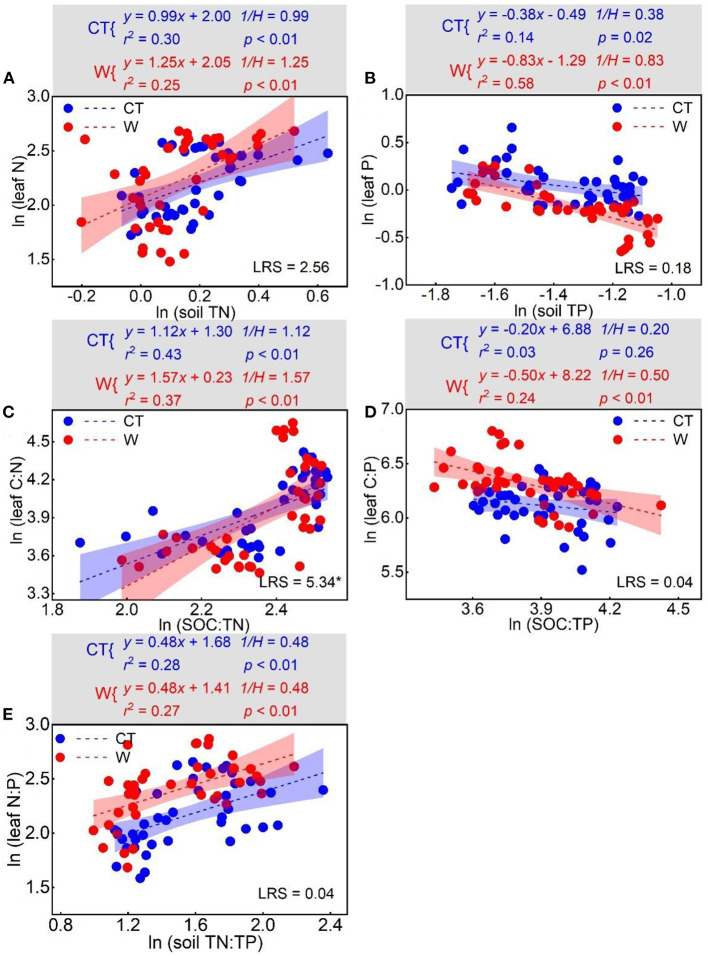
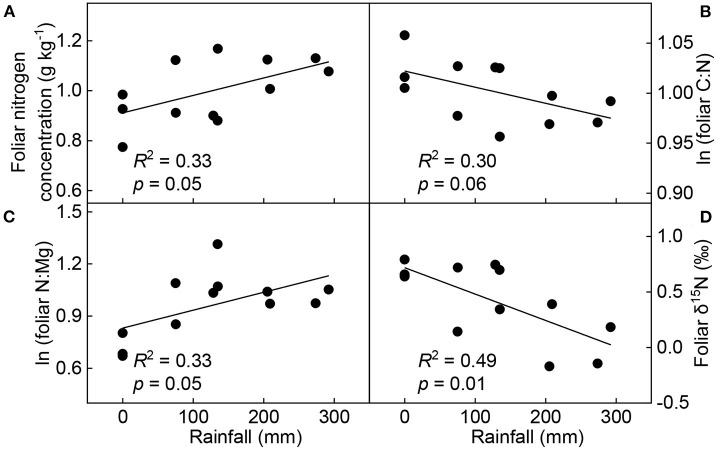
Climate warming is becoming an increasingly serious threat. Understanding plant stoichiometry changes under climate warming is crucial for predicting the effects of future warming on terrestrial ecosystem productivity. Nevertheless, how plant stoichiometry responds to warming when interannual rainfall variation is considered, remains poorly understood. We performed a field soil warming experiment (+5°C) using buried heating cables in subtropical areas of China from 2015 to 2018. Stoichiometric patterns of foliar C:N:P:K:Ca:Mg, non-structural carbohydrate, and stable isotope of seedlings were studied. Our results showed that soil warming decreased foliar P and K concentrations, C:Ca, P:Ca, and P:Mg ratios. However, soil warming increased foliar Ca concentration, δN value, C:P and N:P ratios. The response ratios of foliar N, C:N, and δN to soil warming were correlated with rainfall. Our findings indicate that there was non-homeostasis of N and C:N under warming conditions. Three possible reasons for this result are considered and include interannual variations in rainfall, increased loss of N, and N limitation in leaves. Piecewise structural equation models showed that stoichiometric non-homeostasis indirectly affected the growth of seedlings in response to soil warming. Consequently, the growth of seedlings remained unchanged under the warming treatment. Taken together, our results advance the understanding of how altered foliar stoichiometry relates to changes in plant growth in response to climate warming. Our results emphasize the importance of rainfall variations for modulating the responses of plant chemical properties to warming. This study provides a useful method for predicting the effects of climate warming on economically important timber species.
气候变暖正成为日益严重的威胁。了解气候变暖条件下植物化学计量特征的变化对于预测未来变暖对陆地生态系统生产力的影响至关重要。然而,在考虑年际降雨变化的情况下,植物化学计量如何响应变暖仍知之甚少。2015年至2018年,我们在中国亚热带地区使用埋地加热电缆进行了田间土壤增温实验(+5°C)。研究了幼苗叶片碳、氮、磷、钾、钙、镁的化学计量模式、非结构性碳水化合物以及稳定同位素。结果表明,土壤增温降低了叶片磷和钾的浓度、碳:钙、磷:钙和磷:镁的比值。然而,土壤增温增加了叶片钙的浓度、δN值、碳:磷和氮:磷的比值。叶片氮、碳:氮和δN对土壤增温的响应比率与降雨量相关。我们的研究结果表明,在变暖条件下氮和碳:氮存在非稳态。考虑了导致这一结果的三个可能原因,包括降雨的年际变化、氮损失增加以及叶片中的氮限制。分段结构方程模型表明,化学计量非稳态间接影响了幼苗对土壤增温的生长响应。因此,在增温处理下幼苗的生长保持不变。综上所述,我们的研究结果推进了对叶片化学计量变化如何与植物生长对气候变暖响应相关的理解。我们的研究结果强调了降雨变化对调节植物化学性质对变暖响应的重要性。本研究为预测气候变暖对经济重要木材树种的影响提供了一种有用的方法。