Department of Biology, Duke University, Durham, NC, United States.
Biodiversity Research Center, Academia Sinica, Taipei, Taiwan.
Mol Biol Evol. 2021 Dec 9;38(12):5528-5538. doi: 10.1093/molbev/msab242.
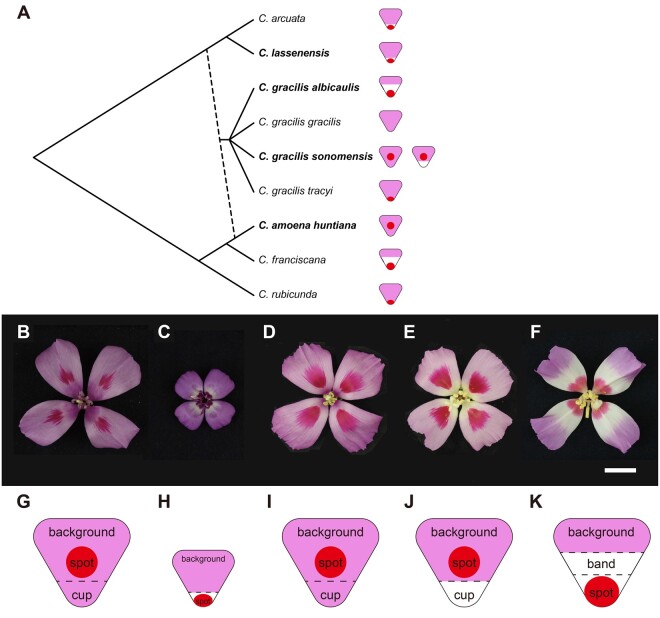
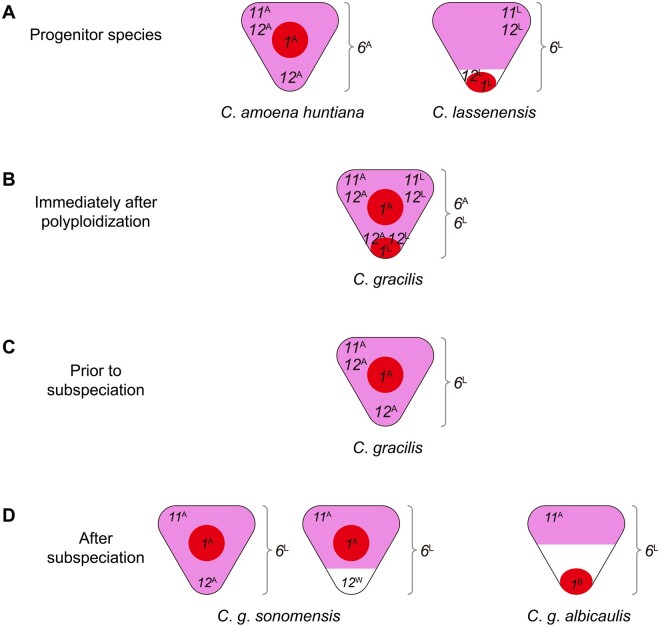
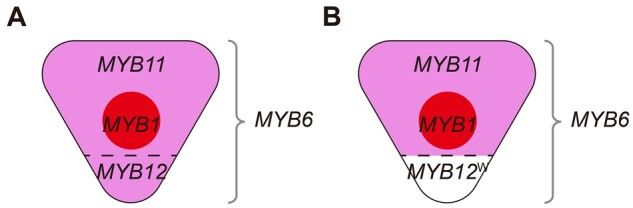
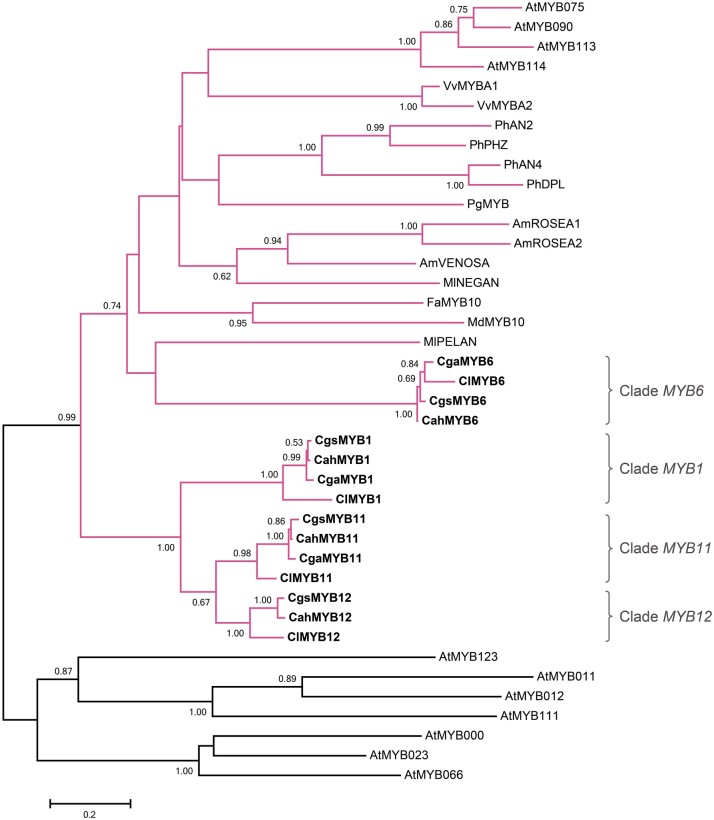
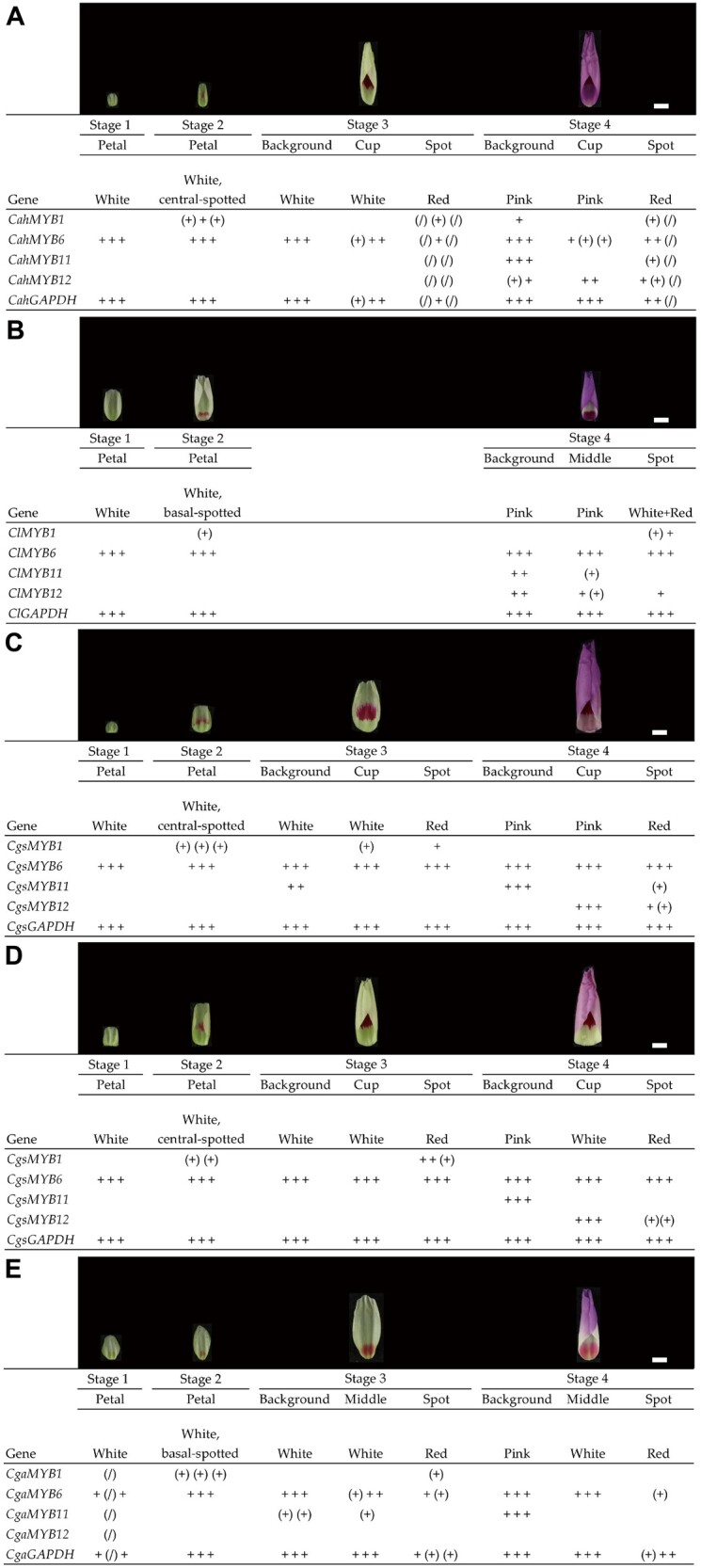
It has been suggested that gene duplication and polyploidization create opportunities for the evolution of novel characters. However, the connections between the effects of polyploidization and morphological novelties have rarely been examined. In this study, we investigated whether petal pigmentation patterning in an allotetraploid Clarkia gracilis has evolved as a result of polyploidization. Clarkia gracilis is thought to be derived through a recent polyploidization event with two diploid species, C. amoena huntiana and an extinct species that is closely related to C. lassenensis. We reconstructed phylogenetic relationships of the R2R3-MYBs (the regulators of petal pigmentation) from two subspecies of C. gracilis and the two purported progenitors, C. a. huntiana and C. lassenensis. The gene tree reveals that these R2R3-MYB genes have arisen through duplications that occurred before the divergence of the two progenitor species, that is, before polyploidization. After polyploidization and subsequent gene loss, only one of the two orthologous copies inherited from the progenitors was retained in the polyploid, turning it to diploid inheritance. We examined evolutionary changes in these R2R3-MYBs and in their expression, which reveals that the changes affecting patterning (including expression domain contraction, loss-of-function mutation, cis-regulatory mutation) occurred after polyploidization within the C. gracilis lineages. Our results thus suggest that polyploidization itself is not necessary in producing novel petal color patterns. By contrast, duplications of R2R3-MYB genes in the common ancestor of the two progenitors have apparently facilitated diversification of petal pigmentation patterns.
有人认为基因复制和多倍体化为新特征的进化创造了机会。然而,多倍体化的影响与形态新颖性之间的联系很少被研究。在这项研究中,我们调查了多倍体化是否导致了异源四倍体 Clarkia gracilis 花瓣色素模式的进化。Clarkia gracilis 被认为是由最近的多倍体化事件产生的,其亲本是两个二倍体物种,C. amoena huntiana 和一个与 C. lassenensis 密切相关的已灭绝物种。我们重建了来自两个亚种 C. gracilis 和两个假定祖先 C. a. huntiana 和 C. lassenensis 的 R2R3-MYB(花瓣色素调控因子)的系统发育关系。基因树表明,这些 R2R3-MYB 基因是在两个祖先物种分化之前,即在多倍体化之前通过复制产生的。多倍体化和随后的基因丢失后,只有来自祖先的两个同源拷贝之一在多倍体中保留下来,使其遗传为二倍体。我们检查了这些 R2R3-MYB 及其表达的进化变化,这表明影响模式的变化(包括表达域收缩、功能丧失突变、顺式调控突变)是在 C. gracilis 谱系内多倍体化之后发生的。因此,我们的结果表明,多倍体化本身并不是产生新花瓣颜色模式所必需的。相比之下,两个祖先共同祖先的 R2R3-MYB 基因的复制显然促进了花瓣色素模式的多样化。