Department of Plant Sciences, University of Cambridge, Downing Street, Cambridge CB2 3EA, UK.
Development. 2024 Nov 1;151(21). doi: 10.1242/dev.203027. Epub 2024 Nov 5.
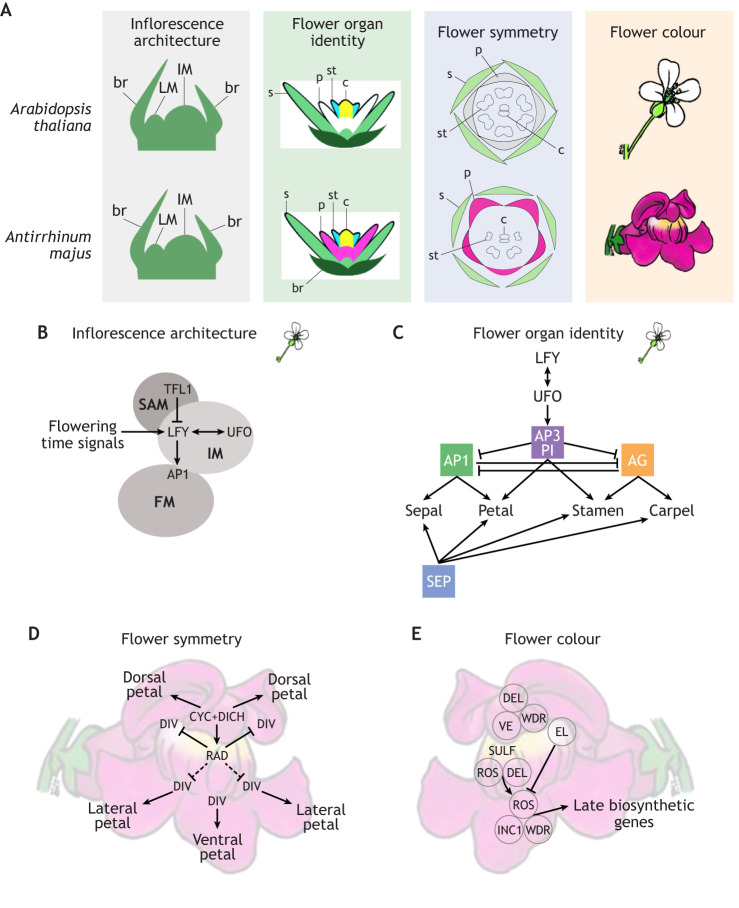
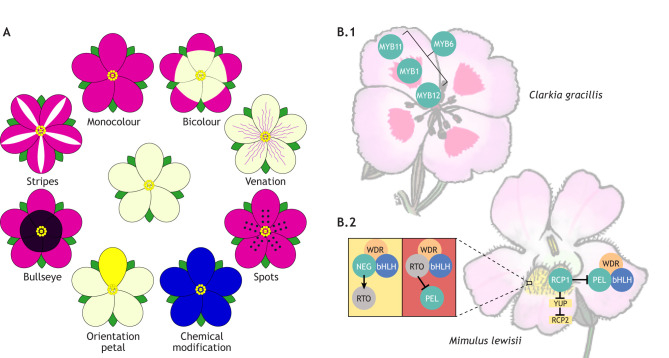
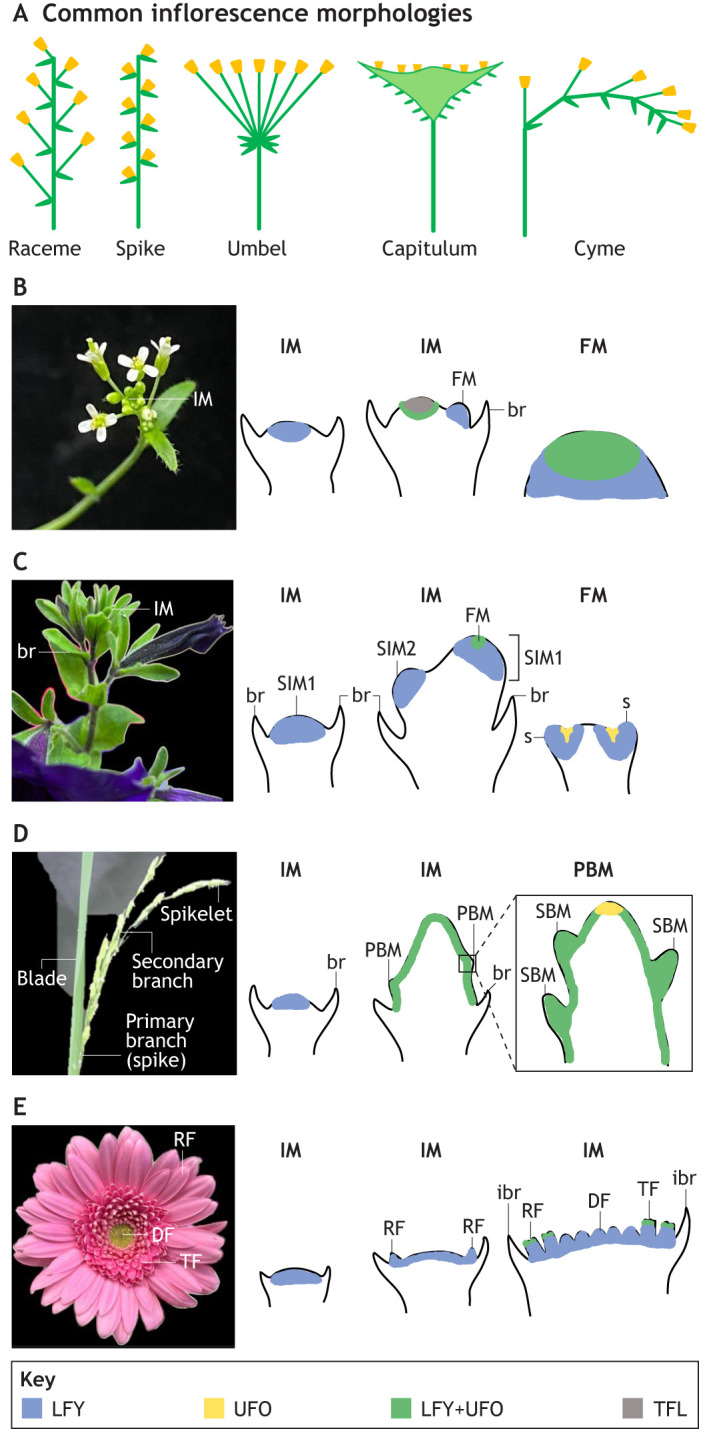
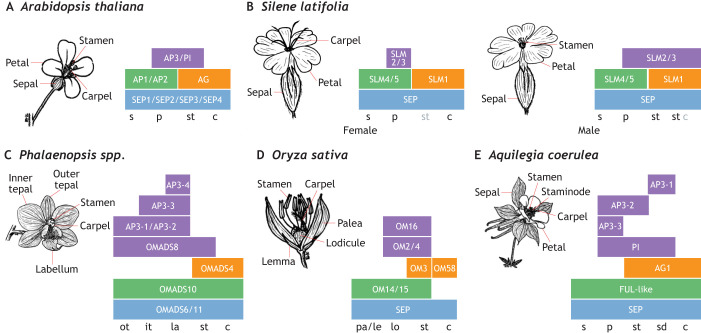
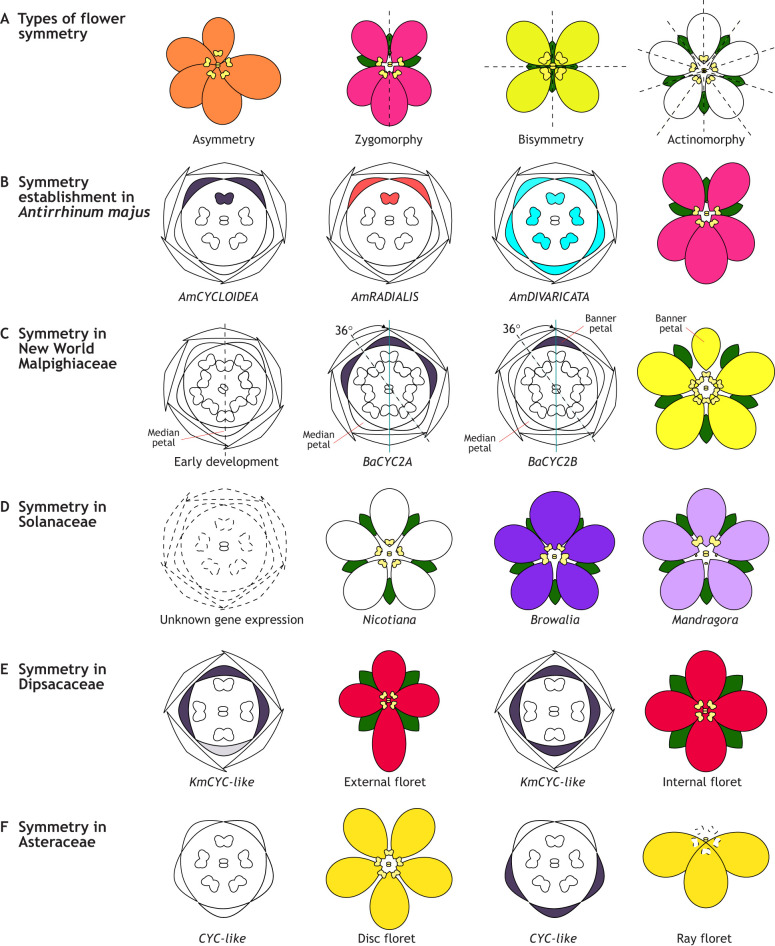
Flowering plants - angiosperms - display an astounding diversity of floral features, which have evolved in response to animal pollination and have resulted in the most species-rich plant clade. Combinations of macroscale (e.g. colour, symmetry, organ number) and microscale (e.g. cell type, tissue patterning) features often lead to highly elaborate floral displays. Most studies have focused on model species with simple floral displays to uncover the genetic and evolutionary mechanisms involved in flower evolution, yet few studies have focused on complex floral displays. Here, we review current knowledge on the development and evolution of complex floral displays. We review gene regulatory networks involved in four developmental pathways contributing to overall floral display (inflorescence architecture, organ identity, flower symmetry and flower colour) in classical plant models. We then discuss how evolutionary modification of one or more of these pathways has resulted in the production of a range of complex floral displays. Finally, we explore modular systems in which multiple pathways have been modified simultaneously, generating the most elaborate floral displays.
开花植物——被子植物——表现出惊人的花卉特征多样性,这些特征是为了应对动物传粉而进化的,从而产生了最多的物种丰富的植物分支。宏观特征(例如颜色、对称性、器官数量)和微观特征(例如细胞类型、组织模式)的组合通常导致高度复杂的花卉展示。大多数研究都集中在具有简单花卉展示的模式物种上,以揭示涉及花进化的遗传和进化机制,但很少有研究关注复杂的花卉展示。在这里,我们回顾了关于复杂花卉展示的发展和进化的现有知识。我们回顾了参与整体花卉展示(花序结构、器官身份、花对称性和花颜色)的四个发育途径的基因调控网络,在经典植物模型中。然后,我们讨论了如何通过对一个或多个这些途径的进化修饰,产生了一系列复杂的花卉展示。最后,我们探讨了同时修饰多个途径的模块化系统,从而产生最精致的花卉展示。