Agnew Christopher, Ayaz Pelin, Kashima Risa, Loving Hanna S, Ghatpande Prajakta, Kung Jennifer E, Underbakke Eric S, Shan Yibing, Shaw David E, Hata Akiko, Jura Natalia
Cardiovascular Research Institute, University of California San Francisco, San Francisco, CA, USA.
D. E. Shaw Research, New York, NY, USA.
Nat Commun. 2021 Aug 16;12(1):4950. doi: 10.1038/s41467-021-25248-5.
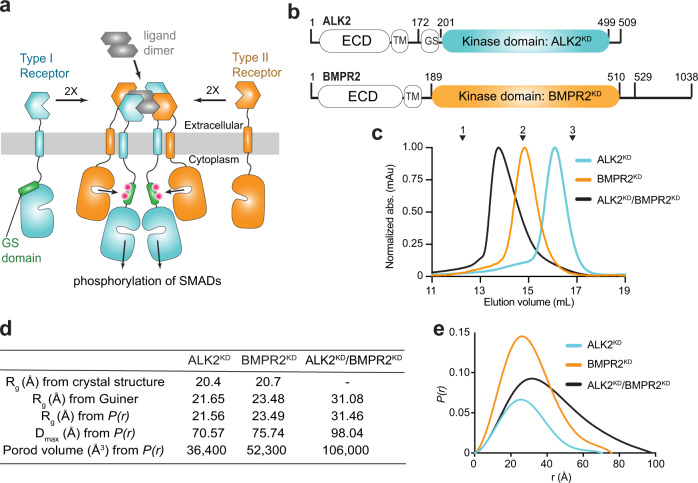
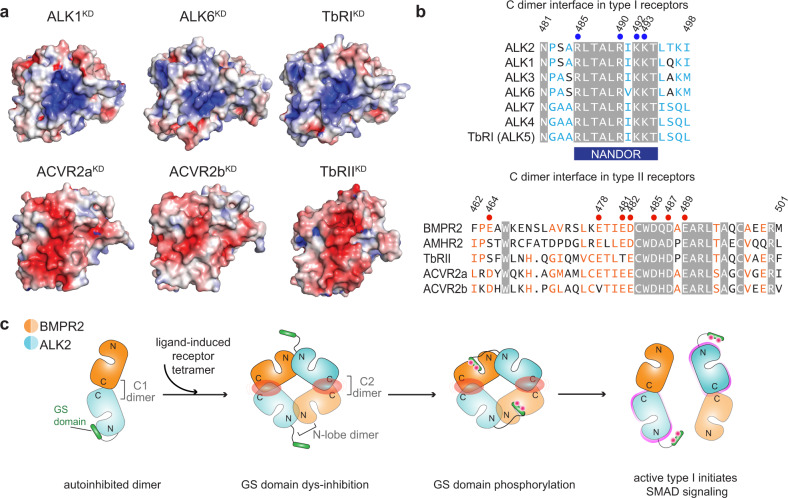
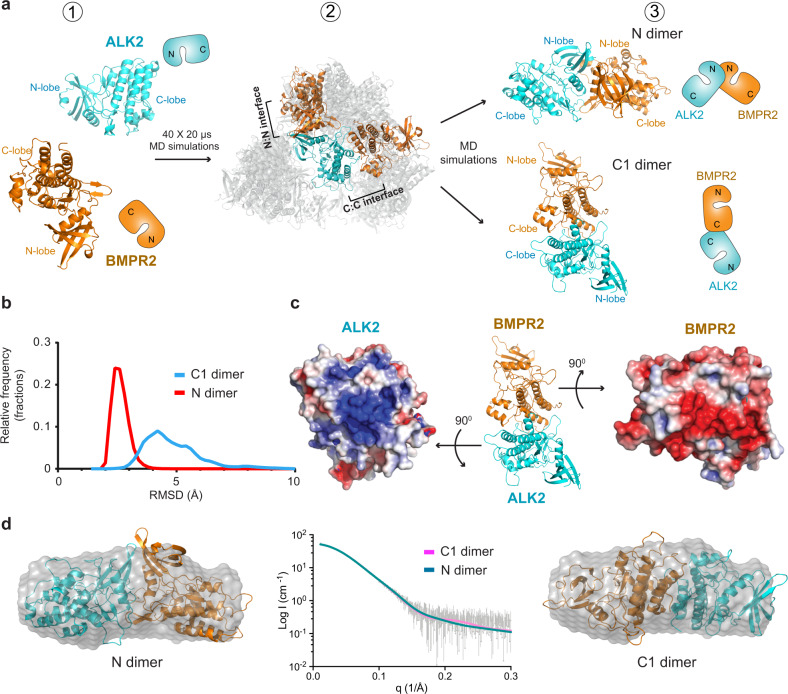
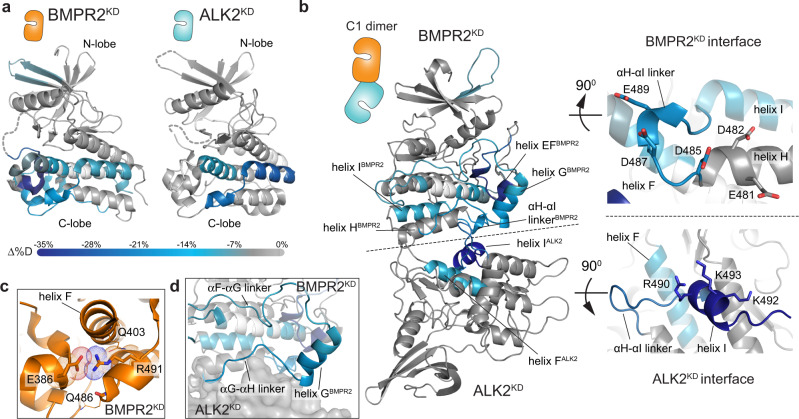
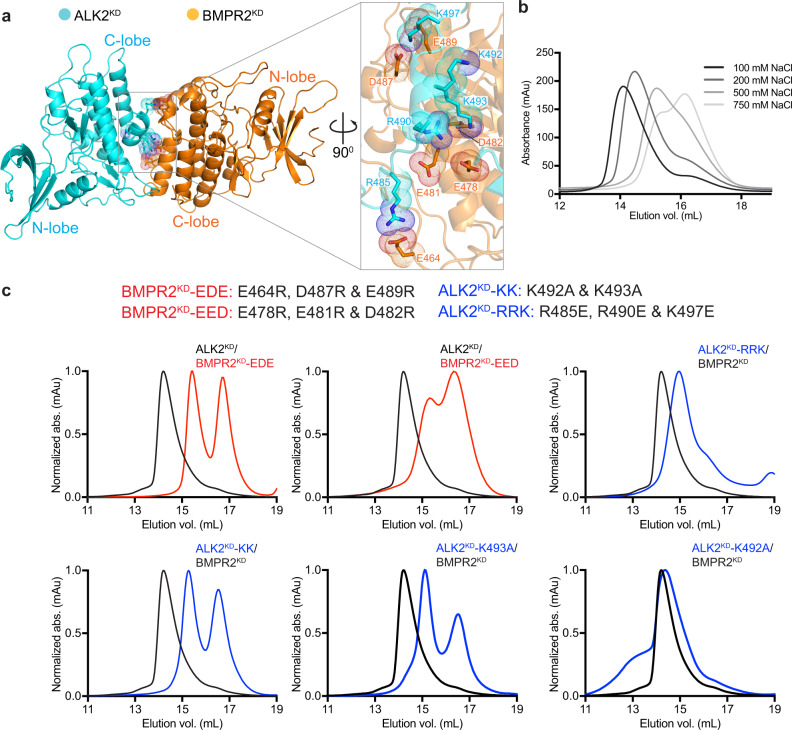
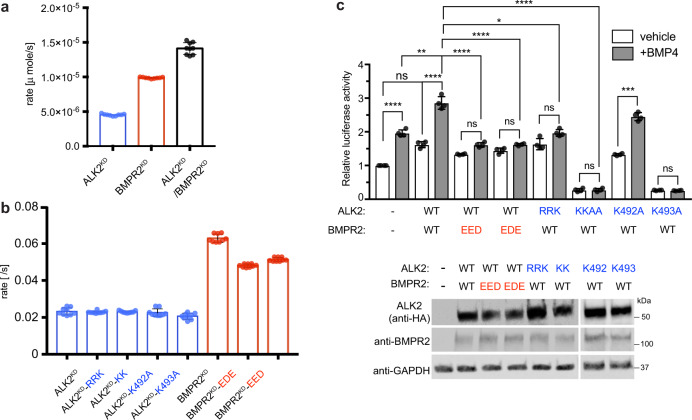
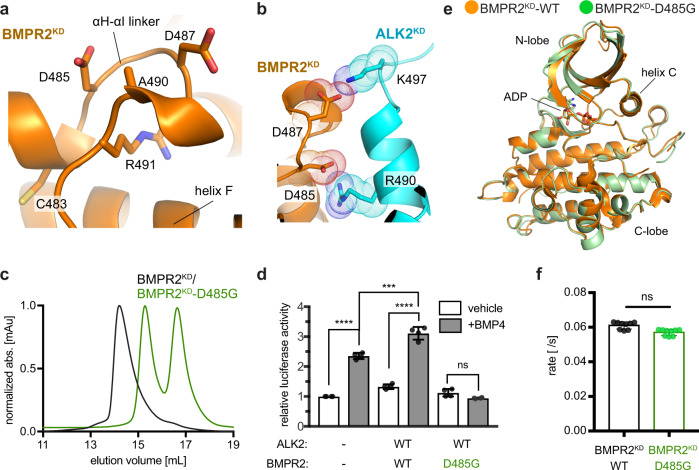
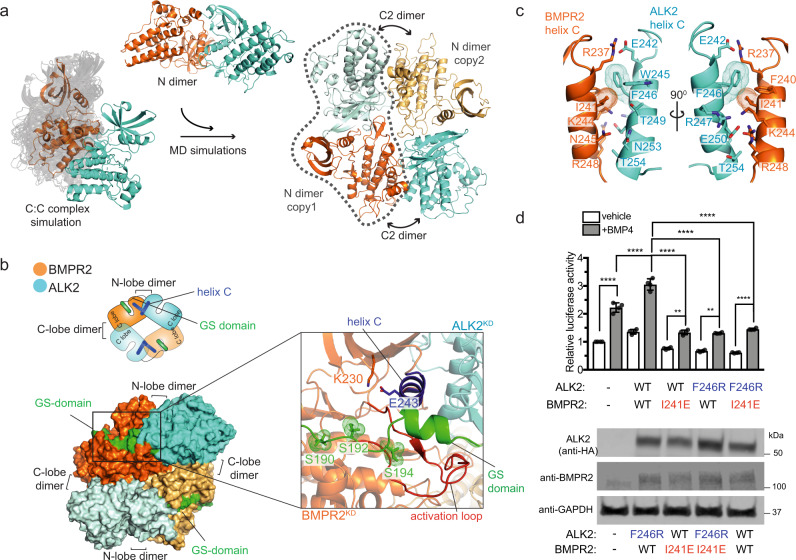
Upon ligand binding, bone morphogenetic protein (BMP) receptors form active tetrameric complexes, comprised of two type I and two type II receptors, which then transmit signals to SMAD proteins. The link between receptor tetramerization and the mechanism of kinase activation, however, has not been elucidated. Here, using hydrogen deuterium exchange mass spectrometry (HDX-MS), small angle X-ray scattering (SAXS) and molecular dynamics (MD) simulations, combined with analysis of SMAD signaling, we show that the kinase domain of the type I receptor ALK2 and type II receptor BMPR2 form a heterodimeric complex via their C-terminal lobes. Formation of this dimer is essential for ligand-induced receptor signaling and is targeted by mutations in BMPR2 in patients with pulmonary arterial hypertension (PAH). We further show that the type I/type II kinase domain heterodimer serves as the scaffold for assembly of the active tetrameric receptor complexes to enable phosphorylation of the GS domain and activation of SMADs.
配体结合后,骨形态发生蛋白(BMP)受体形成由两个I型受体和两个II型受体组成的活性四聚体复合物,然后将信号传递给SMAD蛋白。然而,受体四聚化与激酶激活机制之间的联系尚未阐明。在这里,我们使用氢氘交换质谱(HDX-MS)、小角X射线散射(SAXS)和分子动力学(MD)模拟,并结合SMAD信号分析,表明I型受体ALK2和II型受体BMPR2的激酶结构域通过其C末端叶形成异二聚体复合物。这种二聚体的形成对于配体诱导的受体信号传导至关重要,并且是肺动脉高压(PAH)患者BMPR2突变的靶点。我们进一步表明,I型/II型激酶结构域异二聚体作为活性四聚体受体复合物组装的支架,以实现GS结构域的磷酸化和SMAD的激活。