Tarafdar Sreya, Virata Maria Luisa, Yan Hailing, Zhong Lilin, Deng Lu, Xu Yanqun, He Yong, Struble Evi, Zhang Pei
Plasma Derivatives Branch, Division of Plasma Protein Therapeutics, Office of Tissues and Advanced Therapies, Center for Biologics Evaluation and Research, Food and Drug Administration, Silver Spring, Maryland, USA.
J Med Virol. 2022 Feb;94(2):649-658. doi: 10.1002/jmv.27278. Epub 2021 Aug 26.
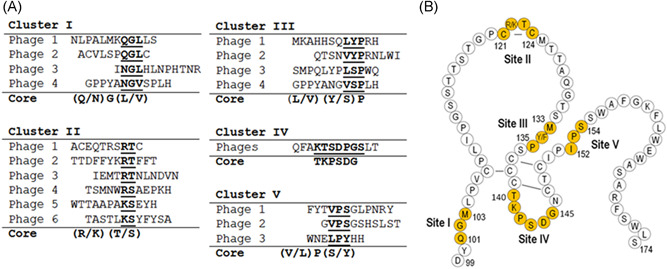
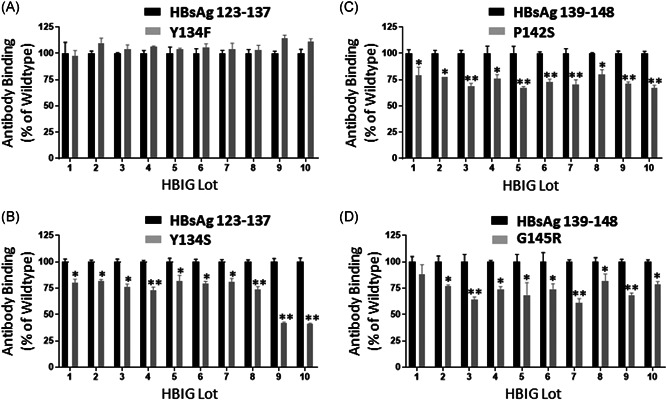
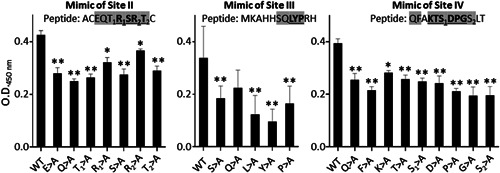
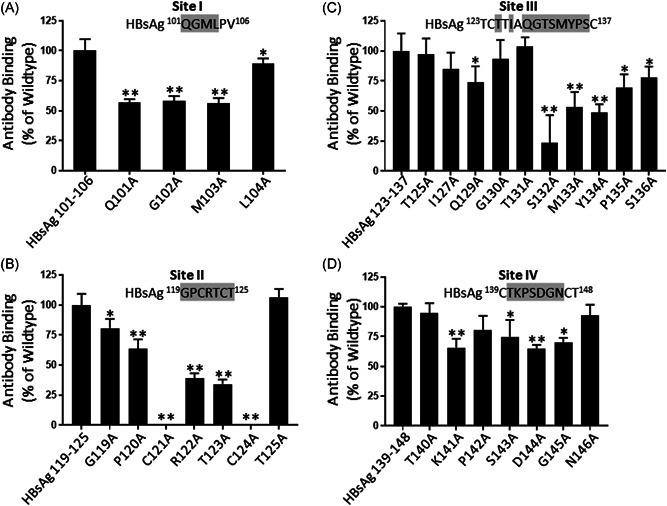
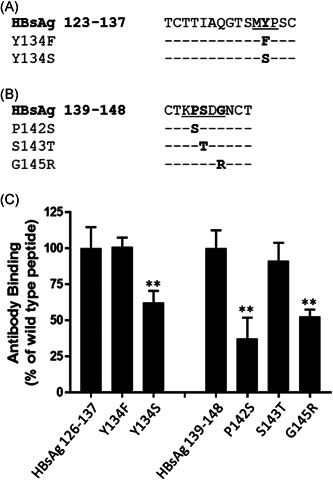
Hepatitis B immune globulin (HBIG) is a human plasma-derived immunoglobulin G concentrate that contains a high titer of neutralizing antibodies (anti-HBs) to the hepatitis B virus (HBV) surface antigen (HBsAg). HBIG is known to be highly effective in treating HBV infections, however, a more systematic characterization of the antibody binding sites on HBsAg and their correlation with emerging "escape" mutations in HBsAg was lacking. By using anti-HBs antibodies from HBIG lots to screen random peptide phage display libraries, we identified five clusters of peptides that corresponded to five distinct anti-HBs binding sites on the HBsAg. Three sites, Site II (C121-C124), Site III (M133-P135), and Site IV (T140-G145), were mapped within the "a" determinant, while the two other sites, Site I (Q101-M103) and Site V (I152-S154), were outside the "a" determinant. We then tested in binding assays HBsAg peptides containing clinically relevant mutations previously reported within these sites, such as Y134S, P142S, and G145R, and observed a significant reduction in anti-HBs binding activity to the mutated sites, suggesting a mechanism the virus may use to avoid HBIG-mediated neutralization. The current HBIG treatment could be improved by supplementing it with site-specific neutralizing monoclonal antibodies that target these mutations for control of HBV infections.
乙型肝炎免疫球蛋白(HBIG)是一种源自人血浆的免疫球蛋白G浓缩物,其中含有高滴度的针对乙型肝炎病毒(HBV)表面抗原(HBsAg)的中和抗体(抗-HBs)。已知HBIG在治疗HBV感染方面非常有效,然而,缺乏对HBsAg上抗体结合位点及其与HBsAg中出现的“逃逸”突变相关性的更系统的表征。通过使用来自HBIG批次的抗-HBs抗体筛选随机肽噬菌体展示文库,我们鉴定出五组肽,它们对应于HBsAg上五个不同的抗-HBs结合位点。三个位点,位点II(C121-C124)、位点III(M133-P135)和位点IV(T140-G145),定位在“a”决定簇内,而另外两个位点,位点I(Q101-M103)和位点V(I152-S154),在“a”决定簇之外。然后,我们在结合试验中测试了含有先前在这些位点报道的临床相关突变(如Y134S、P142S和G145R)的HBsAg肽,观察到抗-HBs与突变位点的结合活性显著降低,这表明病毒可能用于避免HBIG介导的中和的一种机制。通过补充针对这些突变的位点特异性中和单克隆抗体来控制HBV感染,当前的HBIG治疗可能会得到改善。