Zaman Aubhishek, Bivona Trever G
Department of Medicine, University of California, San Francisco, CA, USA.
UCSF Helen Diller Comprehensive Cancer Center, University of California, San Francisco, CA, USA.
Lung Cancer (Auckl). 2021 Aug 10;12:67-79. doi: 10.2147/LCTT.S305484. eCollection 2021.
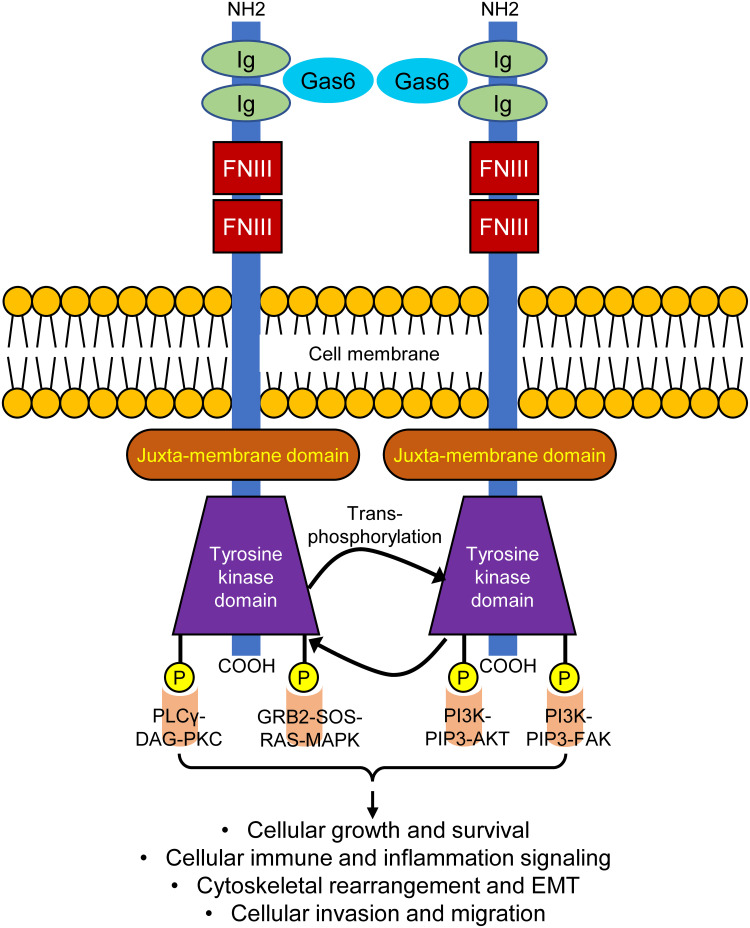
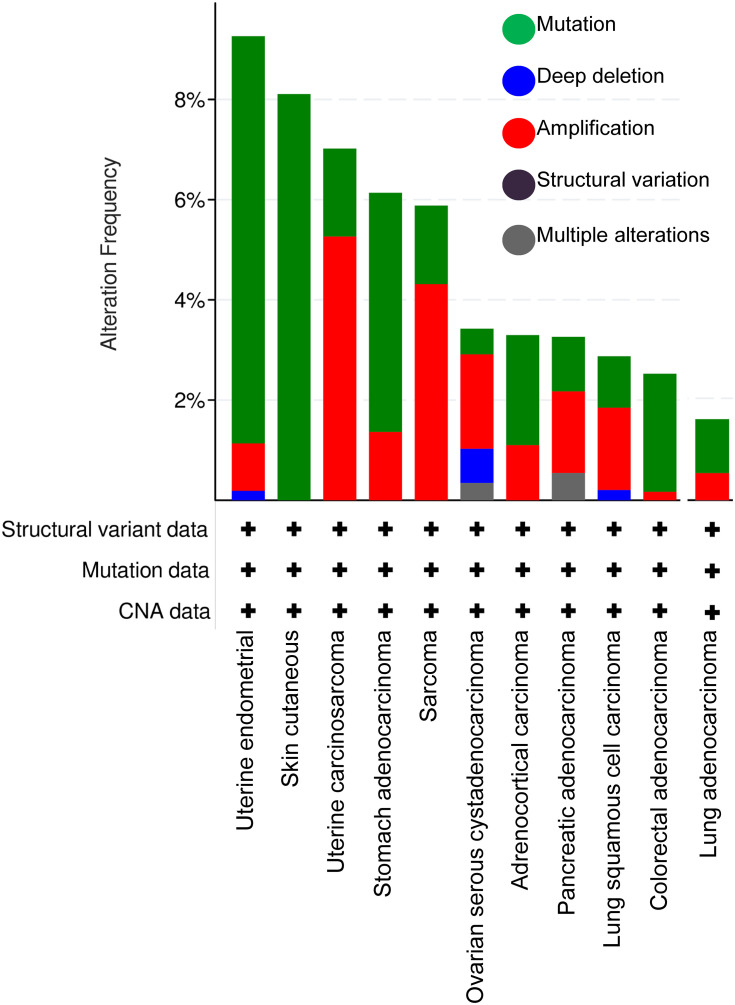
State-of-the-art cancer precision medicine approaches involve targeted inactivation of chemically and immunologically addressable vulnerabilities that often yield impressive initial anti-tumor responses in patients. Nonetheless, these responses are overshadowed by therapy resistance that follows. AXL, a receptor tyrosine kinase with bona fide oncogenic capacity, has been associated with the emergence of resistance in an array of cancers with varying pathophysiology and cellular origins, including in non-small-cell lung cancers (NSCLCs). Here in this review, we summarize AXL biology during normal homeostasis, oncogenic development and therapy resistance with a focus on NSCLC. In the context of NSCLC therapy resistance, we delineate AXL's role in mediating resistance to tyrosine kinase inhibitors (TKIs) deployed against epidermal growth factor receptor (EGFR) as well as other notable oncogenes and to chemotherapeutics. We also discuss the current understanding of AXL's role in mediating cell-biological variables that function as important modifiers of therapy resistance such as epithelial to mesenchymal transition (EMT), the tumor microenvironment and tumor heterogeneity. We also catalog and discuss a set of effective pharmacologic tools that are emerging to strategically perturb AXL mediated resistance programs in NSCLC. Finally, we enumerate ongoing and future exciting precision medicine approaches targeting AXL as well as challenges in this regard. We highlight that a holistic understanding of AXL biology in NSCLC may allow us to predict and improve targeted therapeutic strategies, such as through polytherapy approaches, potentially against a broad spectrum of NSCLC sub-types to forestall tumor evolution and drug resistance.
先进的癌症精准医学方法涉及对化学和免疫可靶向的脆弱性进行靶向失活,这些脆弱性通常会使患者产生令人印象深刻的初始抗肿瘤反应。尽管如此,这些反应随后会被治疗耐药性所掩盖。AXL是一种具有真正致癌能力的受体酪氨酸激酶,与一系列具有不同病理生理学和细胞起源的癌症(包括非小细胞肺癌(NSCLC))中耐药性的出现有关。在本综述中,我们总结了AXL在正常稳态、致癌发展和治疗耐药过程中的生物学特性,重点关注NSCLC。在NSCLC治疗耐药的背景下,我们阐述了AXL在介导对针对表皮生长因子受体(EGFR)以及其他显著致癌基因的酪氨酸激酶抑制剂(TKI)和化疗药物耐药中的作用。我们还讨论了目前对AXL在介导细胞生物学变量(如上皮-间质转化(EMT)、肿瘤微环境和肿瘤异质性)中的作用的理解,这些变量是治疗耐药的重要调节因子。我们还整理并讨论了一系列正在出现的有效药理学工具,这些工具旨在战略性地干扰NSCLC中AXL介导的耐药程序。最后,我们列举了正在进行的和未来令人兴奋的针对AXL的精准医学方法以及这方面的挑战。我们强调,对NSCLC中AXL生物学的全面理解可能使我们能够预测并改进靶向治疗策略,例如通过联合治疗方法,可能针对广泛的NSCLC亚型,以防止肿瘤进展和耐药。