Meng Wangyang, Liao Yongde, Chen Jiaping, Wang Yangwei, Meng Yunchong, Li Kuo, Xiao Han
Department of Thoracic Surgery, Union Hospital, Tongji Medical College, Huazhong University of Science and Technology, Wuhan, China.
J Thorac Dis. 2021 Jul;13(7):4281-4300. doi: 10.21037/jtd-21-658.
An increasing number of original studies suggest that estrogen receptor beta (ERβ) expression may be related to non-small cell lung cancer (NSCLC) prognosis; however, the evidence remains inconclusive and conflicting. We aimed to systematically evaluate the expression and prognostic value of ERβ in NSCLC, and to explain the inconsistency between ERβ protein and mRNA level.
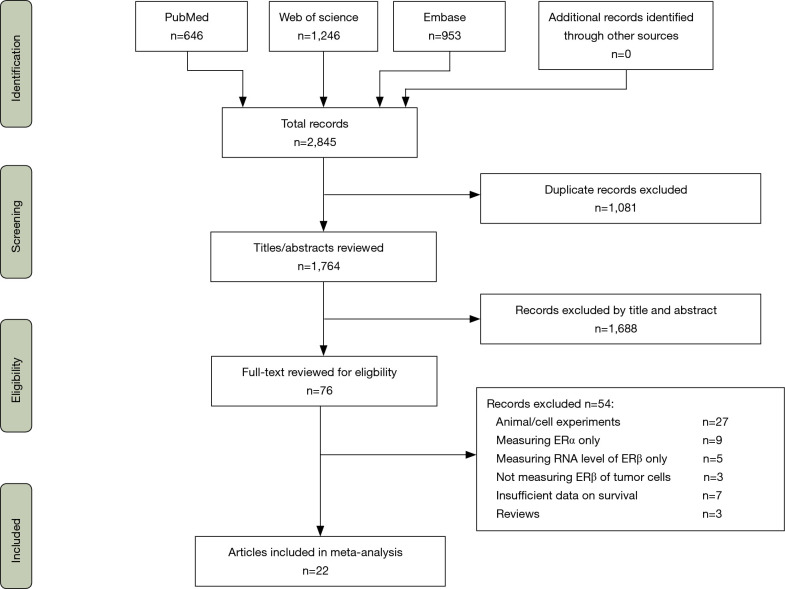
PubMed, Embase, and Web of Science databases were searched for studies (published before October 6, 2020) reporting the prognostic value of ERβ protein expression in NSCLC. The pooled hazard ratios (HRs) with 95% confidence intervals (CIs) for overall survival (OS) were calculated. Transcriptome and survival data of lung adenocarcinoma patients were obtained from public databases for differential expression and survival analyses. Immunohistochemistry (IHC) was performed to examine the ERβ protein expression in 39 NSCLC patients. Western blotting and RT-qPCR were performed to analyze ERβ expression in two paired NSCLC and normal adjacent tissue samples. The effect of methyltransferase-like 13 (METTL3) on ERβ expression was investigated in a lung cancer cell line.
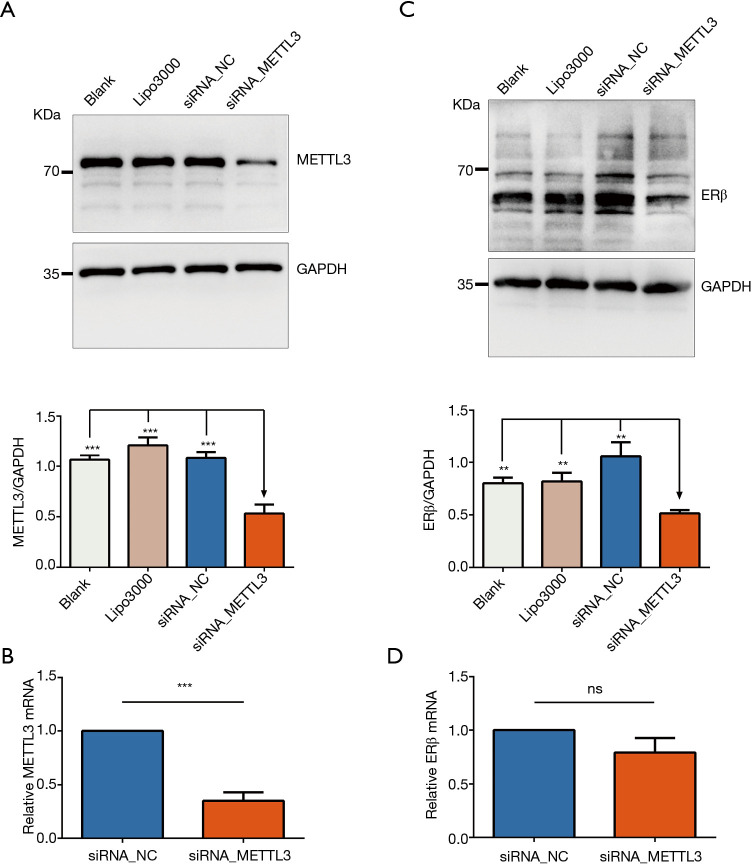
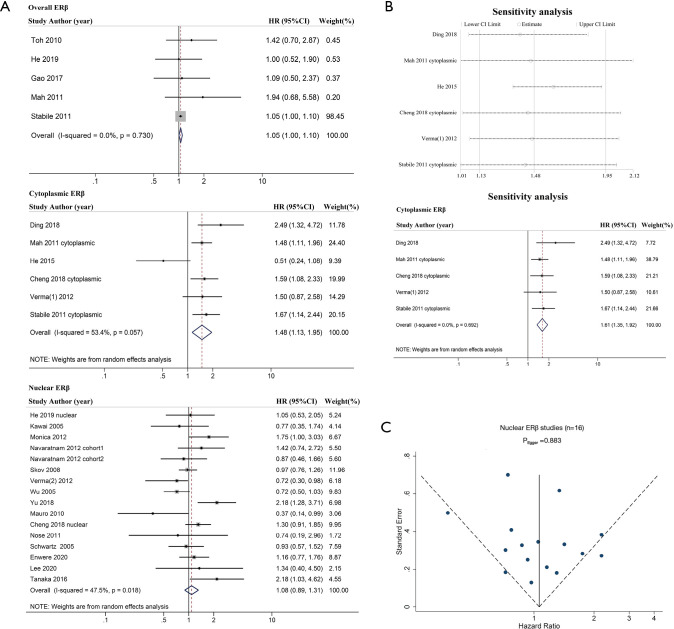
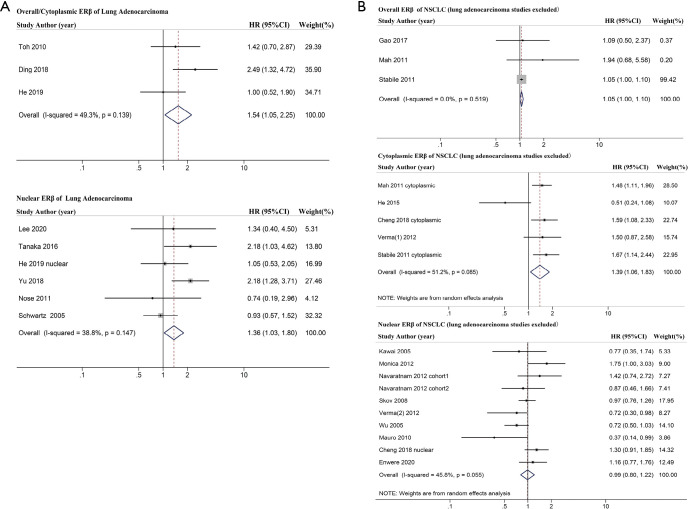
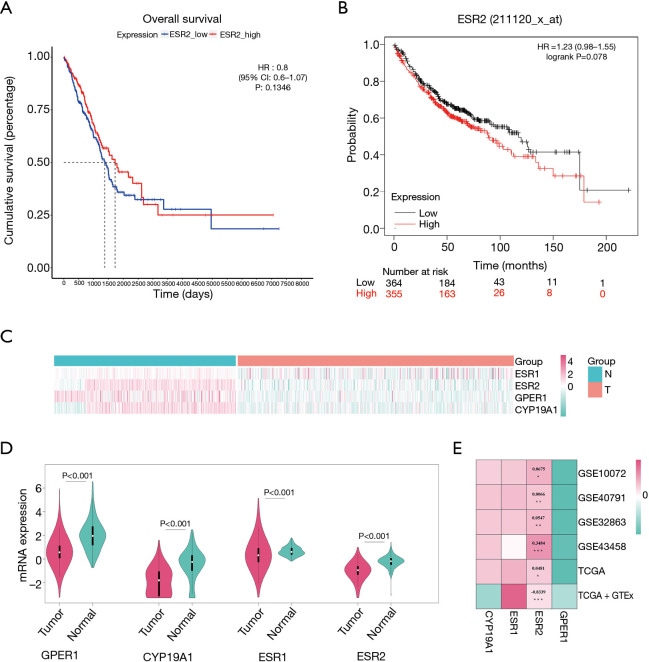
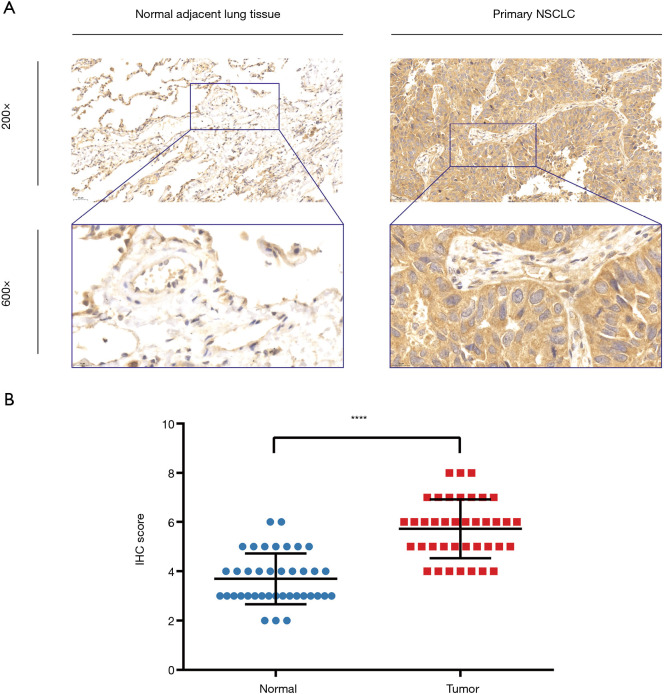
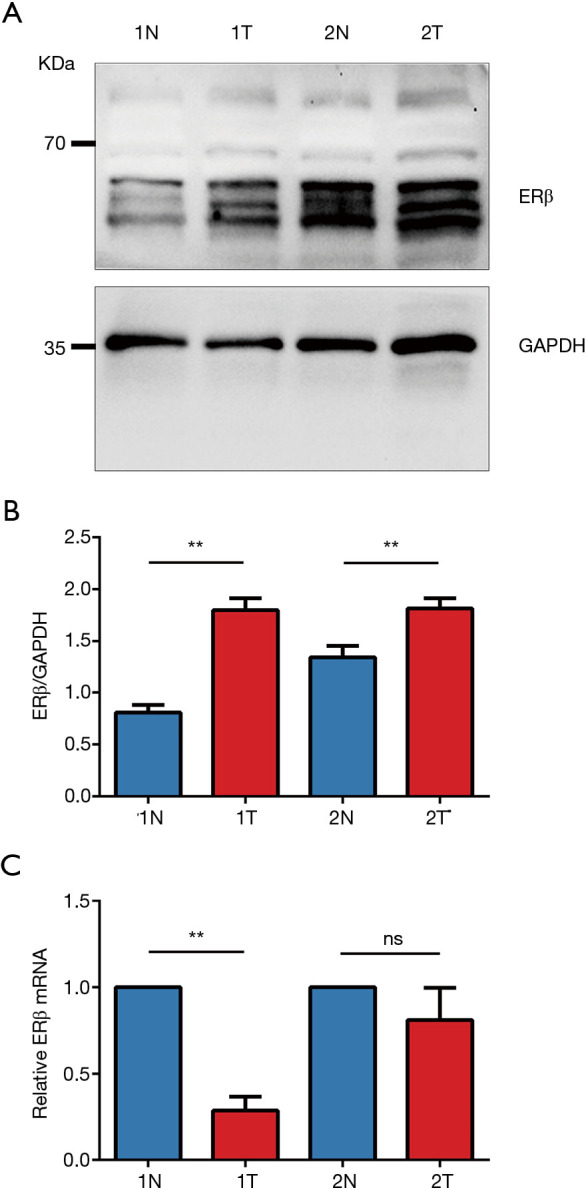
Meta-analysis of 23 studies with a total of 3744 patients demonstrated that high protein expression of overall ERβ and cytoplasmic ERβ indicated poor OS (HR: 1.05, 95% CI: 1.00 to 1.10; HR: 1.48, 95% CI: 1.13 to 1.95) in NSCLC. For lung adenocarcinoma especially, high protein expression of both overall/cytoplasmic ERβ and nuclear ERβ suggested poor OS (HR: 1.54, 95% CI: 1.05 to 2.25; HR: 1.36, 95% CI: 1.03 to 1.80). Bioinformatics analysis indicated the expression of ERβ mRNA was not associated with the prognosis of lung adenocarcinoma. Analysis of public databases showed that ERβ mRNA is not highly expressed in tumor tissues, however, IHC results revealed that ERβ protein is highly expressed in NSCLC tissues. We validated this inconsistency in ERβ expression in paired tumors and normal adjacent tissues from patients. Moreover, METTL3 knockdown in the A549 cell line downregulated ERβ protein expression but not ERβ mRNA expression.
Our study elucidated the inconsistency between ERβ protein and mRNA expression levels and their prognostic values. The results indicated that METTL3-driven enhanced translation in NSCLC may cause this inconsistency.
越来越多的原始研究表明,雌激素受体β(ERβ)表达可能与非小细胞肺癌(NSCLC)的预后相关;然而,证据仍然不确凿且相互矛盾。我们旨在系统评估ERβ在NSCLC中的表达及预后价值,并解释ERβ蛋白与mRNA水平之间的不一致性。
检索PubMed、Embase和Web of Science数据库中(2020年10月6日前发表的)报告ERβ蛋白表达在NSCLC中的预后价值的研究。计算总生存(OS)的合并风险比(HRs)及95%置信区间(CIs)。从公共数据库获取肺腺癌患者的转录组和生存数据,进行差异表达和生存分析。对39例NSCLC患者进行免疫组织化学(IHC)检测ERβ蛋白表达。对两对NSCLC及其癌旁正常组织样本进行蛋白质印迹法和逆转录定量聚合酶链反应(RT-qPCR)分析ERβ表达。在肺癌细胞系中研究甲基转移酶样13(METTL3)对ERβ表达的影响。
对23项研究共3744例患者的荟萃分析表明,NSCLC中ERβ总体蛋白高表达和细胞质ERβ高表达提示OS较差(HR:1.05,95%CI:1.00至1.10;HR:1.48,95%CI:1.13至1.95)。尤其对于肺腺癌,ERβ总体/细胞质和细胞核蛋白高表达均提示OS较差(HR:1.54,95%CI:1.05至2.25;HR:1.36,95%CI:1.03至1.80)。生物信息学分析表明,ERβ mRNA表达与肺腺癌预后无关。对公共数据库的分析显示,ERβ mRNA在肿瘤组织中并非高表达,然而,IHC结果显示ERβ蛋白在NSCLC组织中高表达。我们在患者的配对肿瘤组织和癌旁正常组织中验证了这种ERβ表达的不一致性。此外,在A549细胞系中敲低METTL3可下调ERβ蛋白表达,但不影响ERβ mRNA表达。
我们的研究阐明了ERβ蛋白和mRNA表达水平及其预后价值之间的不一致性。结果表明,NSCLC中METTL3驱动的翻译增强可能导致这种不一致性。