Wonju Public Health Center, COVID-19 Division, Wonju-Si, Korea.
Division in Anatomy and Developmental Biology, Department of Oral Biology, Human Identification Research Institute, BK21 FOUR Project, Yonsei University College of Dentistry, Room 6 01, 50-1 Yonsei-ro, Seodaemun-gu, Seoul, 03722, Korea.
Surg Radiol Anat. 2021 Dec;43(12):2071-2076. doi: 10.1007/s00276-021-02821-7. Epub 2021 Aug 25.
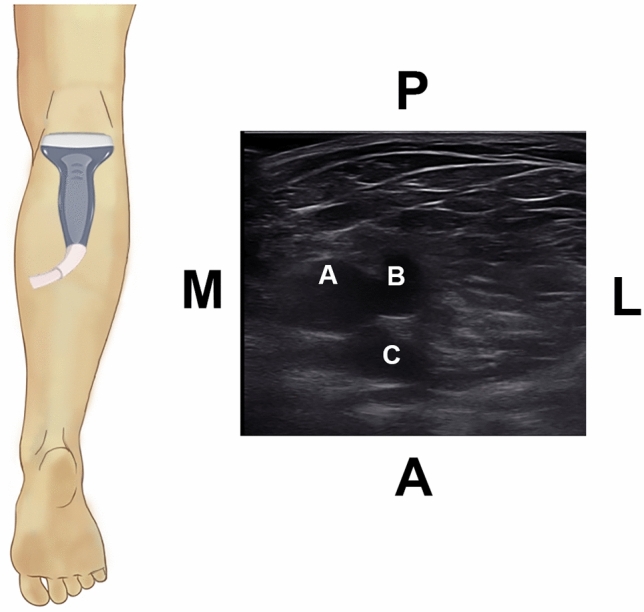
An antegrade approach is frequently used in catheter-directed thrombolysis to remove deep-vein thrombosis. However, the antegrade approach is difficult when accessing veins with small diameters; therefore, understanding the variation of deep calf vein is important.
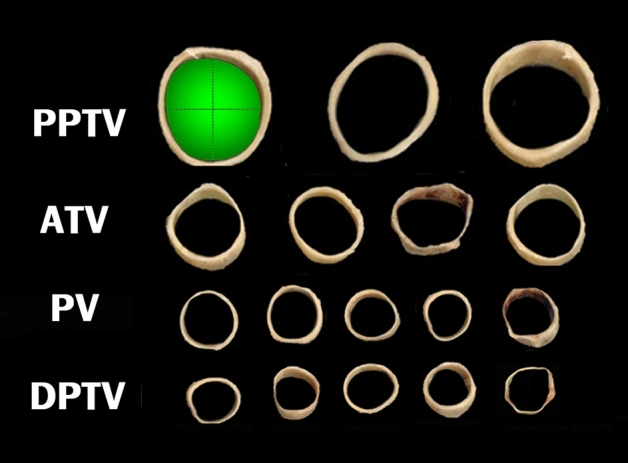
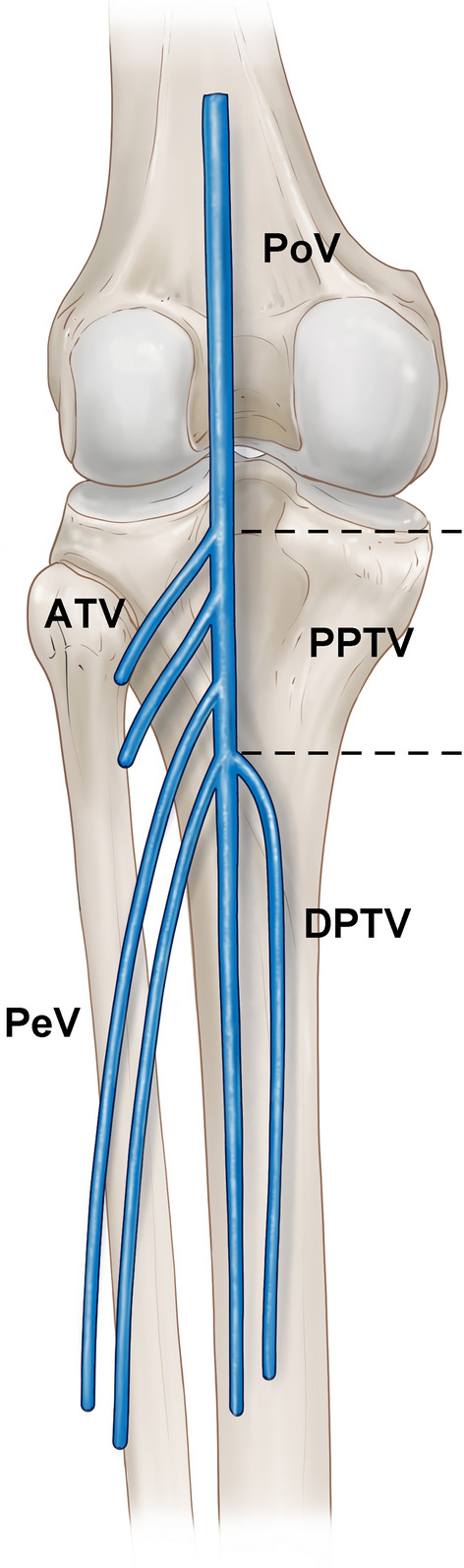
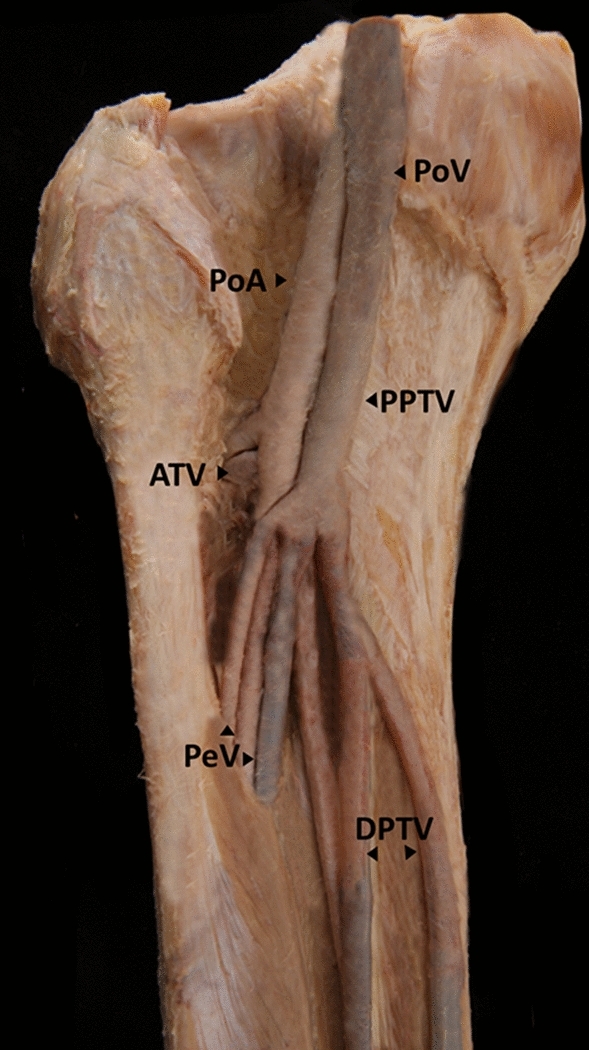
This study measured the diameters and surface areas of the proximal and distal posterior tibial vein, peroneal vein, and anterior tibial vein to determine which are preferable for venous access. This study dissected 132 legs from Korean and Thai cadavers. The proximal and distal posterior tibial vein, peroneal vein, and anterior tibial vein were scanned and measured.
The mean diameter and surface area were largest for the proximal tibial vein, at 6.34 mm and 0.312 cm, respectively, followed by the anterior tibial vein (5.22 mm and 0.213 cm), distal posterior tibial vein (3.29 mm and 0.091 cm), and peroneal vein (3.43 mm and 0.081 cm). The proximal posterior tibial vein and anterior tibial vein have large diameters and surface areas, which make them ideal for applying an antegrade approach in catheter-directed thrombolysis.
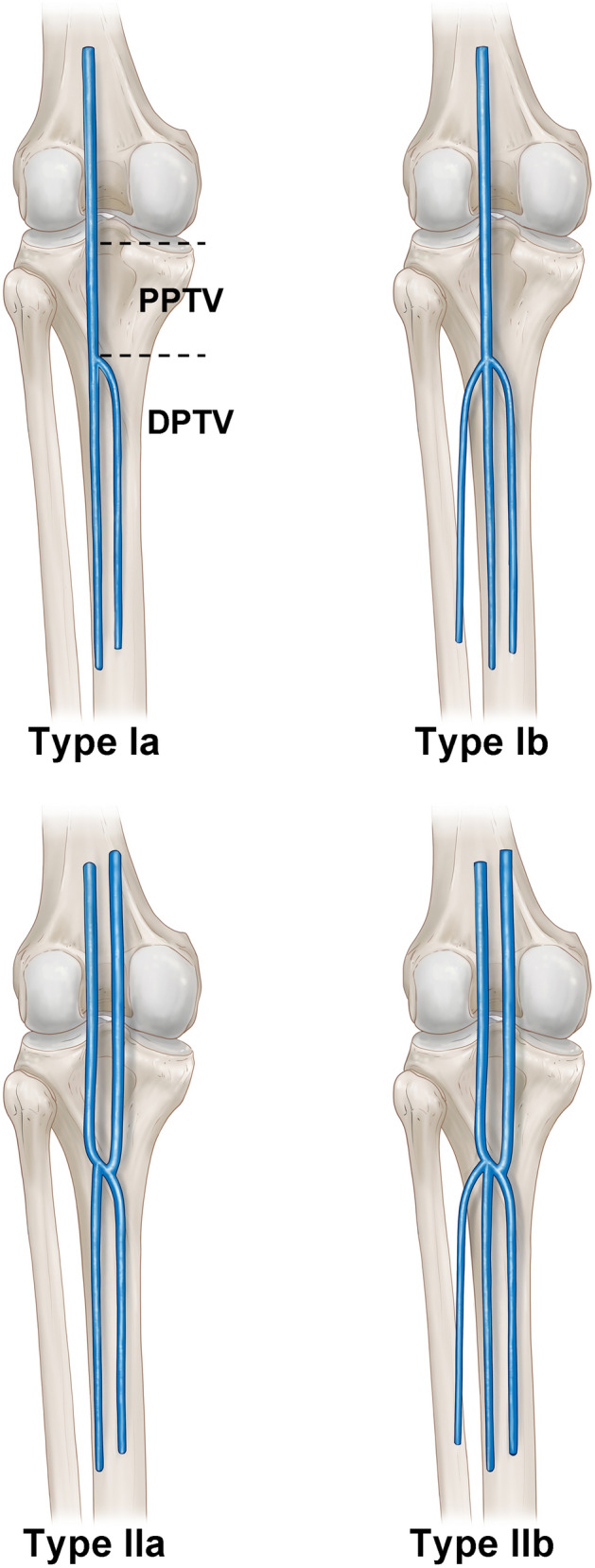
The distal posterior tibial vein and peroneal vein are not recommended due to their smaller surface areas and also the anatomical variations therein.
顺行入路常被用于导管溶栓以清除深静脉血栓。然而,当遇到小直径静脉时,顺行入路较困难;因此,了解小腿深静脉的变异情况很重要。
本研究测量了近端和远端胫后静脉、腓静脉和胫前静脉的直径和表面积,以确定哪种静脉更适合静脉入路。本研究解剖了 132 具来自韩国和泰国的尸体的下肢。对近端和远端胫后静脉、腓静脉和胫前静脉进行了扫描和测量。
胫前静脉的平均直径和表面积最大,分别为 6.34mm 和 0.312cm,其次是胫前静脉(5.22mm 和 0.213cm)、远端胫后静脉(3.29mm 和 0.091cm)和腓静脉(3.43mm 和 0.081cm)。近端胫后静脉和胫前静脉具有较大的直径和表面积,使其成为导管溶栓中应用顺行入路的理想选择。
由于其较小的表面积和解剖变异,不建议使用远端胫后静脉和腓静脉。