Brito Catarina, Graca Joana, Vilela Pedro
Department of Neuroradiology, Hospital Beatriz Angelo, Loures, Portugal.
Department of Neuroradiology, Hospital Egas Moniz, Lisbon, Portugal.
J Med Cases. 2020 Dec;11(12):394-399. doi: 10.14740/jmc3583. Epub 2020 Oct 21.
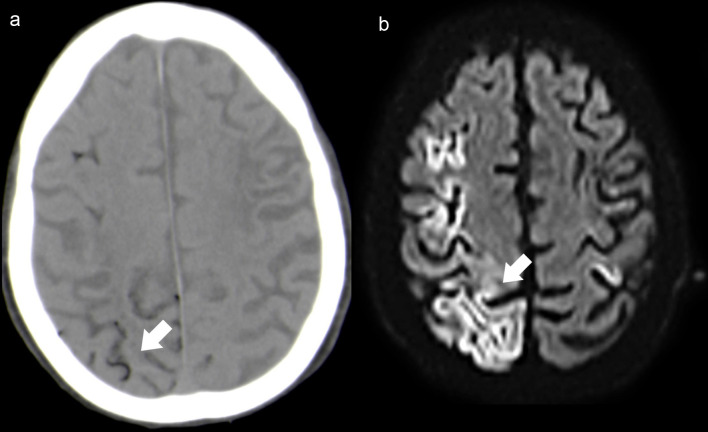
Cerebral air embolism (CAE) is a serious disease, often underdiagnosed due to nonspecific neurological findings and clinical and imaging unawareness. Early diagnosis is crucial for a prompt specific treatment, which differs from other types of brain infarcts. Immediate computed tomography (CT) scan is the imaging technique of choice, allowing to depict acute intracranial air, most commonly seen in the high convexity along cortical grooves, in a sulcal subarachnoid gyriform pattern. The use of thin-slice (thickness of 5 mm or smaller) and the measurement of air attenuation coefficient can reduce false-negative studies. Hyperbaric oxygen therapy (HBOT) is the first-line treatment for CAE and may affect the outcome. We report four cases of iatrogenic CAE and review the literature.
脑空气栓塞(CAE)是一种严重疾病,常因非特异性神经学表现以及临床和影像学认识不足而被漏诊。早期诊断对于及时进行特异性治疗至关重要,这种治疗方法与其他类型的脑梗死不同。立即进行计算机断层扫描(CT)是首选的成像技术,它能够显示急性颅内积气,最常见于沿皮质沟的大脑凸面,呈脑沟蛛网膜下腔脑回样形态。使用薄层扫描(厚度为5毫米或更小)并测量空气衰减系数可减少假阴性结果。高压氧治疗(HBOT)是CAE的一线治疗方法,可能会影响治疗结果。我们报告4例医源性CAE病例并复习相关文献。