Markey Cancer Center, Department of Molecular and Cellular Biochemistry, University of Kentucky College of Medicine, Lexington, KY 40356, USA.
Cells. 2021 Aug 20;10(8):2138. doi: 10.3390/cells10082138.
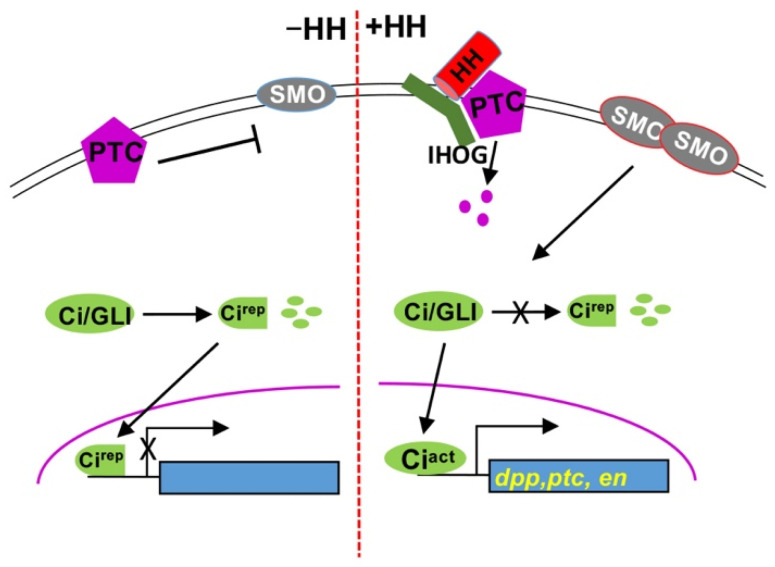
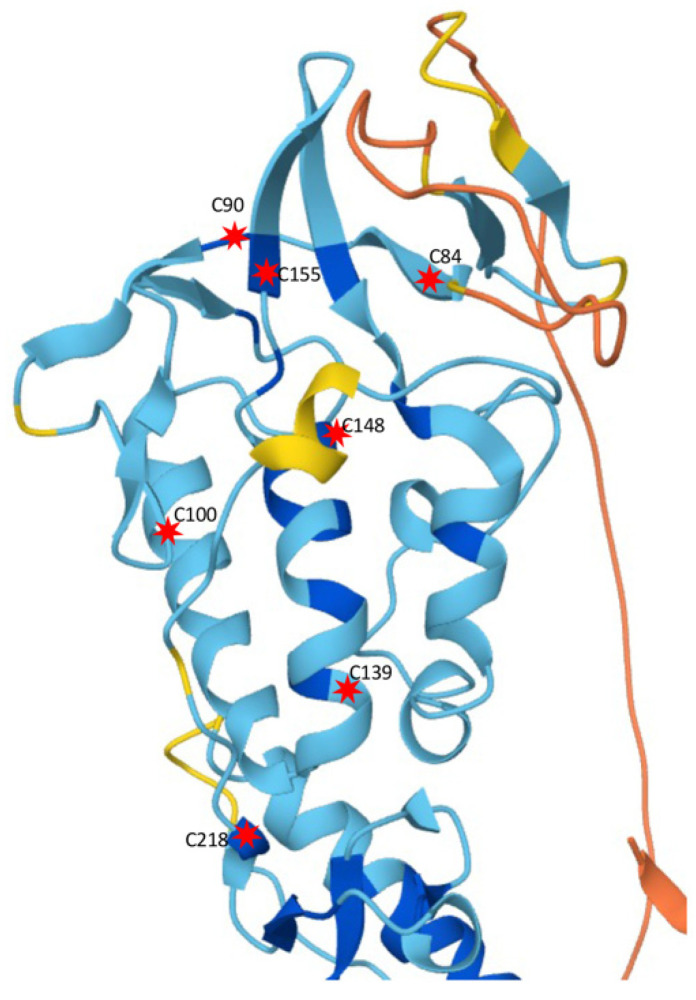
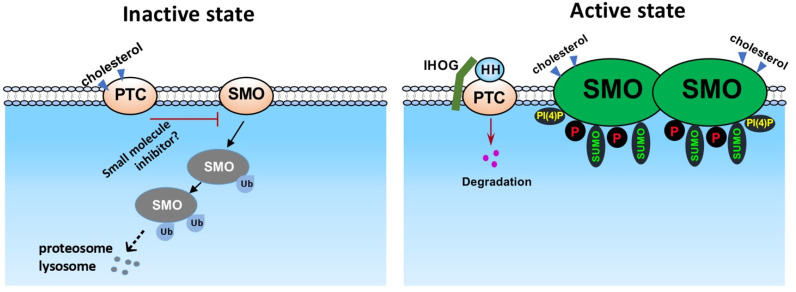
The seven-transmembrane protein, Smoothened (SMO), has shown to be critical for the hedgehog (HH) signal transduction on the cell membrane (and the cilium in vertebrates). SMO is subjected to multiple types of post-translational regulations, including phosphorylation, ubiquitination, and sumoylation, which alter SMO intracellular trafficking and cell surface accumulation. Recently, SMO is also shown to be regulated by small molecules, such as oxysterol, cholesterol, and phospholipid. The activity of SMO must be very well balanced by these different mechanisms in vivo because the malfunction of SMO will not only cause developmental defects in early stages, but also induce cancers in late stages. Here, we discuss the activation and inactivation of SMO by different mechanisms to better understand how SMO is regulated by the graded HH signaling activity that eventually governs distinct development outcomes.
七跨膜蛋白 Smoothened(SMO)已被证明对细胞膜(脊椎动物中的纤毛)上的 hedgehog(HH)信号转导至关重要。SMO 受到多种类型的翻译后修饰的调控,包括磷酸化、泛素化和 SUMO 化,这些修饰改变了 SMO 的细胞内运输和细胞表面积累。最近,SMO 也被证明受到小分子的调控,如氧化固醇、胆固醇和磷脂。SMO 的活性必须通过这些不同的机制在体内得到很好的平衡,因为 SMO 的功能障碍不仅会导致早期发育缺陷,还会导致晚期癌症。在这里,我们讨论了不同机制对 SMO 的激活和失活,以更好地理解 SMO 是如何受到 HH 信号活性的调控的,而这种活性最终决定了不同的发育结果。