School of Chemistry and Chemical Engineering, Qilu University of Technology (Shandong Academy of Sciences), 3501 Daxue Road, Jinan 250353, China.
Tianjin Key Laboratory of Molecular Design and Drug Discovery, Tianjin Institute of Pharmaceutical Research, 306 Huiren Road, Tianjin 300301, China.
Molecules. 2021 Aug 13;26(16):4907. doi: 10.3390/molecules26164907.
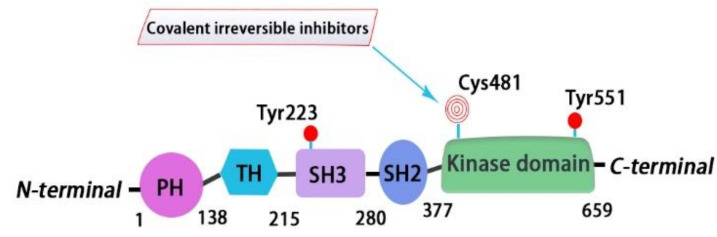
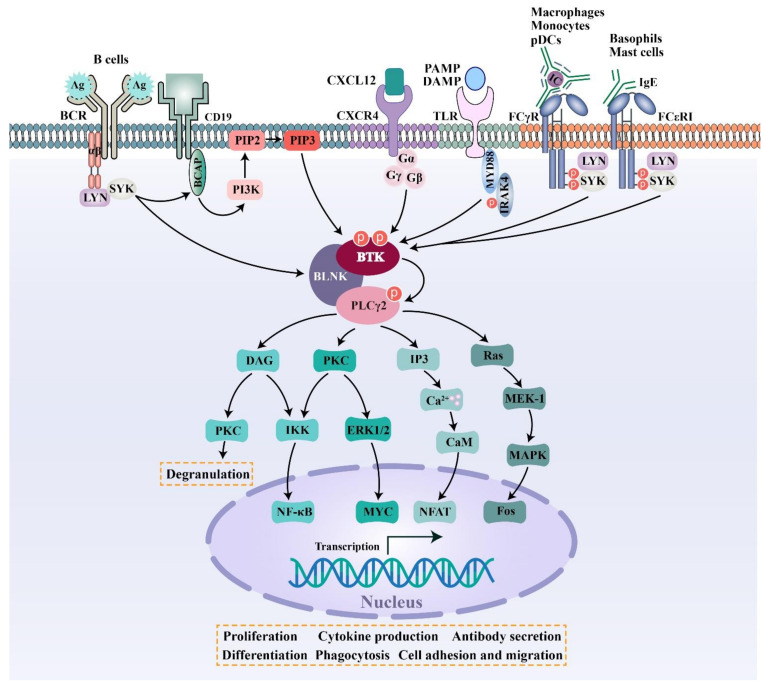
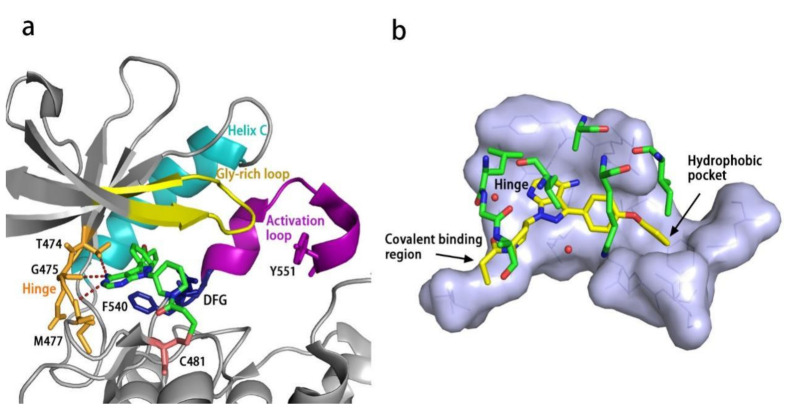
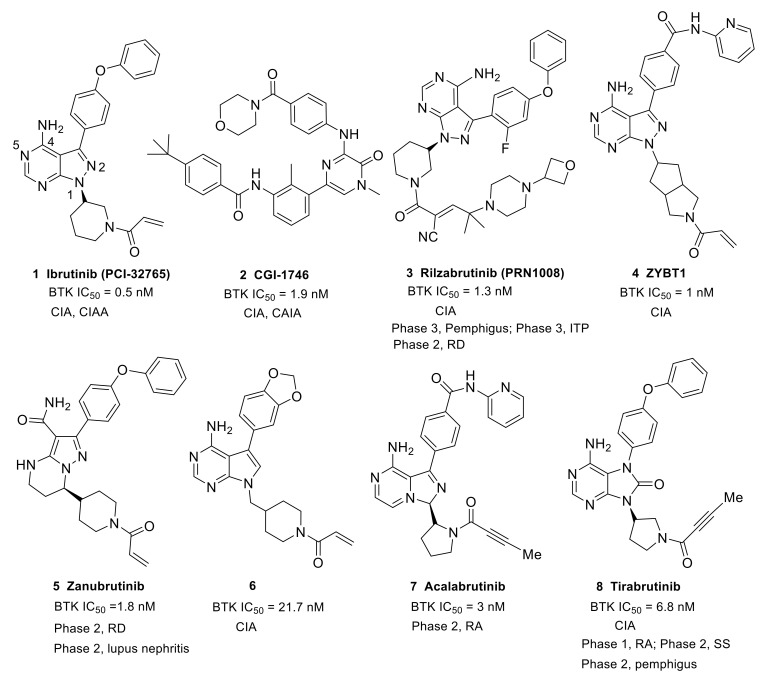
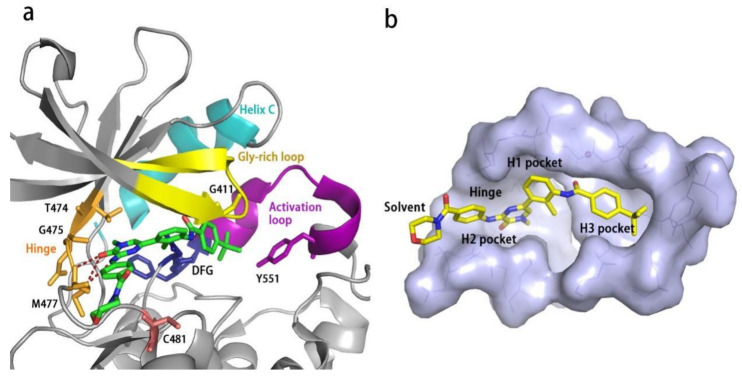
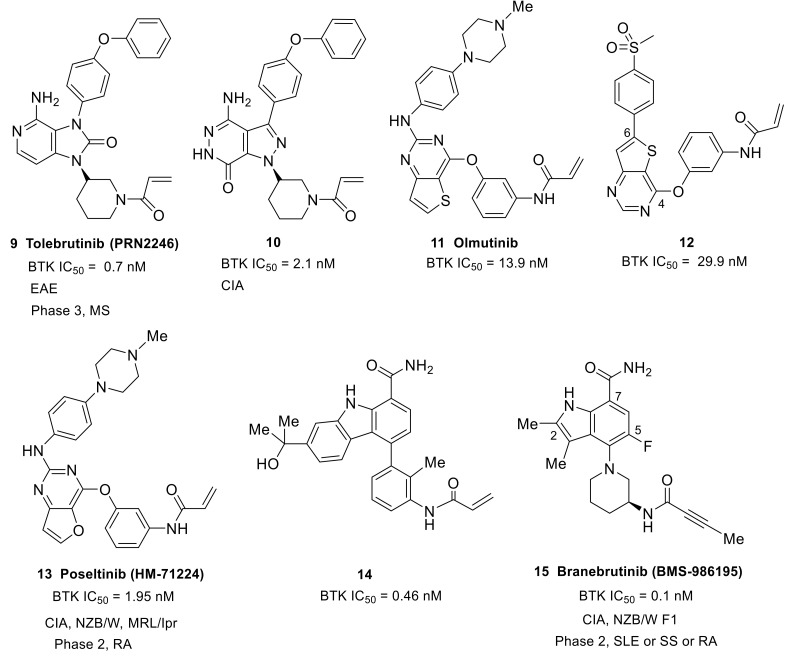
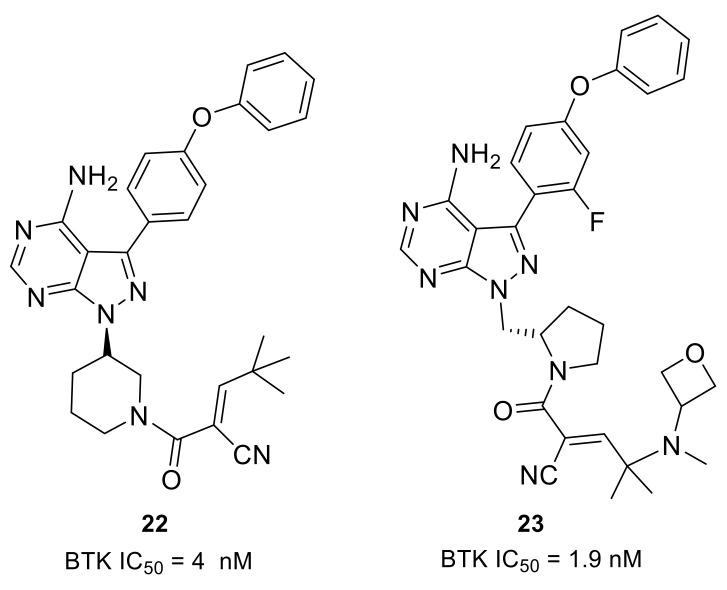
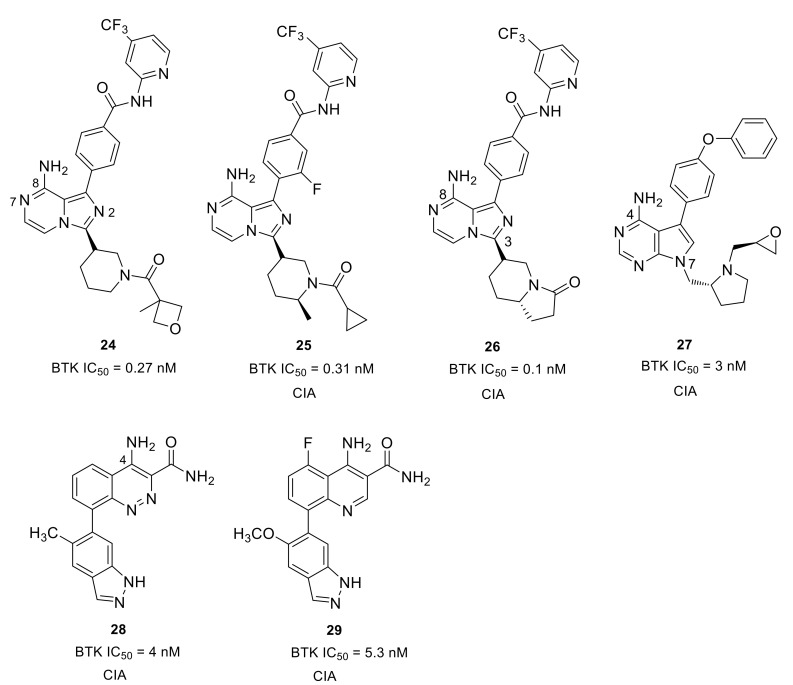
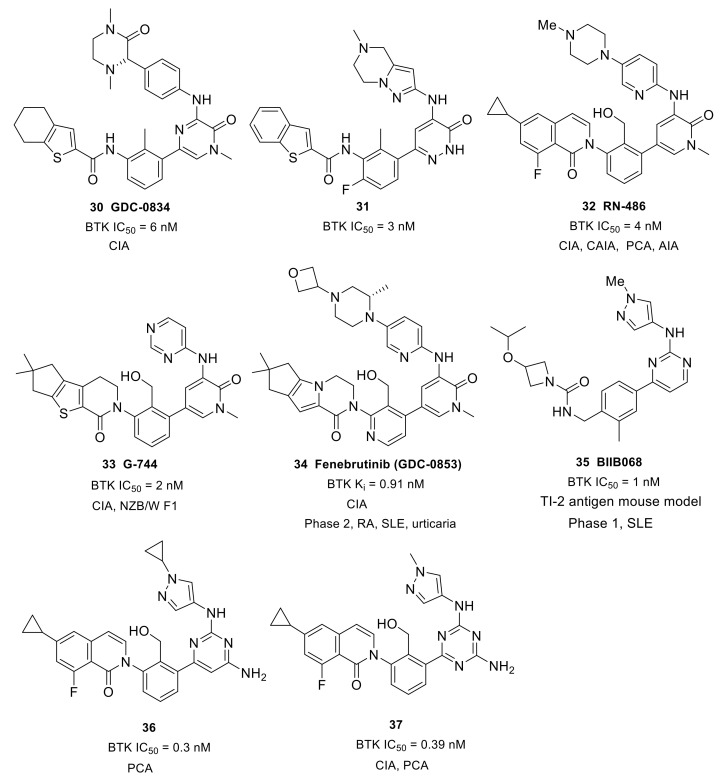
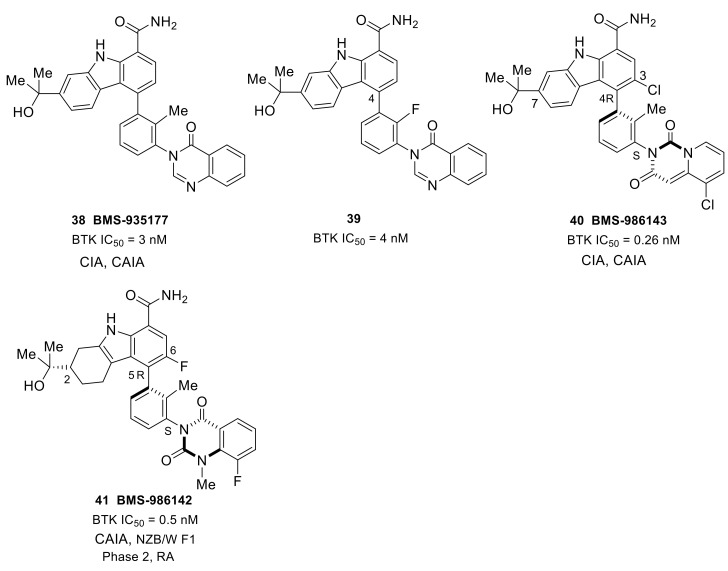
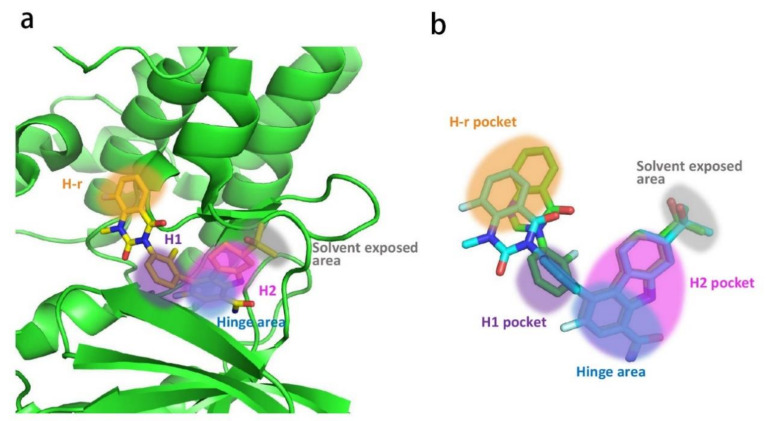
Bruton's tyrosine kinase (BTK) plays a crucial role in B-cell receptor and Fc receptor signaling pathways. BTK is also involved in the regulation of Toll-like receptors and chemokine receptors. Given the central role of BTK in immunity, BTK inhibition represents a promising therapeutic approach for the treatment of inflammatory and autoimmune diseases. Great efforts have been made in developing BTK inhibitors for potential clinical applications in inflammatory and autoimmune diseases. This review covers the recent development of BTK inhibitors at preclinical and clinical stages in treating these diseases. Individual examples of three types of inhibitors, namely covalent irreversible inhibitors, covalent reversible inhibitors, and non-covalent reversible inhibitors, are discussed with a focus on their structure, bioactivity and selectivity. Contrary to expectations, reversible BTK inhibitors have not yielded a significant breakthrough so far. The development of covalent, irreversible BTK inhibitors has progressed more rapidly. Many candidates entered different stages of clinical trials; tolebrutinib and evobrutinib are undergoing phase 3 clinical evaluation. Rilzabrutinib, a covalent reversible BTK inhibitor, is now in phase 3 clinical trials and also offers a promising future. An analysis of the protein-inhibitor interactions based on published co-crystal structures provides useful clues for the rational design of safe and effective small-molecule BTK inhibitors.
布鲁顿酪氨酸激酶(BTK)在 B 细胞受体和 Fc 受体信号通路中发挥着关键作用。BTK 还参与 Toll 样受体和趋化因子受体的调节。鉴于 BTK 在免疫中的核心作用,BTK 抑制代表了治疗炎症和自身免疫性疾病的一种有前途的治疗方法。在开发用于炎症和自身免疫性疾病的潜在临床应用的 BTK 抑制剂方面做出了巨大努力。本综述涵盖了 BTK 抑制剂在治疗这些疾病的临床前和临床阶段的最新进展。讨论了三种抑制剂类型的个别例子,即共价不可逆抑制剂、共价可逆抑制剂和非共价可逆抑制剂,重点介绍了它们的结构、生物活性和选择性。与预期相反,可逆 BTK 抑制剂迄今为止并未取得重大突破。共价、不可逆 BTK 抑制剂的开发进展得更快。许多候选药物进入了不同的临床试验阶段;tolebrutinib 和 evobrutinib 正在进行 3 期临床试验评估。共价可逆 BTK 抑制剂 rilzabrutinib 目前正在 3 期临床试验中,也具有广阔的前景。基于已发表的共晶结构对蛋白-抑制剂相互作用的分析为合理设计安全有效的小分子 BTK 抑制剂提供了有用的线索。