Wang Chang, Yu Zeqing, Zhang Qiangbo, Sun Yan, Tao Chenning, Wu Fei, Zheng Zhenrong
State Key Lab of Modern Optical Instrumentation, College of Optical Science and Engineering, Zhejiang University, Hangzhou 310027, China.
Beijing LLVision Technology Co., Ltd., Beijing 100000, China.
Nanomaterials (Basel). 2021 Jul 26;11(8):1920. doi: 10.3390/nano11081920.
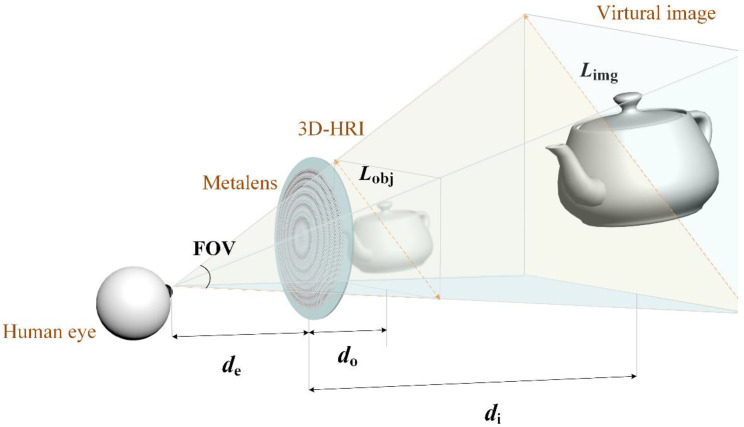
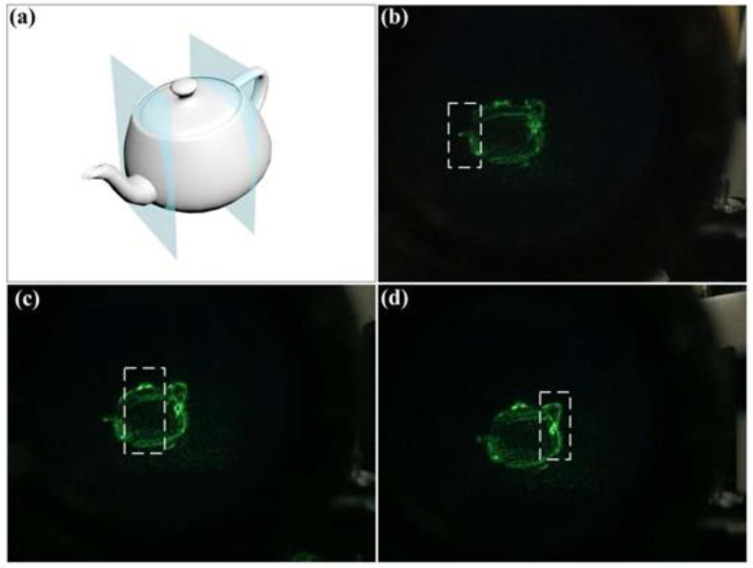
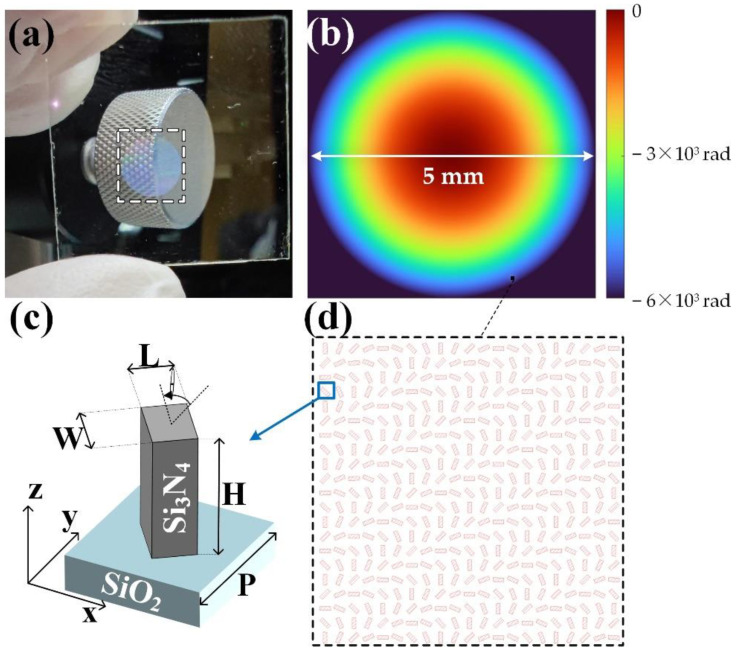
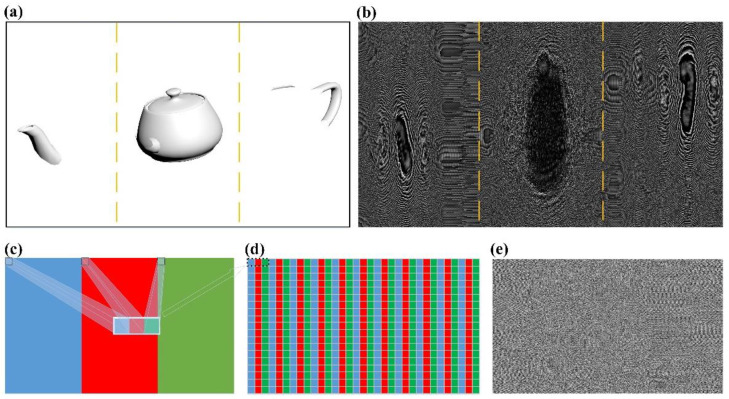
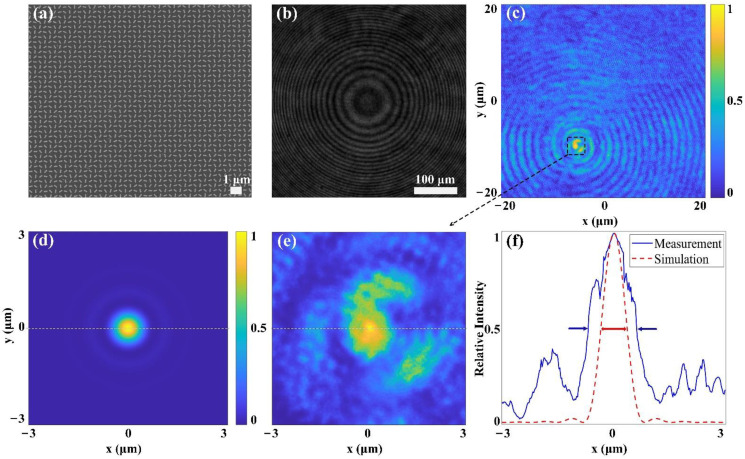
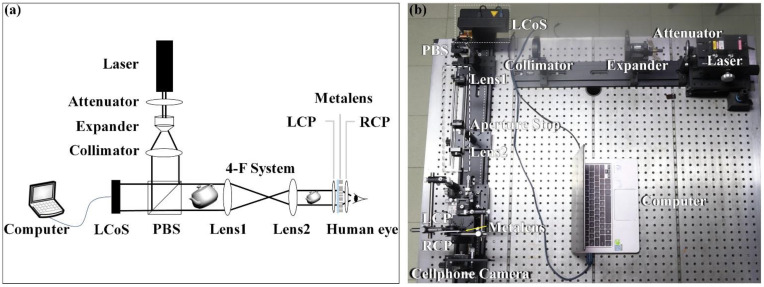
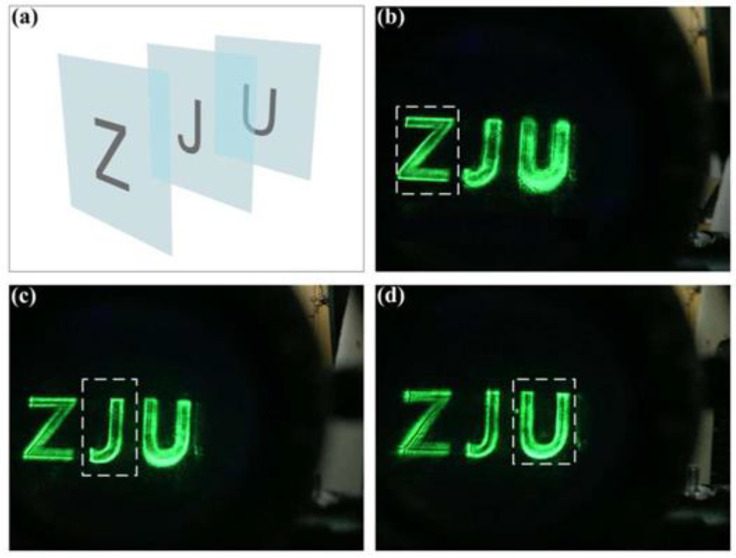
Near-eye display (NED) systems for virtual reality (VR) and augmented reality (AR) have been rapidly developing; however, the widespread use of VR/AR devices is hindered by the bulky refractive and diffractive elements in the complicated optical system as well as the visual discomfort caused by excessive binocular parallax and accommodation-convergence conflict. To address these problems, an NED system combining a 5 mm diameter metalens eyepiece and a three-dimensional (3D), computer-generated holography (CGH) based on Fresnel diffraction is proposed in this paper. Metalenses have been extensively studied for their extraordinary capabilities at wavefront shaping at a subwavelength scale, their ultrathin compactness, and their significant advantages over conventional lenses. Thus, the introduction of the metalens eyepiece is likely to reduce the issue of bulkiness in NED systems. Furthermore, CGH has typically been regarded as the optimum solution for 3D displays to overcome limitations of binocular systems, since it can restore the whole light field of the target 3D scene. Experiments are carried out for this design, where a 5 mm diameter metalens eyepiece composed of silicon nitride anisotropic nanofins is fabricated with diffraction efficiency and field of view for a 532 nm incidence of 15.7% and 31°, respectively. Furthermore, a novel partitioned Fresnel diffraction and resample method is applied to simulate the wave propagations needed to produce the hologram, with the metalens capable of transforming the reconstructed 3D image into a virtual image for the NED. Our work combining metalens and CGH may pave the way for portable optical display devices in the future.
用于虚拟现实(VR)和增强现实(AR)的近眼显示(NED)系统一直在迅速发展;然而,复杂光学系统中笨重的折射和衍射元件以及过度的双目视差和调节-会聚冲突所引起的视觉不适阻碍了VR/AR设备的广泛使用。为了解决这些问题,本文提出了一种结合直径5毫米的超颖透镜目镜和基于菲涅耳衍射的三维(3D)计算机生成全息术(CGH)的NED系统。超颖透镜因其在亚波长尺度上的波前整形非凡能力、超薄紧凑性以及相对于传统透镜的显著优势而受到广泛研究。因此,引入超颖透镜目镜可能会减少NED系统中的笨重问题。此外,CGH通常被视为3D显示克服双目系统局限性的最佳解决方案,因为它可以恢复目标3D场景的整个光场。针对该设计进行了实验,其中制造了一个由氮化硅各向异性纳米鳍片组成的直径5毫米的超颖透镜目镜,对于532纳米入射光,其衍射效率和视场分别为15.7%和31°。此外,一种新颖的分区菲涅耳衍射和重采样方法被应用于模拟生成全息图所需的波传播,该超颖透镜能够将重建的3D图像转换为NED的虚像。我们将超颖透镜和CGH相结合的工作可能为未来的便携式光学显示设备铺平道路。