Sierra-Fonseca Jorge A, Hamdan Jameel N, Cohen Alexis A, Cardenas Sonia M, Saucedo Sigifredo, Lodoza Gabriel A, Gosselink Kristin L
Department of Biological Sciences and Border Biomedical Research Center, University of Texas at El Paso, El Paso, TX, United States.
Neuroscience Program, Smith College, Northampton, MA, United States.
Front Mol Neurosci. 2021 Jul 22;14:661993. doi: 10.3389/fnmol.2021.661993. eCollection 2021.
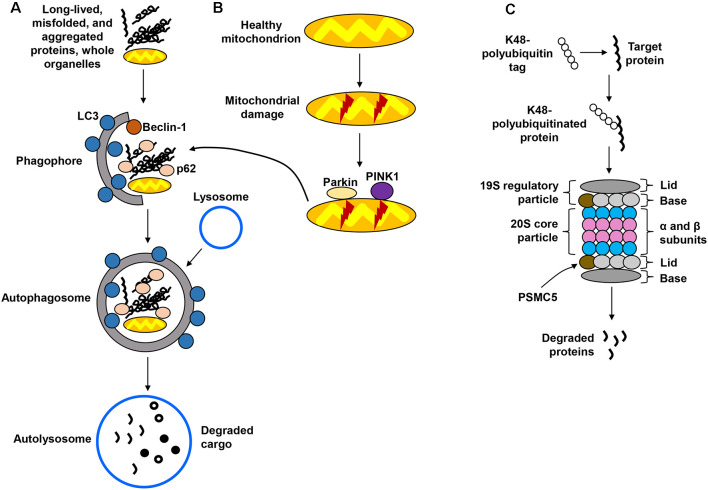
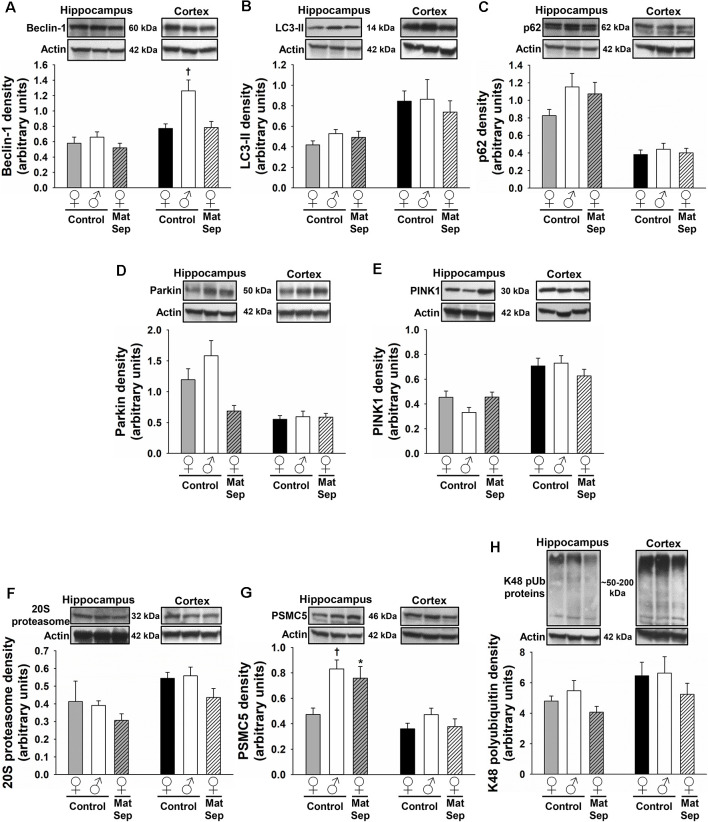
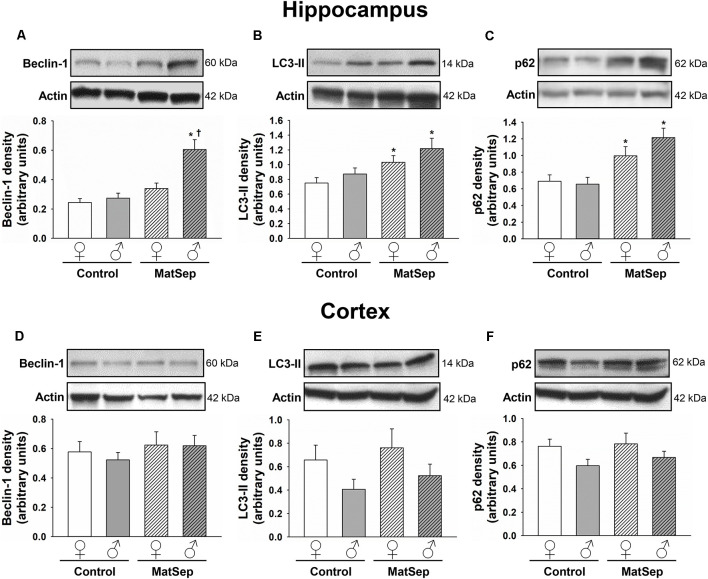
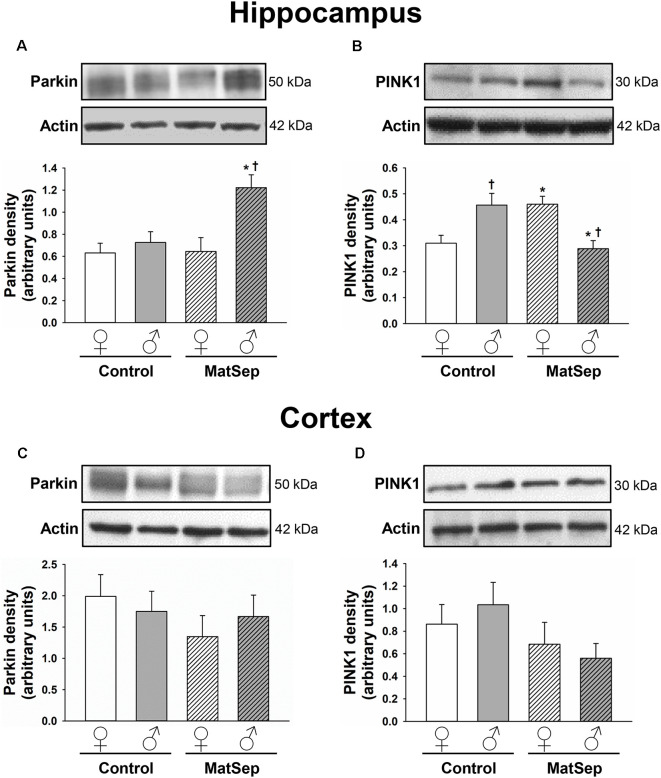
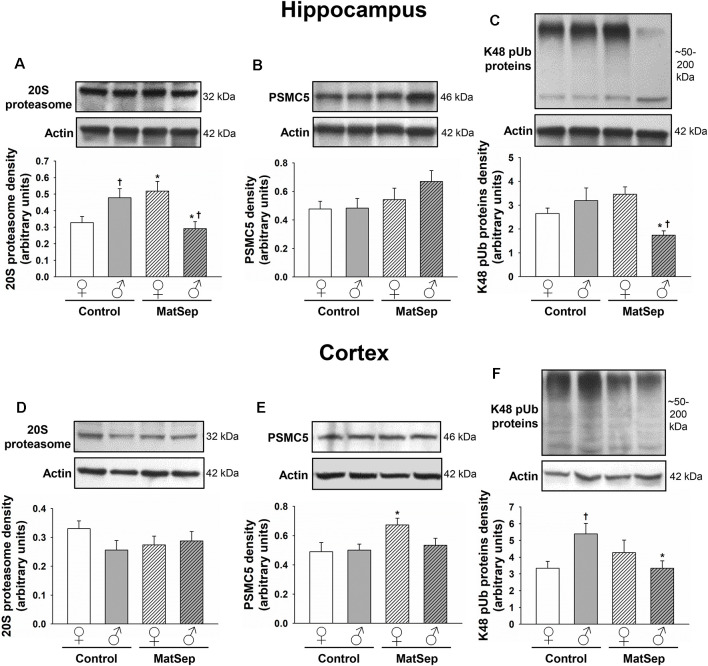
Exposure to early-life stress (ELS) can persistently modify neuronal circuits and functions, and contribute to the expression of misfolded and aggregated proteins that are hallmarks of several neurodegenerative diseases. The healthy brain is able to clear dysfunctional proteins through the ubiquitin-proteasome system (UPS) and the autophagy-lysosomal pathway (ALP). Accumulating evidence indicates that impairment of these pathways contributes to enhanced protein aggregation and neurodegeneration. While stress is a known precipitant of neurological decline, few specific mechanistic links underlying this relationship have been identified. We hypothesized that neonatal maternal separation (MatSep), a well-established model of ELS, has the ability to alter the levels of UPS and ALP components in the brain, and thus has the potential to disrupt proteostasis. The expression of proteostasis-associated protein markers was evaluated by immunoblotting in the hippocampus and cortex of adult Wistar rats that were previously subjected to MatSep. We observed multiple sex- and MatSep-specific changes in the expression of proteins in the ALP, mitophagy, and UPS pathways, particularly in the hippocampus of adult animals. In contrast, MatSep had limited influence on proteostasis marker expression in the cortex of adult animals. Our results indicate that MatSep can selectively modify the intracellular protein degradation machinery in ways that may impact the development and progression of neurodegenerative disease.
早年生活应激(ELS)的暴露可持久地改变神经回路和功能,并促使错误折叠和聚集蛋白的表达,而这些蛋白是几种神经退行性疾病的标志。健康的大脑能够通过泛素-蛋白酶体系统(UPS)和自噬-溶酶体途径(ALP)清除功能失调的蛋白。越来越多的证据表明,这些途径的损伤会导致蛋白聚集增加和神经退行性变。虽然应激是神经功能衰退的已知诱因,但这种关系背后的具体机制联系却鲜有被发现。我们推测,新生期母婴分离(MatSep)作为一种成熟的ELS模型,有能力改变大脑中UPS和ALP组分的水平,因此有可能破坏蛋白质稳态。通过免疫印迹法评估了成年Wistar大鼠海马体和皮质中蛋白质稳态相关蛋白标志物的表达,这些大鼠此前经历过MatSep。我们观察到,在ALP、线粒体自噬和UPS途径中的蛋白质表达存在多种性别特异性和MatSep特异性变化,尤其是在成年动物的海马体中。相比之下,MatSep对成年动物皮质中蛋白质稳态标志物的表达影响有限。我们的结果表明,MatSep可以选择性地改变细胞内蛋白质降解机制,这可能会影响神经退行性疾病的发生和发展。