Department of Obstetrics/Gynecology, Joint Laboratory of Reproductive Medicine, Key Laboratory of Obstetric, Gynecologic and Pediatric Diseases and Birth Defects of Ministry of Education, West China Second University Hospital, Sichuan University, Chengdu, China.
State Key Laboratory of Biotherapy and Cancer Center, West China Hospital, Sichuan University and Collaborative Innovation Center, Chengdu, China.
Hum Mol Genet. 2022 Mar 31;31(7):1013-1021. doi: 10.1093/hmg/ddab242.
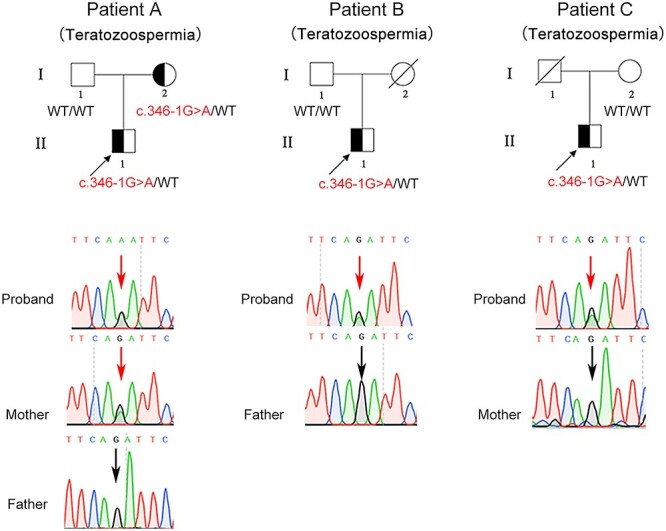
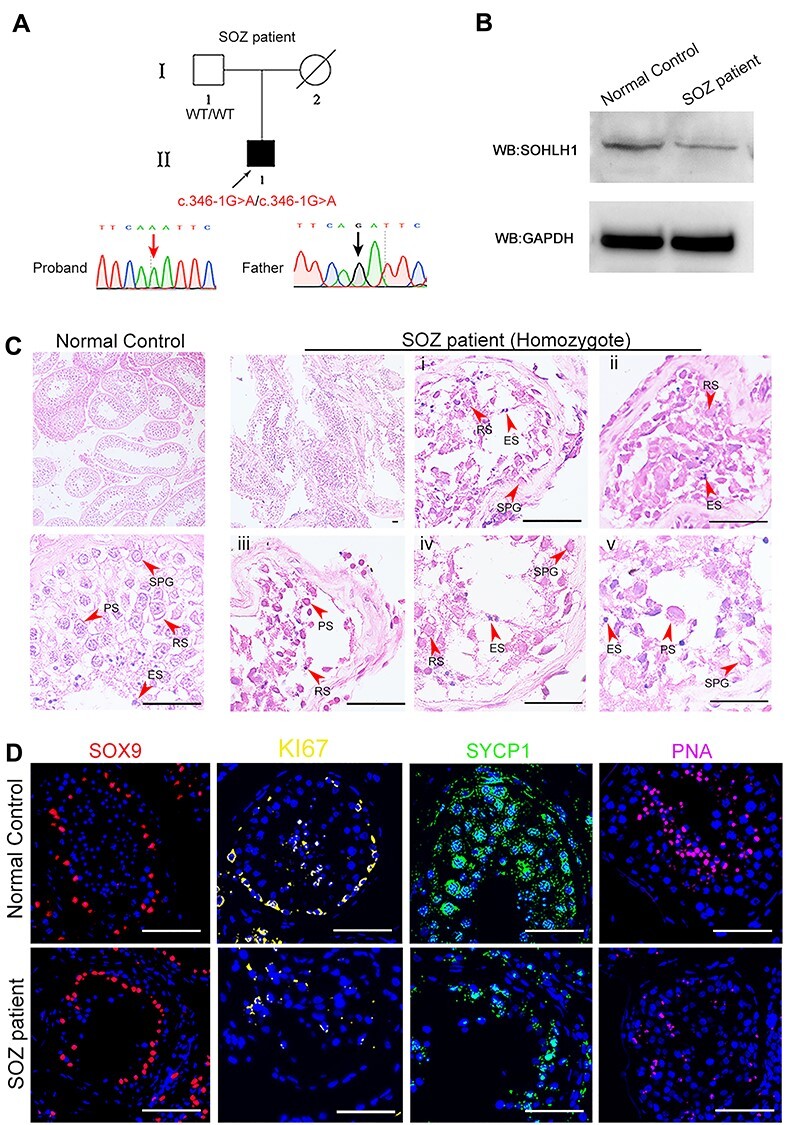
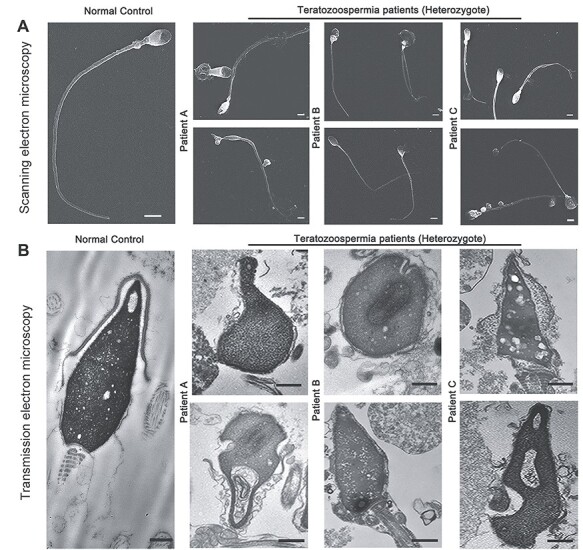
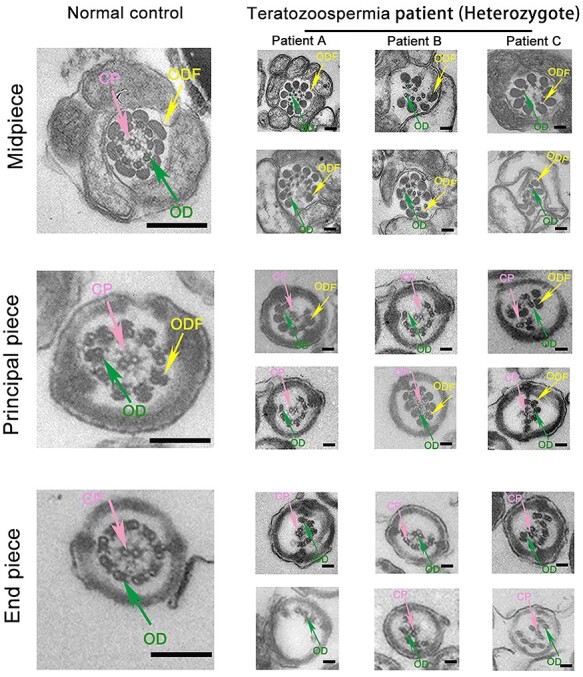
Non-obstructive azoospermia (NOA) is an important cause of male infertility, and the genetic pathogenesis is still incompletely understood. The previous study reported that heterozygous mutation of c.346-1G > A in spermatogenesis and oogenesis specific basic helix-loop-helix 1 (SOHLH1) was identified in two NOA patients and suggested it is the pathogenic factor for NOA. However, in our research, this heterozygous mutation was confirmed in three Chinese infertile patients who suffered from teratozoospermia, but they had normal sperm number. Intriguingly, a homozygous mutation of c.346-1G > A in SOHLH1 was detected in a severe oligozoospermia (SOZ) patient, characterized with severely decreased sperm count. Notably, we unprecedently revealed that this homozygous mutation of c.346-1G > A in SOHLH1 leads to the sharp decrease in various germ cells and spermatogenesis dysfunction, which is similar to the phenotype of SOHLH1 knockout male mice. Moreover, western blotting confirmed that the homozygous mutation declined SOHLH1 protein expression. Additionally, we correlated the good prognosis of intracytoplasmic sperm injection (ICSI) in the patients carrying the mutation of c.346-1G > A in SOHLH1. Thus, we suggested that the heterozygous mutation of c.346-1G > A in SOHLH1 is responsible for teratozoospermia, and this homozygous mutation in SOHLH1 impairs spermatogenesis and further leads to the reduced sperm count, eventually causing male infertility, which unveils a new recessive-inheritance pattern of SOHLH1-associated male infertility initially.
非阻塞性无精子症(NOA)是男性不育的重要原因,其遗传发病机制尚不完全清楚。先前的研究报道,在两名 NOA 患者中发现了生殖细胞和卵母细胞特异性基本螺旋-环-螺旋 1(SOHLH1)c.346-1G > A 杂合突变,并认为其是 NOA 的致病因素。然而,在我们的研究中,这种杂合突变在三名患有畸形精子症的中国不育患者中得到了证实,但其精子数量正常。有趣的是,在一名严重少精子症(SOZ)患者中检测到 SOHLH1 的 c.346-1G > A 纯合突变,其特征是精子计数严重减少。值得注意的是,我们首次揭示了 SOHLH1 的这种 c.346-1G > A 纯合突变导致各种生殖细胞急剧减少和精子发生功能障碍,这与 SOHLH1 敲除雄性小鼠的表型相似。此外,Western blot 证实了该纯合突变降低了 SOHLH1 蛋白表达。此外,我们还将携带 SOHLH1 突变的患者进行胞浆内单精子注射(ICSI)的良好预后进行了关联。因此,我们认为 SOHLH1 的 c.346-1G > A 杂合突变导致畸形精子症,而 SOHLH1 的这种纯合突变则损害精子发生,进而导致精子数量减少,最终导致男性不育,这初步揭示了 SOHLH1 相关男性不育的一种新的隐性遗传模式。