Department of Microbiology and Immunology, Northwestern University Feinberg School of Medicine, Chicago, IL 60611, USA.
Department of Microbiology & Immunology, University of Illinois, Chicago College of Medicine, Chicago, IL 60612, USA.
Cell Rep. 2021 Sep 7;36(10):109664. doi: 10.1016/j.celrep.2021.109664. Epub 2021 Aug 17.
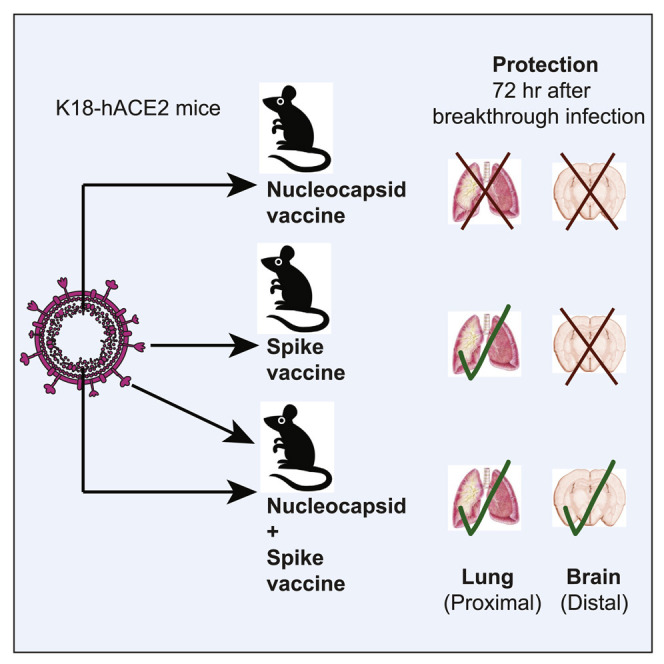
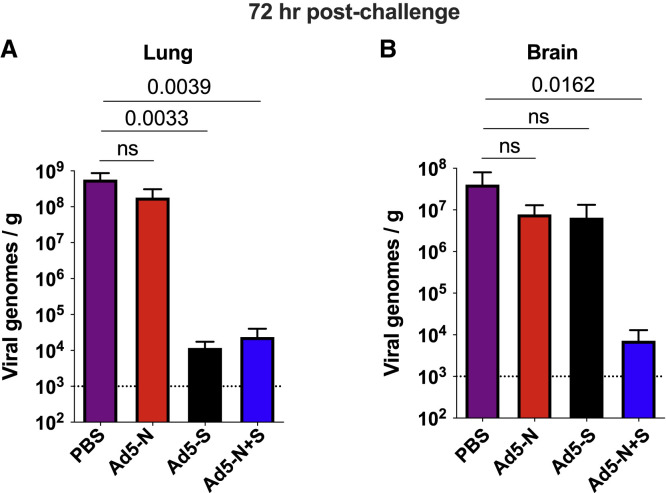
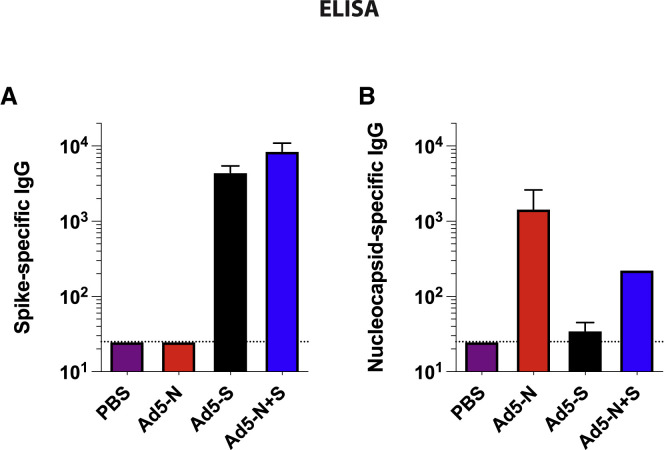
SARS-CoV-2 infection causes respiratory insufficiency and neurological manifestations, including loss of smell and psychiatric disorders, and can be fatal. Most vaccines are based on the spike antigen alone, and although they have shown efficacy at preventing severe disease and death, they do not always confer sterilizing immunity. Here, we interrogate whether SARS-CoV-2 vaccines could be improved by incorporating nucleocapsid as an antigen. We show that, after 72 h of challenge, a spike-based vaccine confers acute protection in the lung, but not in the brain. However, combining a spike-based vaccine with a nucleocapsid-based vaccine confers acute protection in both the lung and brain. These findings suggest that nucleocapsid-specific immunity can improve the distal control of SARS-CoV-2, warranting the inclusion of nucleocapsid in next-generation COVID-19 vaccines.
SARS-CoV-2 感染会导致呼吸功能不全和神经系统表现,包括嗅觉丧失和精神障碍,并且可能致命。大多数疫苗仅基于刺突蛋白,尽管它们已显示出在预防重症疾病和死亡方面的功效,但并不总是能提供杀菌性免疫。在这里,我们探讨了是否可以通过将核衣壳作为抗原来改进 SARS-CoV-2 疫苗。我们发现,在挑战后的 72 小时内,基于刺突蛋白的疫苗在肺部提供了急性保护,但在脑部没有。然而,将基于刺突蛋白的疫苗与基于核衣壳的疫苗相结合可在肺部和脑部提供急性保护。这些发现表明,核衣壳特异性免疫可以改善对 SARS-CoV-2 的远端控制,因此有必要在下一代 COVID-19 疫苗中纳入核衣壳。