Department of Infectious Diseases, Asan Medical Center, University of Ulsan College of Medicine, Seoul, Republic of Korea; Office for Infection Control, Asan Medical Center, Seoul, Republic of Korea.
Department of Infectious Diseases, Asan Medical Center, University of Ulsan College of Medicine, Seoul, Republic of Korea.
J Hosp Infect. 2021 Nov;117:28-36. doi: 10.1016/j.jhin.2021.06.012. Epub 2021 Aug 25.
There is growing evidence that super-spreading events (SSEs) and multiple-spreading events (MSEs) are a characteristic feature of severe acute respiratory syndrome coronavirus 2 (SARS-CoV-2) infection. However, data regarding the possibility of SSEs or MSEs in healthcare settings are limited.
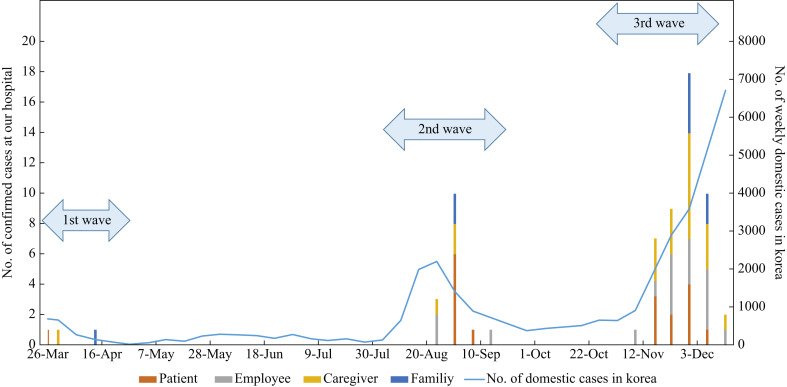
This study was performed at a tertiary-care hospital in Korea. We analysed the nosocomial COVID-19 cases that occurred in healthcare workers and inpatients and their caregivers between January and 20 December 2020. Cases with two to four secondary cases were defined as MSEs and those with five or more secondary cases as SSEs.
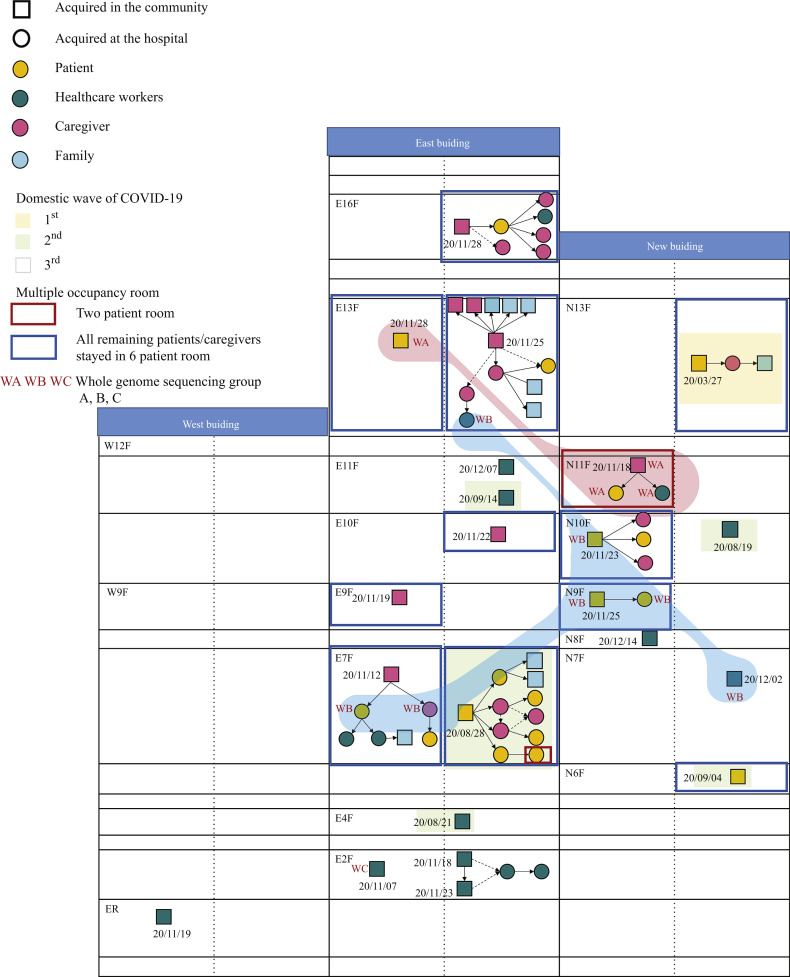
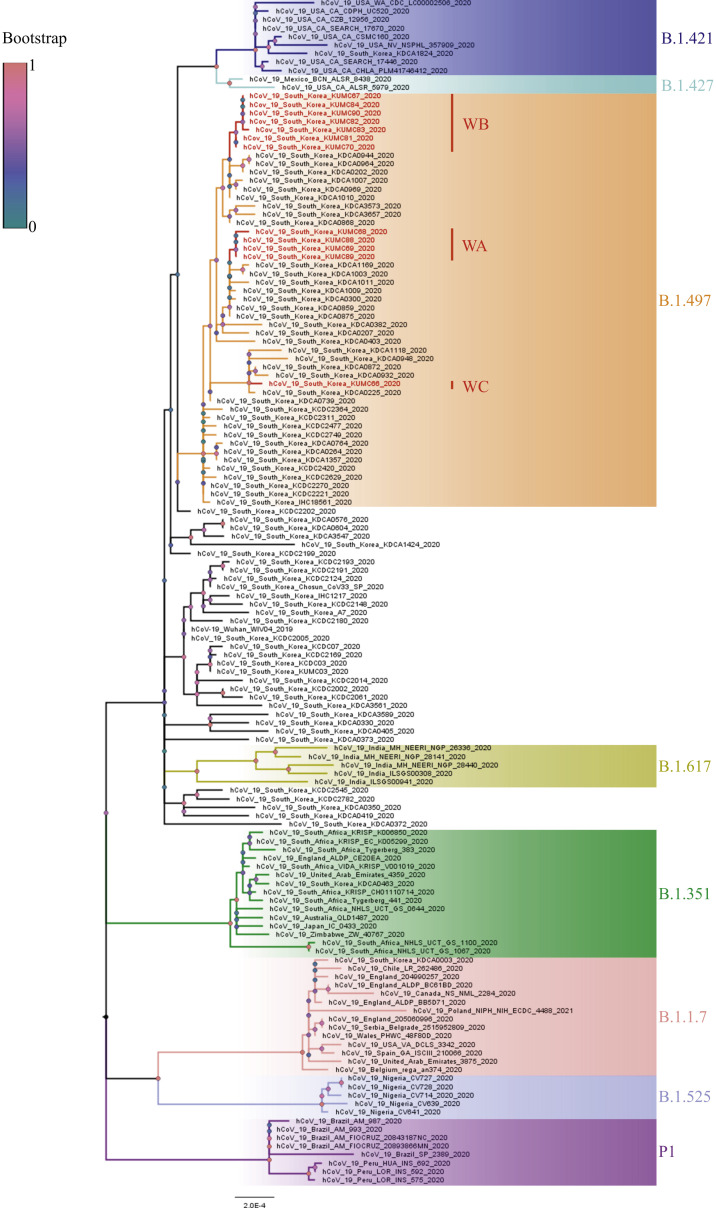
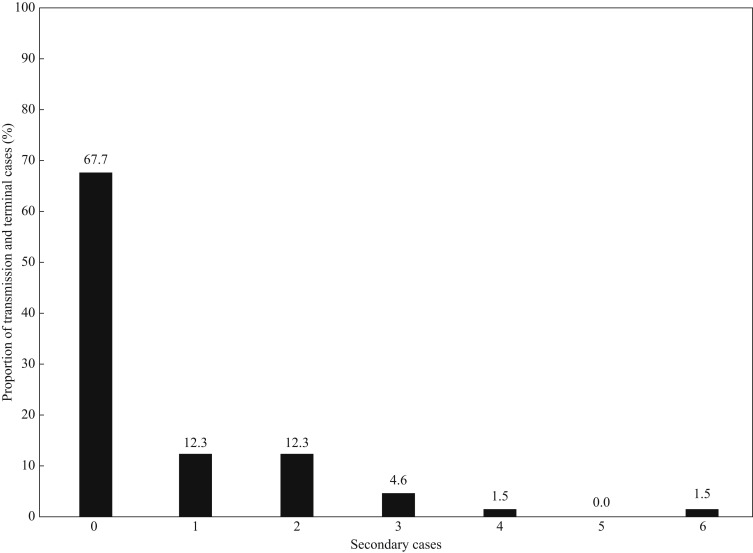
We identified 21 nosocomial events (single-case events, N = 12 (57%); MSE + SSE, N = 9 (43%)) involving 65 individuals with COVID-19. Of these 65 individuals, 21 (32%) were infectors. The infectors tended to have a longer duration between symptom onset and diagnostic confirmation than did the non-infectors (median two days vs zero days, P=0.08). Importantly, 12 (18%) individuals were responsible for MSEs and one (2%) for an SSE, which collectively generated 35 (54%) secondary cases.
In a hospital with thorough infection-control measures, approximately 70% of the nosocomial cases of COVID-19 did not generate secondary cases, and one-fifth of the infectors were responsible for SSEs and MSEs, which accounted for approximately half of the total cases. Early case identification, isolation, and extensive contact tracing are important for the prevention of transmission and SSEs.
越来越多的证据表明,超级传播事件(SSE)和多次传播事件(MSE)是严重急性呼吸综合征冠状病毒 2(SARS-CoV-2)感染的特征。然而,关于医疗保健环境中发生 SSE 或 MSE 的可能性的数据有限。
本研究在韩国的一家三级保健医院进行。我们分析了 2020 年 1 月至 12 月 20 日期间发生在医护人员和住院患者及其护理人员中的医院获得性 COVID-19 病例。有 2 至 4 例继发病例的定义为 MSE,有 5 例或更多继发病例的定义为 SSE。
我们确定了 21 起医院感染事件(单一病例事件,N=12(57%);MSE+SSE,N=9(43%)),涉及 65 例 COVID-19 患者。在这 65 例患者中,有 21 例(32%)为感染者。感染者从症状发作到确诊的时间间隔长于非感染者(中位数为 2 天比 0 天,P=0.08)。重要的是,有 12 例(18%)患者引起 MSE,1 例(2%)引起 SSE,总共产生 35 例(54%)继发病例。
在一家采取了彻底感染控制措施的医院中,约 70%的 COVID-19 医院感染病例未产生继发病例,五分之一的感染者引发了 SSE 和 MSE,占总病例数的近一半。早期病例识别、隔离和广泛的接触追踪对于预防传播和 SSE 至关重要。