
迪拜修复牙医对牙种植体及修复体选择的调查
Survey of Dental Implant and Restoration Selection by Prosthodontists in Dubai.
作者信息
Al Saleh Fatma, AbuZayeda Moosa, Kiat-Amnuay Sudarat, Milosevic Alexander
机构信息
Prosthodontic Unit of the Dental Services Department, Dubai Health Authority, Dubai, UAE.
Department of Prosthodontics, Hamdan Bin Mohammed College of Dental Medicine, Mohammed Bin Rashid University of Medicine and Health Sciences, Dubai, UAE.
出版信息
Int J Dent. 2021 Aug 17;2021:8815775. doi: 10.1155/2021/8815775. eCollection 2021.
BACKGROUND
With various surgical and prosthetic component designs being introduced in dental implants, decisions have to be made when choosing a system and a certain prosthodontic protocol. A survey of implant prosthodontic specialists has not been previously performed in the Middle East.
AIM
This study aimed to determine selection criteria and choice of dental implants and restorations by prosthodontic specialists in the Emirate of Dubai, United Arab Emirates.
MATERIALS AND METHODS
A validated 16-item questionnaire was used in the survey which included demographic information, implant training and experience, implant treatment planning, implant restoration, and implant system preference. The research protocol was approved by the Research and Ethics Committees of Hamdan Bin Mohammed College of Dental Medicine and Dubai Health Authority. Prosthodontists were identified from regulatory authority websites and contacted by e-mail with the questionnaire attached.
RESULTS
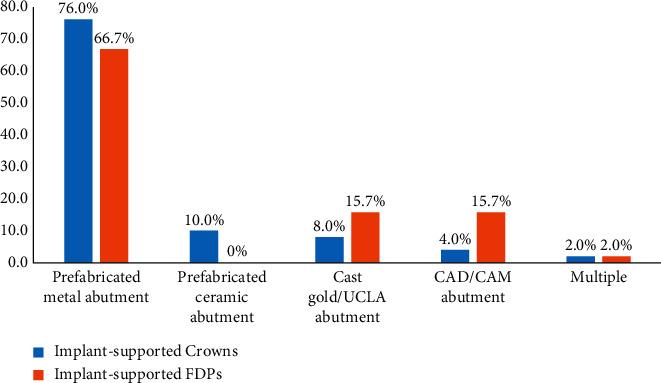
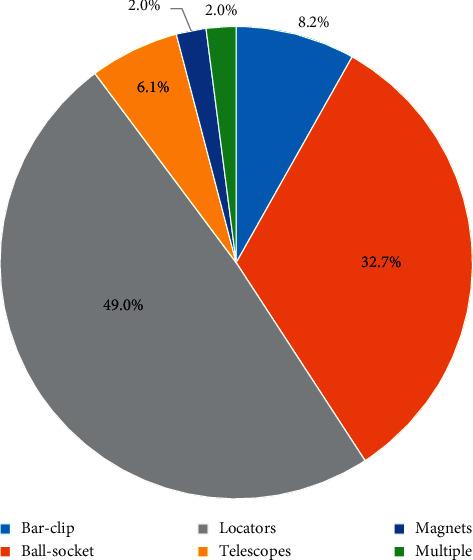
A total of 84.6% (77) of the registered prosthodontists in Dubai completed the questionnaire with 66.2% reported practicing implant dentistry. Out of which, 54.9% reported surgically placing dental implants and 45.1% restore them only prosthetically. Prefabricated metal abutments were the most commonly selected abutments for single crowns (76.0%) and for fixed dental prostheses (66.7%). Screw retention is preferred mostly for single crowns (68.0%) and fixed dental prostheses (74.0%). Locators were the most commonly selected type of attachment for implant-retained/supported overdentures (49.0%). Conventional loading was the most selected type of loading in all oral conditions.
CONCLUSION
Within the limitations of this study, it can be concluded that most prosthodontists in Dubai practice implant dentistry and more than half surgically place dental implants. Prefabricated metal abutments are the most selected type of abutments. Most prosthodontists use screw-retained implant restorations and prefer locator attachments for implant-retained/supported overdentures. Conventional loading is the most preferred implant loading method in all oral conditions. Implant company/system selections are various and there is no major preference for a certain system. The majority of prosthodontists select implant systems based on implant features, literature review, and simplicity of restorative kit.
背景
随着各种外科手术和修复组件设计被引入牙种植领域,在选择种植系统和特定的修复方案时必须做出决策。此前中东地区尚未对种植修复专家进行过调查。
目的
本研究旨在确定阿拉伯联合酋长国迪拜酋长国种植修复专家对牙种植体及修复体的选择标准和偏好。
材料与方法
本次调查采用了一份经过验证的包含16个条目的问卷,内容涵盖人口统计学信息、种植培训与经验、种植治疗计划、种植修复以及种植系统偏好。该研究方案获得了哈姆丹·本·穆罕默德牙科学院和迪拜卫生局研究与伦理委员会的批准。从监管机构网站上识别出修复医师,并通过电子邮件向其发送附有问卷的邮件进行联系。
结果
迪拜84.6%(77名)注册修复医师完成了问卷,其中66.2%报告从事种植牙科工作。其中,54.9%报告进行过种植体的外科植入,45.1%仅进行种植体的修复工作。预制金属基台是单冠(76.0%)和固定义齿(66.7%)最常选用的基台。螺丝固位主要用于单冠(68.0%)和固定义齿(74.0%)。定位器是种植体固位/支持的覆盖义齿最常选用的附着类型(49.0%)。在所有口腔状况下,常规加载是最常选用的加载类型。
结论
在本研究的局限性范围内,可以得出结论,迪拜的大多数修复医师从事种植牙科工作,且半数以上进行种植体的外科植入。预制金属基台是最常选用的基台类型。大多数修复医师使用螺丝固位的种植修复体,且种植体固位/支持的覆盖义齿更倾向于使用定位器附着。在所有口腔状况下,常规加载是最受欢迎的种植加载方式。种植公司/系统的选择多种多样,对特定系统没有主要偏好。大多数修复医师根据种植体特征、文献综述和修复套件的简易性来选择种植系统。
 Zotero 插件