Research Division, National Autonomous University of Mexico, Mexico City, Mexico.
Faculty of Higher Studies (FES) Iztacala, National Autonomous University of Mexico, Mexico City, Mexico.
Biomed Res Int. 2021 Aug 25;2021:9915927. doi: 10.1155/2021/9915927. eCollection 2021.
The SARS-CoV-2 virus is the cause of the latest pandemic of the 21st century; it is responsible for the development of COVID-19. Within the multiple study models for both the biology and the treatment of SARS-CoV-2, the use of stem cells has been proposed because of their ability to increase the immune response and to repair tissue. Therefore, the objective of this review is to evaluate the role of stem cells against SARS-CoV-2 and COVID-19 in order to identify their potential as a study model and as a possible therapeutic source against tissue damage caused by this virus. Therefore, the following research question was established: What is the role of stem cells in the study of SARS-CoV-2 and the treatment of COVID-19?
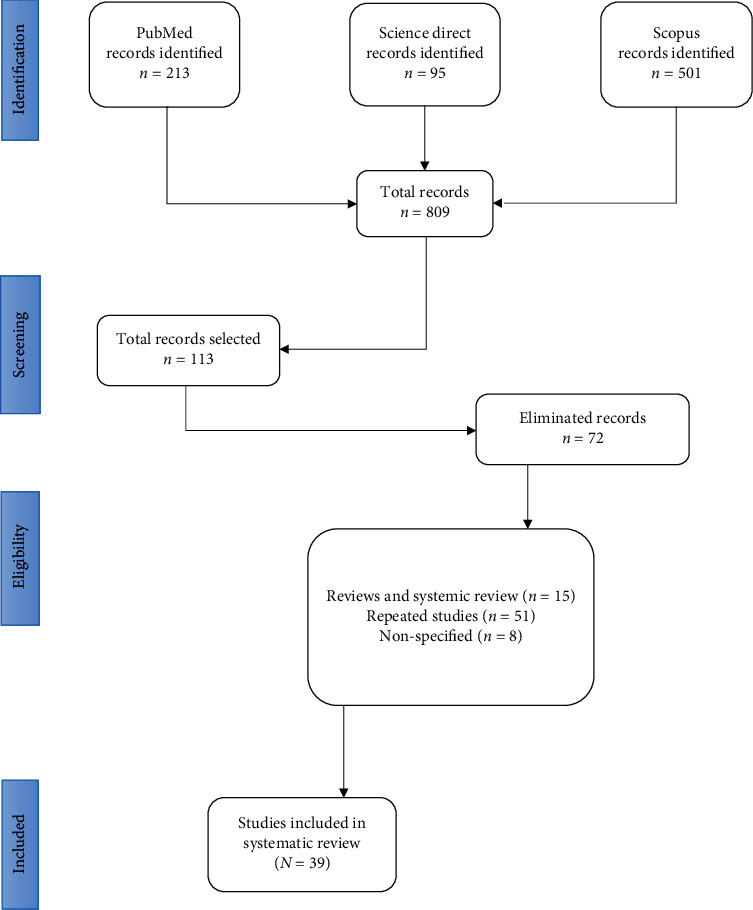
A search was carried out in the electronic databases of PUBMED, Scopus, and ScienceDirect. The following keywords were used: "SARS-CoV-2," "COVID-19," and "STEM CELL," plus independent search strategies with the Boolean operators "OR" and "AND." The identified reports were those whose main objective was the study of stem cells in relation to SARS-CoV-2 or COVID-19. For the development of this study, the following inclusion criteria were taken into account: studies whose main objective was the study of stem cells in relation to SARS-CoV-2 or COVID-19 and clinical case studies, case reports, clinical trials, pilot studies, in vitro, or in vivo studies. For assessment of the risk of bias for in vitro studies, the SciRAP tool was used. The data collected for each type of study, clinical or in vitro, were analyzed with descriptive statistics using the SPSS V.22 program.
Of the total of studies included ( = 39), 22 corresponded to in vitro investigations and 17 to human studies (clinical cases ( = 9), case series ( = 2), pilot clinical trials ( = 5), clinical trials ( = 1)). In vitro studies that induced pluripotent stem cells were the most used ( = 12), and in clinical studies, the umbilical stem cells derived were the most reported ( = 11). The mean age of the study subjects was 58.3 years. After the application of stem cell therapy, the follow-up period was 8 days minimum and 90 days maximum. . The mechanism by which the virus enters the cell is through protein "S," located on the surface of the membrane, by recognizing the ACE2 receptor located on the target cell. The evidence that the expression of ACE2 and TMPRSS2 in stem cells indicates that stem cells from bone marrow and amniotic fluid have very little expression. This shows that stem cell has a low risk of infection with SARS-CoV-2.
The use of stem cells is a highly relevant therapeutic option. It has been shown in both in vitro studies and clinical trials that it counteracts the excessive secretion of cytokines. There are even more studies that focus on long-term follow-up; thus, the potential for major side effects can be analyzed more clearly. Finally, the ethical use of stem cells from fetal or infant origin needs to be regulated. The study was registered in PROSPERO (no. CRD42021229038). The limitations of the study were because of the methodology employed, the sample was not very large, and the follow-up period of the clinical studies was relatively short.
SARS-CoV-2 病毒是 21 世纪最新大流行的病原体,它是 COVID-19 的致病因子。在针对 SARS-CoV-2 的生物学和治疗的多种研究模型中,已经提出使用干细胞,因为它们具有增强免疫反应和修复组织的能力。因此,本综述的目的是评估干细胞在对抗 SARS-CoV-2 和 COVID-19 中的作用,以确定它们作为研究模型以及作为对抗该病毒引起的组织损伤的潜在治疗来源的潜力。因此,提出了以下研究问题:干细胞在 SARS-CoV-2 的研究和 COVID-19 的治疗中的作用是什么?
在 PUBMED、Scopus 和 ScienceDirect 电子数据库中进行了检索。使用了以下关键词:“SARS-CoV-2”、“COVID-19”和“STEM CELL”,以及使用布尔运算符“OR”和“AND”的独立搜索策略。确定的报告是那些主要目的是研究与 SARS-CoV-2 或 COVID-19 相关的干细胞的报告。为了开展这项研究,考虑了以下纳入标准:主要目的是研究与 SARS-CoV-2 或 COVID-19 相关的干细胞的研究,以及临床病例研究、病例报告、临床试验、试点研究、体外或体内研究。对于体外研究的偏倚风险评估,使用了 SciRAP 工具。对于每种类型的研究(临床或体外),使用 SPSS V.22 程序进行描述性统计分析。
在总共纳入的研究中(= 39),22 项为体外研究,17 项为人体研究(临床病例(= 9)、病例系列(= 2)、试点临床试验(= 5)、临床试验(= 1))。最常用的是诱导多能干细胞的体外研究(= 12),在临床研究中,最常报告的是脐带干细胞(= 11)。研究对象的平均年龄为 58.3 岁。在接受干细胞治疗后,随访时间最短为 8 天,最长为 90 天。病毒进入细胞的机制是通过位于膜表面的蛋白质“S”,通过识别靶细胞上的 ACE2 受体。ACE2 和 TMPRSS2 在干细胞中表达的证据表明,骨髓和羊水来源的干细胞表达非常少。这表明干细胞感染 SARS-CoV-2 的风险很低。
使用干细胞是一种非常相关的治疗选择。无论是在体外研究还是临床试验中,都表明它可以对抗细胞因子的过度分泌。还有更多的研究集中在长期随访上,因此可以更清楚地分析潜在的重大副作用。最后,需要规范胎儿或婴儿来源的干细胞的伦理使用。该研究已在 PROSPERO(编号:CRD42021229038)中注册。研究的局限性在于所采用的方法,样本量不大,临床研究的随访期相对较短。
