Department of Dental Materials and Prosthodontics, Institute of Science and Technology, São Paulo State University, 777 Eng. Francisco José Longo Av, 12245-000, São José dos Campos, SP, Brazil.
Department of Civil and Environmental Engineering, University of Connecticut, 261 Glenbrook Rd., U-3037, Storrs, CT 06269, USA.
Dent Mater. 2021 Nov;37(11):1655-1666. doi: 10.1016/j.dental.2021.08.019. Epub 2021 Sep 2.
To understand the stress development in porcelain-veneered zirconia (PVZ) and porcelain-veneered lithium disilicate (PVLD) crowns with different veneer/core thickness ratios and cooling rates. To provide design guidelines for better performing bilayer restorations with the aid of Viscoelastic Finite Element Method (VFEM).
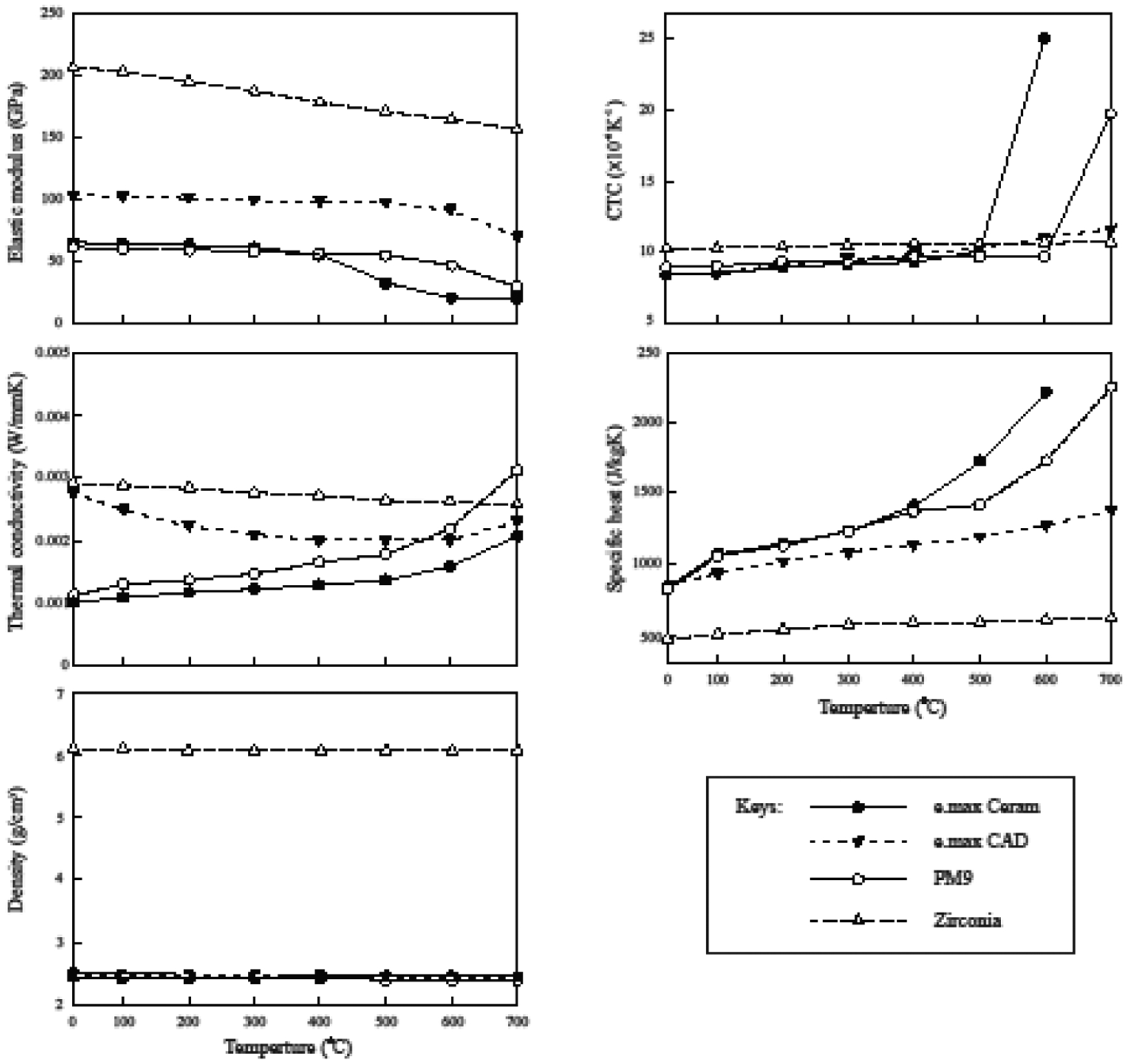
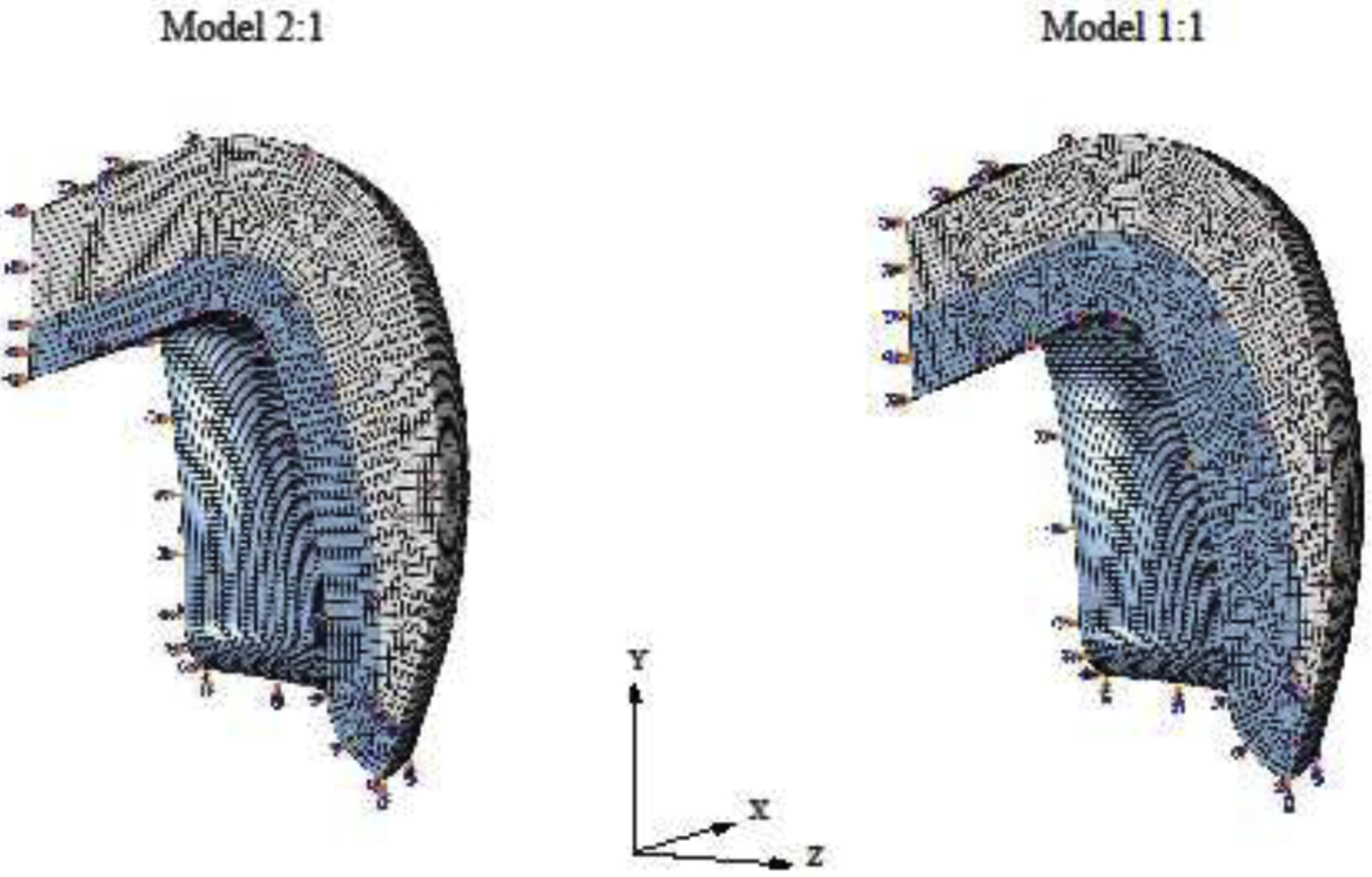
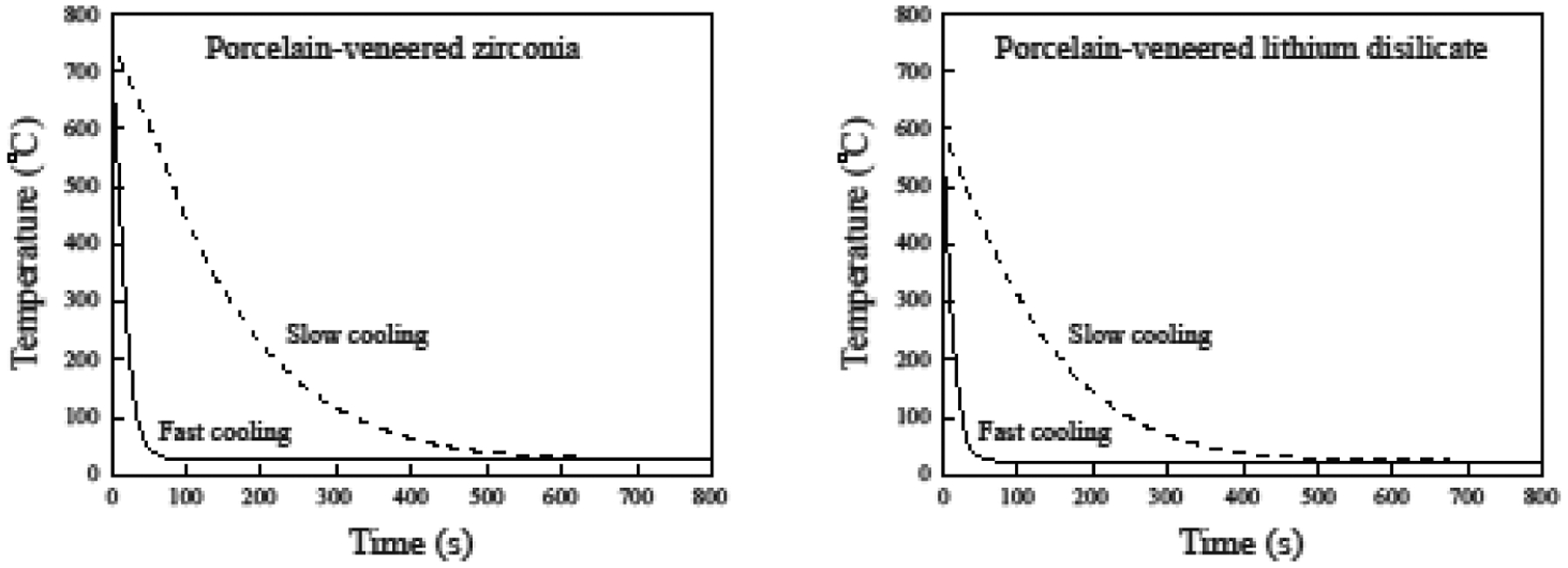
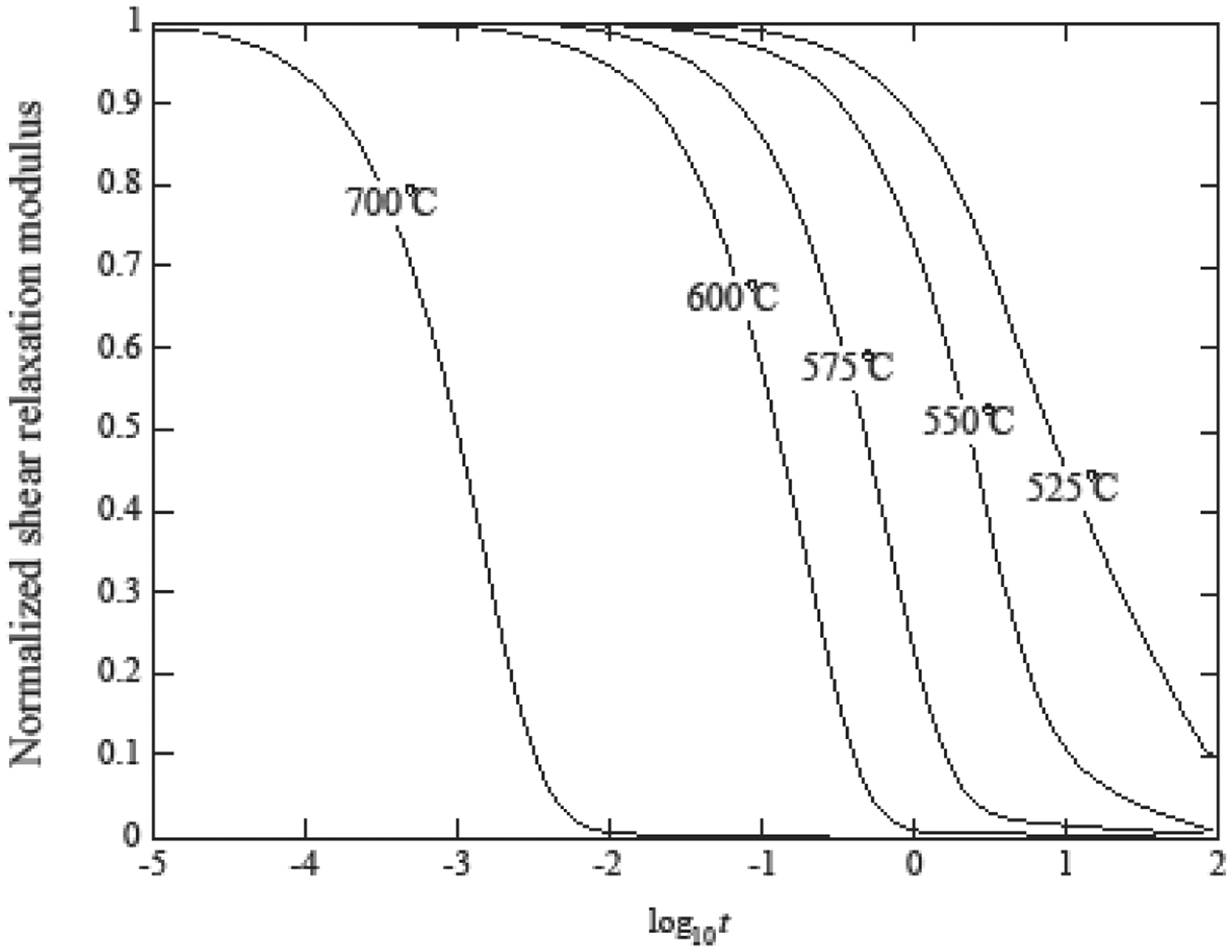
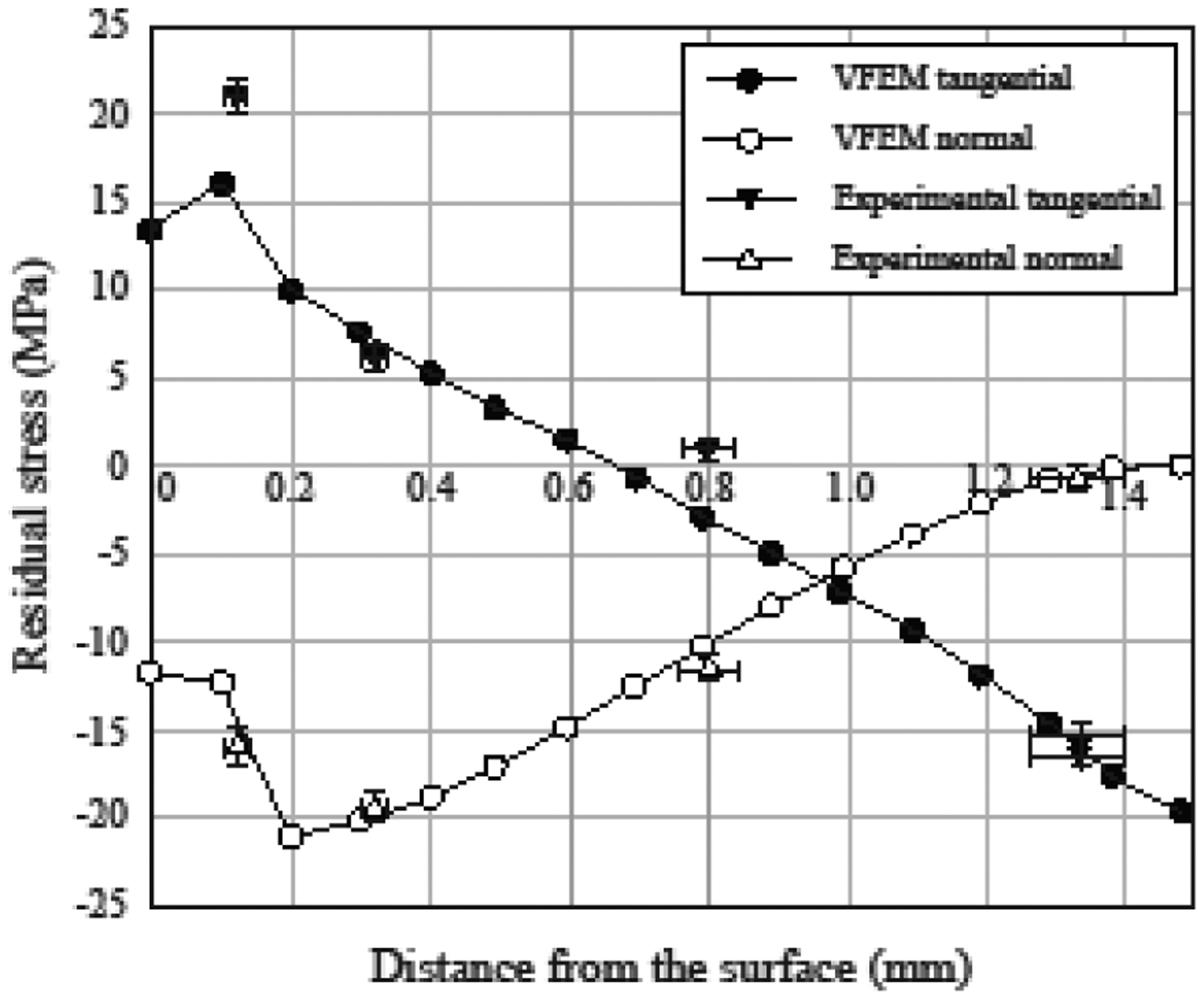
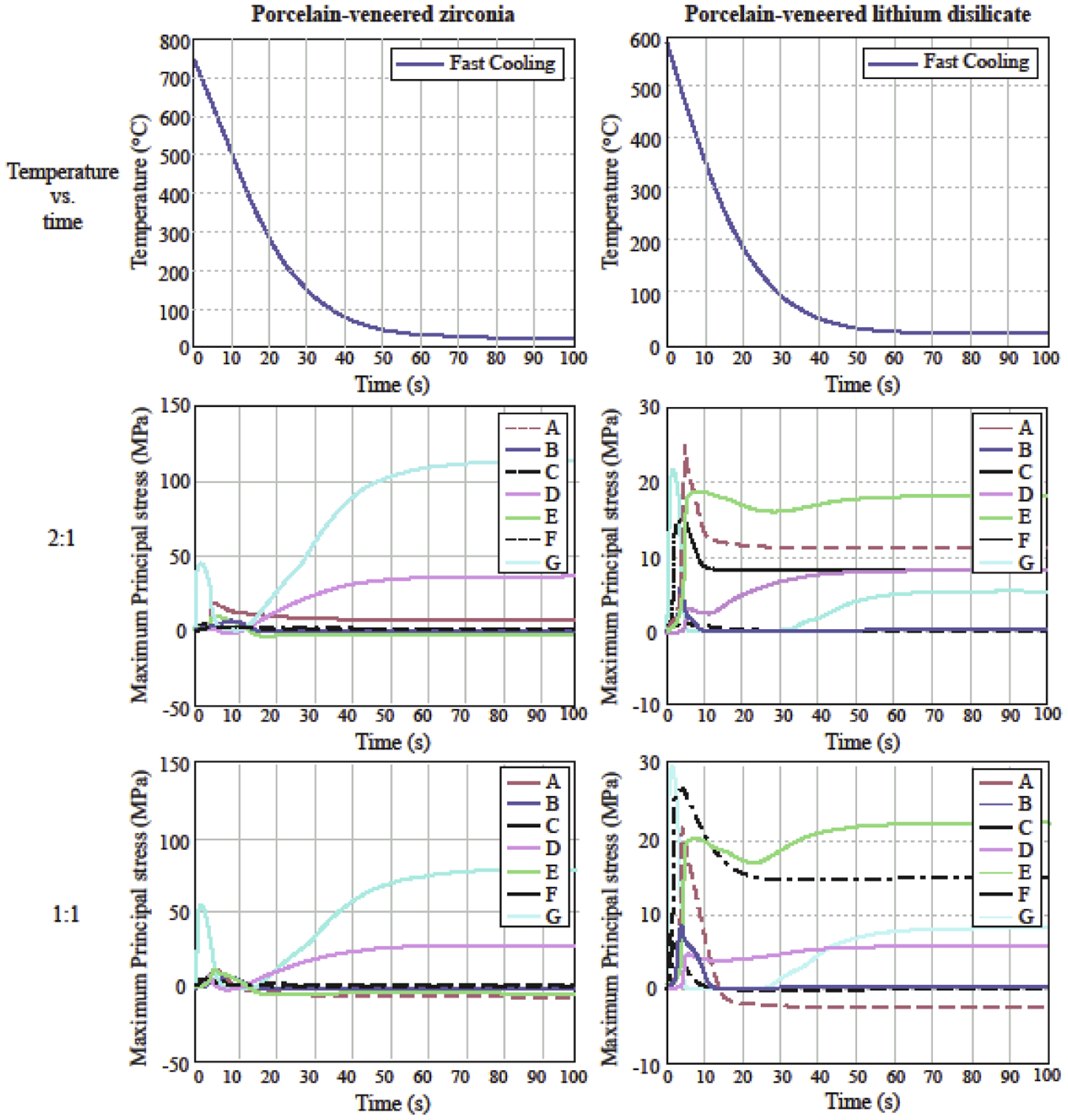
The VFEM was validated by comparing the predicted residual stresses with experimental measurements. Then, the model was used to predict transient and residual stresses in the two bilayer systems. Models with two different veneer/core thickness ratios were prepared (2:1 and 1:1) and two cooling protocols were simulated (Fast: ∼300 °C/min, Slow: ∼30 °C/min) using the heat transfer module, followed by stress analysis in ABAQUS. The physical properties of zirconia, lithium disilicate, and the porcelains used for the simulations were determined as a function of temperature.
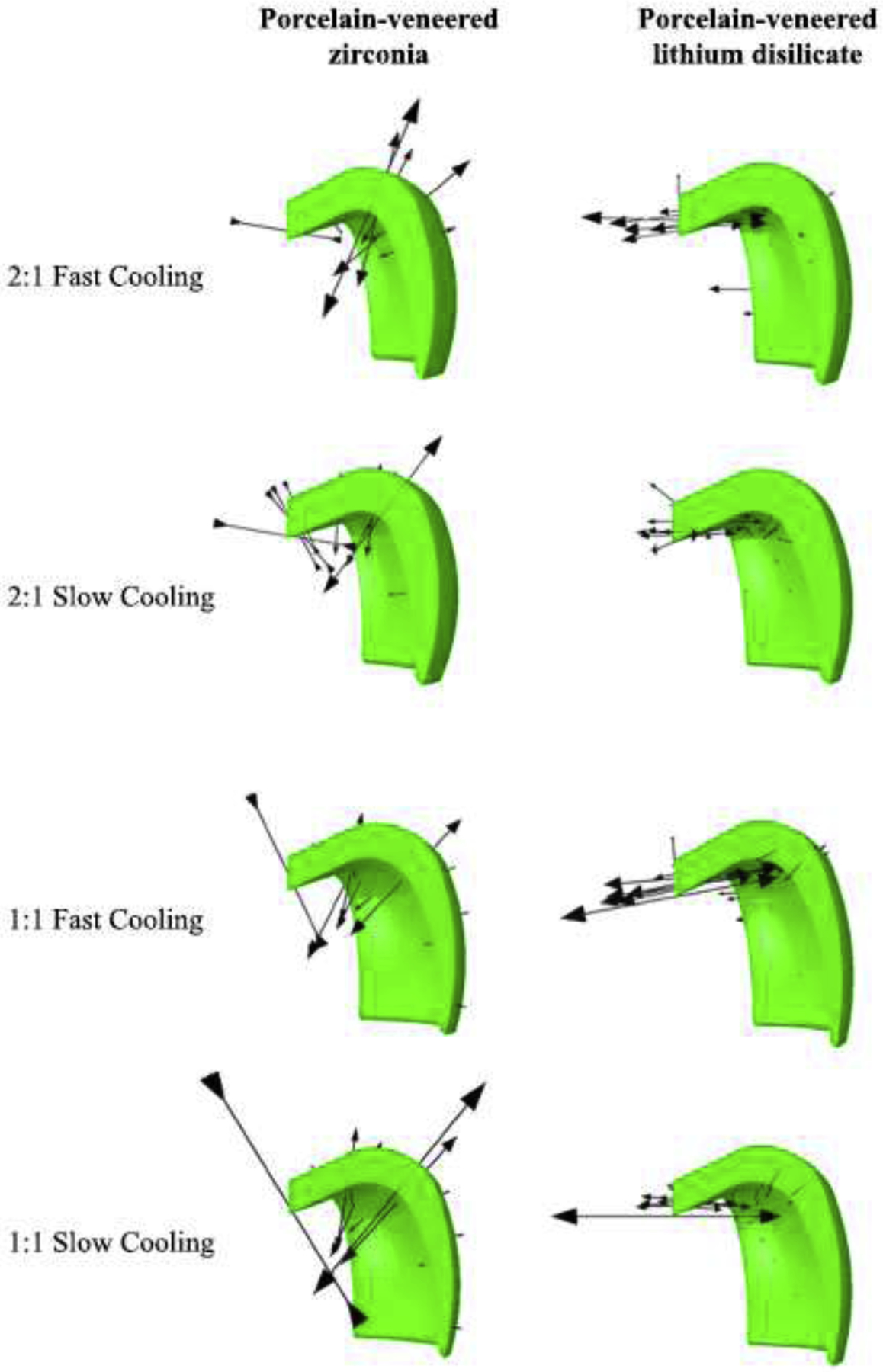
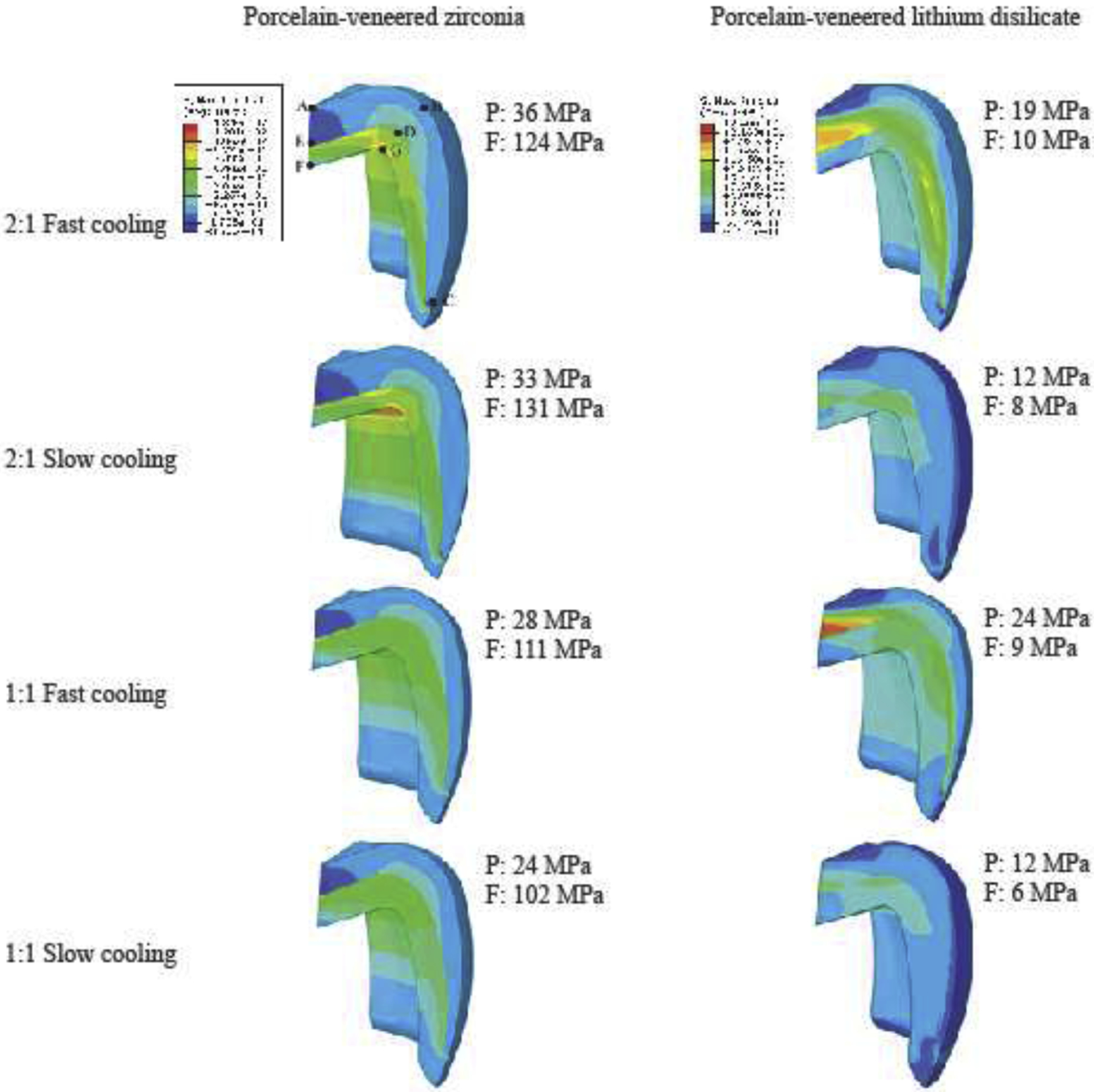
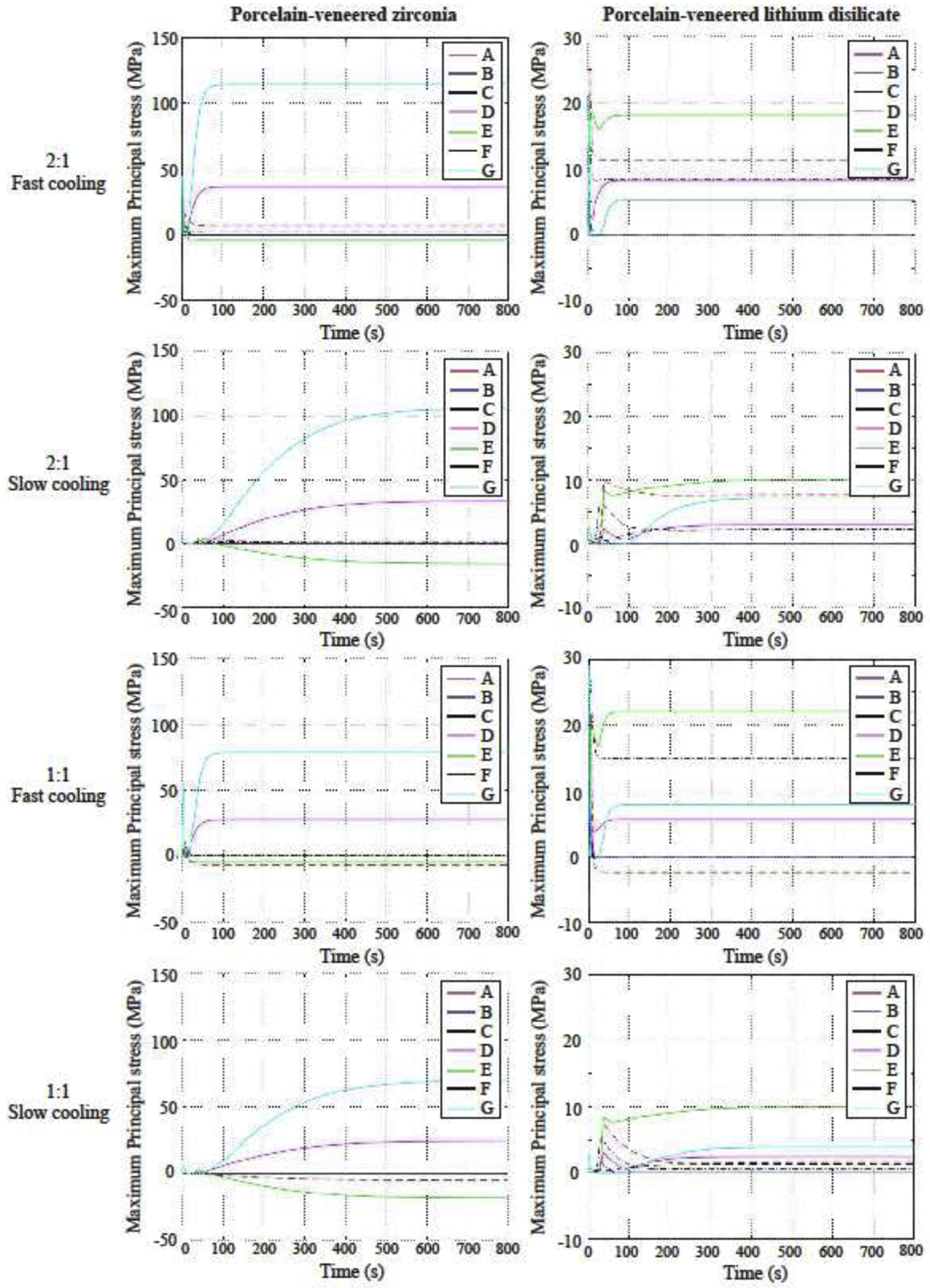
PVLD showed lower residual stresses than PVZ. The maximum tensile stresses in PVZ were observed in the cusp area, whereas those in PVLD were located in the central fossa. The 1:1 thickness ratio decreased stresses in both layers of PVZ. Slow cooling slightly decreased residual stresses in both systems. However, the cooling rate effect was more evident in transient stresses.
Slow cooling is preferable for both systems. A thinner porcelain layer over zirconia lowers stresses throughout the restoration. The different stress distributions between PVZ and PVLD may affect their failure modes. Smaller mismatches in modulus, CTE, and specific heat between the constituents, and the use of low T porcelains can effectively reduce the deleterious transient and residual tensile stresses in bilayer restorations.
了解不同瓷层/核厚度比和冷却速率下烤瓷熔附氧化锆(PVZ)和烤瓷熔附二硅酸锂(PVLD)冠的内应力发展情况。借助粘弹性有限元法(VFEM)为性能更好的双层修复体设计提供指导。
通过比较预测残余应力与实验测量值,验证 VFEM 的准确性。然后,使用该模型预测两种双层系统中的瞬态和残余应力。制备了两种不同瓷层/核厚度比(2:1 和 1:1)的模型,并使用传热模块模拟了两种冷却方案(快速:∼300°C/min,缓慢:∼30°C/min),然后在 ABAQUS 中进行应力分析。模拟中使用的氧化锆、二硅酸锂和瓷的物理性能随温度变化而确定。
PVLD 的残余应力低于 PVZ。PVZ 的最大拉伸应力出现在尖牙区域,而 PVLD 的最大拉伸应力出现在中央窝。1:1 的厚度比降低了 PVZ 各层的应力。缓慢冷却略微降低了两种系统的残余应力。然而,冷却速率对瞬态应力的影响更为明显。
缓慢冷却对两种系统都是优选的。在氧化锆上覆盖更薄的瓷层可降低整个修复体的内应力。PVZ 和 PVLD 之间不同的应力分布可能会影响它们的失效模式。在组成材料之间具有更小的模量、CTE 和比热的不匹配,以及使用低热膨胀系数的瓷,可以有效地降低双层修复体中有害的瞬态和残余拉伸应力。