Bartos Michael, Siegl Frantisek, Kopkova Alena, Radova Lenka, Oppelt Jan, Vecera Marek, Kazda Tomas, Jancalek Radim, Hendrych Michal, Hermanova Marketa, Kasparova Petra, Pleskacova Zuzana, Vybihal Vaclav, Fadrus Pavel, Smrcka Martin, Lakomy Radek, Lipina Radim, Cesak Tomas, Slaby Ondrej, Sana Jiri
Department of Neurosurgery, University Hospital Hradec Kralove, Hradec Kralove, Czechia.
Central European Institute of Technology, Masaryk University, Brno, Czechia.
Front Oncol. 2021 Aug 13;11:707017. doi: 10.3389/fonc.2021.707017. eCollection 2021.
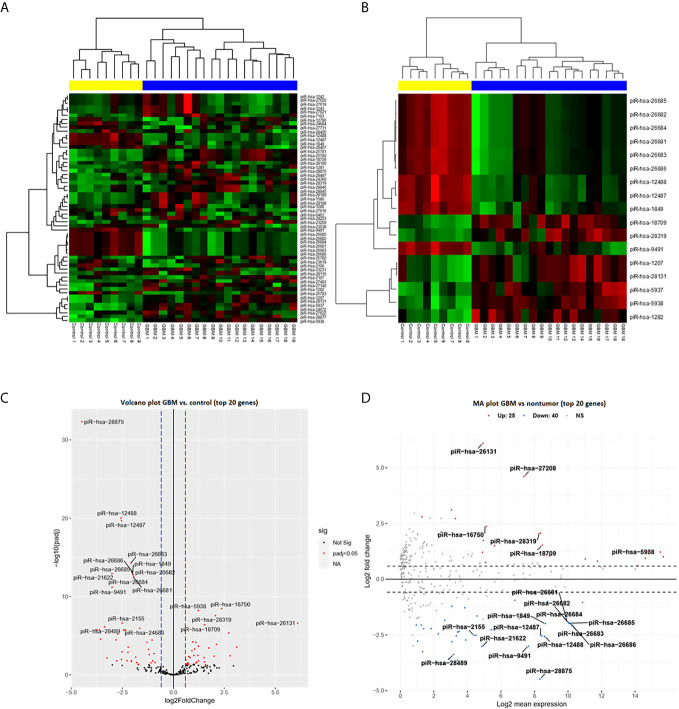
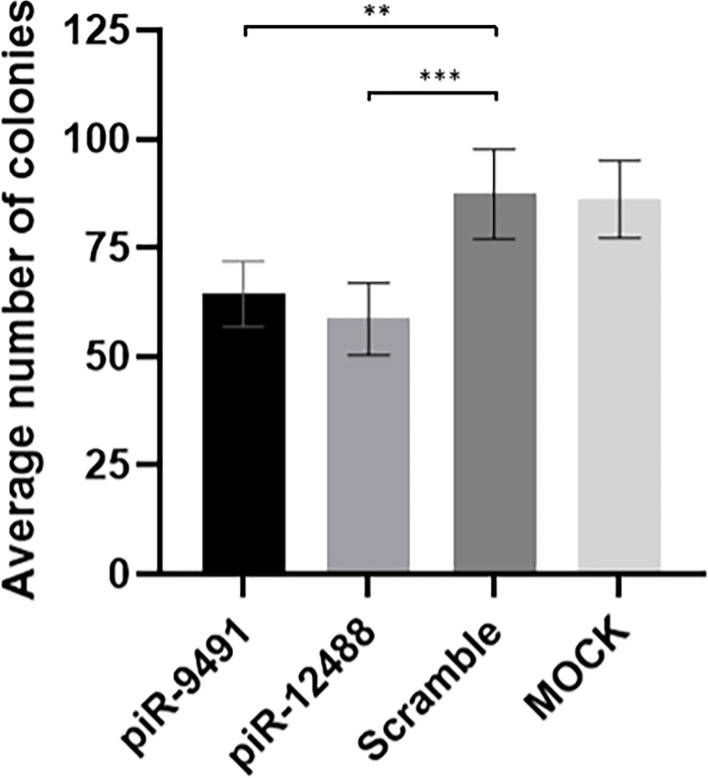
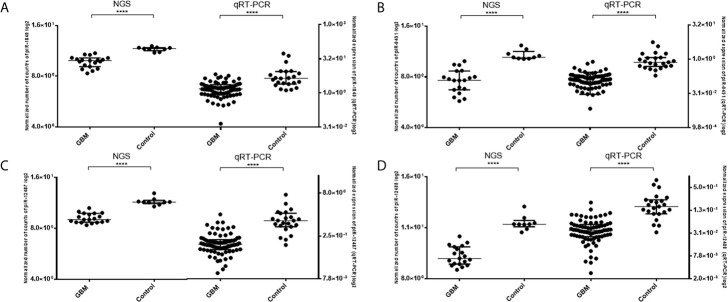
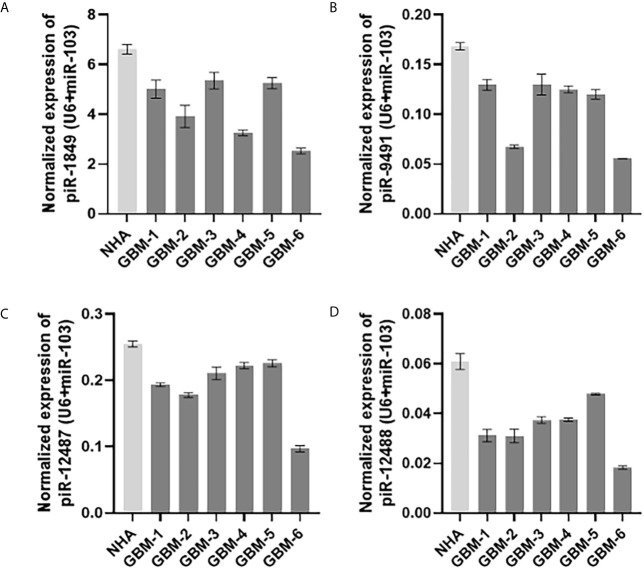
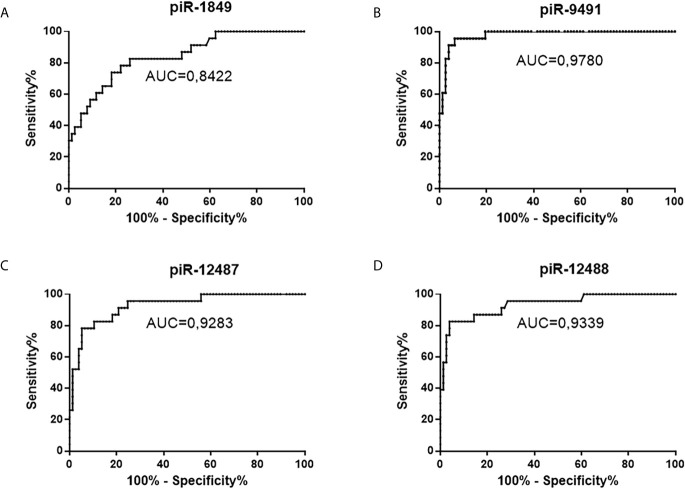
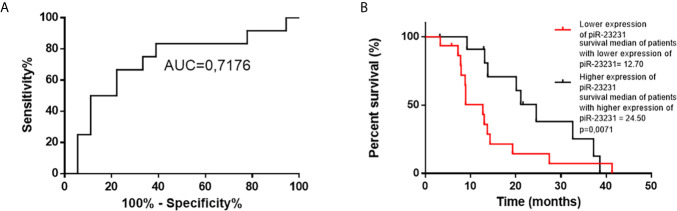
Glioblastoma (GBM) is the most frequently occurring primary malignant brain tumor of astrocytic origin. To change poor prognosis, it is necessary to deeply understand the molecular mechanisms of gliomagenesis and identify new potential biomarkers and therapeutic targets. PIWI-interacting RNAs (piRNAs) help in maintaining genome stability, and their deregulation has already been observed in many tumors. Recent studies suggest that these molecules could also play an important role in the glioma biology. To determine GBM-associated piRNAs, we performed small RNA sequencing analysis in the discovery set of 19 GBM and 11 non-tumor brain samples followed by TaqMan qRT-PCR analyses in the independent set of 77 GBM and 23 non-tumor patients. Obtained data were subsequently bioinformatically analyzed. Small RNA sequencing revealed 58 significantly deregulated piRNA molecules in GBM samples in comparison with non-tumor brain tissues. Deregulation of piR-1849, piR-9491, piR-12487, and piR-12488 was successfully confirmed in the independent groups of patients and controls (all < 0.0001), and piR-9491 and piR-12488 reduced GBM cells' ability to form colonies . In addition, piR-23231 was significantly associated with the overall survival of the GBM patients treated with Stupp regimen ( = 0.007). Our results suggest that piRNAs could be a novel promising diagnostic and prognostic biomarker in GBM potentially playing important roles in gliomagenesis.
胶质母细胞瘤(GBM)是最常见的原发性星形细胞起源恶性脑肿瘤。为了改变其不良预后,有必要深入了解胶质瘤发生的分子机制,并确定新的潜在生物标志物和治疗靶点。PIWI相互作用RNA(piRNA)有助于维持基因组稳定性,并且在许多肿瘤中已经观察到它们的失调。最近的研究表明,这些分子在胶质瘤生物学中也可能发挥重要作用。为了确定与GBM相关的piRNA,我们在19例GBM和11例非肿瘤脑样本的发现集中进行了小RNA测序分析,随后在77例GBM和23例非肿瘤患者的独立集中进行了TaqMan qRT-PCR分析。随后对获得的数据进行生物信息学分析。与非肿瘤脑组织相比,小RNA测序显示GBM样本中有58个piRNA分子显著失调。在患者和对照组的独立组中成功证实了piR-1849、piR-9491、piR-12487和piR-12488的失调(均<0.0001),并且piR-9491和piR-12488降低了GBM细胞形成集落的能力。此外,piR-23231与接受Stupp方案治疗的GBM患者的总生存期显著相关(=0.007)。我们的结果表明,piRNA可能是GBM中一种新的有前景的诊断和预后生物标志物,可能在胶质瘤发生中起重要作用。