Zhao Jia, Bhandari Bhesh, Gaiani Claire, Prakash Sangeeta
School of Agriculture and Food Sciences, The University of Queensland, St Lucia QLD, 4072, Australia.
Laboratoire d'Ingénierie des Biomolécules (LIBio), Université de Lorraine, Nancy, France.
Curr Res Food Sci. 2021 Aug 23;4:577-587. doi: 10.1016/j.crfs.2021.08.007. eCollection 2021.
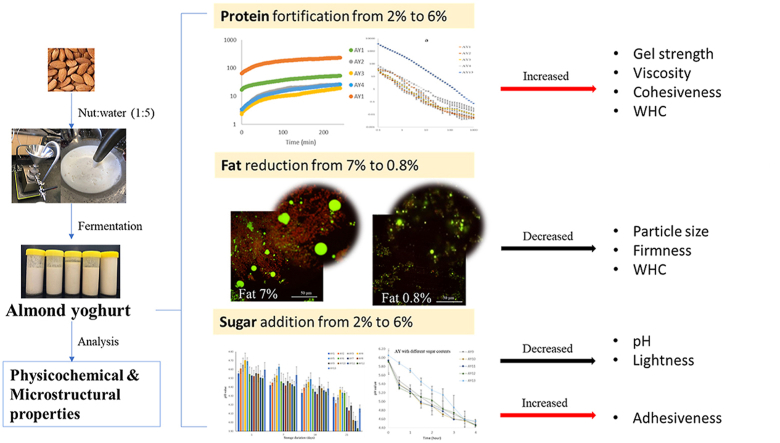
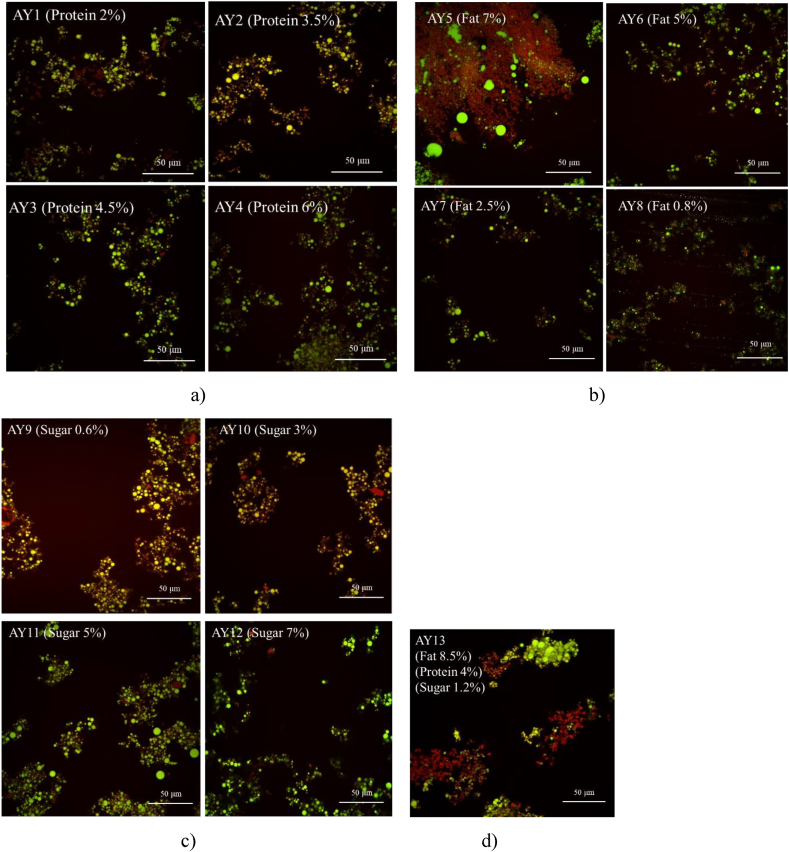
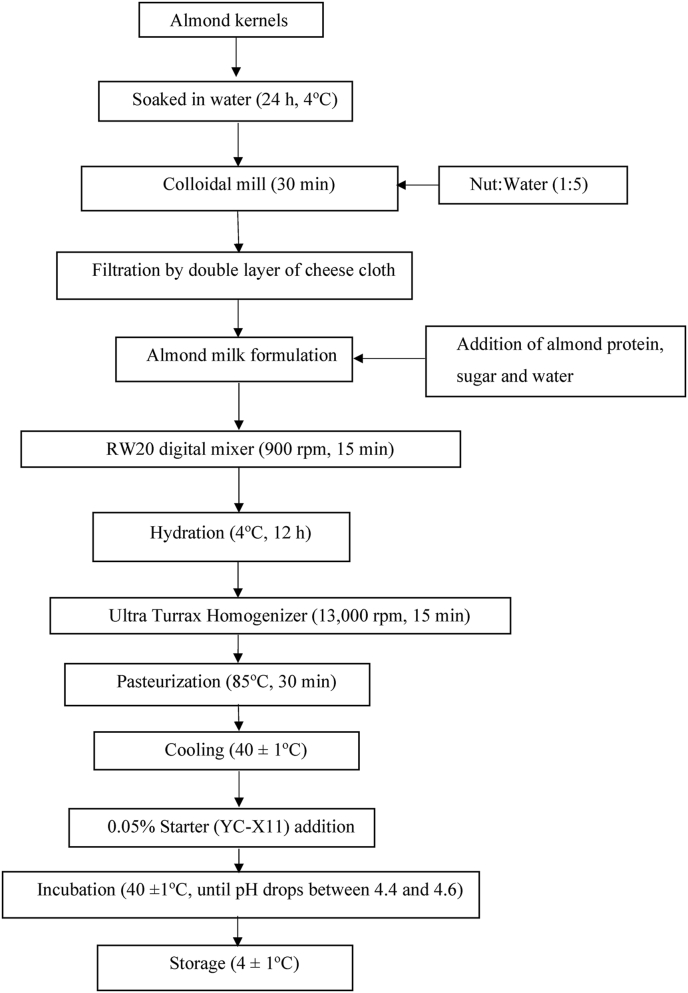
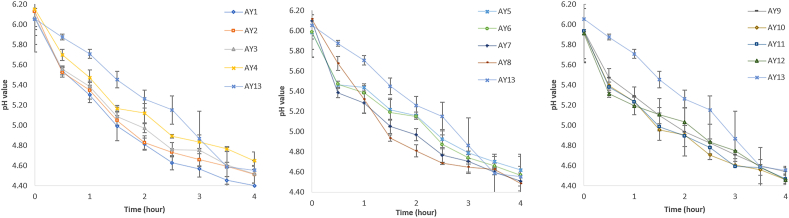
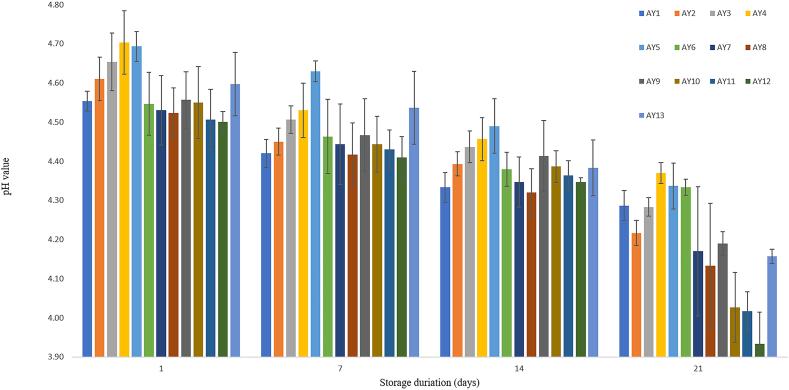
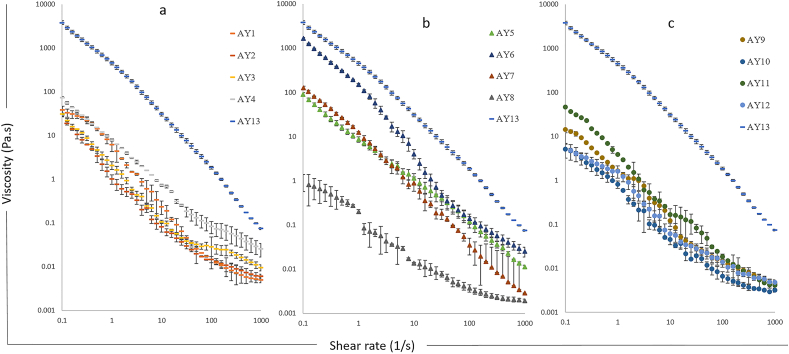
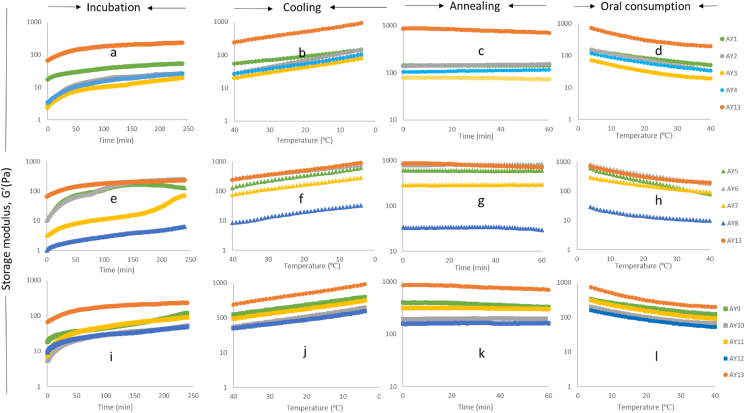
The influence of the protein, fat and sugar in almond milk on the formation of the acidic gel was investigated by determining their physicochemical and microstructural properties. The protein, fat and sugar in the almond milk were varied from 2% to 6%, 0.8%-7% and 0.6%-7%, respectively and fermented using Lactobacillus delbrueckii subsp. bulgaricus and Streptococcus thermophiles to form a gel structure. Both protein and fat increased the gel strength, viscosity (stirred gel) and lightness of almond yoghurts as the concentration increased. The addition of protein content increased the cohesiveness (from 0.70 to 1.17), water holding capacity (from 28.75% to 52.22%) and D value of particle size (from 32.76 μm to 44.41 μm) of almond yoghurt. Fat reduction decreased the firmness (from 6.56 g to 4.69 g), D value (from 88.53 μm to 18.37 μm), and water holding capacity (from 48.96% to 27.66%) of almond yoghurt. With sugar addition, almond yoghurt showed increased adhesiveness, decreased lightness and a low pH, with no significant difference in firmness, particle size, and flow behaviour. The confocal images provided evidence that the fortified protein contents homogeneously entrapped fat globules resulting in a more stable gel network and increased fat content led to large fat globule formation resulting in a harder gel network, while the added sugar did not significantly affect the gel network. The results suggested that the protein fortification enhances the texture of almond yoghurt. The fat content of 7% with 3.5% protein showed poor consistency and gel strength of yoghurt. Sugar mainly contributed to bacterial metabolism during fermentation.
通过测定杏仁奶中蛋白质、脂肪和糖的物理化学性质及微观结构特性,研究了它们对酸性凝胶形成的影响。杏仁奶中蛋白质、脂肪和糖的含量分别在2%至6%、0.8%至7%和0.6%至7%之间变化,并使用德氏乳杆菌保加利亚亚种和嗜热链球菌发酵以形成凝胶结构。随着浓度增加,蛋白质和脂肪均提高了杏仁酸奶的凝胶强度、粘度(搅拌型凝胶)和亮度。蛋白质含量的增加提高了杏仁酸奶的内聚性(从0.70提高到1.17)、持水能力(从28.75%提高到52.22%)和粒度D值(从32.76μm提高到44.41μm)。脂肪含量降低会降低杏仁酸奶的硬度(从6.56g降至4.69g)、D值(从88.53μm降至18.37μm)和持水能力(从48.96%降至27.66%)。添加糖后,杏仁酸奶的粘附性增加、亮度降低且pH值较低,在硬度、粒度和流动行为方面无显著差异。共聚焦图像表明,强化的蛋白质含量均匀地包裹脂肪球,从而形成更稳定的凝胶网络,而脂肪含量增加会导致形成大脂肪球,从而形成更硬的凝胶网络,而添加的糖对凝胶网络没有显著影响。结果表明,蛋白质强化可改善杏仁酸奶的质地。蛋白质含量为3.5%、脂肪含量为7%时,酸奶的稠度和凝胶强度较差。糖主要在发酵过程中促进细菌代谢。