Chemical Process Development, Global Product Development and Supply, Bristol Myers Squibb Company, New Brunswick, NJ, USA.
Biologics Development, Global Product Development and Supply, Bristol Myers Squibb Company, New Brunswick, NJ, USA.
MAbs. 2021 Jan-Dec;13(1):1974150. doi: 10.1080/19420862.2021.1974150.
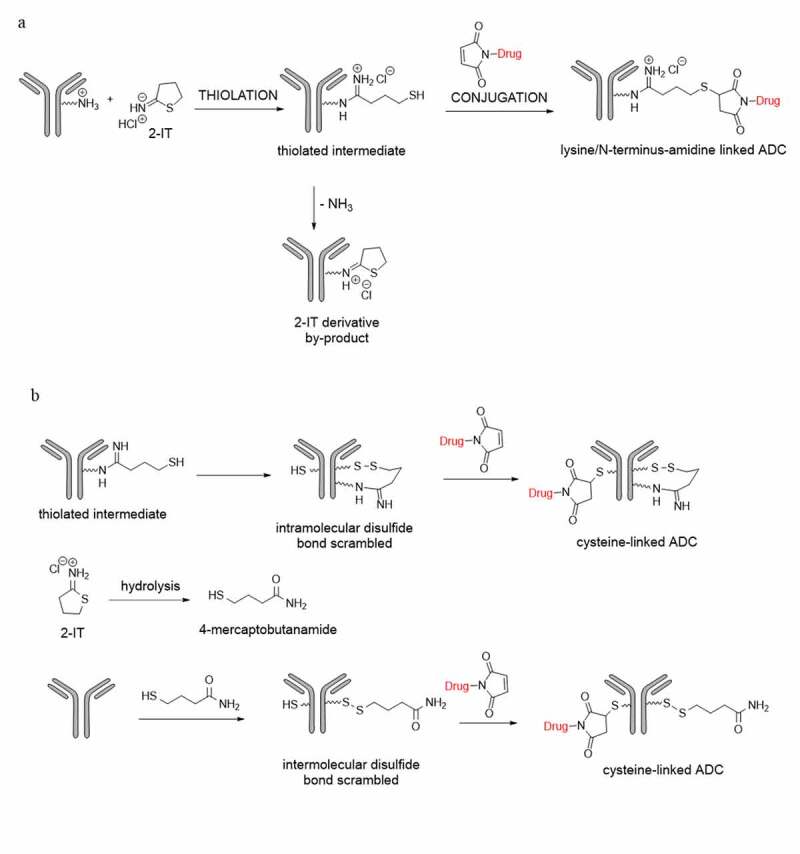
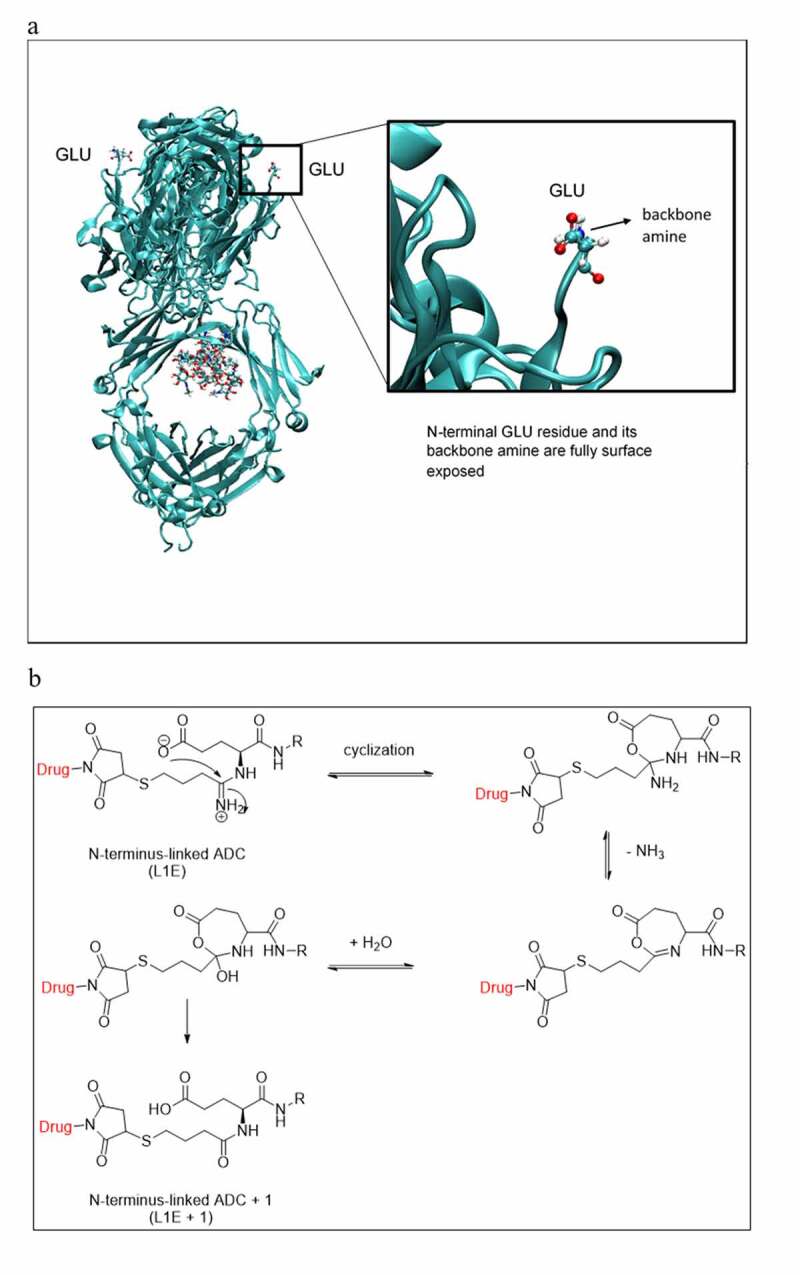
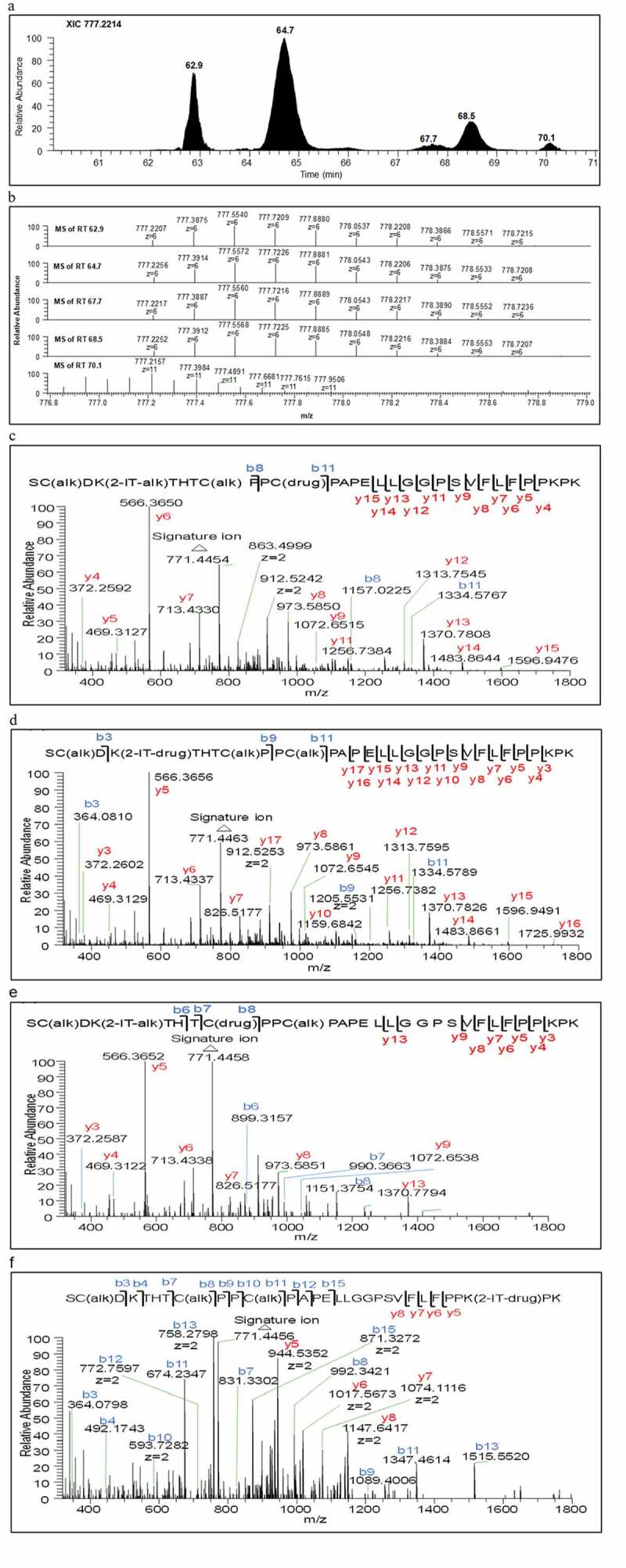
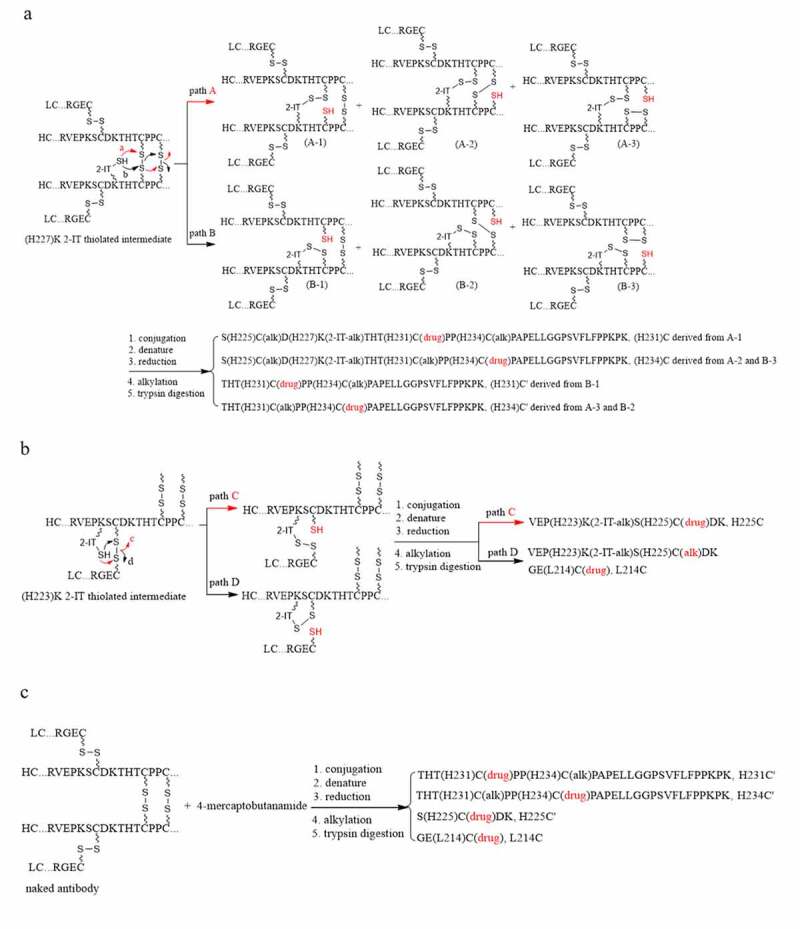
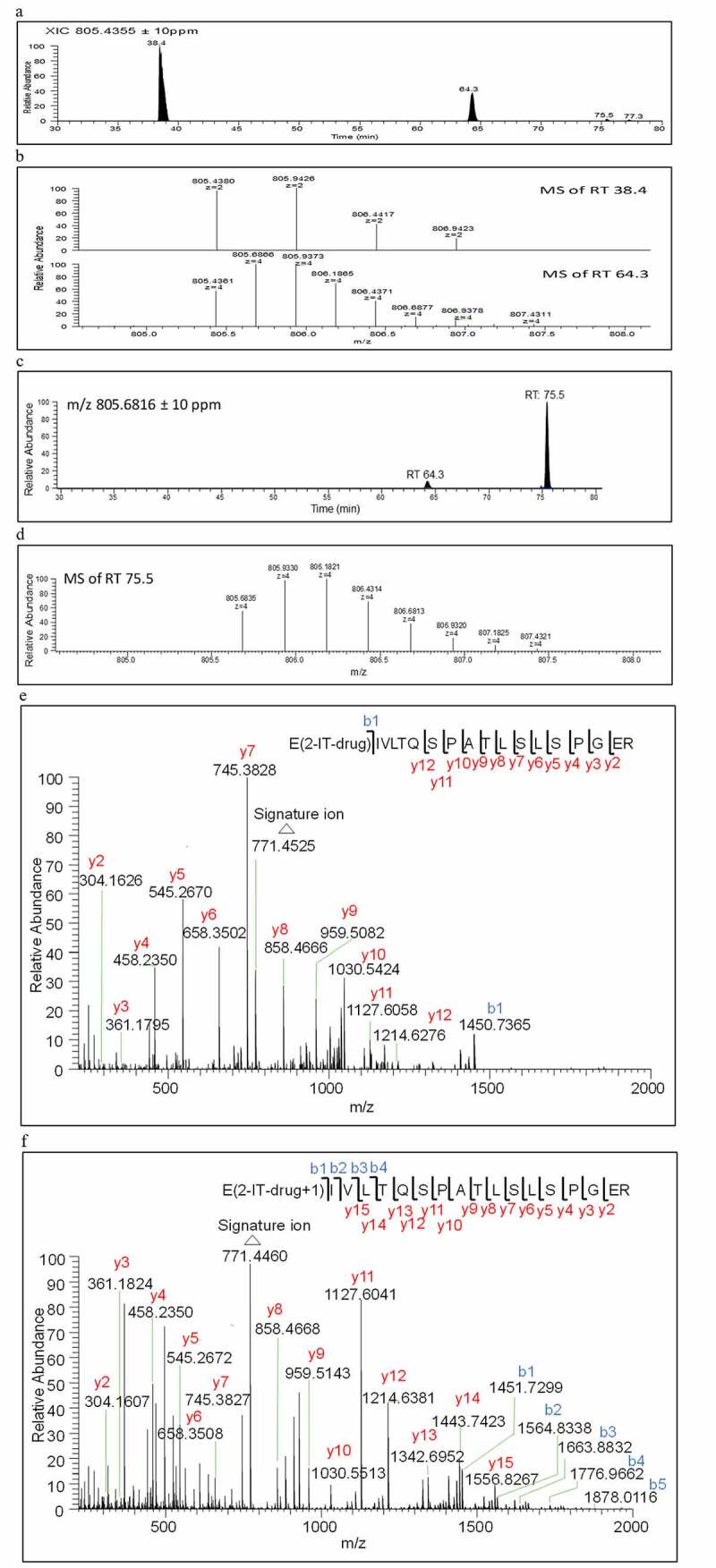
This study describes the characterization of conjugation sites for a random, lysine conjugated 2-iminothiolane (2-IT) based antibody-drug-conjugate synthesized from an IgG1 antibody and a duocarmycin analog-based payload-linker. Of the 80 putative lysine sites, 78 were found to be conjugated via tryptic peptide mapping and LC-HRMS. Surprisingly, seven cysteine-linked conjugated peptides were also detected resulting from the conjugation of cysteine residues derived from the four inter-chain disulfide bonds during the reaction. This unexpected finding could be attributed to the free thiols of the 2-IT thiolated antibody intermediates and/or the 4-mercaptobutanamide by-product resulting from the hydrolysis of 2-IT. These free thiols could cause the four inter-chain disulfide bonds of the antibody to scramble via intra- or inter-molecular attack. The presence of only pair of non-reactive (unconjugated) lysine residues, along with the four intact intra-chain disulfide bonds, is attributed to their poor accessibility, which is consistent with solvent accessibility modeling analysis. We also discovered a major by-product derived from the hydrolysis of the amidine moiety of the -terminus conjugate. In contrast, the amidine moiety in lysine-linked conjugates appeared stable. Based on our results, we propose plausible formation mechanisms of cysteine-linked conjugates and the hydrolysis of the -terminus conjugate, which provide scientific insights that are beneficial to process development and drug quality control.
本研究描述了一种随机赖氨酸连接的 2-亚氨基硫代烷(2-IT)基于抗体药物偶联物的缀合位点的特征,该偶联物是由 IgG1 抗体和基于二羧酸菌素类似物的有效载荷连接子合成的。在 80 个假定的赖氨酸位点中,通过胰蛋白酶肽图谱和 LC-HRMS 发现 78 个位点通过缀合。令人惊讶的是,还检测到七个半胱氨酸连接的缀合肽,这是由于反应过程中来自四个链间二硫键的半胱氨酸残基的缀合所致。这种意外的发现可能归因于 2-IT 硫醇化抗体中间体的游离硫醇和/或 2-IT 水解产生的 4-巯基丁酰胺副产物。这些游离的硫醇可能导致抗体的四个链间二硫键通过内或分子间攻击发生混乱。只有一对非反应性(未缀合)赖氨酸残基的存在以及四个完整的链内二硫键归因于它们的低可及性,这与溶剂可及性建模分析一致。我们还发现了一种主要的副产物,它是由末端缀合物的脒基部分水解产生的。相比之下,赖氨酸连接的缀合物中的脒基部分似乎很稳定。基于我们的结果,我们提出了半胱氨酸连接缀合物和末端缀合物水解的可能形成机制,这为工艺开发和药物质量控制提供了有益的科学见解。