Department of Biomedical Engineering, Stony Brook University, Stony Brook, NY, 11794, USA.
Department of Microbial Pathogens & Immunity, Rush University Medical Center, Chicago, IL, 60612, USA.
Transl Psychiatry. 2021 Sep 6;11(1):459. doi: 10.1038/s41398-021-01573-7.
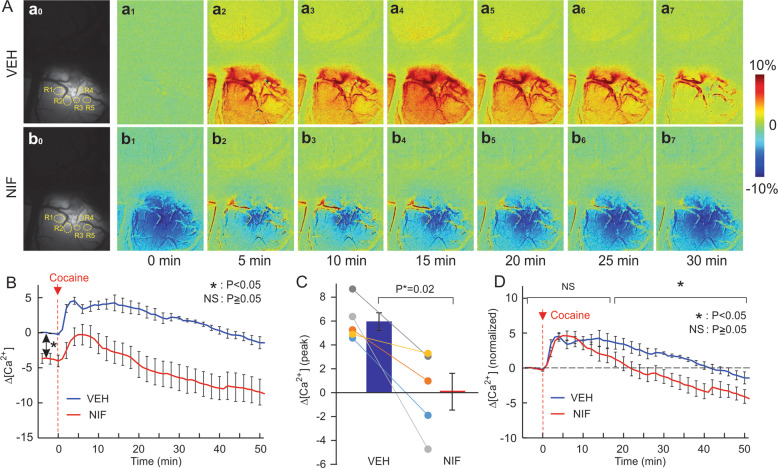
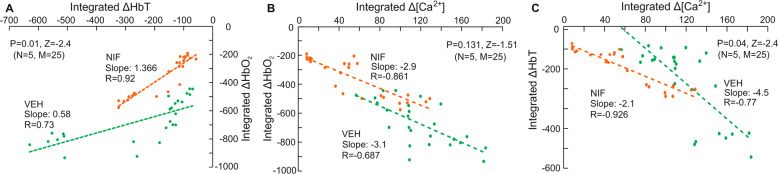
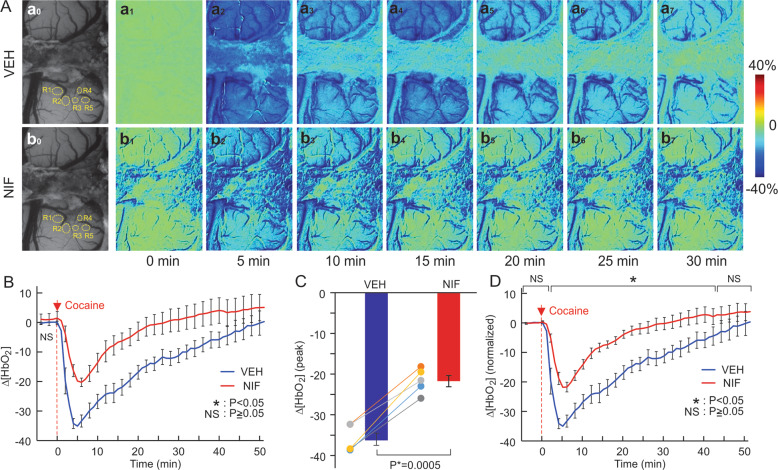
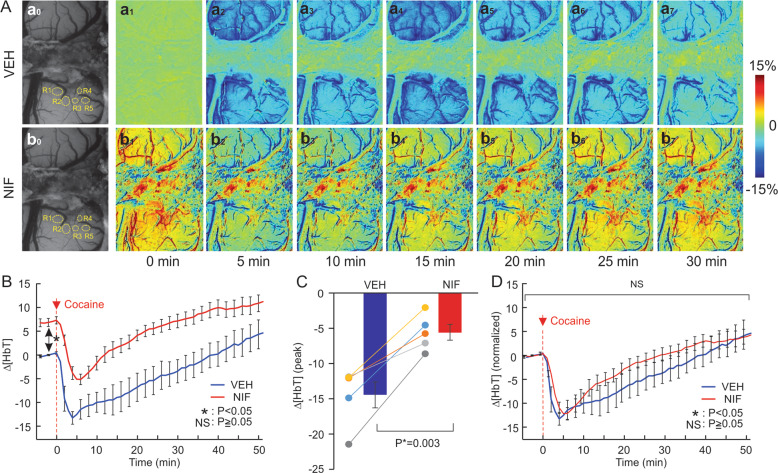
Cocaine profoundly affects both cerebral blood vessels and neuronal activity in the brain. The vasoconstrictive effects of cocaine, concurrently with its effects on neuronal [Ca] accumulation are likely to jeopardize neuronal tissue that in the prefrontal cortex (PFC) could contribute to impaired self-regulation and compulsive cocaine consumption. Here we used optical imaging to study the cerebrovascular and neuronal effects of acute cocaine (1 mg/kg i.v.) and to examine whether selective blockade of L-type Ca channels by Nifedipine (NIF) (0.5 mg/kg i.v.) would alleviate cocaine's effects on hemodynamics (measured with cerebral blood volume, HbT), oxygenation (measured with oxygenated hemoglobin, HbO) and neuronal [Ca], which were concomitantly measured in the PFC of naive rats. Our results show that in the PFC acute cocaine significantly reduced flow delivery (HbT), increased neuronal [Ca] accumulation and profoundly reduced tissue oxygenation (HbO) and these effects were significantly attenuated by NIF pretreatment. They also show that cocaine-induced vasoconstriction is distinct from its increase of neuronal [Ca] accumulation though both of them contribute to hypoxemia and both effects were attenuated by NIF. These results provide evidence that blockade of voltage-gated L-type Ca channels might be beneficial in preventing vasoconstriction and neurotoxic effects of cocaine and give support for further clinical investigations to determine their value in reducing cocaine's neurotoxicity in cocaine use disorders.
可卡因会深刻地影响大脑中的脑血管和神经元活动。可卡因的血管收缩作用,以及其对神经元[Ca]积累的影响,可能会危及前额皮质(PFC)中的神经元组织,从而导致自我调节受损和强迫性可卡因消费。在这里,我们使用光学成像来研究急性可卡因(1mg/kg 静脉注射)对脑血管和神经元的影响,并检查硝苯地平(NIF)(0.5mg/kg 静脉注射)选择性阻断 L 型钙通道是否会减轻可卡因对血流动力学(用脑血容量 HbT 测量)、氧合(用氧合血红蛋白 HbO 测量)和神经元[Ca]的影响,这些在未处理的大鼠的 PFC 中同时进行了测量。我们的结果表明,在 PFC 中,急性可卡因显著降低了血流输送(HbT),增加了神经元[Ca]的积累,并显著降低了组织氧合(HbO),而 NIF 预处理明显减轻了这些影响。它们还表明,可卡因引起的血管收缩与其增加神经元[Ca]积累不同,尽管两者都导致低氧血症,而这两种作用都被 NIF 减弱。这些结果提供了证据,表明阻断电压门控 L 型钙通道可能有助于预防可卡因引起的血管收缩和神经毒性作用,并支持进一步的临床研究,以确定它们在减少可卡因使用障碍中的神经毒性方面的价值。