
品牌声誉对产品线评估影响的神经基础:一项事件相关电位研究
Neural Bases of Brand Reputation Effect on Extension Evaluation: An ERPs Study.
作者信息
Liu Chang, Song Zhijie, Shi Rui
机构信息
School of Economics and Management, Yanshan University, Qinhuangdao, China.
出版信息
Front Neurosci. 2021 Aug 23;15:704459. doi: 10.3389/fnins.2021.704459. eCollection 2021.
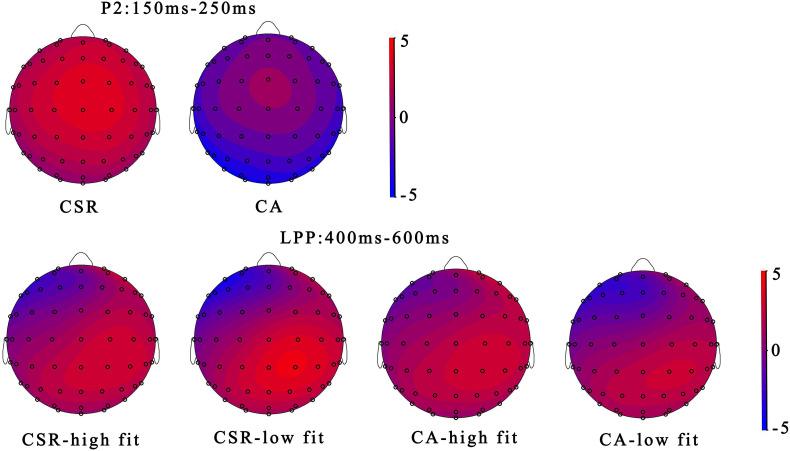
Brand extension, as a marketing strategy, is frequently utilized by enterprises to produce new products. There exist several critical factors determining its success, such as brand reputation and perceived fit. The present study adopts the event-related potentials (ERPs) method to explore the underlying neural mechanism of the joint influence of the two factors on consumers' evaluation of brand extension. Specifically, consumers were presented with a brand with corporate social responsibility (CSR) or corporate ability (CA) reputation, following attached to an extension product (high fit vs. low fit). And then, they were given a 5-point scale to report their acceptance intention (AI) toward the brand extension. Behavioral data showed a higher AI and a shorter reaction time for high fit in contrast to low fit conditions. For low fit conditions, consumers were more inclined to accept the extension product with a brand with CSR than CA reputation. Neurophysiologically, CSR reputation evoked a larger P2 amplitude and LPP amplitude than CA reputation. Moreover, the low fit conditions elicited a more positive LPP amplitude than the high fit conditions in the context of a brand with a CSR reputation. Yet, for a brand with a CA reputation, the effect of perceived fit was not found. These results may reflect early attention resources engagement and altruistic motivation at the late stage during brand extension evaluation. The findings provided neurological evidence for which of the two types of brand reputation (CSR vs. CA) have a more positive effect on brand extension.
品牌延伸作为一种营销策略,被企业频繁用于生产新产品。存在几个决定其成功的关键因素,如品牌声誉和感知契合度。本研究采用事件相关电位(ERP)方法来探究这两个因素对消费者品牌延伸评价的联合影响的潜在神经机制。具体而言,向消费者展示具有企业社会责任(CSR)或企业能力(CA)声誉的品牌,随后附上延伸产品(高契合度与低契合度)。然后,让他们用5分制来报告对品牌延伸的接受意愿(AI)。行为数据表明,与低契合度条件相比,高契合度条件下的接受意愿更高且反应时间更短。对于低契合度条件,消费者更倾向于接受具有企业社会责任声誉而非企业能力声誉的品牌的延伸产品。从神经生理学角度来看,企业社会责任声誉比企业能力声誉诱发更大的P2波幅和晚期正电位(LPP)波幅。此外,在具有企业社会责任声誉的品牌背景下,低契合度条件比高契合度条件诱发更积极的LPP波幅。然而,对于具有企业能力声誉的品牌,未发现感知契合度的影响。这些结果可能反映了品牌延伸评价早期的注意力资源投入和后期的利他动机。这些发现为两种类型的品牌声誉(企业社会责任与企业能力)中哪一种对品牌延伸有更积极的影响提供了神经学证据。


 Zotero 插件